
Health Insurance

Group Health Insurance Companies in India

Aaryaa Nagpal Jambhulkar

Written by Aaryaa Nagpal Jambhulkar

Insurance Writer

Gaurav Bhat

Reviewed by Gaurav Bhat

IRDAI-Certified Expert at Ditto

SP0738578124

Certified
Group Health Insurance Companies in India

Overview

Group health insurance covers employees or registered members under a single master policy. Leading group health insurance companies in India offer customizable plans based on organizational needs and budgets.

Popular Group Health Insurance Providers in India

  • HDFC ERGO: 97.61% average Claim Settlement Ratio (CSR) (FY24-26) and 16,000+ network hospitals.
  • Bajaj General: 95.63% average CSR (FY24-26) and 12,600+ network hospitals.
  • Aditya Birla: 96.25% average CSR (FY24-26) and 16,500+ network hospitals.
  • Care Health: 95.45% average CSR (FY24-26) and 11,400+ network hospitals.
  • Niva Bupa: 92.92% average CSR (FY24-26) and 10,000+ network hospitals.
  • ICICI Lombard: 86.81% average CSR (FY24-26) and 11,000+ network hospitals.

Key Features of Group Health Plans

  • Customizability: Flexible room rent limits, co-payment, and coverage options.
  • Day 1 Pre-Existing Disease (PED) Coverage: Negotiable waiting period waivers.
  • Family Coverage: Optional dependent and maternity benefits.
  • Simpler Enrollment: Usually no pre-policy medical tests required.

If you're planning to offer health insurance to your employees, you've probably noticed that several insurers offer group health plans. But here's the catch: not every insurer offers the same benefits, pricing, or claims experience.

One might offer attractive premiums, while another might stand out for its hospital network or flexible coverage options. So, how do you decide which group health insurance company is right for your business?

In this guide, we'll explore popular group health insurance companies in India and their plans, key features, eligibility requirements, and how group coverage compares with individual health insurance.

What Is Group Health Insurance?

Group health insurance is a single policy that covers multiple people in an existing group, such as company employees or association members. The organization usually holds the master policy, while eligible members receive coverage under it.

Under the IRDAI Regulations, 2024, group health insurance is divided into two main categories:

    • Employer-Employee Groups: Companies, startups, factories, and other organizations purchase health insurance for their employees. The employer holds the master policy.
    • Non-Employer-Employee Groups: Professional associations, cooperative societies, banks, alumni networks, and similar organizations purchase health insurance for their eligible members.

Key Features of Group Health Insurance

Unlike individual health insurance plans, which generally have fixed core features and limited customization, group health insurance gives organizations more flexibility in choosing coverage.

Background Image

01

Co-Payment

Employers can choose plans without a co-payment or include a clause requiring insured members to pay a percentage of each eligible claim.

02

Low Eligibility Requirement

Plans can have daily room rent limits or allow rooms without category-based restrictions.

03

Maternity and Outpatient Department (OPD) Coverage

Employers can add maternity benefits, coverage for newborns from day 1, and OPD expenses, such as doctor consultations and diagnostic tests.

04

Parental Coverage

Employers can extend coverage to employees' dependent parents and parents-in-law with an additional premium payment.

05

Waiting Period Waivers

Employers can negotiate to remove waiting periods for Pre-Existing Diseases (PEDs), the initial 30-day waiting period, and certain specified illnesses, allowing claims from day 1.

However, these benefits are not automatically included in every group health insurance plan. Actual coverage depends on the features the organization selects and the terms agreed with the insurer.

List of Group Health Insurance Companies and Plans in India

InsurerPlanNumber of PoliciesNumber of Lives Covered
Acko GeneralAcko Group Health Insurance Policy6821,57,81,117
Aditya Birla HealthGroup Activ Health6,9741,06,83,969
Bajaj GeneralFlexi Health Protect Plan (Group)8,70459,21,734
Care HealthGroup Care 360°14,2412,73,21,598
Cholamandalam MSGroup Health Insurance1,54112,19,985
Galaxy HealthGalaxy Plus2,89,7754,01,163
Generali CentralGroup Health Insurance (Revised)1,04220,68,057
Go Digit GeneralDigit Health Plus Policy (Revision)2,83131,90,469
HDFC ERGOHDFC ERGO Group Health Insurance5,54460,31,510
ICICI LombardGroup Health (Floater) Insurance23,16387,04,131
IFFCO TokioGroup Medishield Insurance Policy1,30619,16,502
IndusInd GeneralMediclaim Group Insurance3,33559,82,951
Liberty GeneralLiberty Group Health Policy64613,53,174
Magma GeneralGroup Health Insurance3,79426,41,612
ManipalCigna HealthManipalCigna FlexiCare Group Insurance Policy2,47447,80,679
Narayana HealthNarayana Group Health Insurance - Group Health541,10,373
National InsuranceNational Group Mediclaim Policy2,57881,74,219
New India AssuranceNew India Flexi Floater Group Mediclaim Policy37,9692,32,55,463
Niva Bupa HealthXpress Health24891,39,565
Oriental InsuranceGroup Mediclaim4,86392,90,158
Royal SundaramGroup Health2,49319,52,729
SBI GeneralGroup Mediclaim Policy21,63531,34,112
Shriram GeneralShri Group Mediclaim Insurance48,69248,694
Star HealthStar Group Health Insurance Benefit Plus Platinum11818,97,716
Tata AIGGroup MediCare10,49134,20,422
United IndiaUni Group Health Insurance Policy2,2581,08,74,919
Universal SompoGroup Health Insurance Policy15,03132,89,420
Zuno GeneralGroup Health Insurance6227,08,991
Zurich KotakGroup Health Care2,49617,64,340

Note: Data is sourced from the respective insurer’s Q4 public disclosures and is as of March 31, 2026.

Talk to an expert
today and find
the right
insurance for you.

Ditto Advisor

Eligibility Criteria and Documents Required for a Group Health Insurance Policy

Eligibility Criteria

For Employers and Organizations:

    • Must be a recognized employer-employee group or an eligible organization, such as a registered association, bank, or cooperative society.
    • The group must have a genuine purpose beyond purchasing insurance.
    • Minimum members depend on the insurer and plan. For example, ManipalCigna FlexiCare requires at least 7 members, while some small-business plans may accept groups of 5-10 members.

For Employees and Members:

    • Eligible Members: Generally include active full-time employees, directors, and registered members of the organization.
    • Entry Age: Group plans often have flexible entry age limits, although restrictions may apply depending on the policy.
    • Dependents: Spouses, dependent children, parents, and parents-in-law may be covered if the employer includes them.
    • Medical Tests: Usually not required before enrollment, although insurers may request them in certain cases.

Documents Required

    • Certificate of incorporation or registration
    • Organization PAN
    • Goods and Services Tax (GST) registration certificate (where applicable)
    • Group proposal form 
    • Employee list (census)

For each employee, the employer collects basic details such as full name, employee ID, date of birth, gender, joining date, coverage start date, and selected sum insured.

The employer also collects eligible dependents' details, along with nominee information where required for personal accident or fixed-benefit coverage.

What Documents Should Employees Receive?

Under applicable IRDAI guidelines, insured members should receive relevant policy and coverage information, including:

    • Coverage Confirmation: Employers must share the group insurance policy with insured employees so they can review the benefits, limits, and conditions.
    • Certificate of Insurance (COI): For non-employer groups, the insurer must issue a certificate specifying the member's coverage, benefits, policy period, premium, and exclusions.
    • Customer Information Sheet (CIS): Insured group members must receive a summary of key benefits, exclusions, coverage limits, and important policy conditions.

The exact documents and eligibility requirements may vary by insurer, group size, and policy terms. Employees should request these documents from their employer or insurer rather than relying only on an insurance e-card.

Pros and Cons of Group Health Insurance vs. Individual Health Insurance

Group Health Insurance

Pros:

    • Lower Cost: Employers often pay the full premium or subsidize it, reducing employees' expenses.
    • Day 1 Coverage: Waiting periods for PEDs can be waived if negotiated by the employer.
    • Fewer Medical Tests: Most group plans don't require pre-policy medical checkups.

Cons:

    • Limited Control: Employers decide coverage amounts, co-payment, room rent restrictions, and other benefits.
    • Coverage Ends on Exit: Coverage generally ends when you leave the organization, unless continuation options are offered.
    • Benefits Can Change at Renewal: The employer may revise coverage limits, benefits, or policy terms when renewing the group health insurance policy.

Individual Health Insurance

Pros:

    • Greater Control: You can choose your sum insured, policy features, and available add-ons based on your needs.
    • Lifelong Renewability: Coverage can continue regardless of your employment status, as long as you renew the policy on time.
    • Choice of Coverage Amount: You can select a higher sum insured based on your healthcare needs and budget.

Cons:

    • Higher Personal Expense: You pay the full premium yourself, which generally increases with age and other pricing factors.
    • Waiting Periods: Pre-existing diseases have waiting periods of up to 3 years, unless the policy reduces or waives them.
    • Medical Underwriting: Insurers may require medical tests, apply additional premiums, or impose specific conditions based on your health.

Why Choose Ditto for Health Insurance?

At Ditto, we’ve assisted over 12,00,000 customers with choosing the right insurance policy. Why customers like Pallavi love us:
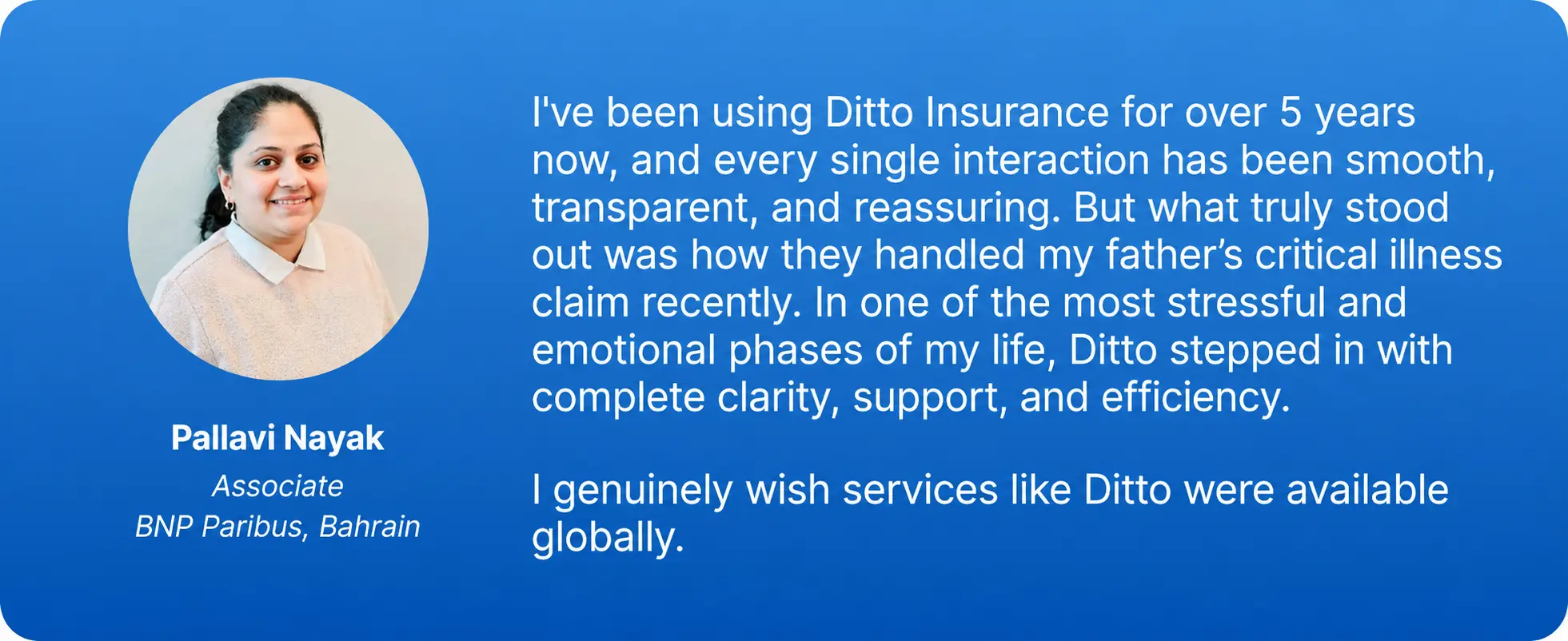
Pallavi Nayak LinkedIn Testimonial
    • 100% Free Consultation
    • No Spam. No Sales Pressure.
    • Rated 4.9/5 on Google Reviews by 30,000+ Happy Customers
    • Backed by Zerodha
    • Dedicated Claim Support Team
    • Compare Plans and Premiums with a Trusted Insurance Advisor

Confused about the right insurance? Speak to Ditto’s certified advisors for free, unbiased guidance. Book your call now or chat with us on WhatsApp. Slots fill up fast!

Ditto’s Take on Group Health Insurance

Group health insurance can be valuable, but the insurer's name alone doesn't tell you how much protection you're getting.

Before relying on your employer's insurance, review the Customer Information Sheet and benefit schedule to understand exactly what's covered, what's excluded, and when your coverage ends.

If you're evaluating insurers for an individual health insurance policy, explore our guide to the best health insurance companies for a closer look at their performance and offerings. These evaluations can help you compare insurers, while your group policy's specific terms determine the protection you receive through your employer.

If your employer's policy leaves significant gaps, consider getting personal health insurance while you're still eligible rather than waiting until you need medical treatment.

Frequently Asked Questions

Which are the best group health insurance companies in India for small businesses?

No single insurer is best because group health insurance plans are customized to the company's size, employee needs, and budget. Popular options include HDFC ERGO, Bajaj General, Care Health, Aditya Birla, Niva Bupa, and ICICI Lombard. When comparing insurers, look at hospital networks, claims-servicing records, available benefits, and policy restrictions rather than premiums alone.

Can a company with only 5 to 10 employees buy a group health insurance policy?

Small businesses can purchase group health insurance if they meet the insurer's minimum group-size and underwriting requirements. For example, ManipalCigna FlexiCare specifies a minimum of seven members. Businesses with fewer employees should confirm eligibility directly with the insurer, as qualifying group sizes and available products vary.

Does group health insurance cover pre-existing diseases from day one?

Yes, group health insurance can cover PEDs from day 1, but this benefit is not guaranteed. Employers must negotiate a waiting period waiver with the insurer and include it in the master policy. Without this waiver, standard waiting periods may apply. Employees should check their policy documents or confirm with their HR team whether pre-existing conditions are covered immediately or after a waiting period.

What happens to my group health insurance cover when I leave my job?

Your group health insurance generally ends when you leave your job. However, under IRDAI rules, you can request to migrate to an individual or family floater policy with the same insurer. Migration allows you to carry forward continuity credits, including completed waiting periods for PEDs and specific illnesses, instead of starting from scratch. However, migration depends on the insurer's underwriting and acceptance. Contact your insurer before leaving to avoid a coverage gap.

Can employees add parents or in-laws to a group health insurance policy, and who pays the extra premium?

Yes, employees can include dependent parents or parents-in-law if their employer's group health insurance policy allows it. Some companies pay the additional premium, while others let employees purchase parental coverage through salary deductions. The cost generally depends on the parents' ages, coverage amount, and policy benefits. Check with your HR team about eligibility, premiums, waiting periods, and any co-payment requirements before adding family members.

Do group health insurance companies use a TPA for cashless claims?

Yes, many group health insurance companies use Third-Party Administrators (TPAs) to coordinate cashless claims, while others rely on in-house teams. TPAs assist with hospital approvals, document verification, and claim processing. However, the insurer remains responsible for claim decisions, settlement, and grievance resolution, even when a TPA is involved. Insurers also report claims-servicing performance in their NL-48 filings and public disclosures. Employees can check their policy documents to identify their claims administrator.

How do group health insurance companies price premiums for an employee group?

Group health insurance premiums depend on the number of insured members, their ages, family composition, and selected benefits. Insurers also consider the sum insured, room rent limits, co-payment, maternity coverage, and waiting-period waivers. For existing groups, previous claims experience, including the Incurred Claims Ratio (ICR) of the group, can influence renewal premiums. Employers typically negotiate the final premium based on their workforce's needs and budget.

Can I claim under both my employer's group health insurance and my personal health insurance?

Yes, you can claim under both policies if the medical expenses are covered under group health insurance for employees. However, you cannot receive more than the total eligible medical bill. If one policy covers only part of the expenses, you can claim the remaining eligible amount under the other. IRDAI's 2024 rules also allow insurers to coordinate claims across multiple health policies. Keep your hospital bills and claim settlement documents ready.

Is GST applicable on group health insurance, and can employers claim input tax credit (ITC)?

Yes, group health insurance continues to attract 18% GST, even though individual and family floater health insurance policies have been GST-exempt since September 22, 2025. On October 8, 2026, the GST Council recommended allowing employers to claim Input Tax Credit (ITC) on employee insurance premiums. However, this change requires a legal amendment to take effect. Until then, employers can claim ITC only when they meet the existing legal conditions.

Are bank-based group health insurance policies a good alternative to personal health insurance?

Bank-based group health insurance plans, such as ICICI Health Shield 360, can offer affordable coverage, but they may not be reliable long-term alternatives to personal health insurance. Banks can change insurers, premiums, or benefits at renewal, and some plans have room rent limits, co-payment, or age restrictions. Although IRDAI rules may allow eligible waiting-period benefits to transfer, continued coverage isn't guaranteed. Ideally, maintain a separate personal health insurance policy.

Last updated on: