


Overview
When you're running a small business, every expense matters. Between salaries, rent, and daily operations, setting aside money for employee health insurance might seem like a luxury. But what happens when an employee faces a medical emergency and turns to you for financial help?
That's where group medical insurance can make a difference. And contrary to what you might think, it's not just for large corporations. Even businesses with a handful of employees can qualify for group health coverage.
In this guide, we'll break down the eligibility requirements, coverage options, costs, and tax implications.
Is Group Health Insurance Mandatory for Small Businesses in India?
No, group health insurance is generally optional for small businesses in India. However, certain statutory employee insurance requirements may apply.
The confusion dates back to April 2020, when the Ministry of Home Affairs (MHA) temporarily mandated medical insurance for workers during the COVID-19 pandemic. IRDAI also issued a circular on April 16, 2020, advising insurers to offer suitable policies. However, the requirement was later removed from revised lockdown guidelines and is no longer a general mandate.
That said, employers must check their obligations under the Employees' State Insurance (ESI) scheme.
Under the Code on Social Security, 2020, which took effect on November 21, 2025, ESI generally applies to establishments with 10 or more employees, subject to applicable conditions. The notified wage ceiling is ₹21,000 per month, and special provisions apply to certain notified hazardous occupations, even with fewer employees.
Important: ESI and private group health insurance are different. Purchasing a private policy doesn't automatically exempt employers from mandatory ESI contributions.
While private group health insurance is generally optional, it can help small businesses attract and retain talent while giving employees peace of mind about their medical expenses. However, employers must still check their statutory insurance obligations before deciding what coverage to offer.
Eligibility Criteria and Minimum Employee Requirements
You don't need hundreds of employees to qualify for group health insurance. Small businesses and startups can also purchase these policies, provided they meet the insurer's eligibility requirements.
Minimum Employee Requirements
India has no universal minimum employee count for group health insurance. Requirements vary by insurer and product.
For example, ManipalCigna's ProHealth group insurance policy requires at least 7 members. Similarly, Care Health's Group Care requires 7 insured lives for corporate eligibility, including eligible dependents. So, a business with 3 employees and 4 eligible dependents could qualify under Care's terms.
Other insurers may have different requirements, so smaller businesses should check eligibility before applying.
Other Eligibility Requirements
- Employer-Employee Relationship: The business must have genuine employees. Groups cannot be formed solely to purchase insurance.
- Employee Eligibility: Full-time employees generally qualify, while contract workers, interns, and part-time employees may be eligible depending on the policy.
- Age Requirements: Entry-age limits vary by insurer and product. Employee age distribution also affects premiums.
- Dependent Coverage: Spouses, children, parents, and parents-in-law may be covered, subject to policy terms and additional costs.
- Required Documents: Insurers typically require employee names, ages, locations, and relevant business details.
Once approved, the business receives a master policy, and eligible employees are enrolled.
Types of Group Health Insurance Plans for Small Businesses
Group health insurance plans fall into two broad categories based on how they pay claims. These are indemnity-based plans and fixed-benefit plans. The coverage structure can also differ depending on whether the employer wants to insure employees individually or include their families.
1) Indemnity-Based Group Health Insurance
These plans cover eligible medical expenses incurred during hospitalization, up to the available sum insured. They generally cover expenses such as room rent, ICU charges, surgeries, and other treatments, subject to policy terms.
Employers can choose between two common coverage structures.
- Individual Coverage: Each employee receives a separate sum insured. For example, if five employees have ₹5 lakh coverage each, one employee's claim will not reduce the sum insured available to the others.
- Family Floater Coverage: An employee and eligible family members share a common sum insured. For example, if an employee, their spouse, and child have a ₹10 lakh floater, all three share that amount for eligible medical expenses during the policy year.
For example, ManipalCigna's ProHealth group insurance policy and HDFC ERGO group health insurance offer hospitalization coverage with individual and family floater options, subject to the selected policy terms.
Some insurers also offer group top-up or super top-up coverage that provides additional protection above a specified deductible. For example, ICICI Lombard's Group Health Assure super top-up offers additional coverage for eligible medical expenses, subject to the applicable deductible, sum insured, and policy conditions.
2) Fixed-Benefit Group Insurance
Unlike indemnity-based plans, fixed-benefit insurance pays a predetermined amount when a specified insured event occurs, regardless of the actual medical expenses incurred.
These benefits may be available through separate group policies or as optional covers within a broader group insurance plan.
- Group Critical Illness Insurance: Pays a predetermined lump sum when an insured employee is diagnosed with a covered critical illness, such as cancer of specified severity or a qualifying heart attack, subject to policy conditions. For example, ManipalCigna's Lifestyle Protection Group Policy offers critical illness coverage.
- Group Hospital Cash Insurance: Pays a fixed amount for each eligible day of hospitalization, subject to the policy's limits and conditions. For example, ManipalCigna's ProHealth Group Insurance Policy offers optional daily cash benefits.
- Group Personal Accident Insurance: Provides specified payouts for accidental death or disability, depending on the coverage selected. For example, ManipalCigna's Lifestyle Protection group policy offers personal accident benefits, either separately or alongside critical illness coverage.
Ditto's Take: For small businesses, indemnity-based group health insurance should generally be the priority because it helps employees pay actual hospitalization expenses. Fixed-benefit covers can provide additional financial support, but they should not be treated as replacements for comprehensive health insurance.
Talk to an expert
today and
find
the right
insurance for you.


Group Health Insurance Costs for Small Businesses
Group health insurance premiums vary depending on the coverage selected. To give you an idea of costs, here's a breakdown from the official HDFC ERGO group health insurance rate chart for the Gold Plan with a ₹15 lakh sum insured.
For example, a small business covering 10 employees aged between 18 and 35 would have an illustrative annual base premium of ₹67,150, before GST and any group-specific adjustments.
Important: These are indicative premiums taken from HDFC ERGO's published rate chart, not final quotations. Actual costs may differ based on the insurer, plan, and the following factors.

Group Size
Age Profile
Sum Insured
Coverage Benefits
Cost Sharing Measures
Premium Insights
Tax Implications of Group Health Insurance for Small Businesses
1) Tax Benefits for Employers
Under Section 30(c) of the Income-tax Act, 2025 (previously Section 36(1)(ib)), employers can deduct qualifying group health insurance premiums paid for their employees when calculating taxable business income.
The premiums must be paid through a mode other than cash, and the insurance scheme must meet the prescribed conditions.
For example, if a small business pays ₹1 lakh annually for qualifying employee health insurance and is subject to an effective corporate tax rate of 25%, it could save ₹25,000 in taxes, assuming it has sufficient taxable profits. Actual tax savings depend on the applicable tax rate.
2) Tax Benefits for Employees
Employees generally do not have to pay income tax on qualifying group health insurance premiums paid by their employer, as these are excluded from taxable salary perquisites under Section 17(2)(c) of the Income-tax Act, 2025.
However, employees cannot claim a separate deduction for premiums paid entirely by their employer.
If employees personally contribute (in part or fully) toward eligible health insurance coverage, they may qualify for a deduction under Section 126 of the Income-tax Act, 2025 (previously Section 80D), subject to the statutory limits and payment conditions. This deduction is available only under the old tax regime.
3) GST on Group Health Insurance
Employer-sponsored group health insurance continues to attract 18% GST, even after qualifying individual health insurance policies became GST-exempt on September 22, 2025, as clarified by the Department of Financial Services.
For example, a business paying ₹1 lakh in annual premiums would incur an additional ₹18,000 in GST, bringing its total outlay to ₹1.18 lakh.
At its 57th meeting on October 8, 2026, the GST Council recommended removing ITC restrictions, potentially allowing employers to claim input tax credit on group health insurance premiums.
Why Choose Ditto for Health Insurance?
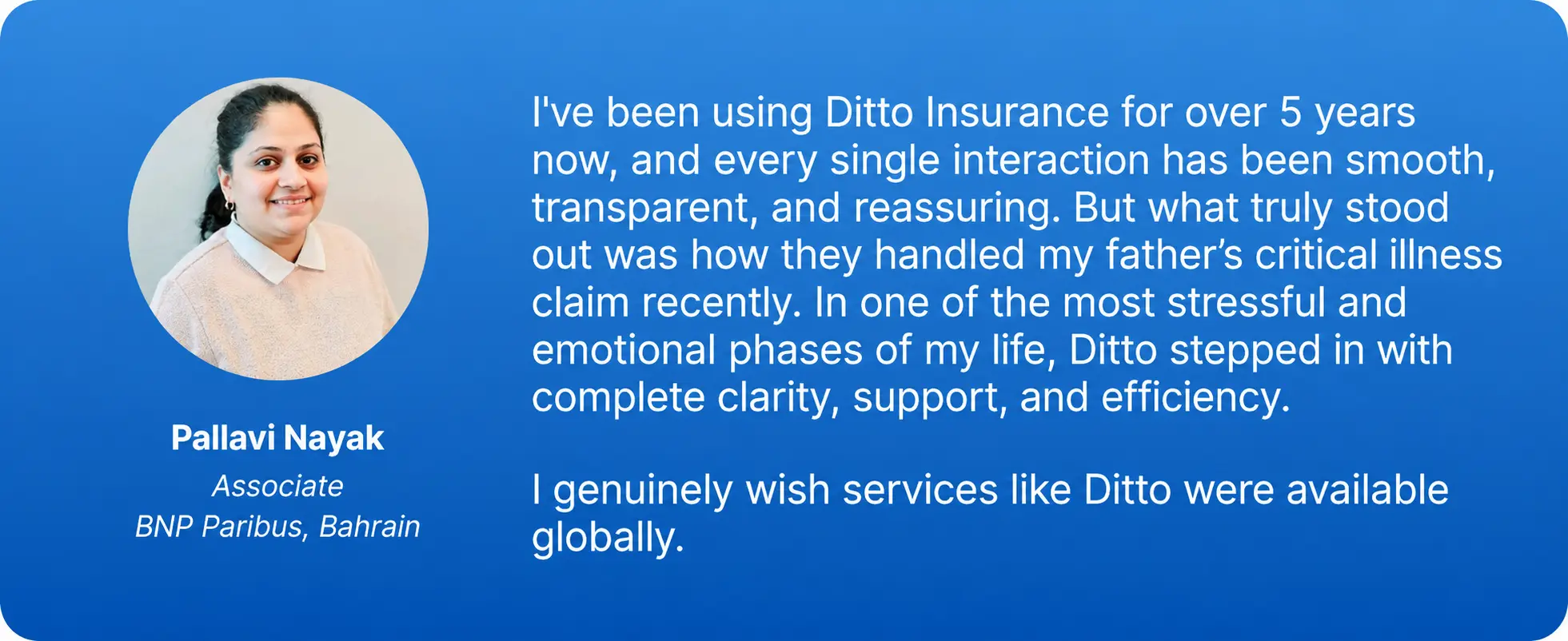
At Ditto, we’ve assisted over 12,00,000 customers choose the right insurance policy. Why customers like Pallavi love us:
- 100% Free Consultation
- No Spam. No Sales Pressure.
- Rated 4.9/5 on Google Reviews by 30,000+ Happy Customers
- Backed by Zerodha
- Dedicated Claim Support Team
- Compare Plans and Premiums with a Trusted Insurance Advisor
Confused about the right insurance? Speak to Ditto’s certified advisors for free, unbiased guidance. Book your call now or chat with us on WhatsApp. Slots fill up fast!
Conclusion
Small business group health insurance can be a useful benefit, even for those with only a handful of employees. While it is generally not mandatory, the right policy can help protect employees from unexpected medical expenses.
Before choosing a plan, check the insurer's minimum group size, available coverage, and premium costs. You can also explore the group health insurance companies in India to understand your options. Make sure you understand your ESI obligations and the applicable tax benefits.
The goal is to find a policy that fits your business's budget while giving employees adequate medical protection.
Frequently Asked Questions
Last updated on: