


Overview
According to the IRDAI Annual Report 2024–25, general and health insurers settled about 58% of all health insurance claims through cashless mode. These claims accounted for 66.35% of the total claim amount paid (₹62,537 crore).
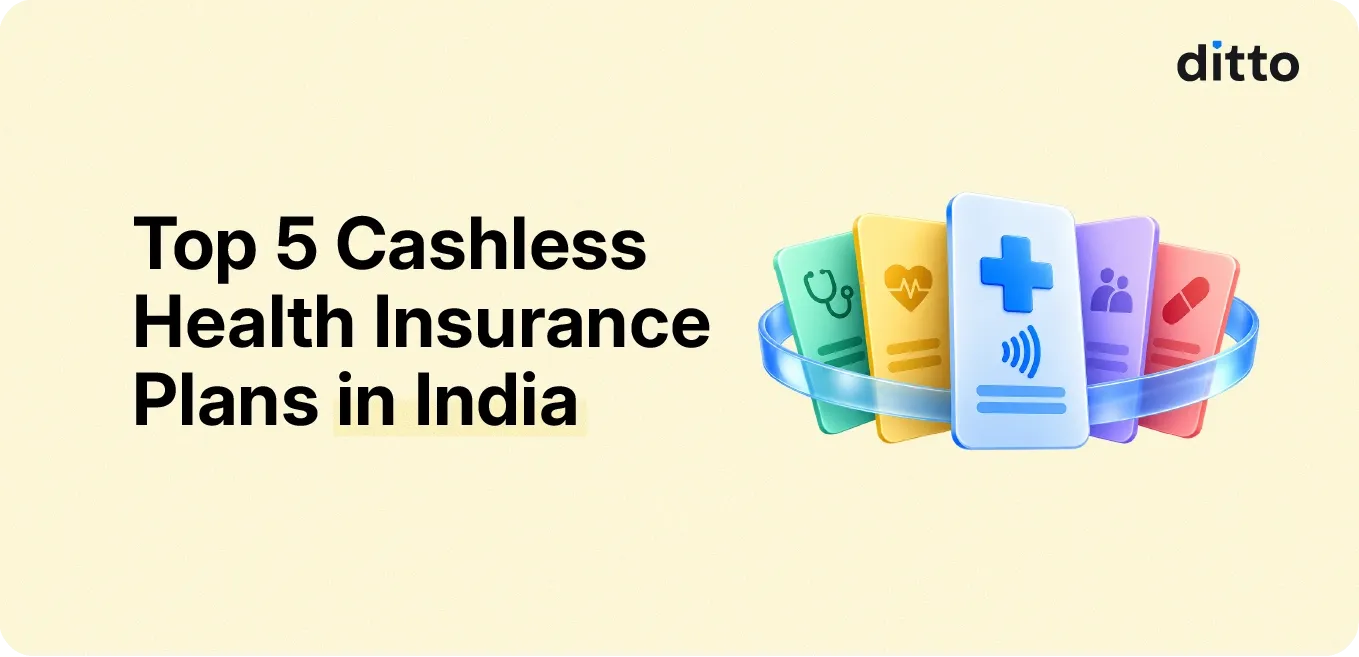
In this guide, we break down the top 5 cashless health insurance plans in India, their hospital networks, claim settlement track record, and what's excluded even under a cashless claim.
What Is Cashless Health Insurance?
Cashless health insurance is a claim settlement mode where the insurer pays the admissible portion of your hospital bill directly to the hospital, subject to policy terms and cashless authorization.
However, cashless doesn’t mean zero out-of-pocket cost. You may still need to pay deductibles, co-payments, non-payable items, expenses beyond sub-limits or available coverage, and any portion of the bill not admissible under your policy.
IRDAI requires insurers to decide on cashless authorization within 1 hour of receiving a complete request, and issue final discharge approval within 3 hours. If insurer-side delays cause extra hospital charges, the insurer must bear them. Timelines may still vary based on document completeness and hospital coordination.
Note: A cashless denial doesn’t mean your claim is rejected. You can still pay the bill and file for reimbursement later. However, if the treatment falls under a waiting period, exclusion, or isn’t medically necessary, it may not be payable even under reimbursement.
Top 5 Cashless Health Insurance Plans in India: Ditto’s Pick [2026]
Note: This data reflects the insurer as a whole and is sourced from IRDAI annual reports and public disclosures of insurers. To explore more such insights, refer to Ditto Data Lab.
All five insurers meet our preferred benchmarks on key metrics such as three-year average CSR and hospital network size, although performance can differ across complaints, scale, servicing models, and digital capabilities. These metrics help assess insurer reliability, but they don’t guarantee how smooth an individual cashless claim will be.
However, we don’t choose plans based on CSR or hospital count alone. Ditto’s insurer rating framework evaluates policy features (45%), insurer quality (45%), and premium (10%).
Top 5 Cashless Health Insurance Plans: Sample Premiums
The premiums are illustrative and calculated for adults living in Delhi (pincode: 110010) for a 1-year tenure with recommended add-ons. Your final premium will vary based on factors like age, medical history, location, selected add-ons, and discounts.
Talk to an expert
today and
find
the right
insurance for you.

How Does the Cashless Health Insurance Claim Process Work?
Hospitalization and Intimation
Visit a network hospital’s insurance/TPA desk and share your health card, policy details, and ID. For planned admissions, inform the insurer in advance. For emergencies, inform them as soon as possible after admission.
Pre-Authorization Request
The hospital collects medical details such as diagnosis, treatment plan, and estimated costs, and sends a pre-authorization request to the insurer or TPA.
Initial Approval
As per IRDAI rules, the insurer must decide on the request within 1 hour of receiving complete documents.
Treatment and Updates
Treatment continues within the approved amount. If costs increase, the hospital can request an enhancement.
Discharge and Settlement
At discharge, the hospital submits final bills and documents. The insurer issues final approval within 3 hours and settles the admissible amount directly. You pay any non-covered expenses.
In-House vs. TPA-Based Claim Handling
- In-House Claims: The insurer’s internal team processes claims directly, including pre-authorization and final approval. Insurers such as HDFC ERGO, Care Health Insurance, Aditya Birla Health Insurance, and Niva Bupa follow this model. This may include features like app-based tracking, care support, or status updates during the process.
- TPA-Based Claims: Claims are managed through an external TPA that coordinates with the hospital and insurer for documentation, review, and approvals. Insurers like SBI General Insurance use this model. It adds an additional administrative layer, although the overall claim flow remains similar.
Note: If your policy is taken via Ditto, we provide end-to-end renewal and claims assistance.
How the Cashless Everywhere Initiative Works
The Cashless Everywhere initiative by the General Insurance Council (GIC) allows you to request cashless treatment at non-network hospitals, subject to insurer approval. It is available only if the claim is admissible under the policy and the request meets the insurer’s operating guidelines.
Several major insurers offer a non-network cashless process, but availability and operating conditions vary by insurer and depend on coordination between the hospital and insurer.
- Planned Admissions: Inform your insurer at least 48 hours in advance so they can arrange approvals.
- Emergency Admissions: Inform your insurer within 48 hours of admission.
- Hospital Eligibility: The hospital must meet the insurer’s eligibility requirements and agree to the cashless arrangement.
This works best as a backup, not a replacement for a strong hospital network. A network hospital already has an established cashless arrangement with the insurer, while non-network cashless depends on fresh coordination and hospital acceptance. Approvals depend on policy terms, treatment eligibility, the insurer’s process, and whether the hospital agrees to coordinate. Confirm availability directly before relying on it.
What Expenses Are Not Covered Under Cashless Health Insurance Policies?
Even with a cashless claim, you’ll still have to pay certain charges out of pocket:
- Deductibles and Co-Payments: The fixed amount or percentage you must pay under your policy.
- Room Rent Limits: Choosing a room above your policy’s eligibility can lead to proportionate deductions in the room charge and specified associated medical expenses, depending on the policy’s terms.
- Exclusions and Waiting Periods: Treatments that aren’t covered yet or fall under permanent exclusions (purely cosmetic treatment, for example, is commonly excluded unless medically necessary).
- Non-Medical Consumables: Items such as gloves, masks, gowns, and other consumables may be excluded unless your policy or add-on covers them. Certain hospital and administrative charges may also be treated separately under claim rules.
- Exhausted Sum Insured: Any admissible expense beyond the coverage available under your policy must be paid out of pocket. This is calculated after considering your base sum insured, bonus, and any applicable restoration benefits.
Ditto’s Take
Why Choose Ditto for Health Insurance?
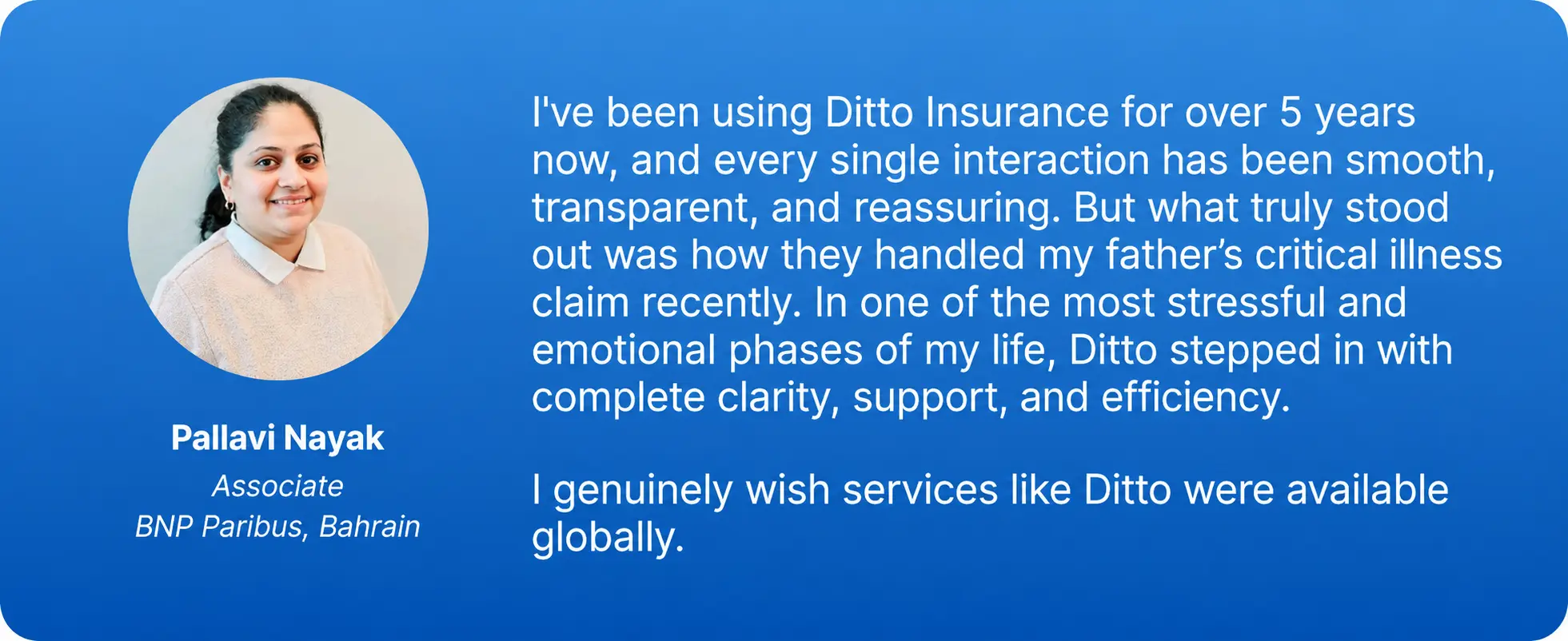
At Ditto, we’ve assisted over 12,00,000 customers with choosing the right insurance policy. Why customers like Pallavi love us:
- 100% Free Consultation
- No Spam. No Sales Pressure.
- Rated 4.9/5 on Google Reviews by 30,000+ Happy Customers
- Backed by Zerodha
- Dedicated Claim Support Team
- Compare Plans and Premiums with a Trusted Insurance Advisor
Confused about the right insurance? Speak to Ditto’s certified advisors for free, unbiased guidance. Book your call now or chat with us on WhatsApp. Slots fill up fast!
Conclusion
Choosing a cashless health insurance plan comes down to how reliably the insurer handles approvals, how quickly it processes claims, and how well the hospital and insurer coordinate during treatment. The right fit depends on what you value most, such as communication, ease of tracking, or hospital access in your city.
When choosing a plan, start with the policy itself. Look for an adequate base cover, manageable waiting periods, minimal co-payments and sub-limits, sensible restoration benefits, and access to hospitals you would actually use.
Don’t confuse cashless access with adequate coverage. Cashless only changes how an admissible claim is paid. Your sum insured and policy terms determine how much financial protection you actually have.
Frequently Asked Questions
Last updated on: