SBI cashless health insurance is a facility offered by SBI General Insurance that allows you to receive medical treatment at designated hospitals without paying upfront. The insurer settles eligible medical expenses directly with the hospital, eliminating out-of-pocket transactions.
SBI General Insurance has 16,600+ network hospitals across India and a 3-year average Claim Settlement Ratio of 96.14% (FY 2022-25), making it a reliable cashless option. For example, a ₹1.5 lakh gallbladder surgery at a network hospital can be settled on a cashless basis by the insurer, while you pay only for non-covered items or deductibles as per your policy terms.
This guide is for anyone evaluating SBI health plans or trying to figure out how cashless claims actually work.
Picture this: you're rushed to the hospital at midnight. The last thing you want is to arrange ₹2 lakh on the spot before the doctor even starts the treatment.
That is exactly the problem SBI cashless health insurance solves. Instead of paying upfront and chasing reimbursements later, SBI General settles the bills directly with the hospital. You just focus on getting better.
In this article, you will find SBI health insurance plans that offer cashless treatment, how the cashless process works, types of claims, and how to find a network hospital near you.
Not sure which hospital around you offers cashless treatment for your SBI policy? Book a call or WhatsApp us for clarity.
Popular SBI Health Insurance Plans That Offer Cashless Claims
35+ optional covers, including critical illness, hospital daily cash, and maternity. 2-year waiting period for PEDs, with the option to reduce it to 1 year
Pre-hospitalization is covered for 30/60 days, and post-hospitalization for 60/180 days. Optional Cumulative bonus of 50% up to 200% of SI in case of no claims.
₹5 lakh to ₹4 crore (above your chosen deductible)
A variety of add-ons, like maternity cover and unlimited restoration. Pre-hospitalization is covered for 60 days, and post-hospitalization for 90 days.
Talk to an expert today and find the right insurance for you.
How SBI Cashless Health Insurance Works
Step 1: Find a network hospital. Use the SBI hospital locator to confirm your preferred hospital is in the network. Always call the hospital directly to double-check before your admission date.
Step 2: Inform the insurer about the hospitalization. For planned hospitalization, do this at least 48 hours before admission. For emergencies, get admitted first and notify SBI within 24 hours of admission. Missing this window can shift your claim from cashless to reimbursement.
Step 3: Head to the hospital's insurance desk. Show your SBI health card or policy document along with a valid photo ID such as Aadhaar or PAN.
Step 4: The hospital completes the pre-authorization form with your diagnosis, treatment plan, and estimated costs, then sends it directly to SBI. You just need to verify that your details are accurate.
Step 5: Wait for approval. Once approved, a pre-authorization letter is sent to the hospital, and you can proceed with your treatment.
Step 6: Undergo your treatment. At discharge, review the final bill carefully and sign all documents. SBI settles the approved amount directly with the hospital. You pay only for non-payable items, deductibles, or exclusions, if any.
Please Note
As per IRDAI's Master Circular on Health Insurance, the insurer must decide on cashless authorization within 1 hour of receiving the request and issue the final discharge authorization within 3 hours of the hospital's request.
If your cashless request is declined, it does not mean your claim is rejected or that treatment is denied. You can still go ahead with treatment, pay the bills, and file for reimbursement afterward.
Types of Health Insurance Claims
Basis
Cashless Claims
Reimbursement Claims
How it Works
The insurer pays the eligible bill to the hospital directly on your behalf.
You pay the hospital first and claim the amount back later.
Usage
Network hospitals only
Any facility, including non-network hospitals
Upfront Payment
Not required, except for non-payable items
Required in full at the time of discharge
Paperwork
Minimal, the hospital handles most of it
Higher, you collect and submit all original documents yourself
Settlement Speed
Faster, the insurer settles directly with the hospital
Slower, depends on document review and processing time
Pre-Authorization
Required before or shortly after admission
Not required, but timely intimation is still recommended
Suitable When
Your preferred hospital is in the network
You are at a non-network hospital, especially in an emergency
Did You Know?
SBI General also offers the Cashless Everywhere feature that extends cashless access beyond the standard network. The catch is timing. For planned treatments, the pre-authorization must go in at least 48 hours before admission. For emergencies, you have 48 hours from the time of hospitalization. Act within that window, or the request will not be considered under this option.
However, we at Ditto suggest opting for cashless via network hospitals whenever possible. Applicability of Cashless Everywhere is subject to the insurer's approval, the hospital’s acceptance, and policy terms.
SBI Health Insurance Cashless Network Hospitals: How to Find One Near You
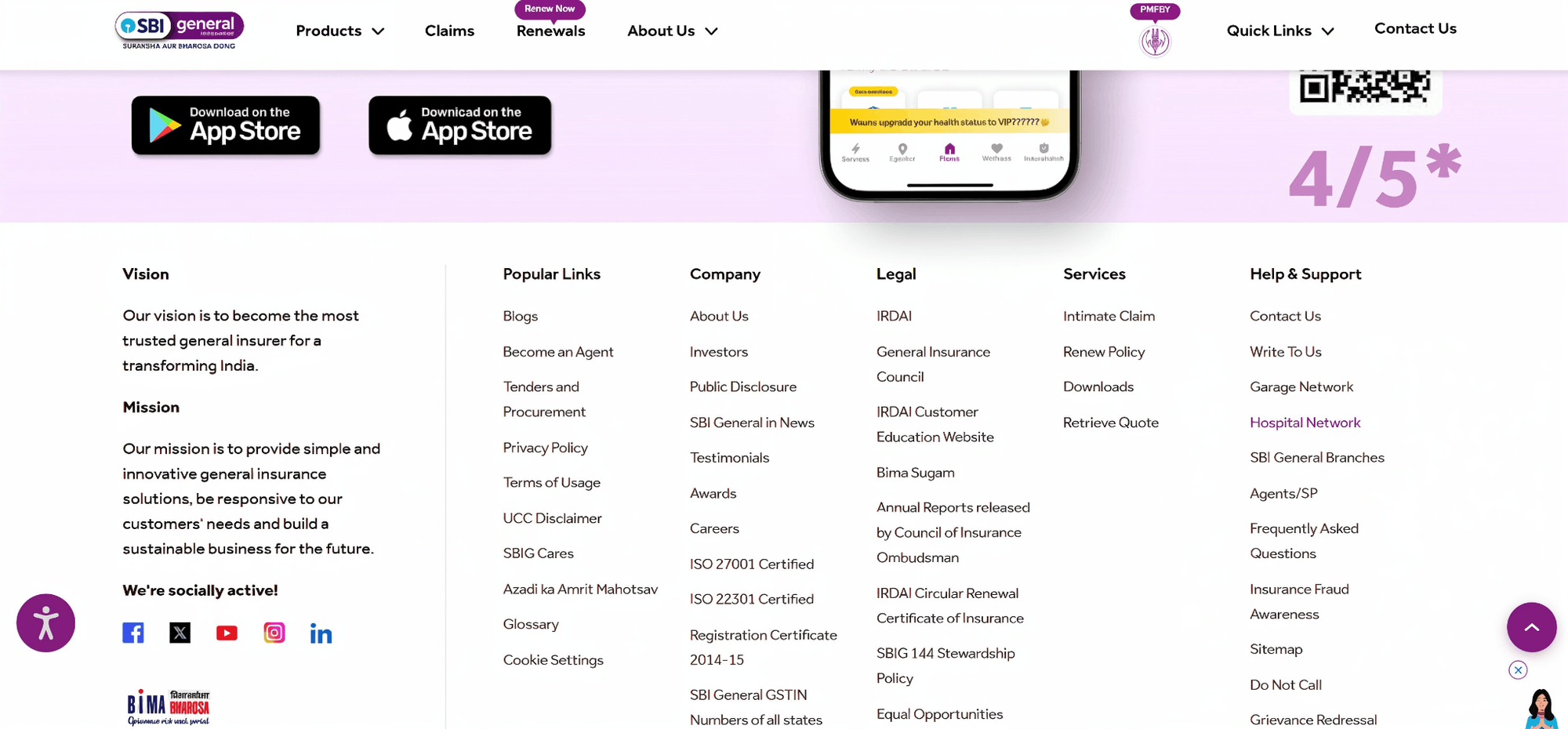
Navigate to the bottom of the home page and click “Hospital Network” under the “Help & Support” option.
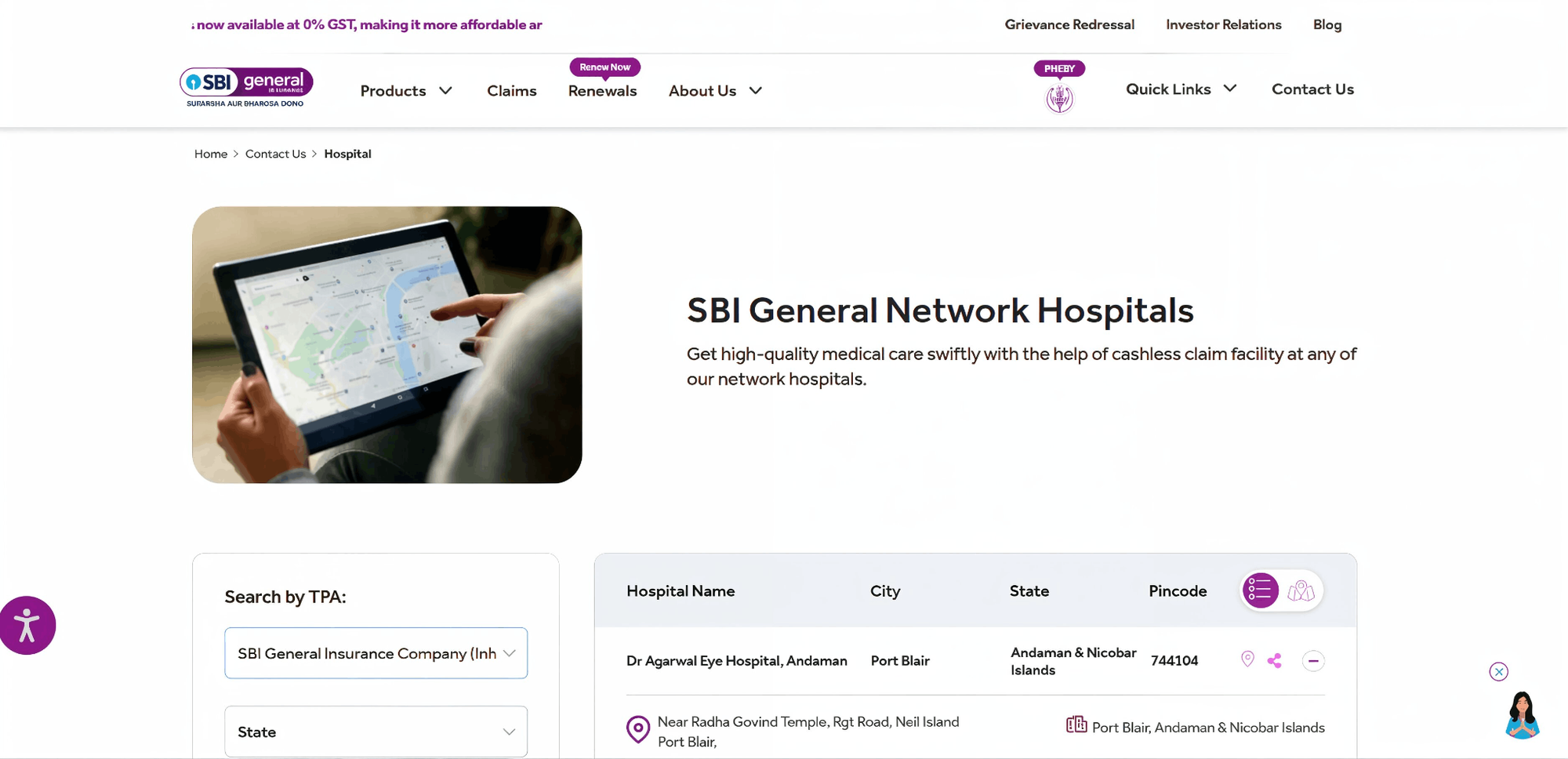
Select the in-house option, enter your state and city, then click “Locate Hospital”. In case a Third-Party Administrator (TPA) is involved, select the correct one from the drop-down options.
Alternatively, you can find a nearby hospital by entering your pincode or hospital name.
Note: The SBI health insurance app makes it easier to find nearby network hospitals in just a few taps. Download it from the App Store or Google Play Store and check hospital details anytime for online convenience.
Key Insight
Even with a cashless policy, some hospitals ask for a small security deposit upfront, ranging from ₹5,000 to ₹50,000, depending on the treatment and the hospital's arrangement with the insurer. This is not a claim payment. The hospital holds it temporarily, deducts any non-payable items at discharge, and refunds the remaining balance once the insurer settles the final bill.
Why Choose Ditto for Health Insurance?
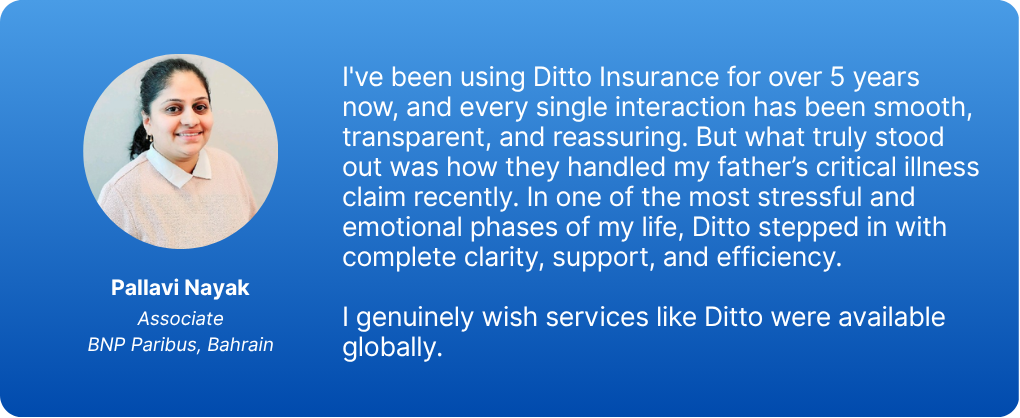
At Ditto, we’ve assisted over 8,00,000 customers with choosing the right insurance policy. Why customers like Pallavi below love us:
No-Spam & No Salesmen
Rated 4.9/5 on Google Reviews by 22,000+ happy customers
SBI General is a solid choice if you want cashless health coverage backed by a financially stable insurer with a wide hospital network. The key is to use it right.
Always check the hospital network before you need it, not during an emergency. Notify SBI on time, whether that is 48 hours before a planned admission or within 24 hours of an emergency hospitalization. And when in doubt, always choose cashless over reimbursement.
If you are still deciding between plans, the Super Health Platinum Infinite is worth a closer look for its comprehensive coverage, while Health Alpha works well if you prefer to build your plan around your own needs. If neither feels like the right fit, our guide to thebest health insurance plans in India covers top options from various insurers to help you compare.
Frequently Asked Questions
Can I use cashless treatment at any hospital in India with SBI health insurance?
You can use cashless treatment at any of SBI General's 16,600+ network hospitals. However, SBI also offers a Cashless Everywhere feature that extends cashless access to select non-network hospitals, subject to certain conditions. For planned treatments, the pre-authorization request must go in at least 48 hours before admission. For emergencies, you have 24 hours from the time of hospitalization. This feature still depends on the specific hospital's cooperation and the insurer's approval, so confirm availability directly with the hospital before relying on it.
Does SBI health insurance use a TPA or settle claims in-house?
SBI General uses an in-house claims settlement team for retail (personal) health insurance policies. Third-Party Administrators (TPAs) are primarily used for group insurance claims. TPAs streamline documentation and billing formats across hospitals, reducing operational chaos. They maintain digital records, making tracking easier. However, at Ditto, we prefer insurers with in-house claims teams such as HDFC ERGO, Care Health, and Aditya Birla because they tend to deliver a faster, smoother claims experience than the typical TPA-driven process. This is an important but often overlooked detail when comparing health insurers in India.
What should I do if a network hospital refuses cashless treatment under my SBI health insurance?
If a network hospital refuses cashless treatment, you have two options. First, ask the hospital to contact SBI General directly again, as refusals are sometimes due to documentation issues that can be resolved quickly. Second, if the hospital still refuses, you can pay the bills yourself and file a reimbursement claim by submitting original documents to SBI General's Health Vertical Office in Pune. Per IRDAI guidelines, network hospitals are also expected to work toward broader cashless access. At Ditto, we suggest always verifying cashless availability with the hospital before admission to avoid last-minute surprises.
Does SBI health insurance use a TPA or settle claims in-house?
As per IRDAI's Master Circular on Health Insurance, insurers must approve or reject a cashless authorization request within 1 hour of receipt and issue a final discharge authorization within 3 hours of the hospital's request. Any extra costs arising from delays beyond these timelines must be borne by the insurer, not you. If the insurer misses either window without explanation, escalate through customer support or the IRDAI grievance portal. These mandatory timelines are designed to reduce the stress of waiting for approvals during hospitalization.
What documents are required for an SBI cashless claim?
For cashless claims under SBI health insurance, you need your health insurance card, a valid photo ID proof, and a doctor’s prescription or admission advice. The hospital’s insurance or TPA desk handles most documentation, including the pre-authorization form and medical details. You only need to verify your identity and policy information. At discharge, review the final bill carefully to ensure only non-covered items are charged to you. Keeping documents required for a health claim accurate helps avoid disputes and ensures smooth settlement between the insurer and hospital.
How do I file a cashless claim at the SBI health insurance hospital?
For a cashless claim under SBI health insurance, start by confirming if the hospital is a network hospital of the insurer. At admission, share your health card or policy details at the insurance desk. The hospital submits a pre-authorization request with your diagnosis, treatment plan, and estimated cost. Once approved, the insurer settles eligible expenses directly with the hospital. You only pay for non-payable items, deductibles, or exclusions. This process reduces upfront financial burden and makes hospitalization more manageable and less stressful during medical treatment.
What is SBI’s claim settlement ratio, and is it good enough?
SBI General health insurance Claim Settlement Ratio (CSR) stands at 96.13% for FY 2024-25, while the 3-year average (FY 2022-25) is 96.14%. That's well above the industry average of 91.22%, which puts the insurer in a competitive and safe position. At Ditto, we recommend that CSR be an important factor, but not the only deciding one. You should also look at the Incurred Claim Ratio (ICR), complaint volume, and how well the insurer's plans fit your actual coverage needs before making a decision.
What is the difference between cashless and reimbursement claims in SBI health insurance?
With cashless claims, SBI General pays the hospital directly, and you pay nothing upfront (except for non-covered items). With reimbursement claims, you pay the hospital first, then submit original bills and documents to SBI for a refund. Per IRDAI's 2024-25 annual report, 58% of all health insurance claims in India were settled in a cashless mode, and 66.35% of the total claim amount was paid through cashless settlements. Cashless is generally faster and involves far less paperwork, which is why we recommend using it whenever possible at Ditto.