



Overview
Imagine you're rushed to a hospital that isn't on your insurer's list. Under the old rules, you'd pay the entire bill upfront and claim reimbursement later, a process that can take weeks.
To solve this exact problem, in January 2024, the General Insurance Council (GIC) tried to close this gap with Cashless Everywhere, a rule that lets you use cashless treatment at any hospital, network or not. But over two years later, has it actually delivered on that promise?
This article discusses what Cashless Everywhere means, how to use it step by step, whether IRDAI has backed it with implementation rules, why hospitals keep pushing back, and what to do if one refuses you.
What Is Cashless Everywhere in Health Insurance?
Cashless Everywhere is an industry initiative launched by the General Insurance Council. It is an extension of regular cashless treatment, which usually works at network hospitals that have an agreement with your insurer. Everywhere else, you'd have to pay first and claim later (reimbursement).
The Cashless Everywhere facility asks the insurer and an eligible non-network hospital to agree on one-time terms for your treatment.
It is not an unconditional right to cashless care at every hospital. The claim must be admissible, the insurer's operating guidelines must allow it, and the hospital must accept the arrangement.
The phrase health insurance Cashless Everywhere refers to removing the network restriction where possible. However, it does not remove exclusions, waiting periods, copayments, deductibles, sub-limits, or the sum insured. That’s decided based on your policy wordings.
How Does Cashless Everywhere Work? Eligibility, Intimation, and Documents
Using health insurance Cashless Everywhere comes down to timing and documentation:
- Planned Admission: Inform your insurer at least 48 hours before you're admitted.
- Emergency Admission: Inform them within 48 hours of being admitted, once things are stable.
You'll need your policy number, the hospital's name and address, the treating doctor's details, and the expected diagnosis or procedure. Once notified, the insurer contacts the hospital directly to work out a one-time treatment package, then issues a pre-authorization if it's approved.
For example, with Niva Bupa Cashless Everywhere, you or the hospital desk can raise the request through Niva Bupa's online cashless intimation portal or its 24/7 helpline (1860-500-8888). If you'd rather use email, customercare@nivabupa.com handles general Cashless Everywhere queries, though the portal or helpline is usually faster.
Note: Niva Bupa is mentioned here for reference based on publicly available information and is not a claim about coverage guarantees.
Is Cashless Everywhere Backed by IRDAI? The GIC Initiative Versus the Master Circular
Cashless Everywhere itself was launched by the General Insurance Council (GIC), an industry body of insurers, not by an IRDAI circular naming the scheme. GIC rolled it out on January 24, 2024, after consulting with insurers.
That doesn't mean it's unregulated, though. On May 29, 2024, IRDAI issued its Master Circular on Health Insurance Business, which requires insurers to authorize cashless requests within one hour, clear final discharge within three hours of the hospital's request, and work toward 100% cashless settlement, regardless of whether the hospital is in the insurer's network.
So while GIC built Cashless Everywhere, it's IRDAI's rules that set the implementation timelines for the cashless promise. However, it does not force every non-network hospital to participate. Moreover, the timelines apply after a valid request reaches the insurer, but the hospital may still decline the proposed tariff or process.
Benefits of Cashless Everywhere Over Reimbursement
Reimbursement means paying the full bill (sometimes lakhs of rupees) yourself first, then waiting weeks to get it back. The Cashless Everywhere facility changes that.
No Upfront Lump Sum
Wider Hospital Choice
Useful While Traveling
Less Paperwork
Note: Cashless does not always mean zero payment. You may still pay deductibles, copays, non-medical items, excluded costs, sub-limits, or amounts above the available sum insured.
Talk to an expert
today and
find
the right
insurance for you.


Why Hospitals Still Refuse Cashless Everywhere?
On paper, this sounds simple. In practice, hospitals push back, and it comes down to economics.
Directly From Experts
Hospitals and insurers typically team up because it helps both sides.
Insurers can advertise a larger network, and hospitals get patient volume
from an insurer's local customer base. Who gets the better tariff depends
on leverage. A well-known hospital doesn't need the volume, so it won't
discount much. A lesser-known one will, because the tie-up brings it
patients it wouldn't otherwise get.
Cashless Everywhere effectively asks a hospital to extend a one-off patient
the same discount it only agreed to for a full, ongoing partnership, which
is why bigger hospitals resist it the most.
An established hospital may reject a one-time discounted tariff, while a
smaller hospital may value the additional patient volume. Both sides may
also need time to verify rates, documents, and payment terms.
This makes Cashless Everywhere more practical for planned admissions than
emergencies, since the hospital and the insurer both have more time to
negotiate.
Note: A refusal can be commercial or operational even when the treatment is covered.
How to Use Cashless Everywhere and Escalate a Refusal?
1) Confirm that the treatment is covered and ask whether the hospital will process a non-network cashless request.
2) Notify the insurer within the applicable 48-hour window.
3) Share the requested policy, hospital, and treatment details.
4) Ask for any approval, query, or rejection in writing.
5) If refused, ask whether the reason is coverage, missing information, hospital non-acceptance, or an insurer process issue.
How to Escalate a Cashless Everywhere Claim Refusal?
Complain to the insurer's Grievance Redressal Officer first. If the response is unsatisfactory, use IRDAI's Bima Bharosa portal. You may approach the Insurance Ombudsman after an unsatisfactory response or no insurer reply within 30 days.
Note: If final discharge authorization takes more than three hours after the insurer receives the hospital's request, the insurer must bear additional hospital charges caused by that delay. This does not cover hospital delays or missing documents.
Reimbursement may remain available if the treatment is covered and you meet the filing requirements. If cashless was rejected because the treatment is excluded, reimbursement may also be rejected.
Why Choose Ditto for Health Insurance?
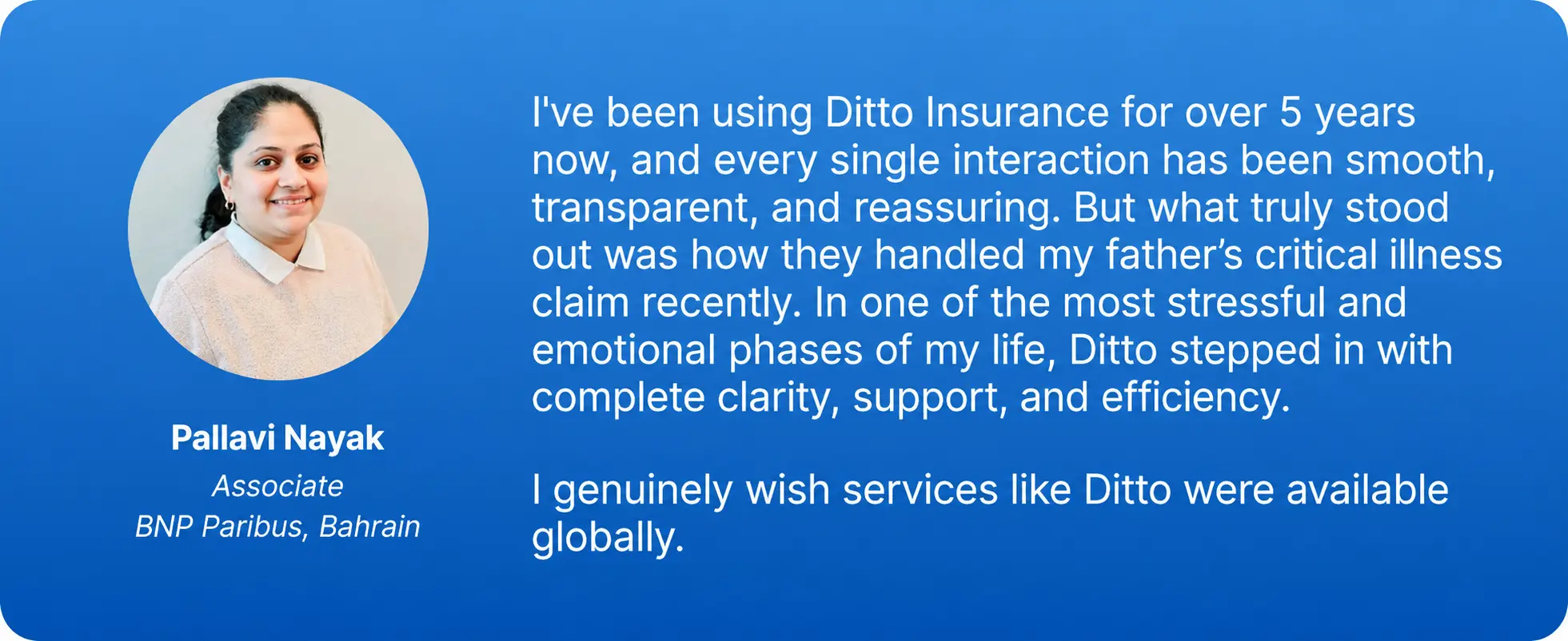
At Ditto, we’ve assisted over 12,00,000 customers choose the right insurance policy. Why customers like Pallavi love us:
- 100% Free Consultation
- No Spam. No Sales Pressure.
- Rated 4.9/5 on Google Reviews by 30,000+ Happy Customers
- Backed by Zerodha
- Dedicated Claim Support Team
- Compare Plans and Premiums with a Trusted Insurance Advisor
Confused about the right insurance? Speak to Ditto’s certified advisors for free, unbiased guidance. Book your call now or chat with us on WhatsApp. Slots fill up fast!
Ditto's Take
Cashless Everywhere is a useful backup, not a substitute for a strong hospital network. If you're buying a new policy, still prioritize insurers with a strong network of hospitals you'd realistically use, and keep your policy number and the insurer's helpline saved before you ever need them. If a valid claim request is delayed or refused, get the reason in writing and escalate promptly.
Frequently Asked Questions
Last updated on: