



![Manipal Cigna Health Insurance Premium Chart [2026]](https://stat.joinditto.in/images/2026/07/Manipal-Cigna-Health-Insurance-Premium-Chart@2x-22.webp)
Overview
Two people buying the same Manipal Cigna Health Insurance plan can pay very different premiums. That's because insurers calculate premiums based on your individual risk profile, not just the plan you choose.
This guide explains the Manipal Cigna premium chart, estimated premiums across plans, the factors that influence your final quote, and how to compare costs before buying a policy.
What Is the Manipal Cigna Health Insurance Premium Chart?
Manipal Cigna Health Insurance does not have a single premium chart for every plan. Premiums vary across products such as Manipal Cigna Sarvah, ProHealth Prime, Prime Senior, and ProHealth Select. Even within the same product, premiums vary by plan variant, age, sum insured, city, family composition, deductible, optional add-ons, and medical underwriting.
While Manipal Cigna publishes sample premium illustrations for selected plans, these are only indicative. Your actual premium is calculated individually after considering your chosen plan, coverage amount, age, location, family structure, medical history, optional benefits, and available discounts.
Sample Manipal Cigna Health Insurance Premiums by Age and Sum Insured
Note: A refers to Adult and C refers to Child. As there is no standard premium chart, the above illustrations are sourced from the Sarvah Param benefit illustration. The figures above are illustrative premiums for a ₹10 lakh policy (available for the entire family) in Zone 1, based on a one-year policy with mandatory base benefits and standard underwriting (no medical loading).
Talk to an expert
today and
find
the right
insurance for you.


ProHealth vs Sarvah Uttam Premium Comparison
Note: A refers to adult and C refers to child. Premiums shown are annual estimates for a ₹15 lakh cover in Delhi (110010). Actual premiums may vary based on age, health profile, underwriting, discounts, and city of residence.
Premiums for ProHealth Prime include an add-on for room modification, a cumulative bonus, and non-payable items. While premiums for the Manipal Cigna Sarvah plan include add-ons for restoration, coverage for non-medical items, room modification, health check-up, and a bonus.

Factors That Affect Your Manipal Cigna Health Insurance Premium
Product and Plan Variant
Your premium depends on the product and variant you choose. Plans like ProHealth Prime, Lifetime Health, and Prime Senior offer different levels of coverage, features, and flexibility. Even variants within the same product come with different benefits. Never compare premiums without comparing benefits.
Age of the Insured
Age is one of the biggest factors that affect your premium. As you grow older, the chances of hospitalization and medical expenses increase, so insurers charge higher premiums. For family policies, the oldest member’s age has the biggest impact on pricing. It is better to buy a separate policy for senior parents instead of adding them to a younger family's floater plan.
Individual, Multi-Individual, or Family Floater
An individual plan gives each person separate coverage. A multi-individual policy covers multiple members, but each gets an independent sum insured. A family floater lets everyone share one common sum insured. Do not assume every family policy is a floater. Shared coverage and separate coverage work very differently during claims.
Sum Insured
A higher sum insured increases your premium, but not always in the same proportion. Moving from ₹5 lakh to ₹10 lakh usually costs less than simply doubling your existing premium because insurers price different coverage levels differently. Always calculate the premium for your chosen sum insured instead of estimating it from another coverage amount.
City or Pricing Zone
Your location also affects the premium. Treatment costs differ across cities, so insurers classify locations into pricing zones. Higher-cost cities generally attract higher premiums than smaller towns. Check whether your policy has zonal co-payment conditions. A lower premium today could mean higher out-of-pocket expenses if you receive treatment in another city.
Pre-Existing Diseases and Underwriting
Online premium charts show rates for healthy applicants. Once you apply, the insurer reviews your medical history before issuing the policy. They may accept your proposal, increase the premium, modify the cover, or decline it.
Optional Covers and Add-Ons
You can customize your policy with add-ons such as maternity cover, non-medical expenses, critical illness, personal accident, international treatment, or waiting period reduction. Each add-on increases the premium. Buy add-ons only if you expect to use them.
Deductible and Co-Payment
A deductible is the fixed amount you pay before the insurer starts paying. A co-payment means you share a percentage of every claim. Choosing either option usually reduces your premium. A lower premium can sometimes lead to much higher claim expenses. Always understand how much you may need to pay out of pocket.
Policy Tenure and Payment Mode
ManipalCigna offers one-year, two-year, and three-year policy options. Longer policy terms often come with premium discounts. Payment frequency may also affect your total cost. A long-term discount only applies during the chosen policy period. At renewal, your premium may still increase because of age, pricing revisions, or product updates.
Manipal Cigna Health Insurance Claim Settlement Ratio and Review
Manipal Cigna is a decent health insurer for buyers seeking comprehensive coverage with ample customization options. It has maintained a strong average Claim Settlement Ratio (CSR) of 92.69% during FY 2024–26, reflecting consistent claim settlement performance across its portfolio. If you wish to explore more such insurer metrics, refer to the Ditto Data Lab.
However, it operates on a smaller scale than many peers and records higher complaint volumes (the average complaint volume was 32 complaints per 10,000 claims during FY 2024–FY 2026) than leading standalone health insurers such as Aditya Birla Health Insurance.
Additionally, policies purchased or renewed before December 22, 2025, are administered through Third-Party Administrators (TPAs), such as Medi-Assist, for cashless services, depending on the policy terms applicable at the time of issuance or renewal.
However, the quality of service can vary across TPAs, which may lead to incorrect information, delays, and repeated follow-ups for policyholders. Additionally, incomplete hospital documentation, coordination issues, and high claim volumes can slow pre-authorizations and the processing of non-urgent claims.
Why Choose Ditto for Health Insurance?
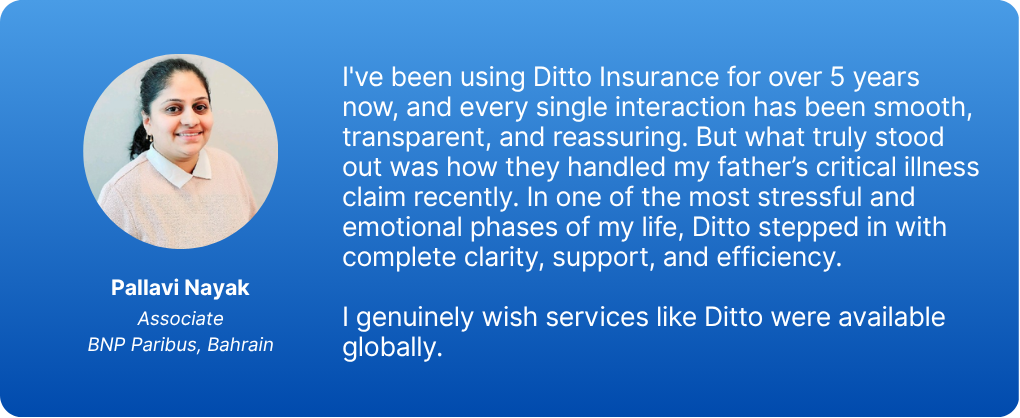
At Ditto, we’ve assisted over 8,00,000 customers with choosing the right insurance policy. Why customers like Pallavi below love us:
- No-Spam & No Salesmen
- Rated 4.9/5 on Google Reviews by 25,000+ happy customers
- Backed by Zerodha
- Dedicated Claim Support Team
- 100% Free Consultation
Confused about the right insurance? Speak to Ditto’s certified advisors for free, unbiased guidance. Book your call now or chat with our advisors on WhatsApp.
Conclusion
Manipal Cigna offers strong product flexibility and comprehensive health insurance options, making it a solid choice for many buyers. However, don't judge a plan by its premium alone. Compare benefits, claim experience, insurer metrics, and long-term value before you decide. You should choose among the best health insurance plans as they protect you when you actually need them, not simply the one with the lowest premium.
Frequently Asked Questions
Last updated on: