Overview

Government health insurance schemes in India include national and state-level programs, which provide free or low-cost, cashless access to healthcare for vulnerable and economically disadvantaged citizens. India's flagship scheme is Ayushman Bharat-Pradhan Mantri Jan Arogya Yojana (AB PM-JAY), which covers approximately 55 crore beneficiaries with a ₹5 lakh cover per family per year for secondary and tertiary care.

Other key programs include the Central Government Health Scheme (CGHS) for central government employees and the Employees' State Insurance Scheme (ESIC) for organized-sector workers. 

This guide is for middle-class families, salaried employees, and senior citizen households trying to figure out whether a government health insurance scheme is enough.

India's medical inflation hit 13%-14% in 2025, nearly triple the general Consumer Price Index (CPI) rate. That number compounds every year. A treatment that costs ₹5 lakh today will cost roughly ₹8 lakh in 4 years. So what does that mean for your health cover?

Take government schemes as a starting point. Government health schemes like PM-JAY cap cover at ₹5 lakh per family per year. That's a meaningful safety net for low-income households. But for a middle-class family dealing with a serious illness at a top private hospital, it may run out fast.

This guide covers every major government health insurance scheme in India, what each one covers, who qualifies, and most importantly, whether you should rely on it alone.

Key Central Government Health Schemes 

1) Ayushman Bharat PM-JAY

Ayushman Bharat PM-JAY is the world's largest government-funded national health insurance scheme. Launched in 2018, it provides ₹5 lakh per family per year for cashless secondary and tertiary hospitalization. It covers 1,900+ procedures as per set packages with empaneled public or private hospitals, along with associated expenses. Notably, there are no waiting periods under the plan. 

The Ayushman Bharat health insurance scheme covers surgeries, ICU stays, diagnostics, and pre- and post-hospitalization expenses for listed procedures. The insured members can also link the PM-JAY benefit to their ABHA Card to store digital medical records and access services quickly. 

The scheme is funded by a combination of central and state government funds. 

Did You Know?

PM-JAY was expanded in 2024 to cover all Indian citizens aged 70 and above, irrespective of income. Eligible senior citizens receive a distinct Ayushman card, commonly referred to as the Ayushman Vay Vandana Card, for cashless secondary and tertiary hospital treatment of up to ₹5 lakh under AB PM-JAY. It is a great move because an estimated 6 crore senior citizens across about 4.5 crore families fall in the 70+ age group.

2) Central Government Health Scheme (CGHS)

CGHS covers serving and retired central government employees, Members of Parliament (MPs), and their dependents. It is more comprehensive than PM-JAY because it includes Outpatient Department (OPD) consultations, routine diagnostics, and medicines. Treatment is available at government dispensaries and empaneled private hospitals.

CGHS has an annual budget of ₹2,370 crore for 2025-26. So, if you are a central government employee, pensioner, or dependent, CGHS is one of the most comprehensive government schemes available.

3) Employees' State Insurance Scheme (ESIC)

ESIC covers organized-sector employees earning up to ₹21,000 per month (₹25,000 for persons with disabilities). Both employer and employee contribute to the scheme. It covers hospitalization, maternity, disability, and dependents' care in the event of a work-related death. The scheme now covers 668 districts across India. 

Key Insight

New Labour Code (November 2025): Under the Code on Social Security (effective November 21, 2025), ESIC now calculates contributions based on basic salary plus Dearness Allowance (DA), not on gross salary. Employees with salary structures that kept basic pay artificially low may now fall under ESIC coverage even at higher gross salaries.

4) Niramaya Health Insurance Scheme

Niramaya covers persons with Autism, Cerebral Palsy, Mental Retardation, or Multiple Disabilities. It provides up to ₹1 lakh per year on a reimbursement basis. Anyone holding a valid disability certificate and a Unique Disability ID (UDID) card is eligible, with no age limit and no pre-enrollment medical test.

Coverage includes hospitalization, OPD, physiotherapy, speech therapy, dental care, and transport costs. You can get treated at any hospital. The annual premium is ₹250 for Below Poverty Line (BPL) beneficiaries and ₹500 for others, and it does not increase with age. You can enroll through the National Trust or a registered disability organization. 

5) Pradhan Mantri Surakshit Matritva Abhiyan (PMSMA)

PMSMA guarantees free antenatal care to all pregnant women in India. On the 9th of every month, any woman in her second or third trimester can visit a designated government health facility for a full checkup, including blood tests, an ultrasound, blood pressure monitoring, and nutritional counseling. The scheme is free of cost, and there is no income-based eligibility.

The simple goal is to catch high-risk pregnancies early and reduce maternal mortality.

One thing to keep in mind: PMSMA is not a health insurance scheme. It does not cover hospitalization costs. For actual maternity cover, you can consider your employer-provided policy or rely on savings.

CTA

Key State-Level Government Health Schemes

Most states run their own government-funded health insurance schemes, either in addition to or integrated with PM-JAY.

SchemeStateSum InsuredEligibility
Chief Minister’s Comprehensive Health Insurance Scheme (CMCHIS)Tamil NaduUp to ₹5 lakh per year Families with an annual income below ₹1.2 lakh.
Mukhyamantri Amrutum (MA) YojanaGujaratUp to ₹5 lakh per year (₹10 lakh after PMJAY-MA integration in Gujarat)BPL and low-income families with an annual income of up to ₹4 lakh.
Swasthya SathiWest BengalUp to ₹5 lakh per year Permanent residents of West Bengal who don’t receive a medical allowance with their salary.
Karunya Arogya Suraksha Padhathi (KASP)KeralaUp to ₹5 lakh per year Low-income and vulnerable families identified by the government.
Dr. NTR Vaidya SevaAndhra PradeshUp to ₹25 lakh per year Families with an annual income under ₹5 lakh.
Chirayu Ayushman SchemeHaryanaUp to ₹5 lakh per year Families with an annual income below ₹1.80 lakh with a valid Parivar Pehchan Patra (PPP). Coverage for higher income slabs is available at a nominal premium.
Mukh Mantri Sehat Yojana (Earlier Sarbat Sehat Bima Yojana)PunjabUp to ₹10 lakh per year Bonafied resident of Punjab regardless of income, caste, or age.

Note: For a detailed state-wise breakdown, including how to apply, see our full guide on state government health insurance schemes

Is Government Health Insurance Enough for You?

For a family with no other coverage and limited income, government health insurance can be the difference between getting treated and not being treated. That matters, and it should not be dismissed.

But if you are a middle-class family with a salaried income, aging parents, or anyone in the household with a chronic condition, relying on a government scheme as your only health cover is a financial risk. 

The ₹5 Lakh Cap Is Not Enough

Medical inflation in India has been rising sharply. What costs a few lakh today will cost significantly more in just a few years, and serious conditions like cancer, heart disease, or a prolonged ICU stay can push expenses well beyond what most government schemes cover in an entire year. Once the cover runs out, there are no top-ups, riders, or restoration.

Hospital Access May Be Limited 

The majority of hospitals under government schemes are smaller facilities. Top-tier hospitals like Apollo, Fortis, and Manipal are largely outside the network. Even empaneled hospitals sometimes stop accepting government cards when reimbursement payments are delayed. If you want treatment at the hospital and doctor of your choice, a government scheme cannot reliably deliver that.

Consultations, Diagnostics, and Medicines Are All Out-of-Pocket

PM-JAY and most state schemes cover hospitalization only. Routine doctor visits, lab tests, and medicines outside a hospital stay are not covered. This matters because a large part of healthcare spending in India happens at the OPD level, not through admissions. CGHS covers OPD for central government employees, but only a limited portion of the population. For everyone else, outpatient costs remain fully out-of-pocket.

Government Schemes Can Change 

Government health programs depend on annual budget allocations, state-level implementation, and political continuity. PM-JAY's hospital network, package rates, and eligibility criteria have changed multiple times since 2018. A scheme that covers a procedure today may not cover it next year.

On the other hand, a private health insurance policy is a legal contract with a licensed insurer regulated by IRDAI. The terms you buy are the terms you get, and the insurer cannot change them arbitrarily at renewal. 

Have a look at the infographic below to compare government health insurance schemes and private insurers to get a better understanding: 

Government Health Schemes vs Private Health Insurers

Why Choose Ditto for Health Insurance? 

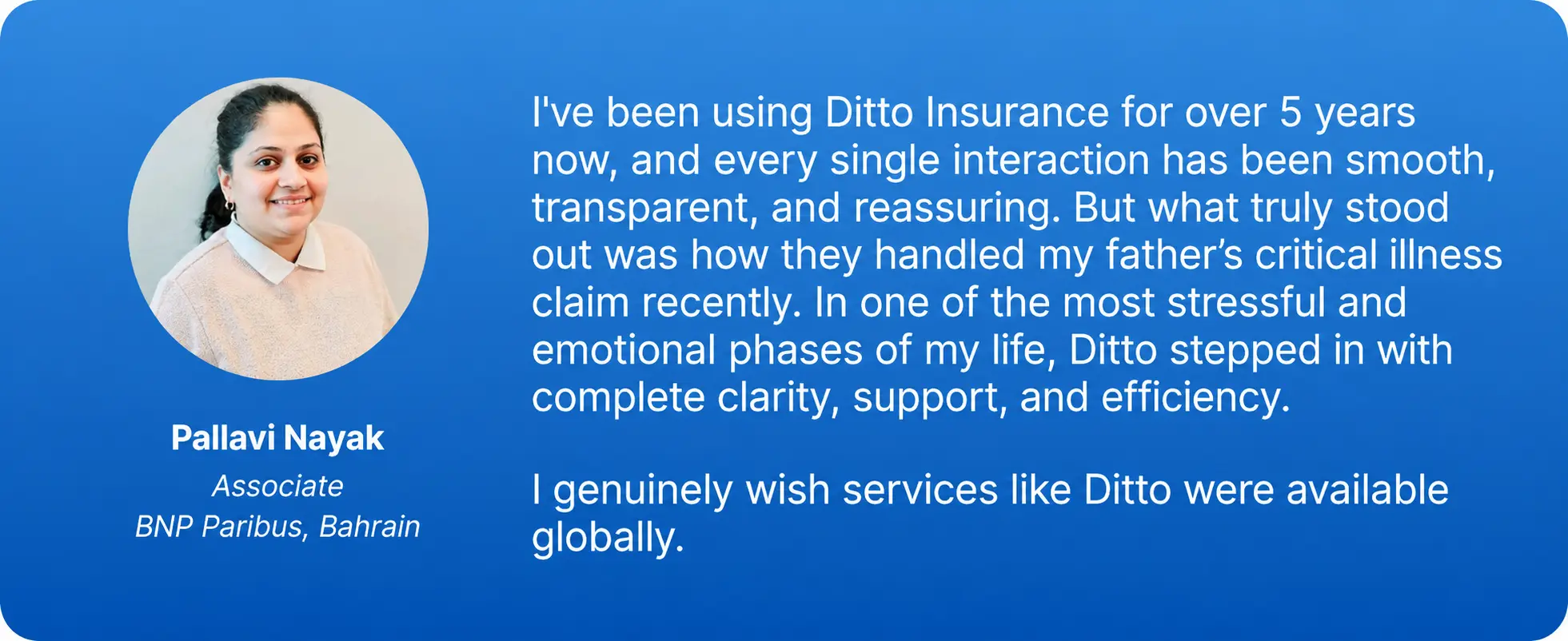
At Ditto, we’ve assisted over 8,00,000 customers with choosing the right insurance policy. Why customers like Pallavi below love us:

Government Health Insurance Schemes
    • No-Spam & No Salesmen
    • Rated 4.9/5 on Google Reviews by 24,000+ happy customers
    • Backed by Zerodha
    • Dedicated Claim Support Team
    • 100% Free Consultation

Confused about the right insurance? Speak to Ditto’s certified advisors for free, unbiased guidance. Book your call now or chat with our advisors on WhatsApp.

Conclusion

Government health insurance schemes in India cover a large segment of the population. PM-JAY reaches 55 crore beneficiaries. CGHS protects the central government and its employees. ESIC covers the organized-sector workforce. State schemes such as Swasthya Sathi, Aarogyasri, and HIMCARE add another layer of coverage for eligible residents.

That is real coverage. But it is not complete coverage. Low sum insured, restricted hospital networks, no OPD benefit, and dependence on political changes will mean these schemes work best as a baseline, not a final answer. 

Ditto's Take: Government health insurance is a safety net, not a replacement for a primary health plan. If you are in the eligible segment, claim it because there is no reason not to. But do not let it substitute for a personal, lifelong, and customizable private policy. The two serve completely different purposes, and ideally, you should have both. If you’re exploring retail policies, have a look at our detailed guide on the best health insurance plans in India.

Frequently Asked Questions

What is the best government health insurance scheme in India?

India's flagship government health insurance scheme is Ayushman Bharat PM-JAY, which covers over 55 crore beneficiaries with cashless hospitalization of up to ₹5 lakh per family per year at more than 32,000 empaneled hospitals. It targets the bottom 40% of the population and covers surgeries, ICU stays, diagnostics, and pre- and post-hospitalization costs for listed procedures. Since October 2024, all citizens aged 70 and above are also eligible, regardless of income. However, whether it is suitable for you depends on factors like your budget, age, pre-existing conditions, and location.

Does government health insurance cover private hospitals in India?

Government health insurance schemes like PM-JAY have a network of over 32,000 empaneled hospitals, but most top-tier private hospitals, such as Apollo, Fortis, and Manipal, are not part of this network. Even hospitals that are formally empaneled sometimes temporarily stop accepting government scheme cards due to delayed reimbursements from the government. This is a significant limitation of government schemes, and at Ditto, we always recommend having a private health insurance plan alongside your government coverage if you want access to the hospital and doctor of your choice.

Is government health insurance enough for middle-class families?

In most cases, government health insurance alone is not enough. PM-JAY caps coverage at ₹5 lakh per family per year, but medical inflation in India is running at 12-14% annually as of 2025, meaning treatment costs are rising quickly. At Ditto, we recommend treating government health coverage as a baseline and supplementing it with a personal, lifelong, renewable private health insurance policy for comprehensive, long-term coverage. You can check the available options in our detailed guide to the best health insurance companies in India

What is ESIC, and who does it cover?

ESIC, or the Employees' State Insurance Scheme, covers organized-sector employees earning up to ₹21,000 per month, or ₹25,000 per month for persons with disabilities. Both the employer and employee contribute to the scheme. ESIC covers hospitalization, maternity benefits, disability, and dependents' care in the event of a work-related death. It currently operates across 668 districts in India. Importantly, under the Code on Social Security, effective November 2025, ESIC will calculate contributions based on Basic and Dearness Allowance (DA) rather than gross salary, which means more employees may fall under its coverage.

What government health insurance schemes exist for senior citizens in India?

Since 2024, all senior citizens aged 70 and above are eligible for PM-JAY regardless of income. They receive a dedicated Ayushman Vay Vandana Card for cashless hospitalization of up to ₹5 lakh per year. State-level schemes like Swasthya Sathi in West Bengal cover all households, and many other state schemes extend coverage to senior citizens in eligible income groups. Central government retirees continue to be covered under CGHS. At Ditto, we recommend checking eligibility for any government senior citizen health insurance scheme and pairing any government coverage with a private top-up or a health plan for complete protection.

Can I have both government health insurance and private health insurance?

Yes, and at Ditto, we recommend it. Government health schemes like PM-JAY cover a specific set of procedures at empaneled hospitals, but they do not cover OPD consultations, have a fixed ₹5 lakh annual cap, and do not provide access to most top-tier private hospitals. A private health insurance policy fills these gaps by offering higher sum insured options, flexible hospital choice, OPD cover as an add-on, and lifelong renewability. Having both gives you a stronger safety net, especially as medical inflation in India continues to rise by around 13-14% per year as of 2025.

Why do government health insurance schemes change over time?

Government health insurance schemes depend on annual budget allocations, policy decisions, and state-level implementation. PM-JAY's beneficiary list, empaneled hospitals, and covered procedures have all changed multiple times since it launched in 2018. Unlike a private health insurance policy, which is a legal contract with an IRDAI-regulated insurer and whose terms cannot be changed arbitrarily at renewal, a government scheme offers no such contractual guarantee. This is one of the key reasons at Ditto we recommend not relying solely on government schemes for long-term healthcare protection.

Can I use PM-JAY and private insurance for the same hospitalization?

Yes, you can use both PM-JAY and a private health insurance policy for the same hospitalization, but you cannot claim the same expenses twice. Under IRDAI guidelines, the two covers complement each other. PM-JAY handles the core treatment costs first, and your private plan covers any remaining balance not paid by PM-JAY. To do this smoothly, inform the hospital about both covers at the time of admission and get a claim settlement summary from PM-JAY before routing the remaining amount to your private insurer. Note that simultaneous cashless claims from both may not always be possible.

Last updated on: