Quick Overview

Government health insurance for senior citizens in India includes schemes such as Ayushman Bharat PM-JAY, the Central Government Health Scheme (CGHS), and various state programs that provide affordable healthcare coverage. 

The most significant scheme today is Ayushman Bharat PM-JAY. Since September 2024, all Indian citizens aged 70 and above qualify for free coverage of ₹5 lakh per year, regardless of income. As of 31 December 2025, under the senior-citizen-focused Ayushman Vay Vandana scheme, over 96.73 lakh cards have been issued. Also, around 10.33 lakh hospital admissions worth ₹2,154.37 crore have been authorized for elderly beneficiaries.

For retired central government employees, CGHS is a strong option, as it covers outpatient department (OPD) expenses along with hospitalization and a wide range of medical services. 

This guide is for seniors aged 60 and above and their families who want to understand eligibility, coverage, and whether they should also consider a private health insurance plan.

As you age, healthcare needs grow more complex, and medical expenses can pile up fast. For senior citizens, this often means dealing with chronic illnesses, frequent hospital visits, and the risk of high-cost treatments that can strain their savings.

Hence, having the right health coverage becomes essential. While private insurance can be costly, government health insurance for senior citizens offers a more affordable option. Let us look at the government health insurance options available to senior citizens in India. 

Ayushman Bharat for Senior Citizens: Coverage and Eligibility

Ayushman Bharat Pradhan Mantri Jan Arogya Yojana (AB PM-JAY) is a major government health insurance scheme for senior citizens in India.

Key Features of PM-JAY for Seniors

    • Universal Coverage: You can apply for this senior citizen health insurance government plan regardless of your socioeconomic status.
    • Coverage Limit: It provides a cover of ₹5 lakh per family per year.
    • Additional Coverage for Seniors: Existing families under AB PM-JAY with a senior citizen 70+ get a special top-up of up to ₹5 lakh.
    • Pre-existing Diseases: This government scheme covers all pre-existing conditions from day one.
    • Cashless Treatment: You can get treated at empaneled hospitals without paying upfront. That said, some private hospitals have paused this facility due to pending dues. Always call the hospital ahead of time before planning an admission. 

Eligibility and Documentation

    • You must be 70 years or older to enroll in this senior citizen health insurance scheme by the Government of India.
    • A valid Aadhaar card linked to an active mobile number is required for OTP-based verification.

Enrollment Process

    • Eligible seniors can get the Ayushman Vaya Vandana Card through the National Health Authority (NHA) beneficiary portal or the Ayushman App using Aadhaar-based e-KYC and face authentication. 
    • If you prefer offline assistance, visit a Common Service Center (CSC) or the help desk of any empaneled hospital, where "Ayushman Mitras" will guide you through the enrollment steps. 
    • Once your details are verified, you can download your card as a PDF and keep a printed copy to ensure a seamless cashless admission process at network hospitals. 

CGHS and Other Central Government Health Schemes

CGHS is the central government health insurance for senior citizens who have retired from central government service. 

    • Who Can Access It: Retired central government pensioners and their dependents: spouse, dependent parents, unmarried children up to 25 years, and unmarried or divorced daughters. 
    • Age Criteria: No minimum or maximum age limit. You stay eligible as long as you draw a central government pension.
    • Health Benefits Covered: Outpatient department (OPD) consultations, specialist referrals, cashless hospitalization, free medicines at Wellness Centers, diagnostics, emergency reimbursements, and preventive health check-ups for members aged 60 and above.
    • Coverage Amount: No fixed sum insured. Treatment at empaneled hospitals is cashless, provided it falls within the CGHS-approved package rates. 
    • Enrollment and Cost: The contribution is based on your last drawn pay level, ranging from ₹250 to ₹1,000 per month. You can pay annually or opt for a lifetime card by paying 10 years' contribution upfront.
    • How to Apply: Visit cghs.nic.in or your nearest CGHS Wellness Center with your Pension Payment Order (PPO), Aadhaar, and dependent proofs. Your card is also accessible digitally via the myCGHS app or DigiLocker.

Fixed Medical Allowance (FMA)

If you live in an area where no CGHS Wellness Center operates, you can opt for the Fixed Medical Allowance instead. You get ₹1,000 per month directly credited to your bank account for day-to-day medical needs. This is modest but still useful for minor OPD expenses. 

CTA

State Government Health Insurance Schemes for Seniors

The senior citizen health insurance government schemes vary widely by state. Here are the major ones to know:

StateScheme NameWho's EligibleCoverage
West BengalSwasthya SathiAll residents, no age or income restriction₹5 lakh per family per year
KeralaKarunya Arogya Suraksha PadhathiPriority households identified under state criteria and PM-JAY categories ₹5 lakh per family per year
MaharashtraMahatma Jyotirao Phule Jan Arogya YojanaFamilies with eligible ration cards, such as yellow or orange (integrated with PM-JAY) ₹5 lakh per family per year
Andhra PradeshDr. YSR AarogyasriBelow poverty line (BPL) and low-income families₹5 lakh per family per year
GujaratPradhan Mantri Jan Arogya Yojana – Mukhyamantri Amrutam Eligible residents covered under PM-JAY and additional state-defined categories ₹10 lakh per family per year (post PMJAY-MA integration) 
RajasthanMukhyamantri Ayushman Arogya Yojana Eligible residents as per state criteriaUp to ₹25 lakh per family per year
Tamil NaduChief Minister's Comprehensive Health Insurance Scheme Residents with annual income up to ₹1.2 lakh (subject to revision) ₹5 lakh per family per year

For a detailed overview of schemes across different regions, explore our guide to state government health insurance schemes

When Should Seniors Consider Private Health Insurance Instead?

    • Preference for Private Hospitals: Most government schemes primarily utilize public hospitals or a limited network of private ones. If you want access to top-tier private healthcare facilities, private health insurance offers a much broader network of providers.
    • Need for High Coverage: Health insurance is primarily meant to protect against high-impact medical events such as cancer, long ICU stays, or major hospitalizations that can lead to very high costs. Most government schemes cap coverage at ₹5 lakh, which is often insufficient given the rising costs of treatments and advanced care. Private health insurance plans help bridge this gap by offering much higher sum insured options, sometimes going up to ₹1 crore, creating a stronger financial safety net. 
    • More Comprehensive Coverage: Private health insurance plans offer broader and more modern benefits. These include features like restoration of sum insured, no-claim bonus, and wellness rewards. They go beyond basic hospitalization and are designed to support ongoing health needs.
    • Wider Range of Treatments Covered: Private plans typically cover daycare procedures, domiciliary treatment at home, AYUSH treatments, and modern medical procedures. Many also include annual health checkups, which are important for senior citizens.
    • Faster and Smoother Claims Process: Private insurers often provide quicker and more streamlined claim settlement. This can make a big difference during medical emergencies when timely approval and support are critical.

You can also explore our guide for health insurance for senior citizens. These are plans built specifically around the needs of older adults. You can use the government health insurance for senior citizens as a backup and keep a private policy for primary use.

Why Choose Ditto for Health Insurance?

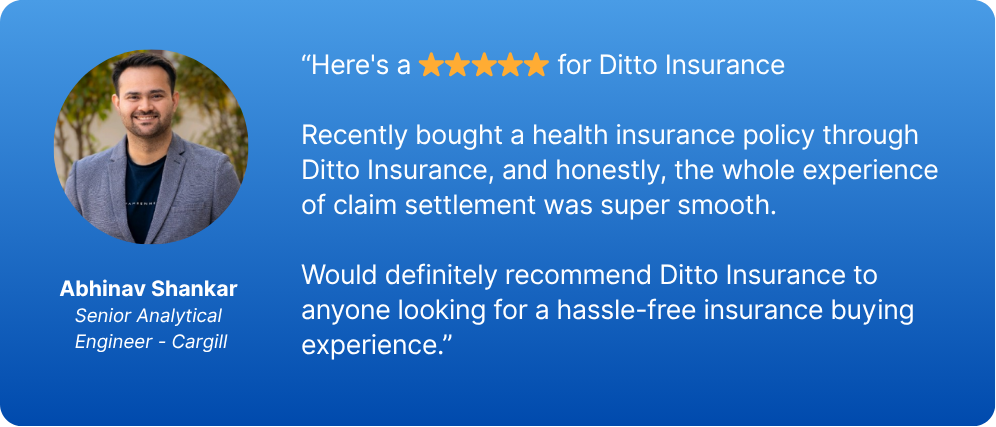
At Ditto, we’ve assisted over 8,00,000 customers with choosing the right insurance policy. Why customers like Abhinav below love us:
Government health insurance for senior citizens
    • No-Spam & No Salesmen
    • Rated 4.9/5 on Google Reviews by 15,000+ happy customers
    • Backed by Zerodha
    • Dedicated Claim Support Team
    • 100% Free Consultation

You can book a FREE consultation. Slots are running out, so book a call or chat with us on WhatsApp now!

Conclusion

Government health insurance plays a vital role in supporting senior citizens by reducing the burden of rising medical expenses, especially for hospitalization, surgeries, and chronic disease management. Schemes like Ayushman Bharat PM-JAY provide an affordable safety net, while the Central Government Health Scheme (CGHS) offers structured healthcare access for retired government employees.

In addition, multiple state-level health insurance programs extend benefits based on income and residency criteria. Together, these initiatives ensure that elderly citizens can access affordable, essential healthcare without facing overwhelming out-of-pocket medical costs during aging and long-term treatment needs.

Frequently Asked Questions

Can retired Employees’ State Insurance Corporation (ESIC) employees get health coverage after retirement?

Yes. Retired ESIC employees can enroll in the ESIC Pensioners' Medical Scheme (PMS). It works on similar lines to CGHS. It has the same contribution rates, approved treatment rates, and fixed medical allowance (FMA) option of ₹1,000 per month for those living outside covered areas. It is optional and contributory.


Coverage includes OPD consultations, hospitalization, and specialist referrals at ESIC hospitals and empaneled facilities. Dependents are also covered under the same enrollment. If you are a retired ESIC employee, contact your nearest ESIC branch office to check the current eligibility criteria and contribution rates before applying. 

Can I have both Ayushman Bharat and a private health policy?

Yes. You can hold both simultaneously to build a stronger safety net. Use your private policy for premium comforts like private rooms, faster specialist access, and a wider hospital network. Keep the government health insurance for senior citizens as a backup for treatment at empaneled hospitals. However, you cannot claim the same medical bill from both plans.


If your private cover gets exhausted mid-treatment, the government scheme can step in to cover remaining costs at empaneled hospitals. This combination works especially well for seniors with serious or chronic conditions requiring frequent hospitalization. 

What are the key differences between private and government health schemes for seniors?

The main difference lies in financial scale and service quality. Private health insurance plans are more comprehensive and flexible, offering higher sum insured options and fewer restrictions on treatments. In contrast, government health insurance for senior citizens acts as a social safety net with limited coverage.


While low-cost and inclusive, these schemes often limit hospital choices and may lead to longer wait times due to high patient volumes. Essentially, private plans offer greater value, while government schemes ensure affordable, basic accessibility for everyone. 

What are the major drawbacks of senior citizen health insurance scheme by government of India?

The primary drawback is the lower sum insured of ₹5 lakh, which may not cover advanced surgeries or long ICU stays at top private hospitals in Tier-1 cities. Most government health insurance plans for senior citizens restrict you to general wards and public hospitals, which often face overcrowding.


The network of private hospitals accepting government scheme cards is significantly smaller than that of private insurers. You may also encounter administrative delays and paperwork hurdles during the pre-authorization process for specific surgeries or specialized treatments. 

What is the best senior citizen health insurance scheme by government of India?

The Ayushman Bharat PM-JAY is currently the strongest government health insurance initiative for most seniors. It offers universal eligibility for all citizens aged 70 and above with a dedicated ₹5 lakh annual cover at zero cost.


For retired central government employees, CGHS is the better option, as it covers OPD consultations, prescribed medicines, and specialist referrals that PM-JAY does not. If your state runs a health scheme, those can further supplement your PM-JAY coverage at no additional cost. 

Are there tax benefits associated with government health schemes for senior citizens?

Yes, there are limited tax benefits. Free government schemes like Ayushman Bharat PM-JAY do not involve any premium payment, so they do not qualify for deductions under Section 80D. However, contributions to the Central Government Health Scheme are eligible for deduction under Section 80D, within the overall limit of ₹50,000 for senior citizens under the old tax regime.


If a senior citizen does not have any health insurance, you can claim actual medical expenses up to ₹50,000 under the same section. These deductions are not available under the new tax regime. 

What illnesses are covered under Ayushman Bharat for seniors?

PM-JAY covers around 1,949 medical procedures across 27 specialties, including oncology, cardiology, neurosurgery, orthopedics, and kidney transplants. It covers surgeries, ICU stays, diagnostics, medicines, and post-hospitalization care up to 15 days after discharge. Pre-existing conditions are covered from day one with no waiting period.


However, it does not cover OPD consultations, routine medicines, or preventive check-ups. All treatments must be on PM-JAY's listed procedure packages to qualify for cashless coverage. Seniors with complex or multiple conditions benefit the most, given the zero-premium, no-waiting-period structure. 

What is the ECHS scheme for senior citizens from the armed forces?

The Ex-Servicemen Contributory Health Scheme (ECHS) is a government healthcare scheme exclusively for retired armed forces personnel and their dependents, including senior citizens. It provides outpatient care, prescribed medicines, specialist consultations, and cashless hospitalization through a network of ECHS polyclinics, service hospitals, and empaneled private hospitals across India.


The scheme covers over 55 lakh beneficiaries and operates on a contributory basis with a one-time lifetime contribution option. Retired defense personnel aged 70 and above must choose between ECHS and AB PM-JAY, as both cannot be accessed simultaneously. 

Last updated on: