

Health Insurance

ABHA Card: Details & Uses

Aaryaa Nagpal Jambhulkar

Written by Aaryaa Nagpal Jambhulkar

Insurance Writer

Ishita Jain

Reviewed by Ishita Jain

IRDAI-Certified Expert at Ditto

SP0738675913

Certified
ABHA Card: Details & Uses

Overview

The Ayushman Bharat Health Account (ABHA) helps you access and share linked medical records without carrying physical documents.

What Is an ABHA Card?

  • 14-Digit Number: A unique, lifelong health ID issued under the Ayushman Bharat Digital Mission (ABDM).
  • ABHA Address: An optional username (e.g., name@abdm) for accessing and sharing records with consent.
  • Free Service: Registration and use are completely free and voluntary.

Key Benefits

  • Digital Records: Access linked prescriptions, test reports, and medical history digitally.
  • Consent-Based Sharing: Choose who can access your medical records and revoke consent when needed.
  • Nationwide Acceptance: Use ABHA at participating healthcare facilities across India.

How to Create an ABHA Card?

  • Visit the official ABHA portal or use the ABHA app.
  • Choose Aadhaar or driving license verification.
  • Complete the required identity verification.
  • Download your card and optionally create an ABHA address to access and share linked records.

Medical records in India are often scattered across hospitals, clinics, and diagnostic centers. When patients switch doctors or move to another city, missing prescriptions and test reports can lead to repeated tests, treatment delays, and additional expenses.

To address this, the Government of India introduced the Ayushman Bharat Digital Mission (ABDM), administered by the National Health Authority (NHA). Under this initiative, the ABHA card helps individuals digitally access and share their medical records across participating healthcare providers.

According to the Press Information Bureau, India has 97.61 crore operational ABHA IDs and over 119.95 crore linked health records, reflecting the initiative's growing adoption.

In this guide, we'll explain what the ABHA card is, its benefits, how to register, and how it differs from health insurance.

Understanding the ABHA Card and Its Key Benefits

The ABHA is a digital health identity with two main components:

    • 14-Digit ABHA Number: Your unique, lifelong digital health ID, issued by the National Health Authority (NHA). It helps identify you within India's digital healthcare system.
    • ABHA Address: An optional, customizable username, similar to an email address or UPI ID (for example, username@abdm). It lets you securely link, access, and share your health records through supported digital platforms, with your consent.

Note: ABHA does not store all your medical records in one central government database. Instead, your records remain with the hospitals, clinics, or healthcare providers that created them. ABHA helps you securely connect, access, and share these records when needed.

Background Image

Key Benefits of the ABHA Card

01

Faster Outpatient Department (OPD) Registration

At participating hospitals, you can scan a QR code using an ABDM-enabled app to share your details and receive a registration token. This reduces paperwork and speeds up registration.

02

Easy Access to Medical Records

You can access prescriptions, lab reports, and other medical records shared by participating healthcare providers digitally. This reduces the need to carry physical documents.

03

Simpler Online Consultations

During teleconsultations, you can securely share your available medical history with doctors through ABDM-enabled platforms, helping them better understand your health needs.

04

Access Through Health Apps

You can view, manage, and organize your linked medical records using supported Personal Health Record (PHR) apps, including the official ABHA app and other integrated platforms such as UMANG and Aarogya Setu.

05

Lifelong Validity Across India

Your 14-digit ABHA number remains valid for life and can be used across participating government and private healthcare facilities nationwide.

Note: Some insurers may request an ABHA number, where available, during the application process. With your consent, linked digital health records may help simplify medical information sharing. The National Health Claims Exchange (NHCX) also aims to streamline claim processing between insurers and healthcare providers. However, having an ABHA number does not automatically guarantee faster approvals or claim settlements.

Who Is Eligible for an ABHA Card?

All Indian residents can create an ABHA card, regardless of their income, existing medical conditions, or health insurance status. Registration is free and voluntary. However, having an ABHA card does not make you eligible for Ayushman Bharat PM-JAY benefits or provide health insurance coverage. You also do not need an ABHA card to receive regular or emergency medical treatment.

Who Can Benefit Most From an ABHA Card?

People With Chronic Conditions

Frequent tests, consultations, and prescription changes make it useful to have all linked medical records accessible in one place.

Senior Citizens

Multiple medications and past treatments can make medical histories difficult to remember, especially during emergencies.

Frequent Travelers and Migrants

Changing cities or doctors often means repeating tests or carrying old reports. ABHA makes linked records easier to access across locations.

Parents and Families

When available, linked digital health records can help parents track their children's vaccination records, growth reports, and medicines.

ABHA Card Registration: A Step-by-Step Guide

1) Visit the Official Portal: Go to the official ABHA website or use a supported app such as ABHA, Aarogya Setu, or UMANG.
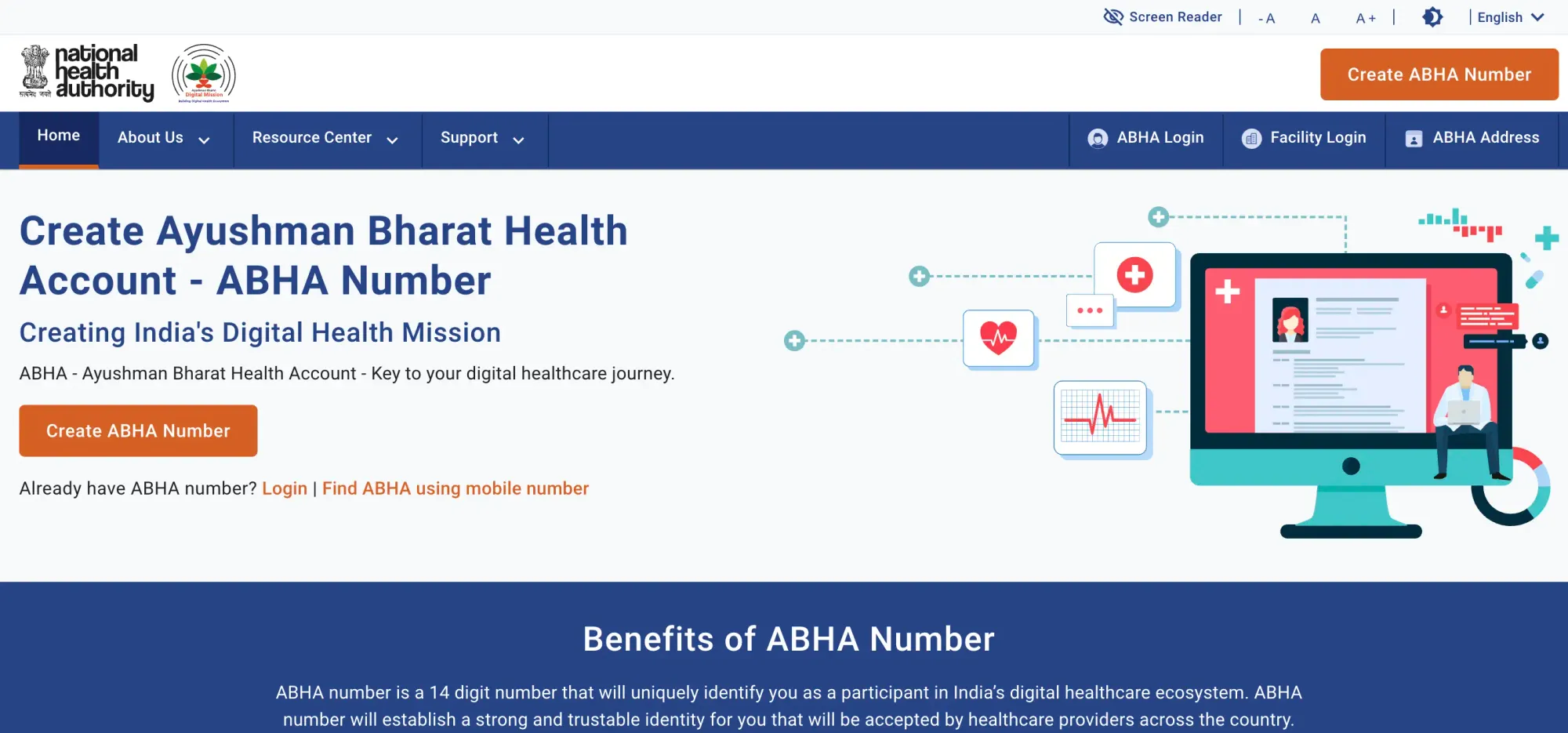
The National Health Authority's ABHA portal lets users create a 14-digit health account number, log in, or find an existing ABHA number.

2) Choose 'Create ABHA Number': Select the registration option. If you already have an ABHA number, use the retrieval option instead of creating a new one.

3) Select a Verification Method:
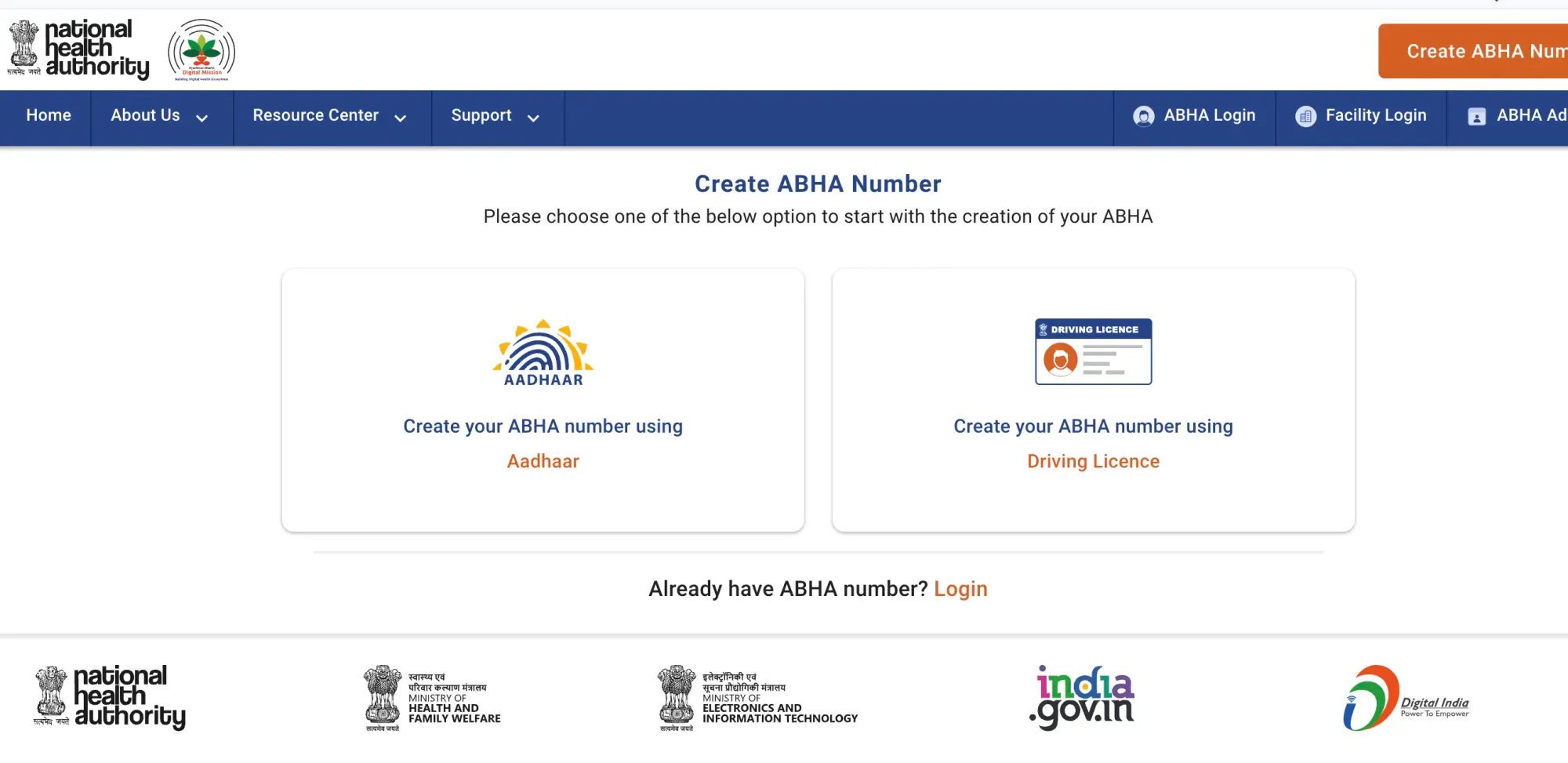
The National Health Authority's ABHA registration page offers two ways to create an ABHA number: using Aadhaar or a driving license.
    • Aadhaar: Verify your identity online using an OTP sent to your Aadhaar-linked mobile number.
    • Driving License: Apply online to generate an enrollment number, then visit a participating healthcare facility with your original driving license and enrollment number for verification.

4) Complete Verification: Enter the OTP if using Aadhaar, or follow the required verification process for your driving license.

5) Download Your ABHA Card: Visit the official ABHA portal, log in using your ABHA number or registered mobile number, complete verification, and download your digital card.

Talk to an expert
today and find
the right
insurance for you.

Ditto Advisor

Linking and Accessing Your Health Records Through ABHA

Linking Your Health Records

Linking connects your medical records from participating hospitals, clinics, or diagnostic centers to your ABHA profile.

Open a supported Personal Health Record (PHR) app and follow the steps to link records from participating healthcare providers. Older paper records or records from non-ABDM-integrated hospitals won't appear automatically. However, some apps let you scan and upload these documents for digital access.

Once your records are linked, you can choose which doctors or healthcare providers can access them. The Health Information Exchange and Consent Manager (HIE-CM) manages requests to share your records securely.

When a provider requests access, you can see who wants your records, why they need them, which records they want, and how long they request access. You can approve, reject, or revoke consent through supported platforms. However, revoking consent does not necessarily remove information already shared with a healthcare provider.

Does ABHA Replace Health Insurance?

No. The ABHA card is not a health insurance policy and does not cover medical expenses.

While ABHA helps you organize, access, and share your medical records digitally, it doesn't pay hospital bills, surgeries, or other treatments. You must cover these expenses out of pocket, through a health insurance policy, or via eligible government healthcare schemes such as Ayushman Bharat PM-JAY.

How Health Insurance Fits Into the Picture

With your consent, ABHA-linked medical records may make it easier to share your health history during insurance applications. The NHCX also aims to simplify claim processing by enabling digital information exchange between hospitals and insurers.

Can insurers access your ABHA-linked medical records? 

Providing your ABHA number does not automatically give insurers access to your medical history. Under the IRDAI Master Circular on Health Insurance Business (May 2024), insurers must obtain your express consent each time they share medical records or related information. You must still disclose your medical history accurately when applying for health insurance.

To explore your coverage options, read our guide on the best health insurance plans in India.

Note: The ABHA card is often confused with Ayushman Bharat PM-JAY, a government scheme that provides eligible beneficiaries with health coverage of up to ₹5 lakh per family annually. Unlike PM-JAY, ABHA does not offer financial coverage.

Why Choose Ditto for Health Insurance?

At Ditto, we’ve assisted over 12,00,000 customers with choosing the right insurance policy. Why customers like Pallavi love us:
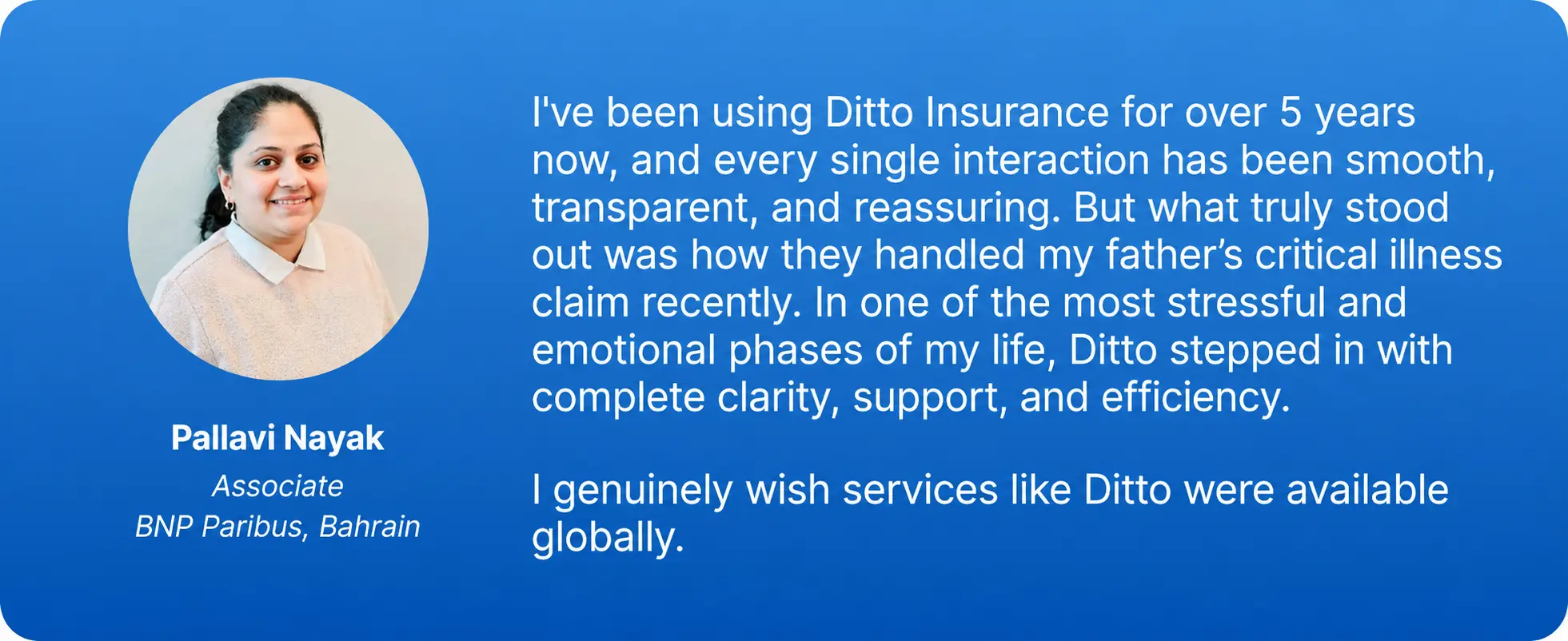
Pallavi Nayak LinkedIn Testimonial
    • 100% Free Consultation
    • No Spam. No Sales Pressure.
    • Rated 4.9/5 on Google Reviews by 30,000+ Happy Customers
    • Backed by Zerodha
    • Dedicated Claim Support Team
    • Compare Plans and Premiums with a Trusted Insurance Advisor

Confused about the right insurance? Speak to Ditto’s certified advisors for free, unbiased guidance. Book your call now or chat with us on WhatsApp. Slots fill up fast!

Ditto’s Take on ABHA Card

The ABHA card makes it easier to manage medical records by connecting prescriptions, test reports, and treatment history through a unique digital health ID. It is free to create and allows you to securely share linked records with healthcare providers, with your consent.

It helps people who frequently see different doctors or manage ongoing medical conditions. However, ABHA does not provide free treatment or health insurance coverage. While it helps organize your medical information, a comprehensive health insurance policy helps protect you against high hospitalization expenses. Together, they can make managing your healthcare easier while protecting you financially against covered medical costs.

Frequently Asked Questions

Is the ABHA card worth getting if I already have health insurance?

Yes, it can be useful. However, the ABHA card is not health insurance and does not cover medical expenses. While health insurance helps pay for covered treatments, ABHA helps you access and share linked medical records. These ABHA card benefits can be useful when consulting different doctors or managing ongoing treatment. With your consent, digital records may also simplify medical information sharing during insurance applications.

Is an ABHA card the same as an Ayushman Bharat card under PM-JAY?

No. The ABHA card is a digital health ID that helps individuals securely link, access, and share medical records. In contrast, the Ayushman Bharat card under the Pradhan Mantri Jan Arogya Yojana (PM-JAY) gives eligible beneficiaries access to government-funded hospitalization coverage of up to ₹5 lakh per family annually. Unlike PM-JAY, ABHA does not provide financial assistance or cover medical treatment costs.

Can I create an ABHA card without an Aadhaar number?

Yes. You can create an ABHA card without Aadhaar using a valid driving license. While Aadhaar allows online registration through OTP verification, the driving license option generally requires identity verification at a participating healthcare facility. To ABHA card apply without Aadhaar, visit the official ABDM portal and select the driving license option. Complete the online application and follow the instructions for in-person verification. You can also seek assistance at participating hospitals.

Can I deactivate or delete my ABHA ID after creating it?

Yes. You can temporarily deactivate or permanently delete your ABHA ID through the official ABDM portal. You can reactivate a deactivated number later, but you cannot use a deleted number to access linked health records through ABDM. However, deleting your ABHA ID does not erase medical records stored by hospitals or healthcare providers. These facilities may retain your treatment records according to applicable legal requirements. It is advisable to save copies of important records before deleting your ABHA.

Who can see my medical records once they are linked to my ABHA number?

Linking medical records to ABHA does not automatically give doctors, hospitals, or insurers access. You must consent to sharing and can control which records are shared, with whom, and for how long. You can revoke consent, but recipients may still have access to previously shared records. Original records stay with healthcare providers, not in a central government database.

Is it free to create an ABHA card?

Yes. Creating an ABHA ID card is completely free, with no registration or renewal charges. You can generate your 14-digit ABHA number through the official ABDM portal, supported mobile apps such as ABHA and UMANG, or participating healthcare facilities. Registration is voluntary, and you don't need to purchase health insurance or pay a subscription fee to use ABHA services.

How do I download my ABHA card online?

You can download your ABHA card through the official ABHA portal or supported apps. Visit the official ABHA portal and log in using your 14-digit ABHA number or registered mobile number. Complete the required identity verification and select the option to view or download your digital ABHA card. Once downloaded, you can save it on your phone or computer for future use. You can also access your card through supported apps like ABHA and UMANG.

Is an ABHA card the same as a health insurance card?

No. An ABHA card is a digital health ID that helps you access and share medical records with your consent. A health insurance card, on the other hand, is issued by your insurer as proof of your health insurance policy. It contains your policy details and helps facilitate cashless treatment at network hospitals for eligible claims, subject to the insurer's authorization. Unlike health insurance, ABHA does not cover medical expenses.

Last updated on: