



Overview
Women's health needs evolve significantly across their 20s, 30s, 40s, and beyond. Reproductive health, hormonal conditions, and the risk of female-specific critical illnesses all change over time. A plan that works at 26 may leave real gaps by 40.
This guide covers what to look for in a health plan as a woman, which plans to choose, and how to think about maternity coverage specifically
Why Women May Need Different Health Cover
Most health insurance plans are designed for the general population. Women's health needs, however, follow a very different curve across life stages.

Female-Specific Conditions Are Overlooked
Conditions like Polycystic Ovary Syndrome (PCOS), thyroid disorders, breast and cervical cancer, and osteoporosis are very common in women. A generic plan is built around general hospitalization and may not offer adequate or timely coverage for these.
Health Needs Change With Age
A woman in her 20s has very different coverage requirements from someone in her 40s. Reproductive health, hormonal conditions, and the risk of female-specific cancers all shift over time. A plan bought without this in mind may leave gaps exactly when it matters most.
Maternity Is Expensive and Rarely Well-Covered
Delivery costs in private hospitals can vary widely between a normal delivery and a C-section, and complications can push costs even higher. Most standard plans either exclude maternity entirely or include it with long waiting periods and low sub-limits.
The Dependency Trap
Women covered under a spouse's or employer's plan often have no independent coverage. In events like divorce or the sudden demise of the primary male policyholder, women frequently experience a lapse in coverage. A standalone policy in your own name is the only way to ensure continuity.
Coverage Decisions Are Not Always Made by Women
Historically, health insurance decisions were made by fathers or spouses. When women own and choose their policy, they are far more likely to pick a plan that actually covers their health needs rather than one that fits someone else's budget or assumptions.
Best Health Insurance Plans for Women in India
Note: In the table above, CSR stands for Claim Settlement Ratio, ICR is Incurred Claims Ratio, and PED is Pre-Existing Diseases.
Did You Know?
Key Benefits to Look For
- Coverage Amount: Opt for adequate coverage, usually ₹15 lakh to ₹25 lakh, based on your age, medical history, family size, location, and preferred hospitals. Medical inflation in India runs at 12% to 14% annually, which means a ₹5 lakh cover today will not go very far a decade from now. Do not underinsure to save on premiums.
- Maternity and Newborn Cover: Check the sub-limits for both normal and C-section deliveries, as these costs can vary significantly. Waiting periods for maternity benefits typically range from 9 months to 4 years, depending on the policy and insurer. Make sure the plan also covers the newborn from day one for a specified period, including management of complications in the early days.
Ditto’s Advice: Due to the high premium, long waiting period, and capped payout, maternity cover should not be viewed as the core reason for securing long-term health protection. Ideally, use your corporate policy (if covered) or rely on savings to get the best value for money. - Waiting Periods: This is the time before coverage kicks in for Pre-Existing Diseases (PEDs), which is 2 to 3 years, and specific illnesses, which is usually 2 years. There is a 30-day initial waiting period for everything apart from accidents. Opt for plans with shorter PED waiting periods or riders that let you reduce them further if you have any pre-existing conditions.
- No Restriction Plans: Avoid plans that have copayment clauses, room rent limits, or disease-wise sub-limits. These hidden restrictions can significantly increase your out-of-pocket costs at the time of a claim, even if you have a large sum insured.
- Restoration and Bonus Benefits: Look for plans that automatically restore your sum insured if it is exhausted during the policy year, ideally with unlimited restoration for any condition, including the same illness. Most comprehensive plans also come with a bonus that increases your sum insured, which can significantly boost your coverage over time.
- Free Annual Health Checkups: Most insurers provide a complimentary yearly health check-up within a set coverage limit, covering specific tests at network hospitals. For women, check whether the check-up includes screenings relevant to women's health, such as thyroid function tests, pap smears, and mammography.
- Operational Metrics: Before buying, check how the insurer performs on key service parameters: claim settlement ratio, incurred claims ratio, ease of the claims process, network hospital coverage, complaint volume, business volume, and customer support. These factors matter more than features alone when you actually need to file a claim.
Talk to an expert
today and
find
the right
insurance for you.


Health Insurance for Pregnant Women: What to Know
Maternity health insurance covers pregnancy, childbirth, and newborn care. Because pregnancy is treated as a pre-existing condition by most insurers, you need to buy your policy before conception. These plans come with waiting periods, so planning is the only way to avoid paying out of pocket for delivery.
Here is what you need to know before buying:
- The Waiting Period
Most plans require you to serve a waiting period of 9 months to 4 years before maternity benefits kick in. The ideal time to buy is a few years before you plan to start a family.
If you are already pregnant, most insurers will still accept your application, but the current pregnancy will be excluded from coverage. The plan will still cover all your other health needs, subject to standard waiting periods.
- What Is Typically Covered
Once the waiting period is complete, a comprehensive maternity plan generally covers:
- Pre- and post-natal care, including blood tests, ultrasounds, and doctor consultations before and after delivery.
- Delivery costs for both normal and C-section deliveries, including surgical and operating room charges.
- Newborn cover (in some plans), including medical expenses and routine vaccinations for the baby, usually for up to 90 days after birth.
Premiums and Waiting Periods for Maternity
Here is a quick comparison of what you can expect to pay for a family floater plan with maternity cover, for two adults aged 30 and 32, with a ₹15 lakh sum insured in Delhi (110010):
Note: Premiums vary by city, age, and insurer pricing updates.
Did You Know?
How to Choose the Right Women Health Insurance Plan
Step 1: Decide if maternity is a priority. If you are planning to start a family in the next 1-4 years, maternity cover may be considered. Choose a plan with a waiting period you can work around.
Step 2: Check the maternity sub-limit. A ₹15,000 cap will not cover most deliveries. Look for at least ₹50,000 to ₹1 lakh, especially if you plan to deliver at a private hospital.
Step 3: Do not sacrifice base plan quality for maternity. The best maternity add-on on a weak base plan is still a weak plan. Insurer reliability, claim settlement record, and hospital network matter more in the long run.
Step 4: Factor in newborn coverage. Newborns can need NICU care, which is expensive. Check whether the plan covers the baby from day 1 or only after 90 days.
Why Choose Ditto for Health Insurance?
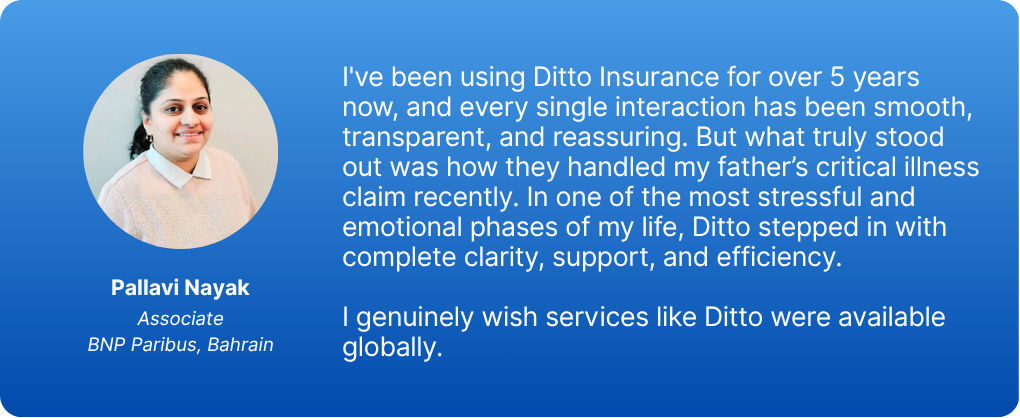
At Ditto, we’ve assisted over 8,00,000 customers with choosing the right insurance policy. Why customers like Pallavi below love us:
- No-Spam & No Salesmen
- Rated 4.9/5 on Google Reviews by 24,000+ happy customers
- Backed by Zerodha
- Dedicated Claim Support Team
- 100% Free Consultation
Confused about the right insurance? Speak to Ditto’s certified advisors for free, unbiased guidance. Book your call now or chat with our advisors on WhatsApp.
Conclusion
Health insurance for women is not a niche product or a maternity plan by another name. It is a long-term financial safety net that should cover you across every phase of your life, from your first standalone policy in your 20s to comprehensive cover as your health needs grow more complex.
Start with a strong general plan that has no room rent limits, no copayment, unlimited restoration, and an insurer with a reliable claim settlement record. Layer in maternity cover if you are planning a family. If you are still comparing options, our guide to the best health insurance plans in India is a good place to start.
And once your health insurance is in place, do not stop there. A term insurance plan ensures your family is financially protected even if you are no longer around. It is the next logical step after sorting your health cover.
Frequently Asked Questions
Last updated on: