



Introduction
Childbirth is not a rare medical event in India. According to UNData’s World Population Prospects, India will see roughly 2.3 crore births in 2026, making health insurance for pregnant women one of the most common requirements for Indian families.
But common does not always mean it is a necessity. A normal delivery at a private hospital in India can cost anywhere between ₹30,000 and ₹1.5 lakh. A C-section can often go beyond ₹3 lakh. This is where many families get caught off guard. They assume their health insurance will cover the bill, only to later realize that their plan has a two-year waiting period, a low maternity sub-limit, or no maternity coverage at all.
This article covers India’s best maternity insurance plans, pregnancy-related coverage rules, waiting periods, delivery benefits, and how Ditto’s advisors help you choose the right option.
Common Questions People Ask
What Is the Best Health Insurance Plan for Pregnant Women in India?
The best health insurance for pregnant women depends heavily on your current stage of life and where you are in your family planning stage.
Health insurance plans for pregnant women can be classified into two categories:
1) If You Are Already Pregnant
Most standard health insurance plans classify pregnancy as a "pre-existing condition" and do not cover it if you conceive before buying the policy. However, if you are already expecting, there are a few plans to consider, but set realistic expectations: options are limited, approvals are not guaranteed, and out-of-pocket expenses can still be high.
2) If You Are Planning for a Baby
If you are not yet pregnant but planning to start a family, it is vital to choose a plan with a short waiting period so you are covered when conception occurs.
Talk to an expert
today and
find
the right
insurance for you.


What the Best Plans Typically Cover
When evaluating these options, ensure your chosen plan includes the following standard features:
- Normal Delivery and C-Section Costs: Covers childbirth expenses for both normal and cesarean deliveries.
- Delivery Hospitalization Charges: Covers hospital expenses linked to childbirth, including room charges, nursing, medicines, and procedure-related costs.
- Pregnancy Complications: Covers hospitalization due to pregnancy-related medical complications.
- Pre- and Post-natal Care: Covers doctor consultations, scans, diagnostic tests, and medical care before and after delivery.
- Newborn Baby Expenses: Covers the baby’s hospitalization expenses from birth, including medical complications and NICU care.
- IVF or Infertility Treatment: Covers assisted reproduction or infertility treatment expenses.
- Surrogacy or Adoption-Related Costs: Covers specific maternity-related costs linked to surrogacy or adoption.
Note: These benefits are not available in every plan. Coverage, waiting periods, sub-limits, and exclusions vary by insurer. In most cases, maternity benefits are capped at the maternity sum insured, not the full base policy sum insured.
Ditto’s Key Insight: Ectopic Pregnancy
Can I Buy Health Insurance After Getting Pregnant in India?
Yes, you can buy health insurance after getting pregnant in India, but it comes with a major limitation: maternity and delivery costs for your current pregnancy will not be covered. Insurers treat pregnancy as a pre-existing condition and require mandatory waiting periods (typically 9 months to 4 years) before covering childbirth.
In general, getting a policy in the first trimester may be easier. In the second trimester, approval is more uncertain. By the third trimester, getting a new retail health insurance policy becomes very difficult. Most insurers prefer that you apply after delivery, ideally once at least 3 months have passed, and your health has stabilized.
Two Things That Still Work in Your Favor:
- Group Health Insurance Through Your Employer: Many employer-sponsored plans offer day 1 maternity coverage with no waiting period. Before you buy any retail plan, Ditto advisors review your existing corporate policy to see whether you already have this benefit. If you do, you could avoid paying extra for a redundant retail plan.
- Retail Plans: For delivery-related cover after pregnancy has started, one option to know is Aditya Birla Activ One Maternity. This is not a standalone maternity policy. It is a combo of Activ One NXT, a maternity rider, and a super top-up. The maternity benefit is a one-time ₹50,000 fixed payout after a 3-month waiting period, and it may be available to women in the first or second trimester. However, the plan requires a 3-year upfront premium, has strict eligibility rules, and does not include newborn cover.
What Is the Waiting Period for Maternity Coverage in Health Insurance?
The waiting period in maternity health insurance is a mandatory time frame after purchasing a policy during which pregnancy-related medical claims are not accepted. Depending on your policy, this waiting period typically ranges from 9 months to 4 years. Buying a plan early and letting it run in the background is the single biggest thing you can do to maximize maternity benefits.
Why It Exists: Insurers impose a waiting period to prevent immediate claims by new policyholders, ensure coverage fairness, and limit payout liability. Essentially, it helps the insurer manage risk while ensuring predictable coverage and cap payouts.
Does Health Insurance Cover Normal and C-Section Delivery in India?
Yes, health insurance covers both normal deliveries and C-sections in India. However, these expenses are only covered if your health insurance plan includes a specific maternity benefit.
Key Details About Maternity Coverage in India:
- What Is Covered: Policies typically cover delivery charges, room rent, surgeon/doctor fees, nursing charges, and pre- and post-natal care (usually for 30 to 90 days after delivery). Many modern plans, such as Star Women Care, also cover newborn medical expenses and vaccinations.
- Waiting Period: Maternity benefits include a mandatory waiting period, typically 9 months to 4 years. You must purchase the policy well before planning a pregnancy for the claim to be accepted.
- Sub-Limits: Many policies have a fixed sub-limit or cap on maternity claims (e.g., ₹50,000 to ₹2 lakh, depending on the plan). You will be responsible for any hospital bills that exceed this amount.
- Corporate Policies: If you are covered under an employer’s group health insurance plan, maternity coverage (for both normal and C-sections) is often included from day one without a waiting period.
- Pre-existing Exclusions: If you are already pregnant when you buy an individual policy, it will be classified as a pre-existing condition, and the delivery will not be covered under most plans.
Can I Claim Maternity Expenses Under Both My Employer Plan and Retail Health Insurance Plan?
Yes, but it is not a double payout. You can use both plans only for the same admissible hospital bill, and the total claim paid across both policies cannot exceed the actual eligible expense.
In practice, you usually use one plan first, often your employer plan if it has day 1 maternity cover. If that plan pays only up to its maternity sub-limit, you can file the unpaid eligible balance under your retail plan as a reimbursement claim, provided your retail plan’s maternity waiting period is complete, and the expense is covered under its terms.
Will My Maternity Claim Reduce My Main Health Insurance Sum Insured?
Usually, no. A delivery claim generally uses the maternity limit, maternity corpus, or fixed maternity benefit specified in the policy, rather than the full base sum insured.
For example, if your health insurance plan has a ₹10 lakh base sum insured and a ₹50,000 maternity limit, the delivery claim is usually capped at ₹50,000. It does not eat into the ₹10 lakh base cover.
The catch is that policy wording matters. Some newborn, NICU, complication, pre- or post-natal, or medically necessary hospitalization expenses may have separate limits or be assessed under regular hospitalization benefits.
Which Health Insurance Plans Have the Shortest Maternity Waiting Period?
Zero-waiting-period maternity health insurance is not available to retail buyers. Insurers require a wait to prevent people from buying coverage only when already pregnant. The shortest available waiting periods in retail plans range from 3 to 9 months, with corporate group plans being the only exception.
Shortest Retail Maternity Waiting Periods
Several top-tier plans offer significantly shorter waiting periods than the standard 2 to 4 years.
- Aditya Birla Activ One Maternity: Features a waiting period of just 3 months (the industry's shortest for retail). However, standard newborn medical cover is generally not included and must be added later.
- Niva Bupa Aspire (Titanium+ / Platinum+): Requires a 9-month waiting period. This plan includes extensive newborn coverage starting from Day 1.
- Care Health Joy (Today variant): Offers a 9-month waiting period, specifically tailored for budgeting families focused on early planning.
How Does Ditto Help Pregnant Women Choose the Right Health Insurance Plan?
Ditto helps pregnant women and families choose health insurance by first understanding the full picture, including pregnancy stage, existing health conditions, employer-provided coverage, budget, and preferred hospitals. Then, by analyzing whether the priority is delivery coverage, newborn coverage, or long-term family health insurance.
Before recommending any retail plan, Ditto advisors check your corporate or group health insurance policy. If your employer’s plan already covers maternity from day 1, it may be smarter to use that instead of buying an additional maternity plan with waiting periods and sub-limits.
Ditto advisors also compare plans across the factors that actually matter during claims, such as maternity waiting periods, delivery limits, newborn cover, NICU coverage, room rent limits, exclusions, co-payments, and whether pregnancy-related complications are covered.
They also help you run the premium-to-payout math. For example, if a maternity add-on costs ₹15,000 per year and has a 3-year waiting period, you pay ₹45,000 before you can claim. If the delivery benefit is capped at ₹50,000, the actual financial gain may be very small.
This helps you decide whether a maternity plan is worth buying, whether you should focus on a strong family health insurance plan instead, or whether it makes more sense to self-fund delivery costs and use insurance for major medical emergencies.
After your baby is born, Ditto advisors can also help you review whether the maternity rider is still useful. In many cases, removing the add-on after delivery can help you avoid paying unnecessarily high premiums.
For policies purchased through Ditto, support does not end after purchase. Ditto also provides claims assistance and follows up with the insurer if you need help during the claim process, at no extra cost.
Why Talk to Ditto for Health Insurance?
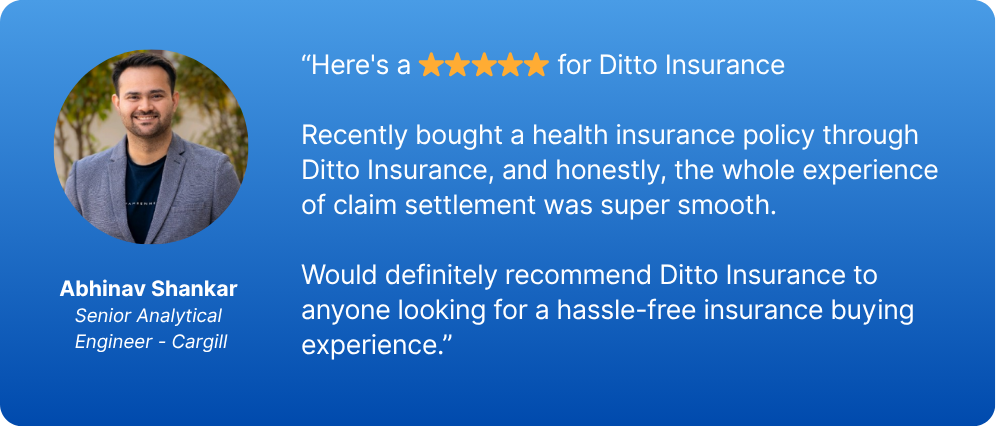
At Ditto, we’ve assisted over 8,00,000 customers with choosing the right insurance policy. Why customers like Abhinav below love us:
- No-Spam & No Salesmen
- Rated 4.9/5 on Google Reviews by 24,000+ happy customers
- Backed by Zerodha
- Dedicated Claim Support Team
- 100% Free Consultation
Confused about the right insurance? Speak to Ditto’s certified advisors for free, unbiased guidance. Book your call or chat on WhatsApp with us now!
Ditto's Take
Maternity insurance in India is genuinely complicated, and not everyone needs to buy a maternity plan. Sometimes your corporate cover is already enough. Sometimes a high-sum-insured base plan plus self-funding makes more financial sense than paying a premium for just a ₹50,000 payout.
Last updated on: