



Overview
More women now view term insurance as an important financial decision, not something to postpone. In fact, 44% of women who buy term insurance now choose cover of ₹1 crore or more. This reflects a clear shift toward stronger family protection and smarter long-term planning.
In this guide, we break down how women can choose the right term insurance plan, secure lower premiums, and protect their family with confidence.

Why Women Need Term Insurance?
Income Needs Protection
For salaried women, term insurance protects the household's income. It can help cover children’s education, savings goals, and the financial needs of parents or spouses.
Business Risk Matters
Term cover helps protect your family’s finances, regular household expenses, business loans, and any financial responsibilities where you have personally promised to repay or stand responsible for the debt.
Lower Premium Edge
Insurers offer lower premiums for women on term plans. Buying early can lock in lower rates for life, which improves affordability and long-term value.
Homemakers Add Real Value
A homemaker may not earn a salary, but she manages key responsibilities like childcare, elder care, meals, and running the household. If this support is not available, the family may need to spend a significant amount each month to replace it.
Take Note
Special Benefits/Discounts in Women's Term Plans
Some insurers in India offer women-specific term insurance plans.
- HDFC Life Click2Protect Supreme Plus offers features like a premium break. After 2 policy years, eligible female policyholders can defer premiums for 12 months during pregnancy or after the spouse’s death, provided prior premiums were paid on time and the policy remains active. Pregnancy-related claims are applicable during pregnancy or within 6 months after delivery, while spouse death-related claims must be made within 6 months of the event.
- Plans like Axis Max Life Smart Term Plan Plus offer a lifeline plus benefit. Under this feature, an eligible female policyholder can increase the base cover after the spouse’s death as a top-up option if the policy is active. This option is available after the 3rd policy anniversary and can be used from 6 months to 2 years after the spouse’s death. The top-up is limited to 50% of the base sum assured or ₹50 lakh, whichever is lower.
- Insurers price term insurance for women at lower rates than for similar male profiles, and in some cases, the savings can be up to 15% due to their higher life expectancy. In India, women currently have both higher life expectancy and lower overall mortality rates compared to men. This can make long-term protection more affordable and improve overall value.
Premiums Across Ages and Plans
Note: The listed premiums are based on non-smoker profiles residing in Delhi (110001), with a ₹1 crore sum assured (coverage up to age 70, and no first-year discount). These figures are illustrative, and actual premiums depend on insurer underwriting.
Talk to an expert
today and
find
the right
insurance for you.


Did You Know?
Top Term Insurance Plans for Women in 2026
- Axis Max Life Smart Term Plan Plus: A strong women-focused option. It offers premium discounts for women, health management services, and a top-up feature after the spouse’s death. The policy offers critical illness cover for up to 64 illnesses over 20 years and provides a terminal illness benefit with an accelerated payout of up to ₹1 crore upon diagnosis of a covered condition. The plan is suitable for women who want protection aligned with real-life family needs.
- HDFC Life Click2Protect Supreme Plus: A solid choice for women who value affordability and flexibility. It offers female premium discounts, multiple plan options, and the backing of a trusted insurer. The plan offers income payout options where nominees can receive structured payments instead of a lump sum, along with a critical illness rider that covers 60 illnesses for up to 15 years.
- ICICI Prudential iProtect Smart Plus: This plan suits modern working women. It offers competitive pricing and premium break options during income disruptions. Among other features, the policy allows a premium break where you can pause payments for up to a year after regular premium payment for a certain period, along with an instant partial payout of ₹3 lakhs at claim intimation for higher cover plans.
- Bajaj Life eTouch II: A practical mainstream plan with flexible payouts, limited pay options, and temporary premium support features. The policy offers a terminal illness payout with early benefit on diagnosis of up to ₹2 crore, along with a waiver of premium in case of accidental disability or terminal illness.
- Aditya Birla Sun Life Super Term Plan: A strong option for women with changing income patterns. It combines female discounts, critical illness and disability benefits, plus premium deferment support during career or caregiving breaks. The policy offers a terminal illness payout for early financial support of up to ₹1 crore, along with accidental total and permanent disability cover that waives future premiums if the rider is opted for.
While you compare the best term insurance for women, do not focus only on the brand name but also on the insurer's metrics. Insurers like Axis Max and ICICI offer strong options with competitive premiums, flexible payouts, and solid claim records.
Note: For term insurance for housewives, the premium is often paid by the earning family member, commonly the husband. However, both the husband and housewife can pay the premiums, and eligibility is usually based on the husband’s income or his existing term insurance coverage.
How to Choose the Right Term Plan as a Woman
- Buy Your Own Cover: Do not depend only on your spouse’s policy. Their term plan protects the family if they pass away. It does not replace the financial and practical value you bring to the household.
- Choose Cover Wisely: Salaried women should consider income, loans, and future goals. Homemakers should value household support and family management, while self-employed women should consider the financial risks linked to running a business. Use our online calculator to figure out how much term coverage you need.
- Select the Right Term: Choose a policy term that covers the years when your family depends on you the most. This may be until children are settled or loans are fully repaid.
- Pick the Right Payout: A lump sum can work for financially disciplined families. A mix of lump sum and monthly income can create better long-term stability.
- Prepare Documents: Homemakers and self-employed women may need extra documents. Income proof, spouse income details, ITRs, or business records can affect approval and the final cover offered.
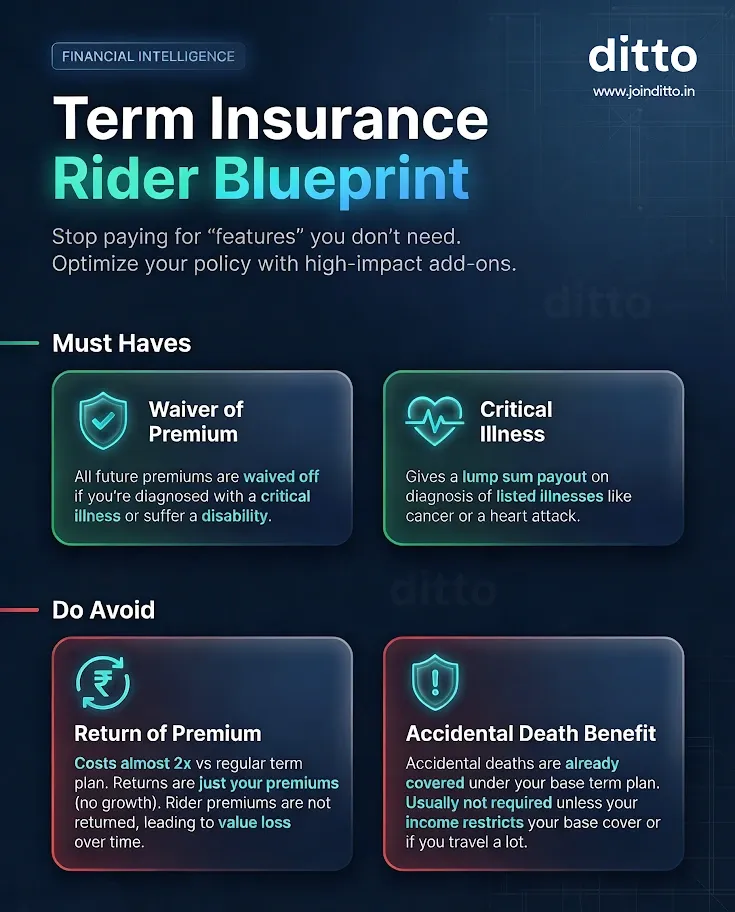
- Choose the Correct Rider: The right riders can add stronger protection for women during career breaks, maternity years, or caregiving responsibilities. Focus on practical add-ons such as Critical Illness, Waiver of Premium, and Disability riders.
See the infographic for an understanding of which rider to consider and which to avoid.
Why Choose Ditto for Term Insurance?
At Ditto, we’ve assisted over 8,00,000 customers with choosing the right insurance policy. Why customers like Aaron below love us:
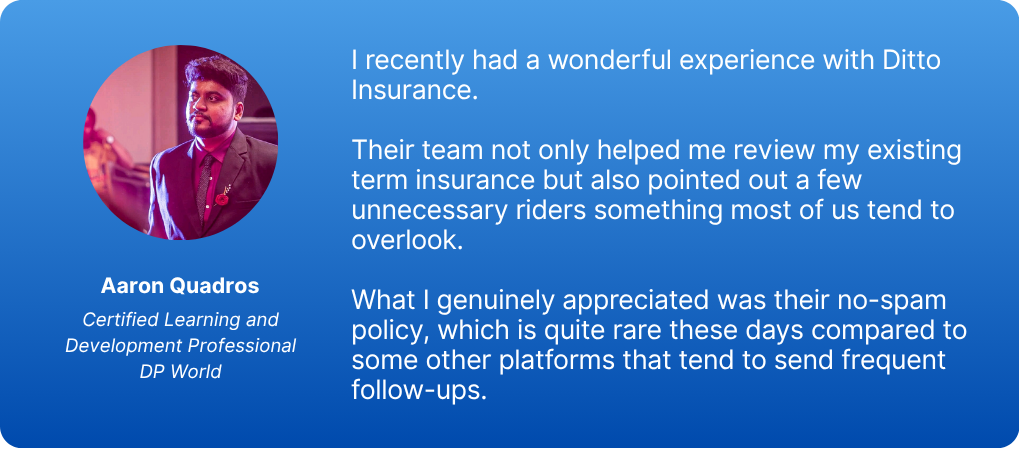
- No-Spam & No Salesmen
- Rated 4.9/5 on Google Reviews by 15,000+ happy customers
- Backed by Zerodha
- Dedicated Claim Support Team
- 100% Free Consultation
You can book a FREE consultation. Slots are running out, so make sure you book a call or chat on WhatsApp now!
Conclusion
Term insurance for women is not about job titles like homemaker, salaried, or self-employed. It is about the financial gap your absence could create and whether your family can stay secure without your support.
- For Homemakers: Your contribution may not show on a salary slip, but it carries real value. Childcare, elder care, and household support can be costly to replace. ICICI Prudential iProtect Smart Plus is a good option for housewives.
- For Salaried Women: Buying early can help lock in lower premiums and protect the income your family depends on. Delaying often leads to higher costs later. Axis Max Life Smart Term Plan Plus is a strong option for salaried women.
- For Self-Employed Women: Your cover should reflect income fluctuations, business commitments, and the time a family may need to regain financial stability after a loss. Self-employed women can explore plans like HDFC Life Click 2 Protect Supreme Plus.
The right policy should align with your responsibilities, not outdated assumptions. Compare benefits, insurer strength, and pricing across the best term insurance companies before you decide.
Frequently Asked Questions
Last updated on: