



Overview
A term insurance policy protects the family financially if the policyholder passes away. But a serious illness or permanent disability could affect the income while the policyholder is still alive, leaving them with medical costs and household expenses to manage.
That’s where term insurance riders can help by adding protection for specific risks. However, not every rider justifies the extra premium, and some benefits may already be part of the base policy.
This guide explains the different term insurance riders, their benefits and limitations, and how to choose add-ons that suit your financial needs.
Why Add Riders to Your Term Insurance Policy?
- Enhance Coverage: Get additional financial protection at an extra cost beyond the base life cover for specific risks, such as a critical illness diagnosis.
- Cover More Risks Under One Plan: Address specific financial risks through riders instead of buying separate policies for every additional need, where suitable.
- Simplify Policy Management: Manage your base term plan and eligible rider benefits under one policy, with claims subject to each rider’s conditions.
- Access Potential Tax Benefits: Under the old tax regime, eligible health-related rider premiums, such as critical illness cover, may qualify for deductions under Section 126 (previously Section 80D) of the Income-tax Act, 2025, subject to applicable limits.
Note: Rider premiums and coverage limits are also subject to regulatory and product-specific restrictions.
According to IRDAI’s Master Circular, premiums for health-related and critical illness riders can be up to 100% of the base policy premium. The combined premiums for all other life insurance riders cannot exceed 30% of the base premium.
Moreover, a rider’s sum assured cannot exceed the base policy’s sum assured. However, accidental death benefit riders are an exception and may offer coverage of up to three times the base sum assured, subject to applicable product terms.
Talk to an expert
today and
find
the right
insurance for you.


Common Term Insurance Riders Explained
1) Critical Illness Rider
This rider pays a lump sum if you’re diagnosed with a covered critical illness, such as cancer or a major heart condition. It can help cover treatment costs and replace lost income, especially if you’re the sole earner. Plans like Axis Max Smart Term Plan Plus offer coverage for 22 or 64 illnesses.
2) Waiver of Premium Rider
A waiver of premium rider in term insurance waives eligible future premiums if you experience a qualifying illness or disability, as defined in the policy. It helps keep your term insurance active during financial hardship, which can be especially useful if you have dependents or ongoing loan repayments.
Plans like HDFC Click 2 Protect Supreme Plus offer the rider for 60 critical illnesses, including permanent disabilities. It is also an affordable rider that can make sense for most policyholders seeking additional protection at a reasonable cost.
3) Terminal Illness Rider
This benefit allows you to access part or all of your death benefit early if you meet the policy’s terminal illness definition. It can help cover palliative care and other expenses. Plans like TATA AIA Sampoorna Raksha Promise offer this rider. However, comprehensive term plans include this as an inbuilt feature, so check your policy wording before adding a separate rider.
4) Accidental Death Benefit Rider
An accidental death benefit rider in term insurance provides an additional payout to the nominee if the life assured dies due to an accident. It suits frequent travelers, people in high-risk occupations, or those who may not qualify for a higher base cover but want added protection. This is a standard rider across leading plans like ICICI Life iProtect Smart Plus.
5) Total Permanent Disability Rider
This rider provides a benefit if an accident causes a qualifying permanent disability. Depending on the term insurance with disability rider, the payout can be a lump sum or follow another specified structure.
Plans like Bajaj Life eTouch II offer an Accidental Partial/Total Permanent Disability Rider. It pays 100% of the rider sum assured for total permanent disability and 50% for partial permanent disability caused by an accident, subject to a 180-day waiting period and a maximum cover of ₹3 crore.
Unique Riders
- Surgical Care Benefit: Some term insurance plans offer specialized benefits for specific medical needs. Check the exact payout conditions and whether the feature is a rider or an inbuilt benefit. Riders like ABSLI Surgical Care can suit buyers who want protection beyond the standard death benefit.
- Block Your Premium: This feature lets you increase your death cover during a specified period using the premium rate locked in when you bought the policy, subject to terms. Plans like Canara HSBC Life Promise2Secure offer this option for people who expect their coverage needs to grow.
- Waiver of Premium on Husband’s Accidental Death: This option waives future premiums on a woman’s policy if her husband dies in an accident and the policy conditions are met. Plans like HDFC Life Click 2 Protect Supreme Plus offer this option for eligible policyholders.
- Early Exit Benefit: Plans like TATA AIA Sampoorna Raksha Promise offer an optional early-exit benefit under the Life Promise variant. It allows you to recover a defined amount linked to premiums paid during a specified window. Exercising this benefit ends your term cover. The payout may fund a separate annuity, but the plan itself does not provide retirement income.
- Extra Payout for Parents: Certain riders extend financial support to surviving parents after the insured’s qualifying death or accidental total permanent disability. Insurers like Bajaj Life offer a Family Protect rider with benefits determined by the insurer.
- Care Plus Rider: Plans like Bajaj Life eTouch II offer a Care Plus Rider with health, wellness, and fitness benefits. It provides a lump-sum payout and waives future rider premiums in case of Accidental Total Permanent Disability (ATPD). The rider also includes unlimited teleconsultations, subject to policy terms and conditions.
Need-Based Riders
- Child Education Rider: This rider can help secure funds for your child’s education if you pass away or meet another qualifying event specified in the policy.
- Spouse Cover Rider: Consider spouse cover if you want to extend life insurance protection to your partner, subject to the plan’s eligibility criteria and terms.
- Hospital Cash Rider: This rider provides a fixed daily cash benefit during eligible hospitalization. It may help cover incidental expenses that standard health insurance does not reimburse. Hospital cash riders are mainly useful when your existing health insurance has coverage gaps.
Note: If you want to cover your spouse, consider a separate term insurance policy or explore plans designed for housewives. Spouse cover under a single policy may not provide comprehensive protection.
Not all riders are available with every term insurance plan. Check each plan’s specific features, rider availability, eligibility criteria, and terms before purchasing.
Plans With Sample Premiums
Note: The annual premiums shown are illustrative estimates for a 25-year-old non-smoking male with ₹2 crore term cover and a ₹25 lakh critical illness rider, with coverage until age 65 and no first-year discounts.
For a rough estimate of base plan premiums, use the Ditto term insurance premium calculator tool. Actual premiums may vary based on insurer, underwriting, and policy terms.

How to Choose Term Insurance Riders Based on Your Needs?
If You Travel Frequently or Work in a High-Risk Job
Consider a disability rider to protect your income if an accident leaves you unable to work. However, check whether your existing cover already meets your needs.
If You Are the Sole Earner or Have a Family History of Critical Illness
Consider a critical illness rider. A non-accelerated option pays separately from your base cover, while an accelerated payout reduces the death benefit available to your nominee. Check the covered illnesses and claim conditions.
If You Have Dependents or Ongoing Financial Commitments
Consider a waiver of premium rider. It can help keep your term policy active when your income is affected. Check the specific eligibility criteria and waiting period.
If You Want Financial Support During a Terminal Illness
Check whether your term plan includes a terminal illness benefit. It lets you access part or all of your death benefit early if you meet the policy’s medical definition and life expectancy criteria. Review how the payout affects your nominee’s benefit.
Ditto’s Recommended Term Insurance Riders
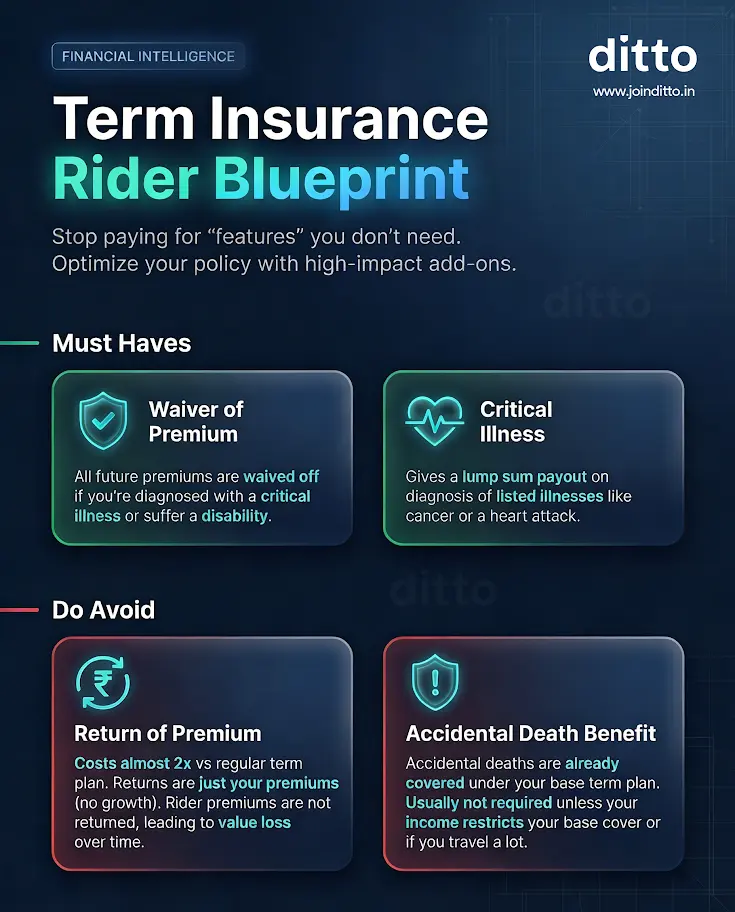
At Ditto, we recommend considering a Waiver of Premium (WOP) rider alongside a Critical Illness (CI) rider.
We suggest prioritizing these riders over Accidental Death Benefit (ADB) and Return of Premium (ROP) options. ROP plans return base premiums with no capital appreciation at a higher cost (60% to 100% more) instead of adding substantial protection.
Take a look at the infographic for clarity.
Why Choose Ditto for Term Insurance?
At Ditto, we’ve assisted over 12,00,000 customers with choosing the right insurance policy. Why customers like Aaron below love us:

- 100% Free Consultation
- No Spam. No Sales Pressure.
- Rated 4.9/5 on Google Reviews by 30,000+ Happy Customers
- Backed by Zerodha
- Dedicated Claim Support Team
- Compare Plans and Premiums with a Trusted Insurance Advisor
Confused about the right insurance? Speak to Ditto’s certified advisors for free, unbiased guidance. Book your call now or chat with us on WhatsApp. Slots fill up fast!
Conclusion
Start by securing adequate base life cover. At Ditto, we believe a person’s life is worth crores, and your term cover should reflect the financial security your family needs. Use the Ditto cover calculator to estimate the right sum assured for your needs.
Next, consider a waiver of premium rider for qualifying critical illness or disability. Then assess whether a critical illness or disability rider adds meaningful protection based on your financial responsibilities and existing insurance.
When comparing the best term insurance plans, focus on the coverage you need rather than the number of riders offered. Check waiting periods, survival periods, exclusions, and payout conditions. Choose add-ons that address genuine gaps without stretching your budget.
Frequently Asked Questions
Last updated on: