

Health Insurance

Expat Health Insurance

Ann Tresa Jais

Written by Ann Tresa Jais

Insurance Writer

Gaurav Bhat

Reviewed by Gaurav Bhat

IRDAI-Certified Expert at Ditto

SP0738578124

Certified
Expat Health Insurance

Overview

Expat health insurance covers eligible medical expenses for people living abroad. Coverage depends on eligibility and location.

Key Features and What It Covers

  • Inpatient and Outpatient Care: Eligible hospitalization and daycare treatment are covered. Outpatient care requires specific benefits.
  • Global vs. Regional Reach: Domestic policies typically cover India, while international plans specify countries, sometimes excluding the United States and Canada.
  • Evacuation and Repatriation: Emergency evacuation is available only when explicitly included.

Popular Plans for Expat Health Insurance for Coverage in India

  • HDFC ERGO Optima Secure+: Provides 2X coverage from day one, unlimited restoration, and an annual increase in coverage through its Infinite Benefit.
  • Care Supreme: Offers unlimited restoration for related and unrelated illnesses, with optional add-ons for additional coverage.
  • Aditya Birla Activ One MAX: Provides Super Credit benefits, unlimited restoration from the second claim, and wellness-linked renewal discounts.

Moving abroad for work, study, or family comes with a long to-do list, and health insurance is easy to push down the list. But your home country policy may not cover treatment in your new country, and plans that do offer international cover often come with restrictions. 

Expat health insurance is meant for people living outside their home country, including Non-Resident Indians (NRIs), Overseas Citizens of India (OCIs), and foreign nationals. Depending on the plan, it may cover medical treatment in one country or across multiple countries.

However, eligibility and coverage vary. Some Indian plans accept NRIs but only cover treatment in India, while certain international plans are available exclusively to Indian residents.

In this guide, we explain eligibility, available plans, premiums, benefits, exclusions, and how to choose the right expat health insurance policy.

Eligibility Criteria for Expats Buying Health Insurance in India

Who Is Eligible to Buy Health Insurance in India?

Applicant CategoryEligibility and Conditions
NRIIndian citizens living abroad can buy eligible Indian health insurance plans. Insurers may require an Indian passport, proof of an overseas address, and an NRI declaration. 
OCIForeign citizens with valid OCI cards can buy plans from insurers accepting OCI applicants, such as HDFC ERGO. They may require a foreign passport, OCI card, and proof of address. 
Foreign Nationals Living in IndiaHealth insurance for foreigners in India is available with select insurers to foreign citizens legally residing in the country. Acceptance depends on the insurer's rules, valid residency documents, and medical underwriting. 
Indian Residents Seeking International CoverageEligible residents can buy plans covering treatment abroad.

Important: Eligibility for Indian health insurance doesn't automatically mean you qualify for international coverage. For example, Care Supreme Global and HDFC ERGO Optima Secure Global Plus offer overseas treatment, but this benefit is unavailable to NRIs, OCIs, PIOs, foreign nationals, and individuals working or studying abroad.

What Other Factors Determine Eligibility?

Apart from residential status, insurers consider the following factors:

  1. Age: Entry-age limits vary by insurer and plan. Some policies have no maximum entry age for adults, while others restrict eligibility to certain age groups.
  2. Medical History: Applicants must disclose existing illnesses, previous hospitalizations, and treatments, including those received in other countries. Insurers may also require medical tests before approving an application.
  3. Documents: Applicants may need a valid passport, visa or residence permit, proof of address, and identification documents. Requirements vary by citizenship, residential status, and insurer.

List of Health Insurance Plans for Expats in India

Aditya Birla Activ One MAX

    • Activ One MAX offers sum insured options from ₹5 lakh to ₹2 crore for individuals and families.
    • Its Super Credit benefit increases the sum insured by up to 500%, capped at ₹3 crore.
    • The plan provides unlimited restoration of the sum insured from the second claim during the policy's lifetime.
    • It also includes Claim Protect for specified non-payable expenses and HealthReturns, which can offer renewal premium discounts of up to 100% for meeting eligible wellness criteria.

Care Supreme

    • Care Supreme offers sum insured options from ₹5 lakh to ₹1 crore for individuals and families.
    • It provides unlimited automatic restoration of the sum insured for both related and unrelated illnesses.
    • The plan has no standard room-rent restrictions or mandatory co-payment.
    • Optional add-ons offer benefits such as reduced waiting periods for pre-existing diseases, OPD coverage, and coverage for specified non-payable expenses.

HDFC ERGO Optima Secure+

    • Optima Secure+ offers sum insured options from ₹10 lakh to ₹2 crore for individuals and families.
    • Its Secure Benefit provides 2X coverage from day one.
    • Infinite Benefit increases coverage by 100% of the base sum insured every year, with no maximum cap, regardless of claims. 
    • It also covers consumables, unlimited restoration, domiciliary treatments, daycare procedures, organ donor expenses, and AYUSH treatments.

Note: These plans are for NRIs who want coverage for hospital treatment in India. If you live abroad, eligible Indian plans may be worth comparing for hospital stays in India, but they don’t replace medical insurance in your country of residence. Eligibility depends on citizenship, residency, medical underwriting, and the exact policy variant. For treatment abroad, buy separate local or international cover that clearly applies in the country where you live.

Talk to an expert
today and find
the right
insurance for you.

Ditto Advisor

Sample Premium Illustration

ProfilesHDFC ERGO Optima Secure+Care SupremeAditya Birla Activ One MAX
(Individual Plan): Age 25₹13,459₹16,294₹9,337
(Family Floater, 2A): Ages (31, 32)₹21,128₹23,153₹14,994
(Family Floater, 2A + 1C): Ages (35, 34, 5)₹26,017₹29,257₹19,760
(Family Floater, 2A): Ages (60, 59)₹72,648₹71,257₹42,300

Note: Here, "A" stands for adult, and "C" denotes children. These are indicative premiums for NRIs with Delhi (PIN code: 110010) as their Indian address, for a ₹15 lakh sum insured, including recommended add-ons. Your premium can change based on age, city, medical history, plan variant, added discounts, and chosen add-ons.

Premium Insight: Some insurers offer discounts to eligible NRIs, but these may come with conditions. For instance, HDFC ERGO's Optima Secure offers a conditional 40% NRI discount. However, if you return to India or file a claim during a visit, you may have to pay the premium difference, depending on the policy's terms. So, before choosing a plan based on its discounted premium, check when the insurer can ask you to pay the additional amount.

Background Image

Benefits of Health Insurance for Expats

01

Protection Against High Medical Costs

Medical treatment abroad can be expensive, particularly in countries like the US and Singapore. Expat health insurance helps pay eligible hospitalization expenses, reducing out-of-pocket costs.

02

Coverage Across Multiple Countries

 International plans may cover treatment in your home country and country of residence. This is useful for expats who frequently travel or relocate, subject to geographical restrictions.

03

Coverage Beyond Employer Insurance

Employer-provided insurance may end when you leave your job. A personally purchased policy can provide continued coverage, provided you remain eligible and keep renewing it.

04

Visa and Residency Compliance

Some countries require foreign residents to have health insurance. An eligible expat policy may help meet these requirements, depending on local regulations.

05

Cashless Treatment and Medical Assistance

Some international plans offer direct billing at partner hospitals and medical assistance services, reducing the need to arrange large upfront payments.

06

Family Coverage

Certain plans allow expats to insure their spouse and dependent children, subject to eligibility rules. This can help cover eligible medical expenses for family members living abroad.

What Is Covered and Not Covered Under Health Insurance for Expats?

CoveredNot Covered
Eligible hospitalization expenses, including room charges, ICU costs, surgery, and medicines, are covered within policy limits. Cosmetic procedures performed solely to improve appearance are generally excluded, unless medically necessary under specified conditions. 
Daycare procedures, such as chemotherapy and dialysis, are generally covered without requiring overnight hospitalization. Routine outpatient consultations, dental care, and vision expenses are generally excluded unless the policy includes these benefits. 
Medical expenses incurred before and after hospitalization are covered for the periods specified in the policy. Treatment outside the policy's specified geographical coverage area is generally excluded. 
CoveredNot Covered

How to Choose the Right Health Insurance Plan for Expats?

    • Check the Coverage Area: Confirm whether the policy covers treatment in your country of residence and home country. Some international plans exclude the US and Canada, while Indian domestic plans generally cover treatment only in India.
    • Verify Residential Eligibility: Check whether the insurer accepts your citizenship and residential status. For example, Care Supreme Global excludes NRIs, OCIs, and foreign nationals from its international coverage benefit.
    • Choose an Adequate Sum Insured: Consider healthcare costs in the countries where you need treatment. Compare deductibles, co-payments, and treatment limits alongside the sum insured to understand your potential out-of-pocket expenses.
    • Review Waiting Periods: Check waiting periods for pre-existing diseases, specified treatments, and international benefits. Some policies may also impose additional restrictions on planned overseas treatment.
    • Check Renewal and Relocation Conditions: Confirm whether coverage can continue if you change jobs or move countries. Changes in your country of residence may affect eligibility, premiums, or available geographical coverage.
    • Understand the Claims Process: Check whether planned treatment needs prior approval and whether you can submit claims online. Overseas medical reports, translations, and missing documents may delay settlement, especially when reimbursement is required.

Why Choose Ditto for Health Insurance?

At Ditto, we’ve assisted over 12,00,000 customers choose the right insurance policy. Why customers like Pallavi love us:
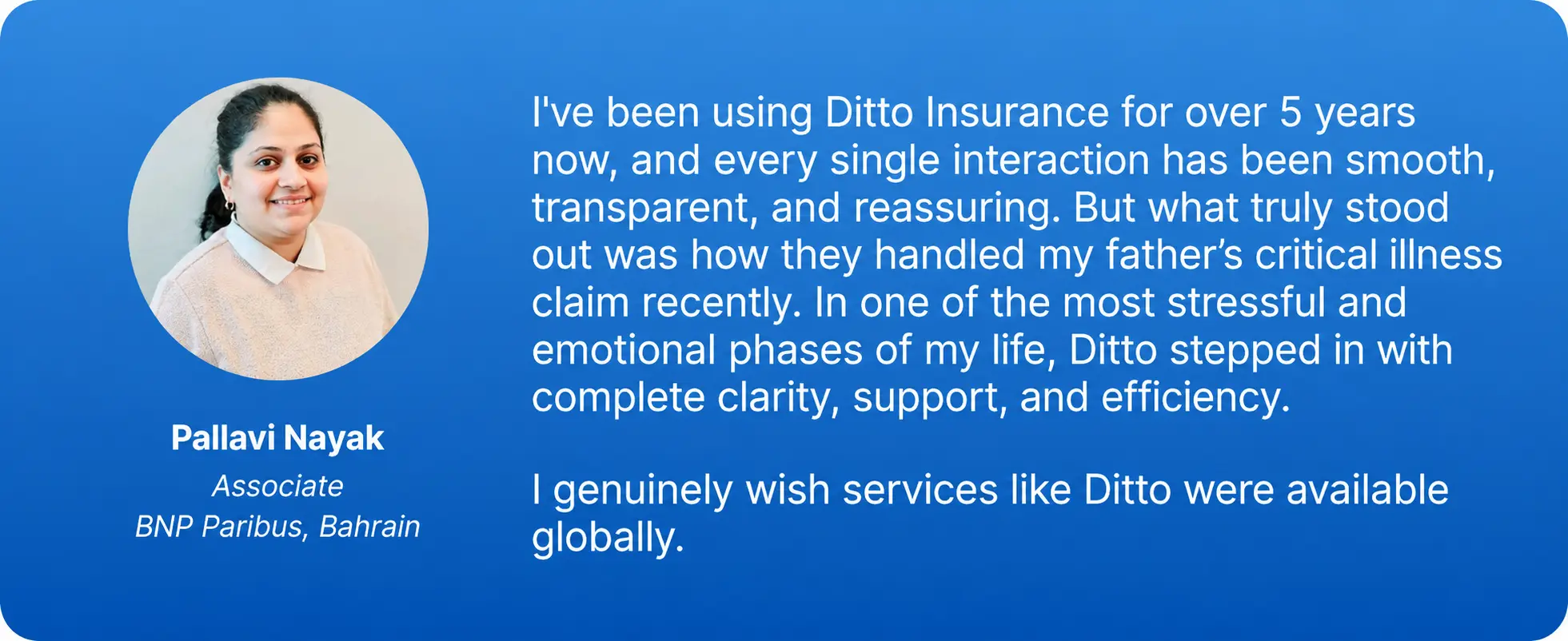
Pallavi Nayak LinkedIn Customer Testimonial

    • 100% Free Consultation
    • No Spam. No Sales Pressure.
    • Rated 4.9/5 on Google Reviews by 30,000+ Happy Customers
    • Backed by Zerodha
    • Dedicated Claim Support Team
    • Compare Plans and Premiums with a Trusted Insurance Advisor

Confused about the right insurance? Speak to Ditto’s certified advisors for free, unbiased guidance. Book your call now or chat with us on WhatsApp. Slots fill up fast!

Conclusion

Choosing health insurance as an expat can be tricky, especially when you need coverage across different countries. Before buying, check whether you're eligible for the plan, where you can receive treatment, and how claims will be handled if you move abroad or return to India.

If you're looking for medical coverage in India, you can explore our guide to the best health insurance plans in India. However, remember that eligibility for NRIs, OCIs, and foreign nationals varies by insurer, and most domestic plans don't cover treatment abroad.

Frequently Asked Questions

Does expat health insurance cover pre-existing medical conditions?

Yes, expat health insurance can cover pre-existing medical conditions, depending on the insurer's underwriting terms. Some international plans cover disclosed conditions from the start, while others impose waiting periods, additional premiums, or permanent exclusions. For Indian health insurance policies, the pre-existing disease waiting period cannot exceed 36 months under the 2024 IRDAI regulatory framework. Always disclose previous diagnoses and treatments, including those received abroad, to avoid complications during claims.

Can I include my spouse and children in my expat health insurance policy?

Yes, several expat health insurance plans allow you to include your spouse and dependent children under the same policy. However, insurers have specific eligibility rules concerning children's ages, family relationships, and residential status. Adding family members also increases the premium based on their age, health, and coverage requirements. If your family lives in different countries, check whether the policy covers each member's country of residence before purchasing.

What happens to my expat health insurance if I move to another country?

Moving to another country can affect your expat health insurance, even if your new destination falls within the policy's geographical coverage. Insurers can revise premiums, change coverage conditions, or discontinue coverage due to local insurance regulations. Inform your insurer before relocating and confirm whether your existing policy remains valid. If coverage cannot continue, arrange a replacement policy before moving to avoid a gap in protection.

Is expat health insurance different from international travel health insurance?

Yes, expat health insurance is designed for people living abroad for extended periods, while international travel insurance primarily covers short trips. Expat policies can include hospitalization, planned treatments, and routine medical care, depending on the benefits selected. Travel insurance typically focuses on medical emergencies and travel-related expenses such as lost baggage or trip cancellations. If you're relocating for work or settling overseas, travel insurance alone is unlikely to meet your ongoing healthcare needs.

Does expat health insurance cover outpatient consultations and prescription medicines?

Yes, some expat health insurance plans cover outpatient consultations and prescription medicines, but these benefits aren't included in every policy. Some international insurers offer outpatient coverage as an optional benefit requiring an additional premium. Coverage can include doctor consultations, diagnostic tests, and prescribed medicines within specified limits. Check whether prescriptions are covered only during hospitalization or also for routine consultations, especially if you need regular medication for an existing condition.

Will my expat health insurance remain valid if my visa or residency status changes?

Your expat health insurance does not automatically become invalid when your visa or residency status changes. However, continued coverage depends on the insurer's eligibility requirements and applicable local regulations. For example, switching from an employment visa to another residence category can affect an employer-sponsored policy. Inform your insurer about the change and obtain confirmation that your coverage remains valid, including any changes to your premium or benefits.

Which health insurance should NRIs, OCIs, and expats choose?

It depends on where you live and where you want treatment. NRIs visiting or returning to India can consider Indian plans, subject to eligibility. OCI cardholders and foreign nationals in India can explore domestic plans from insurers that accept them. If you live abroad and need regular care there, local or international cover is usually a better fit. Indian residents seeking treatment overseas need plans that explicitly cover it.

Which are the leading international health insurance providers for expats?

Well-known providers include Cigna Global (Silver, Gold, and Platinum plans covering hospitalization, day-patient treatment, and cancer care, with worldwide options), Allianz Care (Care Base, Care Enhanced, and Care Signature, with hospitalization, cancer treatment, and optional outpatient cover), and AXA Global Healthcare (hospitalization, specialist care, and emergency evacuation, with an option to exclude US coverage to potentially lower premiums). Eligibility depends on your country of residence and underwriting, so confirm you qualify and your countries are covered. 

Last updated on: