



Overview
According to IRDAI’s annual report (FY 2024-25), India’s insurance penetration stands at just 3.7% of GDP, nearly half the global average of 7.3%. In simple terms, a large number of Indians are either uninsured or do not have enough coverage to protect themselves and their families.
But buying insurance is not just about getting covered. It is also about choosing the right kind of coverage. This is where people get confused, especially when trying to understand the difference between life insurance and general insurance. At first, the distinction may seem basic: life insurance covers life, while general insurance covers everything else. But in practice, the differences are much bigger.
In this article, we’ll explain how each type works, break down the differences, and help you decide which one you should prioritize first.
What Is Life Insurance?
Imagine you're the primary earner in your family. Your income is what pays the rent, funds your child's school fees, and keeps the household running. Life insurance is what replaces that income if you're no longer around.
It is a financial contract between you and an insurer. You pay regular premiums, and in return, the insurer promises to pay a death benefit (sum assured) to your nominee if you pass away during the policy term. Some plans also pay you if you survive the term.
According to IRDAI, life insurance is insurance on human beings. It provides a financial benefit to dependents if the life insured dies during the policy term or becomes disabled due to an accident (in some cases), and can also help provide income in old age through annuity products.
Life Insurance Types Explained

Term Insurance
Term insurance offers pure protection. If you die during the term, your nominee gets the sum assured. If you survive, there's no payout (unless you opted for the “Return of Premium” variant). This is the most affordable and recommended form of life insurance, since it provides the highest life cover for the lowest premium.
Whole Life Insurance
Whole life insurance offers lifelong coverage, usually up to age 99 or 100, depending on the policy. Since the insurer’s risk rises sharply with age, premiums are typically higher. However, we usually don’t recommend coverage up to 99 because, by then, most people no longer have financial dependents, and inflation makes the chosen sum assured far less meaningful.
Endowment Plans
Endowment plans combine life cover with a savings component. If the policyholder dies during the policy term, the nominee gets the death benefit. If the policyholder survives, they receive a maturity benefit. However, premiums are much higher than pure term insurance, while the life cover is usually much lower.
ULIPs (Unit Linked Insurance Plans)
ULIPs combine life insurance with market-linked investments. A part of your premium goes toward life cover and charges, while the rest is invested in equity, debt, or hybrid funds. While this may sound convenient, returns are not guaranteed, charges can reduce growth, there is a 5-year lock-in period, and the life cover is often too low for the premium paid.
Money-Back Plans
Money-back plans combine life cover with periodic payouts during the policy term. If the policyholder dies during the term, the nominee receives the death benefit. If the policyholder survives, they receive payouts at fixed intervals and, in some cases, a maturity benefit. However, the premiums are usually much higher than pure term insurance, while the life cover is often much lower.
What Is General Insurance?
Imagine you're in a car accident, or you end up in a hospital for a week, or your house floods during the monsoon season. General insurance is what steps in to cover those costs.
General insurance (often called non-life insurance) covers everything that isn't about your life. It protects your assets, health, and liabilities against risks like accidents, theft, illness, or natural disasters. These policies are typically short-term, usually one year, and must be renewed annually.
According to IRDAI, general insurance covers anything other than human life. This includes insurance for health, motor vehicles, homes, property, travel, personal accidents, and legal liabilities. In most cases, these policies protect you against financial losses caused by damage, theft, illness, accidents, or other covered risks.
Types of General Insurance in India
- Health insurance covers hospitalization, surgeries, and medical bills. This is arguably the most important form of general insurance for most Indians.
- Motor insurance is mandatory by law for all vehicle owners. It covers third-party injury or property damage. Own-damage cover, which protects your vehicle, is optional and usually part of a comprehensive motor policy.
- Home insurance covers damage to your home due to fire, floods, earthquakes, or theft.
- Travel insurance covers trip cancellations, baggage loss, and medical emergencies while traveling.
- Personal accident insurance pays a lump sum if you're permanently disabled or die in an accident.
Talk to an expert
today and
find
the right
insurance for you.


Difference Between Life Insurance and General Insurance: At a Glance
Which Insurance Should You Buy First?
1) Health Insurance Comes First
- Before comparing the best health insurance plans in India, remember this: a medical emergency is more likely than an early death, and one hospitalization can easily cost lakhs.
- Without health insurance, you may have to use your savings or borrow money.
- Also, health plans have waiting periods. The earlier you buy, the sooner these waiting periods start getting completed.
2) Term Insurance Comes Next if You Have Dependents
- Once your health cover is sorted, compare the best term insurance plans in India if your spouse, children, parents, or anyone else depends on your income.
- If you pass away during the policy term, the insurer pays your nominee a lump sum.
- This money can help your family manage daily expenses, loans, education costs, and long-term goals.
3) Add Other General Insurance Later
- Once health and term insurance are sorted, you can look at other covers based on your needs.
- For example, motor insurance is mandatory if you own a vehicle. Home, travel, or personal accident insurance may make sense depending on your lifestyle and risks.
Ditto’s Honest Advice: Term insurance plus health insurance is the first combination to go with. These two form the foundation of a solid insurance portfolio.
Why Choose Ditto for Insurance?
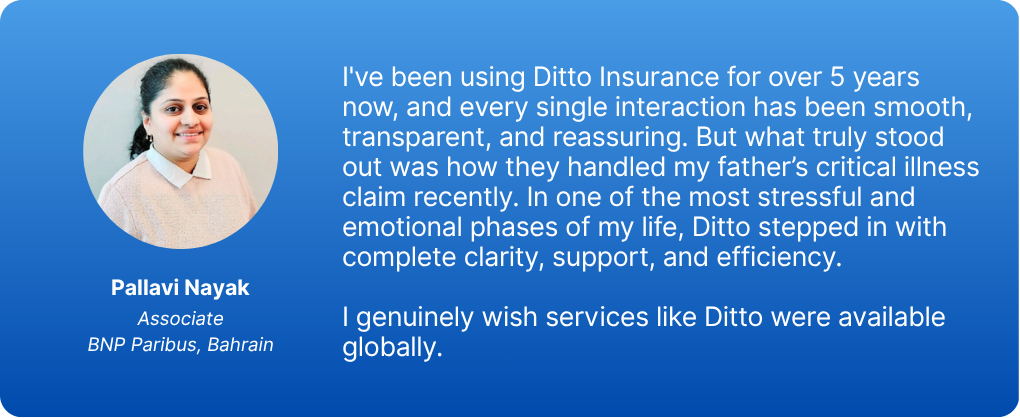
At Ditto, we’ve assisted over 8,00,000 customers with choosing the right insurance policy. Why customers like Pallavi below love us:
- No-Spam & No Salesmen
- Rated 4.9/5 on Google Reviews by 15,000+ happy customers
- Backed by Zerodha
- Dedicated Claim Support Team
- 100% Free Consultation
Confused about the right insurance? Speak to Ditto’s certified advisors for free, unbiased guidance. Book your call or chat on WhatsApp with us now!
Conclusion
The difference between life insurance and general insurance comes down to what you are trying to protect.
- Life insurance protects your family’s financial future if something happens to you.
- General insurance protects you from financial losses linked to health emergencies, vehicle damage, property loss, travel risks, and more.
Both are important, but they differ in coverage, premiums, policy duration, and payouts. If you are building your insurance portfolio from scratch, start with a solid health insurance policy. Then, if you have dependents or loans, add a pure term insurance plan. Once these two foundations are in place, you can consider motor, home, travel, or other general insurance products based on your lifestyle and responsibilities.
Frequently Asked Questions
Last updated on: