




Overview
In your 20s, term insurance might not feel like a priority because major financial responsibilities lie ahead. But as you grow older, the premiums increase and financial responsibilities and goals start to pile up. So your 20s can be the best age to buy term insurance, as you can secure substantial life cover at a relatively lower premium.
In the next few minutes, this guide will help you choose adequate term cover, compare the best term insurance plans, and avoid common buying mistakes.
Why Should You Buy Term Insurance in Your 20s?
- Low Premiums: Age, health, and lifestyle influence term premiums. Buying in your 20s means lower mortality risk and, therefore, lower premiums. The same ₹2 crore cover can cost around 1.5x more if you wait until your 30s.
- Lock in Your Rate: Once the policy is issued, the premium is fixed for the chosen term. Starting early can help you lock in a lower rate for decades.
- Cover More Years: A policy bought in your 20s can protect you through career growth, marriage, children, home loans, and other major financial commitments.
- Protect Tomorrow’s Responsibilities: You may have few dependents today, but your financial responsibilities can change quickly. Buying early ensures you have protection in place before those responsibilities arrive.
- Peace of Mind: Adequate term cover can give you a financial safety net, allowing you to focus on building wealth and making long-term decisions without leaving your future dependents financially exposed.
Note: If your income is below ₹5 lakh a year, insurers may place limits on the amount of term cover you can qualify for. In such cases, rather than delaying protection, consider securing the maximum cover you are eligible for based on your income, health and financial profile. As your income grows, review whether additional cover is needed.
Term Insurance Eligibility and Minimum Age for Term Insurance in India
In India, the minimum age for term insurance is generally 18 years. However, eligibility can vary by insurer and product. Insurers also consider factors such as income, occupation, health, financial profile, and underwriting requirements.
For example, insurers like HDFC Life and ICICI Life currently list 18 years as the minimum entry age for certain term insurance plans.
Eligibility Criteria
Note: The above criteria are for Axis Max Smart Term Plan Plus. Term insurance eligibility age and other criteria vary plan to plan.
Did You Know?
How Much Term Insurance Cover Do You Need in Your 20s?
Most platforms recommend buying 20 to 30 times your annual income, but your actual life cover should reflect your financial responsibilities, not just your salary. You may not have dependents yet, so you may not need an extremely large cover immediately. However, buying early can make sense if:
You Support Your Family
You Have Debt
Your Responsibilities Grow
You Want to Start Early
Example: A 27 year old earning ₹10 lakh a year with no major debt might consider ₹1 to ₹2 crore as a starting range. If they also have a ₹50 lakh home loan and dependents, the required cover could be considerably higher. Use our online cover calculator for a quick estimate of the term coverage you require. It considers your expenses, liabilities, and future goals, rather than just focusing on income.
Talk to an expert
today and
find
the right
insurance for you.


Plans for ₹1 Crore Term Insurance in Your 20s
If you’re in your 20s and considering ₹1 crore term insurance, buying early can help you access lower premiums and secure coverage for a longer period. But the right plan depends on your financial responsibilities, not just your age.
- Look Beyond ₹1 Crore: ₹1 crore may be sufficient for some but inadequate for others. Consider your income, loans, dependents, future responsibilities, and financial assets.
- Choose an Appropriate Term: A policy extending toward your retirement years can provide protection during the period when your financial responsibilities are likely to be highest.
- Compare More Than Premiums: Look at the insurer's track record, exclusions, policy conditions, insurer financial strength, and relevant riders, rather than choosing only the cheapest plan. Refer to the Ditto Data Lab for insurer metrics.
- Disclose Everything Honestly: Declare your medical history, tobacco or alcohol use, occupation, and other information requested by the insurer. Incorrect disclosures can create claim-related complications later.
Note: ₹1 crore is only a starting point. Your ideal term cover should reflect your income, liabilities, dependents, future responsibilities, and assets rather than age alone.
Best Plans to Explore for ₹1 Crore Term Insurance
We assess the best plans using our policy framework, looking at coverage, key features, and long-term value.
- Axis Max Life Smart Term Plan Plus: Offers a critical illness benefit covering up to 64 specified illnesses for a defined period. Smart Term Plan Plus also provides an accelerated payout of up to ₹1 crore on diagnosis of a listed terminal illness, subject to the policy terms.
- HDFC Life Click 2 Protect Supreme Plus: Includes a waiver of premium feature for specified critical illness and disability, helping keep the policy active during income disruption. Click 2 Protect Supreme Plus offers a life stage benefit that can also increase cover after milestones such as marriage or childbirth, subject to terms.
- ICICI Life iProtect Smart Plus: iProtect Smart Plus offers a smart exit feature, which allows eligible policyholders to exit after a specified period and receive a refund of premiums, subject to the product's conditions.
- Bajaj Life eTouch II: A straightforward term plan focused on core life protection. eTouch II includes a terminal illness payout, providing an early benefit on diagnosis of a covered terminal illness, with coverage of up to ₹2 crore, subject to policy conditions.
- Aditya Birla Sun Life Super Term Plan: Offers built-in protection for specified terminal illnesses, allowing an early payout of up to ₹1 crore on diagnosis, subject to the policy terms. Super Term Plan also offers an accidental total and permanent disability benefit that can waive future premiums if the relevant rider is selected.
Plans for ₹2 Crore Term Insurance in Your 20s
If you’re in your 20s and considering ₹2 crore of term insurance, it can provide a substantial financial cushion as your income, family responsibilities, and liabilities grow. The key is making sure the cover matches your future financial needs.
Best Plans to Explore
We evaluate each plan through our policy framework, focusing on coverage, key features, and the long-term value it can offer.
What Should You Prioritize?
- Choose Pure Term Insurance: If your primary goal is income protection, compare straightforward term plans rather than paying extra for savings or investment components.
- Consider a Longer Term: A policy extending to around age 60 to 65 can provide protection through your main earning years. For someone in their 20s, this could mean a 30 to 35-year policy term.
- Match Cover to Future Needs: ₹2 crore isn't automatically excessive. Consider your expected income, outstanding loans, future family responsibilities, and assets that would genuinely support your family.
- Disclose Everything Honestly: Declare alcohol consumption, medical history, existing insurance, and other information requested by the insurer. Inaccurate disclosures can create claim-related issues.
- Look Beyond Claim Ratios: Compare premiums, complaint volumes, policy terms, payout options, and rider conditions rather than relying on the claim settlement ratio alone.
Plans for ₹5 Cr Term Insurance in Your 20s
A ₹5 crore term insurance cover can make sense in your 20s if you have a high income, strong future earning potential, dependents, or substantial financial liabilities. Buying early can also help you access relatively lower premiums while you are younger and healthier.
Best Term Plans Available
Our policy framework helps us assess these plans beyond just the premium, with a focus on coverage, important features, and long-term value.
- Axis Max Life Smart Term Plan Plus offers critical illness cover for up to 64 specified illnesses and an accelerated terminal illness payout of up to ₹1 crore, subject to applicable policy terms.
- HDFC Life Click 2 Protect Supreme Plus offers waiver of premium for specified critical illness and disability, along with a Life Stage benefit to increase cover after milestones such as marriage or childbirth.
- ICICI Life iProtect Smart Plus includes a smart exit feature that allows eligible policyholders to exit after a defined period and receive premiums back, subject to the product's terms and conditions.
- Bajaj Life eTouch II focuses on core life protection and offers a terminal illness payout of up to ₹2 crore on diagnosis of a covered terminal illness, subject to policy conditions.
- Aditya Birla Sun Life Super Term Plan offers a terminal illness payout of up to ₹1 crore and an accidental total and permanent disability benefit that can waive future premiums if the relevant rider is selected.

What Should You Look For?
Choose Pure Term Insurance
If your objective is family protection, compare pure term plans rather than investment-linked insurance products.
Compare Riders Separately
Add riders only where they address a genuine financial risk.
Look Beyond the Lowest Premium
Consider claim servicing, exclusions, underwriting practices, policy conditions, and payout options.
Disclose Information Accurately
Declare smoking, alcohol use, medical history, occupation, and other requested details honestly.
Consider a Longer Term
Coverage until around age 60 to 70 may be appropriate depending on your earning years and financial responsibilities.
Note: A ₹5 crore policy may be sensible for someone earning ₹30 lakh to ₹50 lakh or more, particularly with significant future obligations. If your current income is lower and you have no dependents or major liabilities, ₹5 crore may provide more cover than you need today.
Sample Premium Comparison for Term Insurance Bought in Your 20s
Premium Comparison Across Profiles and Sum Assured
Note: The annual premiums are for Axis Max Smart Term Plan Plus. These figures are based on a male profile residing in Delhi (110010), seeking term insurance coverage until age 65. In comparison, term insurance for women is priced at 5% to 15% lower premiums for the same coverage due to actuarial pricing advantages.
How Long Should the Policy Term Run if You Buy in Your 20s?
If you buy term insurance in your 20s, the policy should ideally remain active until your income is no longer essential to your family. For many people, that means covering most of their working and earning years.
What Policy Term Makes Sense?
- Until Age 60 to 65: A strong default for many salaried professionals.
- Until Age 65 to 70: Consider this if you expect to work longer or want a larger financial safety net.
Here’s a scenario if you purchase a term plan at 25.
Riders Worth Considering in Your 20s
Riders can add protection to a basic term insurance policy, but adding every available rider isn't necessarily useful. The better approach is to choose riders that address risks your existing insurance and financial plan don't already cover.
Riders Available
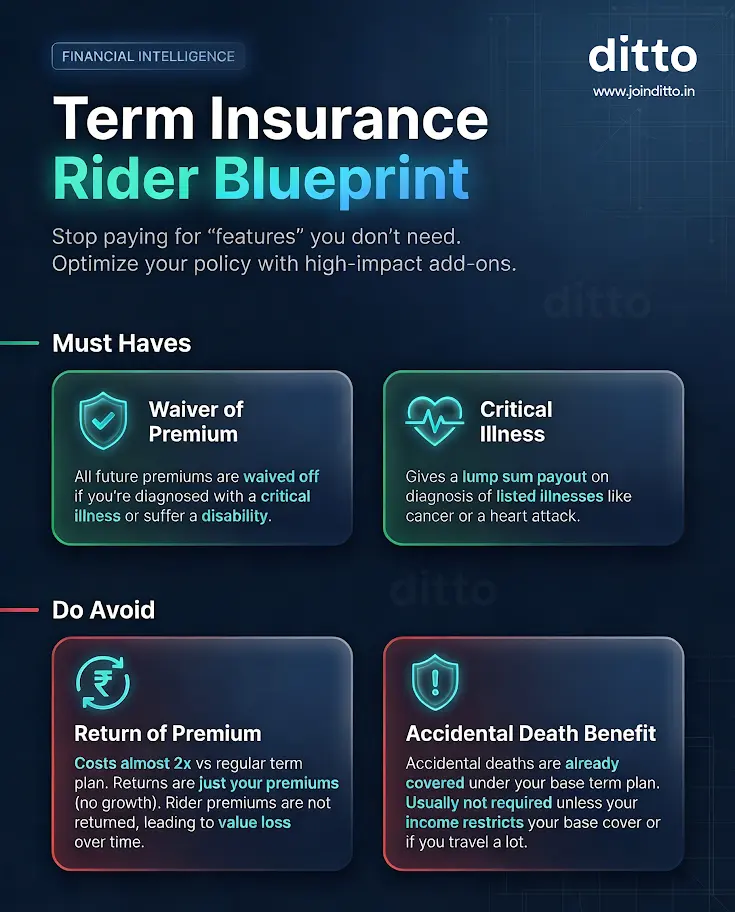
Critical Illness Rider
Pays a lump sum if you are diagnosed with a covered critical illness. It can help with treatment costs, recovery expenses, or lost income.
Accidental Death Benefit Rider
Provides an additional payout if death occurs due to a covered accident. It may be worth considering if you commute extensively, travel frequently, or have higher accidental-risk exposure.
Waiver of Premium Rider
Future premiums may be waived if you experience a qualifying event, such as a covered disability or critical illness, while the term cover continues as per the policy terms.
Permanent Disability Rider
Provides a benefit if you suffer a qualifying permanent disability due to a covered event. This can be particularly relevant because a disability can affect your ability to earn for years.
Note: Not all riders provide value for money. At Ditto, we recommend the critical illness and waiver of premium rider as they offer real protection. Take a look at the infographic to have an understanding of which rider to purchase and which to avoid.
Mistakes to Avoid When Buying Term Insurance in Your 20s
- Buying too Little Cover: A low premium can be tempting, but cheap cover isn't necessarily adequate. Consider your income, outstanding loans, future family responsibilities, and financial goals. The objective is to ensure your family can maintain its financial stability if your income suddenly disappears.
- Choosing Return of Premium Over Pure Term: Return of Premium (ROP) plans can appear attractive because they refund premiums at maturity, but they cost more (60% to 100% more than a regular term plan). At Ditto, we do not recommend ROP plans as they do not offer real returns.
- Waiting Until Your 30s: You may not need insurance urgently today, but delaying the purchase can mean paying more later. Buying while you're younger and generally healthier can help you secure a lower premium for a longer period.
- Choosing Only on Price: The cheapest policy isn't automatically the best one. Compare premiums alongside exclusions, claim-service record, insurer reputation, payout options, policy conditions, and relevant riders before making your decision.
- Picking a Short Term: A 20-year policy or 25-year policy term may look affordable, but it could expire while you're still earning. Choose a term that broadly covers your major earning years, outstanding liabilities, and the period during which your family may depend on your income.
- Hiding Health or Lifestyle Details: Always disclose relevant medical conditions, smoking or tobacco use, alcohol consumption, occupation, and other requested information honestly. Trying to secure a cheaper premium by withholding information can create serious complications for your family when they eventually make a claim.
- Adding Every Rider: Riders can fill genuine protection gaps, but adding everything available can unnecessarily increase your premium. First check what your health insurance and existing financial protection already cover, then choose riders based on risks that genuinely matter to you.
- Ignoring Inflation: ₹1 crore or ₹2 crore may look substantial today, but its purchasing power will be lower decades from now. Consider inflation alongside your future income, children's education, liabilities, and other foreseeable financial responsibilities when deciding how much cover you need.
- Forgetting Future Liabilities: Your financial responsibilities can change significantly after marriage, children, home loans, or business commitments. Don't calculate cover only from today's situation. Consider foreseeable responsibilities and review your protection when major financial milestones occur.
Why Choose Ditto for Term Insurance?
At Ditto, we’ve assisted over 12,00,000 customers with choosing the right insurance policy. Why customers like Aaron below love us:

- 100% Free Consultation
- No Spam. No Sales Pressure.
- Rated 4.9/5 on Google Reviews by 30,000+ Happy Customers
- Backed by Zerodha
- Dedicated Claim Support Team
- Compare Plans and Premiums with a Trusted Insurance Advisor
Confused about the right insurance? Speak to Ditto’s certified advisors for free, unbiased guidance. Book your call now or chat with us on WhatsApp. Slots fill up fast!
Conclusion
Buying term insurance in your 20s can be a smart way to secure long-term financial protection at a relatively lower premium. The key is choosing adequate cover, a suitable policy term and the right insurer, rather than simply chasing the lowest price.
Compare the best term insurance plans based on coverage, exclusions, claim experience, service and overall suitability.
Frequently Asked Questions
Last updated on: