



Overview
Getting term insurance can be harder when your job involves heights, heavy machinery, mining, or other hazards. You may face a higher premium, additional underwriting, restricted rider eligibility, postponement, or decline. Check any exclusions separately in the base policy and attached riders.
In the next few minutes, this guide breaks down how insurers assess high-risk occupations, key factors to account for, and how much term cover you need.
Understanding Term Insurance for High-Risk Occupations
Term insurance for high-risk occupations provides financial protection to your family if you die during the policy term. Because these jobs carry greater occupational risks, insurers may request additional information during underwriting before offering coverage.
What You Can Expect as a High Occupational Risk Applicant
Stricter Underwriting
Higher Premiums
Coverage Adjustments
Postponement or Decline
Which Occupations Are Considered High-Risk for Term Insurance?
The exact list of occupations varies by insurer. However, commonly considered high-risk occupations include:
- Seafarers and merchant navy personnel
- Police and armed forces
- Pilots and aviation workers
- Miners and offshore oil workers
- Chemical plant operators
Did You Know?
Can People in High-Risk Jobs Buy Term Insurance?
Yes. People in high-risk occupations can buy term insurance in India. Working in a risky profession does not automatically make you uninsurable. The difference comes during underwriting. Depending on the job and level of risk, insurers may offer limited coverage or require you to postpone the application. You can compare established insurers like HDFC Life and Axis Max Life that offer high life protection at affordable premiums.
Talk to an expert
today and
find
the right
insurance for you.


How Do Insurers Assess Occupational Risk?
The process starts with a base premium quote based on your initial application details. The insurer then conducts detailed underwriting to understand your occupation and the risks involved.
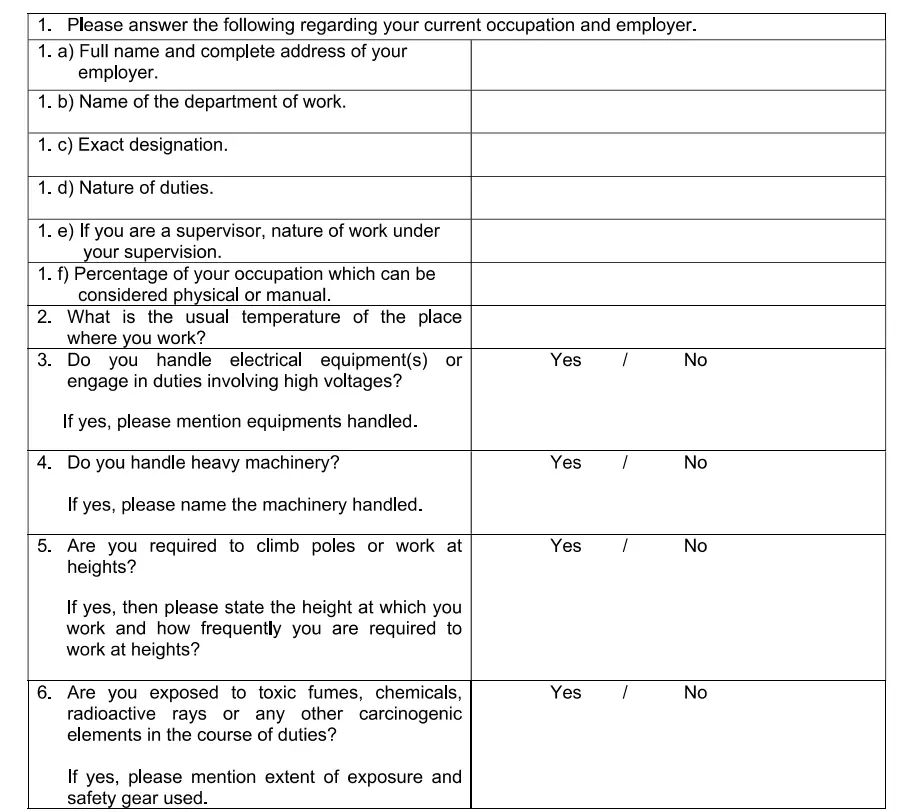
You may need to complete an occupational questionnaire covering your job duties, work environment, travel, safety measures, and hazard exposure. Based on this assessment, the insurer may apply an additional premium loading, commonly around 25% to 100%, although it can be higher for certain occupations. If the perceived risk is too high, the insurer may postpone or decline the application.
Here’s a snippet from the HDFC Life occupational questionnaire the insurer uses to assess your occupational risk while underwriting.
How Do Occupational Exclusions Work in Term Insurance?
Occupational exclusions limit or exclude coverage for certain risks linked to your profession. However, they are not automatically applied simply because you work in a high-risk occupation. During underwriting, the insurer evaluates your job duties, workplace hazards, travel requirements, and overall risk.
At Ditto, we have not seen permanent occupational or occupational death exclusions added to a policy so far. If the insurer cannot reasonably cover the occupational risk, it will usually decline the application instead of adding a permanent exclusion.
Note: You can opt for riders like accidental total and permanent disability. However, these riders have specific exclusions, so do not assume every risk is covered.
For example, HDFC Life income benefit on accidental disability rider excludes self-inflicted injuries and hazardous activities such as hunting. Similarly, ICICI Life accidental death and disability rider excludes deaths linked to alcohol or solvent abuse and foreign invasion.
Additionally, one of the biggest traps for high-risk workers is confusing base term cover with accidental death benefit. The accidental death rider can carry stricter occupational exclusions, making adequate base life cover the more important priority.
At Ditto, we recommend two riders: waiver of premium and critical illness. These riders offer real protection and value for money. Additionally, the Accidental Total and Permanent Disability (ATPD) rider can be especially valuable for high-risk workers whose income depends on their physical ability.
If a qualifying disability permanently prevents them from working, the benefit can provide important financial protection beyond life cover.
How Much Term Insurance Should a High-Risk Worker Buy?
There is no fixed rule for deciding the right term insurance cover, even for high-risk workers. Your cover should reflect your home loan and other meaningful debts, family expenses, future goals, inflation, and the years your dependents may need support.
You should also consider liquid investments that genuinely work well for your family's needs. You can use the Ditto cover calculator to get a rough estimate. It considers expenses, liabilities, inflation, and future goals rather than focusing only on your income.
Note: A high-risk occupation does not automatically mean you need a larger term insurance cover. Your coverage should depend on your family's financial needs, not just occupational risk.

Key Factors and Considerations for Term Insurance for High-Risk Occupations
Exact Occupation and Duties
Your job title alone may not tell the insurer enough. Underwriters usually want to understand what you actually do each day, including your responsibilities, work location, equipment used, and level of physical or operational risk.
Frequency of Dangerous Exposure
How often you face occupational hazards matters. Spending a few days offshore each year is different from working on a drilling rig for several months. Similarly, aviation risk can vary based on flying hours and the type of flying involved.
Work Environment
Insurers may assess whether you work underground, offshore, at height, underwater, or around hazardous substances. Exposure to explosives, radiation, high-voltage electricity, heavy machinery, or extreme conditions can also influence underwriting.
Safety Systems and Training
Workplace safety measures can help insurers understand your actual exposure level. Inherent risks of your occupation may be considered alongside protective equipment, safety procedures, specialized training, and employer safeguards.
Previous Occupational Incidents
Your past work-related incidents may also influence underwriting. Depending on the occupation, insurers may ask about accidents, injuries, or other incidents connected to your professional activities.
Health
Occupational risk is only one part of underwriting. Insurers also evaluate your age, medical history, tobacco use, diabetes, hypertension, cardiac conditions, and other health-related factors before deciding the terms of coverage.
Hazardous Hobbies
Your personal activities can create additional risk, even if your occupation is relatively safe. Activities such as skydiving, parachuting, scuba diving, or other adventure sports may be assessed separately during underwriting.
Financial Justification
The insurer also considers whether the requested sum assured is financially reasonable. Your income, existing life cover, financial responsibilities, and supporting documents can influence how much coverage the insurer is willing to offer.
Why Choose Ditto for Term Insurance?
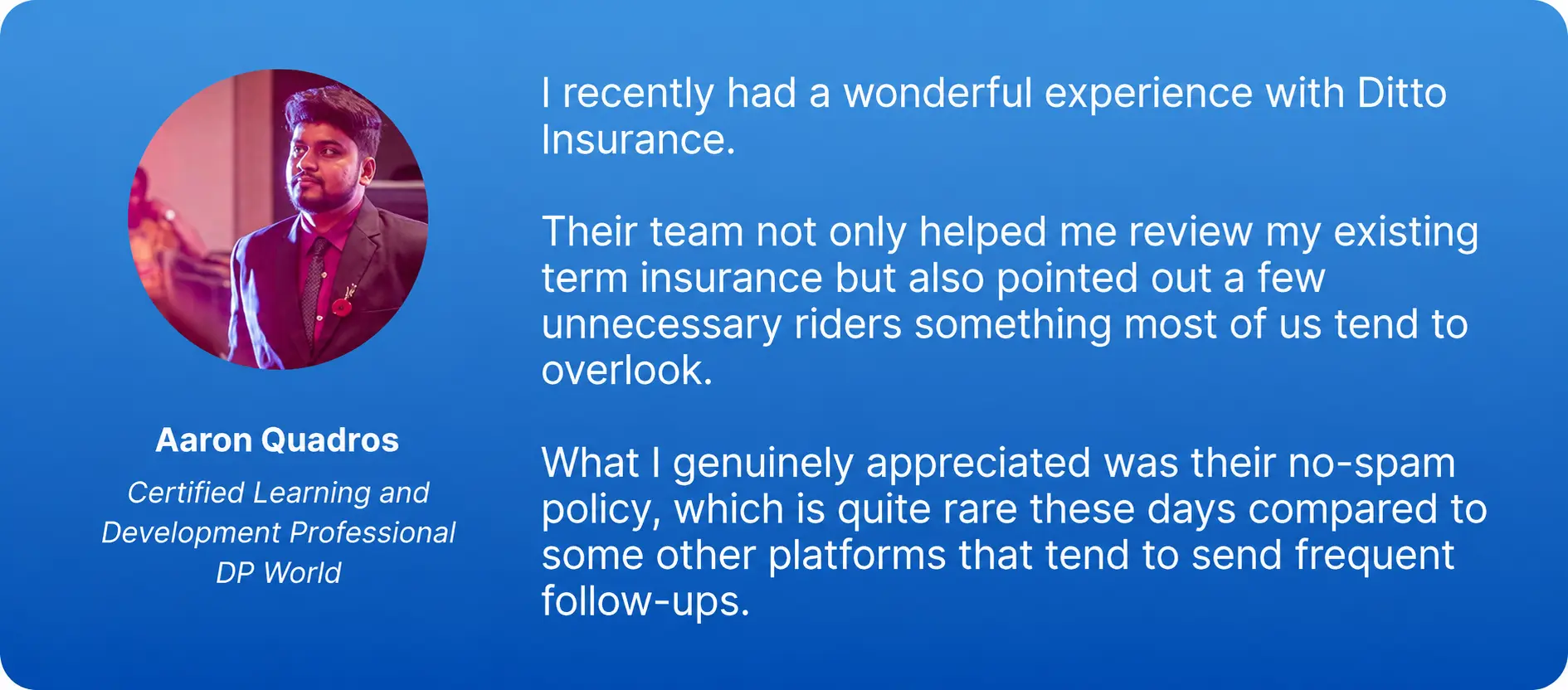
At Ditto, we’ve assisted over 12,00,000 customers with choosing the right insurance policy. Why customers like Aaron below love us:
- 100% Free Consultation
- No Spam. No Sales Pressure.
- Rated 4.9/5 on Google Reviews by 30,000+ Happy Customers
- Backed by Zerodha
- Dedicated Claim Support Team
- Compare Plans and Premiums with a Trusted Insurance Advisor
Confused about the right insurance? Speak to Ditto’s certified advisors for free, unbiased guidance. Book your call now or chat with us on WhatsApp. Slots fill up fast!
Conclusion
People in high-risk occupations should not assume personal term insurance is out of reach. While underwriting may be stricter, suitable coverage is often possible. Group insurance from employers can provide a useful safety net, especially when personal applications are postponed or declined.
However, it should complement, not replace, the best term insurance plans for long-term family protection.
Frequently Asked Questions
Last updated on: