



Overview
Missing a Life Insurance Corporation of India (LIC) premium can leave you confused about whether your policy is still active, when the lapse period begins, or how long you have to revive it. Understanding the FUP date helps you track your policy status and act on time.
This guide explains what FUP in LIC means, its implications, how to revive a lapsed policy, and the documents required.
What Is FUP in LIC and What Does the Full Form Mean?
FUP full form in LIC is First Unpaid Premium. It refers to the due date of your first missed renewal premium. However, reaching this date does not automatically mean your LIC policy has lapsed. You get a grace period to make the payment and keep the policy active.
- Annual Premiums: FUP is the due date of the first missed annual premium.
- Half-Yearly Premiums: FUP is the due date of the first missed half-yearly installment.
- Quarterly Premiums: FUP is the first missed quarterly installment due date.
Example: If your policy started on June 10, 2022, and you paid premiums in 2023 and 2024 but missed the 2025 premium, your FUP date is June 10, 2025.
Here’s a snippet from the LIC New Endowment Plan policy brochure that mentions first unpaid premiums.
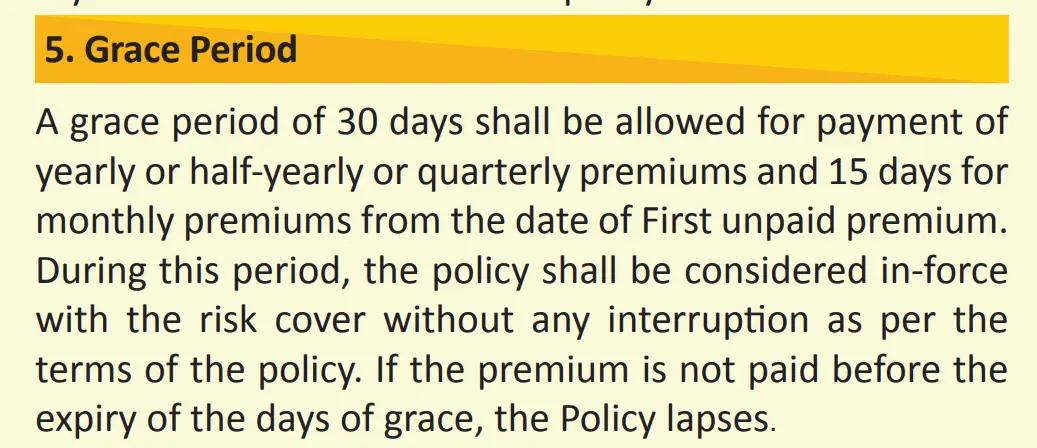
Note: FUP applies to policies with recurring premium payments, where subsequent premiums are due. A single-premium policy has no renewal premiums, so an FUP date does not arise in the same way.
Talk to an expert
today and
find
the right
insurance for you.


Where to Check the FUP Date on Your LIC Policy?
The FUP date is not mentioned in your original LIC policy documents or brochures because it depends on the first premium you actually miss. Your policy schedule mentions particulars like the date of risk and payment mode. However, your policy wording may still use the term FUP when explaining the applicable grace period, lapse, and revival provisions.
The most reliable place to check your FUP date is the LIC customer portal under “Policy Status”. LIC's portal displays key policy details, including the first unpaid premium, along with other particulars like the policy term and sum assured.
Note: You can also check your LIC policy status through the LIC branch servicing your policy. LIC provides policy status through both its branches and online services, including information on whether your policy is currently in force or has lapsed.
How FUP, the Grace Period, and Policy Lapse Are Connected
The three are not inherently the same, but they are closely connected in sequence. The FUP date, grace period, and policy lapse together determine what happens to your policy after you miss a premium.
When you miss a regular premium, the process generally follows a clear timeline from the FUP date through the grace period and, if the premium remains unpaid, to lapse.
- FUP Date Starts the Timeline: The first unpaid premium date is the original due date of the premium you missed. It marks the starting point for tracking the unpaid premium and the subsequent policy status.
- Grace Period Gives You Extra Time: After the FUP date, LIC provides a grace period to make the payment without immediately losing policy benefits. This is 15 days for monthly payments and 30 days for quarterly, half-yearly, and annual payments.
- Lapse Can Follow if You Do Not Pay: If the premium remains unpaid even after the grace period ends, the policy may lapse, subject to its terms. At this stage, the policy's active benefits may stop, although revival may still be possible under applicable conditions.
What Happens to Your LIC Cover After the FUP Date Passes?
When the FUP date passes, your life cover does not stop immediately. During the applicable grace period, the policy remains in force, allowing you to pay the overdue premium while retaining the policy benefits.
However, if you do not pay within the grace period, the policy may lapse, and risk cover can cease. If death occurs after lapse, the death benefit may not be payable, subject to the policy terms.
Different LIC policies can behave differently once the grace period ends. For example, under the current LIC New Endowment Plan, a policy can continue as a paid-up policy with a reduced death benefit after at least one full year's premium has been paid.
The plan also provides specific claim concessions. After three full years of premiums, death within six months of FUP may qualify for the stipulated benefit, subject to deductions. After five full years, this period extends to 12 months, subject to policy terms.

How to Revive a Lapsed LIC Policy From the FUP Date?
Check Whether Your Policy Is Eligible
Most LIC policies can generally be revived within five years from the FUP date, provided the policy has not reached maturity and the life insured is alive.
Check Your Outstanding Dues
Pay the unpaid premiums and applicable revival interest or charges. Confirm the exact amount through LIC's current revival quotation.
Submit Required Health Evidence
LIC may require a declaration of good health and, depending on factors such as your age, sum assured, and lapse period, a medical examination or additional evidence of continued insurability.
Revive Online or Through a Branch
You can check the available revival options through the LIC customer portal. Alternatively, visit the servicing LIC branch with the required documents and complete the revival process.
Wait for LIC's Approval Where Required
Revival is subject to the policy's terms and LIC's assessment. Once approved and the required payment is made, your policy can be restored under the applicable revival conditions.
Did You Know?
Interest and Documents Needed for LIC Policy Revival
If you pay the missed premium within the normal grace period, LIC lets you pay without interest on the overdue premium. However, once the policy enters the revival stage, you need to pay the outstanding premiums along with revival interest.
LIC does not have a single revival interest rate across all policies. Rates and calculation methods vary by product. Therefore, use LIC's official website or contact your agent to confirm the exact amount payable, rather than relying on generic rates found online.
For example, term plans such as Bima Kavach use a benchmark-linked revival interest rate. The rate is linked to the higher of the 10-year G-Sec yield plus 3% and LIC’s non-linked non-participating fund yield plus 1%, subject to the applicable rate for the relevant period.
Note: There is no universal document checklist for LIC policy revival. Requirements may vary based on the lapse period, age, sum assured, policy type, and riders. Know Your Customer (KYC) documents are required, while additional evidence may be needed to establish continued insurability.
FUP Versus DOC: Two LIC Policy Dates People Confuse
Note: The date of commencement of policy marks when your LIC policy contract begins, while the date of commencement of risk marks when the insurer's risk cover starts. These dates are often the same, but they can differ depending on the policy terms.
Why Choose Ditto for Life Insurance?
At Ditto, we’ve assisted over 12,00,000 customers with choosing the right insurance policy. Why customers like Aaron below love us:
- 100% Free Consultation
- No Spam. No Sales Pressure.
- Rated 4.9/5 on Google Reviews by 30,000+ Happy Customers
- Backed by Zerodha
- Dedicated Claim Support Team
- Compare Plans and Premiums with a Trusted Insurance Advisor
Confused about the right insurance? Speak to Ditto’s certified advisors for free, unbiased guidance. Book your call now or chat with us on WhatsApp. Slots fill up fast!
Conclusion
Understanding your FUP date helps you know when a missed LIC premium first became due, when the grace period applies, and whether revival may still be possible. However, if you are evaluating life insurance afresh, compare the best term insurance plans based on coverage and insurer quality rather than relying solely on traditional savings policies.
Frequently Asked Questions
Last updated on: