



Overview
Traditional life insurance plans offered by the Life Insurance Corporation of India (LIC) continue to attract buyers seeking stability and disciplined savings. But before investing, it's important to understand what they truly offer beyond the promises. In the next few minutes, understand the LIC New Endowment Plan features, returns, premiums, and whether it deserves a place in your financial plan.
What Is LIC New Endowment Plan?
LIC New Endowment Plan is a regular pay endowment plan that offers a guaranteed sum assured along with bonus participation, making it suitable for individuals who want to build a lump sum corpus while ensuring financial security for their family.
If you survive the policy term, you receive the maturity benefit with bonuses. If the policyholder passes away during the policy term, your nominee receives a death benefit along with accrued bonuses.
This plan can be purchased offline through licensed agents, brokers, and insurance marketing firms.
Key Features of LIC New Endowment Plan
- Death Benefit: If the life insured dies during the policy term while the policy is in force, LIC pays the higher of the basic sum assured or 7 times the annualized premium, along with any vested simple reversionary bonuses and FAB, if declared. Additionally, the total death benefit is guaranteed to be at least 105% of the total premiums paid up to the date of death, subject to the policy terms and conditions
- Participation in Profits: The policy participates in LIC's profits while it remains in force. You become eligible for simple reversionary bonuses declared by LIC from time to time, along with FAB, if applicable, at maturity or death.
- Settlement Option: Instead of receiving the maturity amount as a lump sum, you can choose to receive it in annual, half-yearly, quarterly, or monthly installments over 5, 10, or 15 years. This option is available for both in-force and paid-up policies.
- Premium Rebates: You can reduce your premium by choosing the yearly payment mode, which offers a 2% rebate, or the half-yearly mode, which offers a 1% rebate. Higher basic sum assured amounts also qualify for additional premium discounts.
- Policy Loan: A policy loan becomes available after one full year of premium payment. The loan amount depends on the policy's surrender value and can provide financial support without immediately surrendering the policy.
- Accidental Death & Disability Benefit Rider: This optional rider provides additional financial protection if the life insured dies or suffers permanent disability due to an accident. It can be added during the policy term, subject to eligibility conditions and rider availability.
- Accident Benefit Rider: This rider provides an additional payout if the life insured dies because of an accident. It can be added to an in-force policy, provided the remaining premium paying term is at least five years, and eligibility conditions are met.
- New Term Assurance Rider: This rider is available only when purchasing the policy. If the life insured dies during the policy term, it pays an additional term insurance benefit over and above the base policy's death benefit.
- Premium Waiver Benefit Rider: Designed for policies issued on a minor's life, this rider is taken on the proposer's life. If the proposer dies during the rider term, future premiums are waived, while the policy continues with all benefits intact, subject to rider conditions.
- Critical Illness Health Rider: Available only at the time of policy purchase, this optional rider provides a lump sum benefit if the life insured is diagnosed with a covered critical illness.
You can choose between coverage for 15 or 40 major critical illnesses, with the latter also including an Assisted Living Benefit (ALB). The rider remains active throughout the chosen rider term.
Take Note: You can choose either the Accidental Death & Disability Rider or the Accident Benefit Rider, along with eligible additional riders. The Critical Illness Rider premium cannot exceed 100% of the base policy premium, while the combined premium for all other life insurance riders is capped at 30% of the base policy premium.
While purchasing life insurance, not every rider adds meaningful value to your base plan. At Ditto, we recommend the Critical Illness Rider and the Waiver of Premium Rider for term insurance riders, as they offer the most practical protection.
Talk to an expert
today and
find
the right
insurance for you.


Eligibility, Policy Term, & Sum Assured
- Available for individuals aged 8 to 50 years at entry.
- Choose a policy term between 12 and 35 years, depending on your financial goal.
- Basic sum assured starts at ₹2 lakh, with higher coverage available subject to LIC's underwriting guidelines.
- The policy matures between ages 20 and 75, depending on the entry age and policy term selected.
- Nominees can receive the death benefit as a lump sum or in installments over 5, 10, or 15 years, based on the option chosen.
- Premiums can be paid yearly, half-yearly, quarterly, or monthly, allowing you to choose a payment schedule that best fits your finances.
Note: Choose a policy duration that aligns with your long-term financial goals, whether you're planning for family protection. Additionally, you must select a basic sum assured that suits your protection needs and budget, with higher coverage also making you eligible for premium rebates.
Premium Illustration and Maturity Returns
Sample Premiums by Policy Terms
Note: The illustrative premiums for a basic sum assured of ₹2 lakh are sourced from the LIC New Endowment Plan brochure.
Maturity Benefits
The above illustrative figures are derived from the plan brochure and are based on a 30-year-old life assured choosing a ₹2 lakh basic sum assured with a 35-year policy term and 35-year premium payment term.
Based on LIC's official benefit illustration, the approximate Internal Rate of Return (IRR) is around 1.4% per year under the 4% illustration and about 4.1% to 4.3% per year under the 8% illustration. The exact IRR may vary slightly depending on whether premium payments are assumed at the beginning or the end of each policy year.
These IRRs include assumed and non-guaranteed bonuses. Since future bonus declarations may differ, the actual maturity amount and effective return can be higher or lower than the illustrated figures.
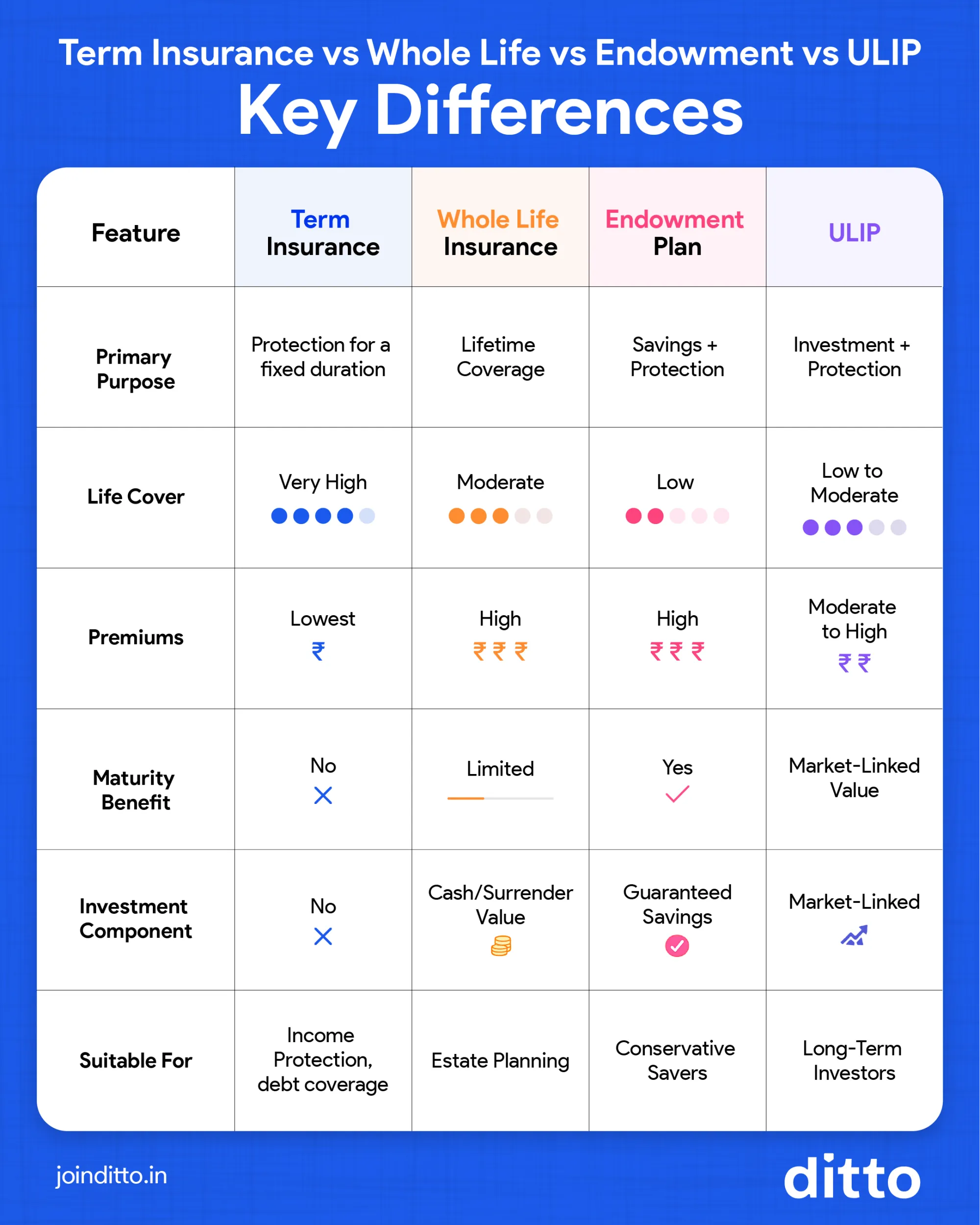
Note: Traditional endowment plans typically provide life cover of only 5x–10x the annual premium, while term insurance can offer protection of 20x–30x your annual income. Take a look at the infographic to see how different life insurance products compare with a term plan.
Pros and Limitations of LIC New Endowment Plan
Pros of LIC New Endowment Plan
- Encourages regular investing over the policy term, making it suitable for people who prefer structured wealth accumulation.
- Choosing the yearly payment mode or opting for a higher basic sum assured can reduce your effective premium through built-in rebates.
- Premiums may qualify for tax deductions, while maturity and death benefits can also enjoy tax advantages if the applicable conditions are satisfied. Premiums qualify for deduction under Section 123 (previously Section 80C), subject to the ₹1.5 lakh annual limit under the old tax regime. The maturity amount may remain tax-free under Section 11 (previously Section 10(10D)) only if the policy satisfies the applicable premium-to-sum assured requirement.
Limitations of LIC New Endowment Plan
- The maturity corpus may struggle to keep pace with rising education, healthcare, or retirement costs over very long investment periods.
- Since premiums continue throughout the policy term, missing payments can affect benefits and reduce the policy's overall value.
- Increasing or restructuring investments later is not as simple as with mutual funds or other market-linked investment products.
- Protection and savings are bundled into one product, making it difficult to optimize each objective independently.
Who Should Buy and Who Should Avoid the LIC New Endowment Plan
Why Choose Ditto for Life Insurance?
At Ditto, we’ve assisted over 8,00,000 customers with choosing the right insurance policy. Why customers like Aaron below love us:

- No-Spam & No Salesmen
- Rated 4.9/5 on Google Reviews by 25,000+ happy customers
- Backed by Zerodha
- Dedicated Claim Support Team
- 100% Free Consultation
You can book a FREE consultation. Slots are running out, so make sure you book a call now or chat over WhatsApp with our advisors.
Conclusion
The LIC New Endowment Plan is best suited for buyers who value capital stability, disciplined long-term savings, and LIC's established track record over aggressive wealth creation. It works well as a traditional savings-cum-insurance product, but its return potential is generally modest and may not keep pace with long-term inflation.
If your primary objective is comprehensive financial protection, consider keeping insurance and investments separate. Explore LIC term insurance plans or compare the best term insurance plans to secure higher life cover at a lower cost, while using dedicated investment products to build long-term wealth.
Frequently Asked Questions
Last updated on: