




Overview
According to the IRDAI Annual Report 2024–25, the Indian life insurance industry paid out ₹6,30,171 crore in total benefits during the year. Out of this, ₹47,490 crore was paid as death claims, while a much larger share was returned to policyholders during their lifetime through surrender and withdrawal benefits of ₹2,33,299 crore and maturity benefits of ₹2,23,034 crore.
In this article, we explain the key life insurance benefits, including financial protection, tax benefits, and optional rider-based coverage.
What Are the Key Benefits of Life Insurance?
- Income Replacement: If you are the primary earner, life insurance can replace the income your family would lose, helping them maintain their lifestyle and meet ongoing financial commitments.
- Securing Your Child's Future: Life insurance can help fund important milestones such as your child's education, higher studies, or marriage, ensuring long-term goals remain on track.
- Debt Protection: Life insurance proceeds can be used to repay outstanding liabilities, such as home loans, personal loans, or credit card debt, helping prevent these obligations from becoming a burden on your family.
How Does Life Insurance Financially Protect Your Family?
Life insurance creates a financial safety net by providing a lump-sum payout to the nominee if the policyholder passes away during the policy term. This helps the family manage expenses, meet future financial goals, and maintain financial stability.
For example, if a 30-year-old parent with a ₹2 crore life insurance cover passes away unexpectedly, the payout can help the family maintain their lifestyle and avoid financial disruption.
Types of Life Insurance and Their Benefits
Key Insights
At Ditto, we generally recommend term insurance over other types of life insurance for most people.
We prefer term insurance because it:
- Provides the highest coverage for the lowest cost.
- Helps replace the policyholder's income and protect the family's financial future.
- Keeps insurance and investments separate, making financial planning simpler and more efficient.
While products such as ULIPs, endowment plans, and money-back policies may suit specific savings or investment needs, they typically offer lower life cover for the same premium.
Tax Benefits of Life Insurance Under the Income Tax Act
Life insurance can provide valuable tax advantages in addition to financial protection.
Section 80C
Premiums paid towards eligible life insurance policies can qualify for a deduction under Section 80C of the Income Tax Act, 1961, subject to the applicable conditions and an overall deduction limit of ₹1.5 lakh per financial year.
The deduction is available for life insurance premiums paid for yourself, your spouse, or your children, provided the policy meets the prescribed requirements. Under the Income-tax Act, 2025, the corresponding provision is Section 123, read with Schedule XV.
Note: This benefit is available under the old tax regime.
Section 10(10D)
Death benefits paid to a nominee are fully tax-free under Section 10(10D) (now Section 11, Schedule II), regardless of the premium amount, ensuring the family receives the entire payout.
Certain life insurance policies may also offer tax-free maturity benefits, subject to specific conditions. For policies purchased after April 2012, the annual premium must not exceed 10% of the sum assured. For ULIPs purchased on or after 1 February 2021, the aggregate annual premium must not exceed ₹2.5 lakh to retain tax-free maturity benefits. If this limit is exceeded, gains are taxed as capital gains.
Similarly, for traditional life insurance policies such as endowment and money-back plans purchased on or after 1 April 2023, the aggregate annual premium must not exceed ₹5 lakh, failing which maturity proceeds are taxed at the policyholder's applicable income tax slab rate.
Since tax treatment varies by policy type, premium amount, and prevailing regulations, life insurance should primarily be purchased for financial protection, with tax benefits viewed as an added advantage.
Talk to an expert
today and
find
the right
insurance for you.


Benefits Beyond Death Cover: Riders, Savings, Retirement
- Enhanced Protection Through Riders: Life insurance policies can be customized with riders such as accidental death, accidental total and permanent disability, critical illness, and waiver of premium benefits, providing broader financial protection against unforeseen events.
At Ditto, we generally recommend considering the Critical Illness (CI) and Waiver of Premium (WOP) riders, as they can strengthen financial protection during major health setbacks. Learn more in our guide to term insurance riders. - Savings and Wealth Creation: Some life insurance products, including endowment plans, whole life policies, and ULIPs, combine life cover with savings or investment features, helping policyholders build a corpus over the long term.
- Retirement Planning: Certain insurance and pension-oriented products can help accumulate funds for retirement and provide a source of post-retirement income, depending on the policy structure.
When Do You Actually Need Life Insurance?
You should consider buying life insurance if you:
- Are Married or Have a Financially Dependent Partner: The payout can help your spouse manage household expenses and maintain their lifestyle.
- Have Children: Life insurance can help cover childcare costs, education expenses, and other future financial needs.
- Have Outstanding Loans: If you have a home loan, personal loan, or other significant debt, life insurance can prevent these liabilities from becoming a burden on your family.
- Support Aging Parents or Other Dependents: The death benefit can provide them with continued financial support.
- Own a Business: Life insurance can help protect business continuity and support partners or family members who depend on the business income.
Who Does Not Need Life Insurance?
You Have No Current or Future Financial Dependents:
You Have Sufficient Wealth to Self-Insure
There Are No Major Financial Responsibilities
Why Choose Ditto for Life Insurance?
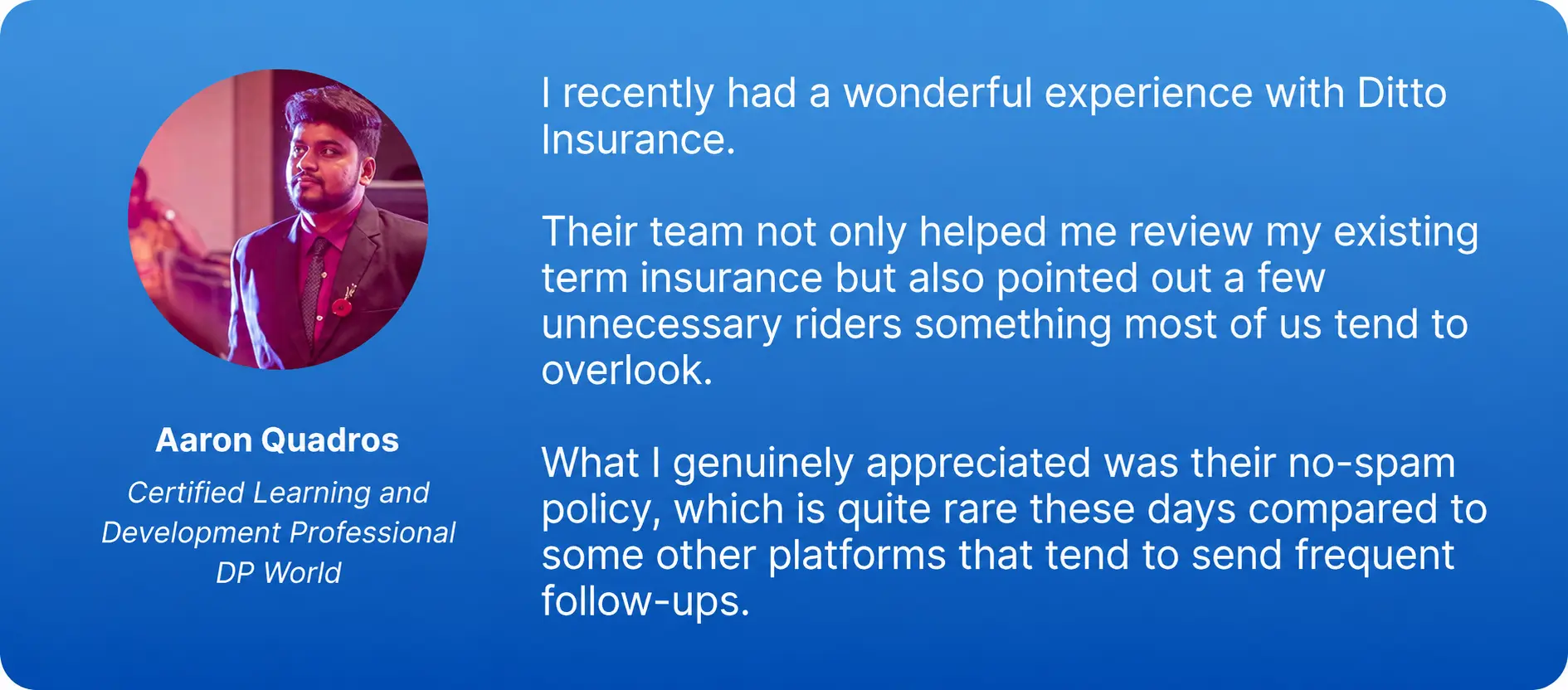
At Ditto, we’ve assisted over 12,00,000 customers with choosing the right insurance policy. Why customers like Aaron below love us:
- 100% Free Consultation
- No Spam. No Sales Pressure.
- Rated 4.9/5 on Google Reviews by 30,000+ Happy Customers
- Backed by Zerodha
- Dedicated Claim Support Team
- Compare Plans and Premiums with a Trusted Insurance Advisor
Confused about the right insurance? Speak to Ditto’s certified advisors for free, unbiased guidance. Book your call now or chat with us on WhatsApp. Slots fill up fast!
Conclusion
Life insurance is one of the most effective ways to protect your family's financial future. It can provide income replacement, help repay outstanding debts, fund future goals, and offer additional benefits such as tax advantages and rider-based protection.
While some policies include savings and retirement features, the primary purpose of life insurance should always be financial security for your loved ones. Choosing the right cover at the right stage of life can help ensure your family remains financially stable, even in your absence.
That's why, at Ditto, we recommend opting for a pure term insurance plan. It focuses solely on protection, offers high life cover at an affordable premium, and is the option we would personally choose to safeguard our families' financial future.
Frequently Asked Questions
Last updated on: