



Overview
A health insurance policy offering up to ₹5 crore in coverage and unlimited restoration sounds promising. But what if it also comes with room-rent restrictions or requires you to pay 20% of the admissible claim amount if you choose Zone B pricing but receive treatment in Zone A?
These restrictions matter when assessing whether IndusInd Health Gain 3.0 is worth buying.
Introduced in 2026, the updated version of Reliance Health Gain offers three variants, flexible coverage options, and several optional add-ons. However, the insurer's claims performance and certain policy restrictions raise questions about whether these benefits are enough.
In this guide, we'll examine what IndusInd Health Gain 3.0 offers and whether it's worth considering in 2026.
Key Features and Riders of IndusInd Health Gain 3.0
IndusInd Health Gain 3.0 offers three plan variants: Plus, Power, and Prime, with different sum insured options and room eligibility. All three variants include hospitalization coverage, restoration benefits, and cumulative bonuses.

Core Features of IndusInd Health Gain 3.0
Plan Variants and Sum Insured
Hospitalization Coverage
Pre- and Post-Hospitalization
Unlimited Restoration Benefit
Extra Sum Insured (SI)
Cumulative Bonus
Preventive Health Check-Ups and Vaccinations
Additional Policy Benefits
Optional Riders and Add-Ons
- Chronic Shield: Covers declared and insurer-accepted pre-existing asthma, hypertension, high cholesterol, and diabetes from day 31. You can only select it when purchasing the policy for the first time, and it remains applicable for life. This add-on is unavailable to children and adults aged 61 or above at first policy inception.
- Double Cover: This add-on replaces the standard 20% Extra Sum Insured benefit with an additional 100% of your base sum insured. You can use this extra coverage once per policy year during an eligible hospitalization.
- Guaranteed Cumulative Bonus: Option A prevents your earned cumulative bonus from decreasing even if you make a claim. Option B increases your cumulative bonus by 100% of the base sum insured for every claim-free year, up to a maximum of 300%.
- Consumable Cover: Covers eligible non-medical hospital consumables, including gloves, syringes, and surgical kits, that are otherwise excluded from standard hospitalization coverage.
- Pre-Existing Disease (PED) Waiting Period Reduction: You can reduce the standard 36-month waiting period for pre-existing diseases to 24 or 12 months by selecting this add-on. However, you cannot combine it with Chronic Shield.
- Mother and Child Care Bundle: This add-on covers eligible maternity, newborn hospitalization, vaccination, and infertility expenses, with a shared coverage limit of ₹1 lakh to ₹2 lakh. Both spouses must be insured. Waiting periods depend on the policy term and selected option, while infertility benefits have separate waiting periods. You cannot combine this bundle with a voluntary co-payment or aggregate deductible add-on.
- Convenience Cover Bundle: Extends pre- and post-hospitalization coverage to 90 and 180 days, respectively. It also includes eligible air ambulance expenses up to 7.5% of base sum insured or ₹5 lakh, whichever is higher. The bundle also covers up to ₹1,000 in registered radio taxi expenses per hospitalization. Depending on the variant, it may pay ₹10,000 to ₹25,000 toward recovery expenses after a qualifying hospital stay of at least seven days.
Note: Benefits, limits, eligibility, and exclusions are subject to policy terms. For complete details on coverage and add-ons, refer to the official prospectus and other policy documents before purchasing.
Eligibility Criteria and Documents Required for Application
Eligibility Criteria
Plus covers you and your spouse. Power also allows one set of parents or parents-in-law, while Prime allows both sets. Extended family members, including siblings, grandparents, and grandchildren, may be covered under individual coverage but not under family floaters.
Documents Required
- Identity and Address Proof: Aadhaar card, PAN card, passport, voter ID, driving license, or other accepted KYC documents.
- Proof of Income: Bank statements, Income Tax Returns (ITR), or recent payslips, if required for higher sum insured amounts or financial underwriting.
- Medical Records: Existing medical reports, prescriptions, or discharge summaries, particularly when declaring pre-existing conditions.
- Proposal Form and Bank Details: Completed application form, health declarations, and relevant bank account details.
- Portability Documents: Existing policy details, renewal notice, and claim history when switching from another insurer.
Additional documents or medical examinations may be requested depending on the applicant's age, medical history, chosen coverage, and underwriting requirements.
Sample Premiums by Age and Sum Insured
The premiums are illustrative and calculated for residents in Delhi (pincode: 110010) for a 1-year tenure. Your final premium will depend on the plan you choose, your age, medical history, cover amount, add-ons, and discounts.
Talk to an expert
today and
find
the right
insurance for you.


IndusInd General Insurance: Performance Metrics
Note: This information is for the insurer as a whole and comes from IRDAI annual reports and IndusInd General public disclosures. To explore more such data, please refer to Ditto Data Lab.
Pros and Cons of IndusInd Health Gain 3.0
Pros
- Family Coverage: The Prime variant allows up to 12 family members, including parents and parents-in-law, under one family floater policy.
- Early Coverage for Chronic Conditions: The Chronic Shield add-on covers accepted pre-existing conditions such as diabetes, hypertension, high cholesterol, and asthma from day 31.
- Additional Benefits: The policy includes a policy pause option for overseas travel, waiting-period benefits for newly added spouses, and preventive health check-ups and vaccinations from day 1.
Cons
- Below-Average Claim Settlement Ratio: The IndusInd health insurance claim settlement ratio of 86.46% is below the industry average and Ditto’s benchmark of 90%, raising concerns about its claims performance.
- Recent Ownership Change: Reliance General Insurance has undergone an ownership change and rebranding as IndusInd General Insurance. While its historical track record remains relevant, monitor its claims handling and service performance under the new ownership.
- Zone-Based Co-Payment: A 20% co-payment applies if you pay premiums for Zone B cities like Hyderabad, Chennai, Pune, or Jaipur but receive treatment in Zone A, which includes Delhi-NCR, Mumbai Metropolitan Region (MMR), Gujarat, and Kolkata.
- Room Rent Restriction: The Plus variant only covers a Single Private AC Room. Choosing a higher room category may result in proportionate deductions on associated hospital expenses as per the plan’s terms and conditions.
Why Choose Ditto for Health Insurance?
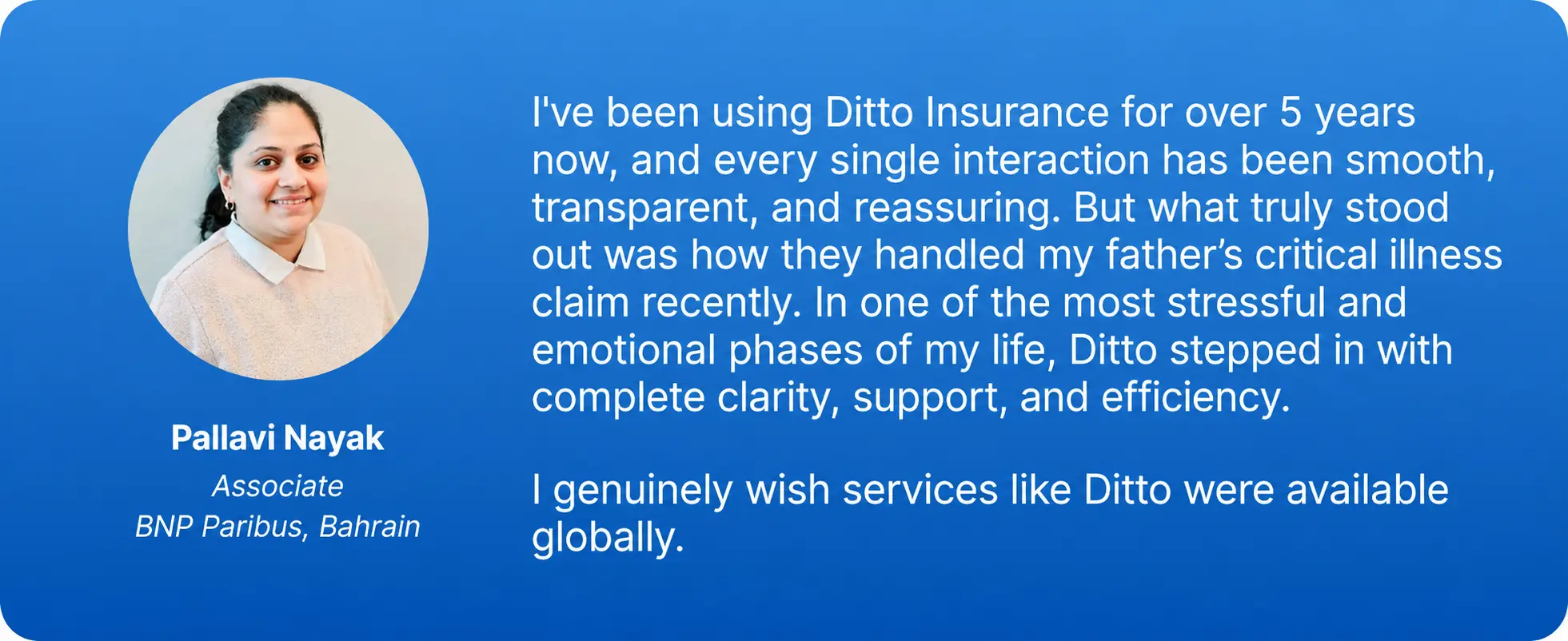
At Ditto, we’ve assisted over 12,00,000 customers with choosing the right insurance policy. Why customers like Pallavi love us:
- 100% Free Consultation
- No Spam. No Sales Pressure.
- Rated 4.9/5 on Google Reviews by 30,000+ Happy Customers
- Backed by Zerodha
- Dedicated Claim Support Team
- Compare Plans and Premiums with a Trusted Insurance Advisor
Confused about the right insurance? Speak to Ditto’s certified advisors for free, unbiased guidance. Book your call now or chat with us on WhatsApp. Slots fill up fast!
Conclusion
IndusInd Health Gain 3.0 offers flexible coverage options and several benefits that can make it worth considering, particularly for families with different healthcare needs.
However, the insurer's below-average claim settlement ratio and recent ownership change raise questions about its future claims and service performance.
For now, we recommend a wait-and-watch approach until the insurer establishes a more consistent track record under its new management. Before deciding, compare the plan’s coverage, exclusions, premiums, and claims performance with other established insurers. You can also explore our guide to the best health insurance plans in India to see how IndusInd Health Gain 3.0 compares with other options.
Frequently Asked Questions
Last updated on: