



Overview
Health insurance is meant to protect you during medical emergencies, but claim rejections are more common than many expect. One of the most common reasons for this is failing to disclose pre-existing diseases, which is often avoidable with proper disclosure at the time of purchase.
If you have diabetes, hypertension, a thyroid condition, past surgeries, or any ongoing illness, your insurer treats it as a PED in health insurance. This means you need to wait before PED-related hospitalization expenses are covered, and it can also impact your premium and overall coverage.
This guide explains PED in health insurance, including its meaning, common conditions, waiting period rules, and how to choose the right plan with pre-existing illnesses.
Common Examples of PEDs in Health Insurance
The Insurance Regulatory and Development Authority of India (IRDAI) has not issued a single fixed list of PED in health insurance. Any condition diagnosed or treated before policy purchase counts as a PED.
That said, here are the most common PEDs in health insurance:
Note: If you have never received a diagnosis, medical advice, or treatment before buying the policy, insurers typically cannot classify it as a PED at the time of purchase. During the application process, they assess your disclosures and may request medical records. If a condition is diagnosed after you buy the policy, it does not count as a PED. However, you should inform the insurer promptly so you do not face any issues when making a claim.
PED Waiting Period: IRDAI Rules Explained
The PED waiting period in health insurance is the time during which claims for pre-existing conditions are not payable.
When you buy a policy with an existing illness, insurers do not cover related treatment costs immediately since these are considered predictable medical expenses.
As per IRDAI guidelines, a condition qualifies as a PED if you were diagnosed, received medical advice, or underwent treatment for it within 36 months before the policy start date. That said, in our experience at Ditto, insurers usually assess your broader medical history during underwriting and may ask for older records as well.
Under the IRDAI (Insurance Products) Regulations, 2024, effective April 1, 2024, insurers can impose a maximum waiting period of 3 years for PEDs. Earlier, this limit was 4 years.
Key Rules to Know
- You must renew your policy without a break. Any lapse can reset the waiting period.
- Once the waiting period is completed, the insurer covers the disclosed PED as per the policy terms.

Why Do Insurers Keep a Waiting Period for PEDs?
Risk Assessment
Health insurance operates through risk pooling, where multiple policyholders pay premiums while only a small number file claims. Pre-existing diseases increase the likelihood of early and repeated claims because these conditions often require multiple hospitalizations. If insurers cover these costs from day one, it becomes difficult to estimate overall claim expenses with stability. A waiting period allows insurers to manage this risk better and keep premiums fair for everyone.
Preventing Misuse
Adverse selection happens when people buy insurance only after they fall sick, while healthier individuals delay buying coverage. This increases claim costs and pushes premiums up for everyone. Waiting periods encourage people to buy insurance early and stay insured over the long term, which helps keep the risk pool balanced.
Talk to an expert
today and
find
the right
insurance for you.


How PED Affects Your Health Insurance Claim?
Pre-existing diseases do not automatically lead to claim rejection. In most cases, claims are denied only when there is non-disclosure at the time of purchase, the waiting period for the condition has not yet been completed, or the treatment falls under a policy exclusion. Once these conditions are met, PED-related claims are covered as per policy terms.
However, there are a few possible outcomes you may face when applying for a health insurance policy after declaring your PEDs.
How PEDs Affect Your Health Insurance Application?
1. Accepted Without Any Conditions: The insurer approves your policy without any loading charges, permanent exclusions, or PED waiting period. This usually happens when the condition is low-risk or well-controlled. However, standard waiting periods, such as the 30-day initial waiting period and specific illness waiting periods, still apply.
2. Accepted With Waiting Period: The policy is issued, but coverage for the declared PED is delayed. You must complete the mandatory waiting period (up to 3 years as per IRDAI) before claims related to that condition are payable.
3. Accepted With Loading and Waiting Period: The policy is approved, but with a higher premium due to added risk. At the same time, a waiting period still applies before PED-related coverage begins.
4. Accepted With Permanent Exclusion: The policy is issued, but the insurer permanently excludes the specific condition. This means any treatment related to that PED will never be covered.
5. Application Declined: The insurer may reject the application entirely if the medical risk is too high to cover. Alternatively, the insurer might offer a specialized product designed for high-risk individuals, although it may come with certain limitations.
Tips for Buying Health Insurance with a PED
1. Always Disclose PEDs Honestly: IRDAI requires full disclosure of your medical history during policy purchase. If you hide a PED, the insurer may reject your claim or even cancel the policy. After 5 continuous years, the moratorium period comes into effect, so the insurer cannot contest your claim on the grounds of non-disclosure, except in cases of proven fraud or permanent exclusions. Still, it is best to disclose all medical conditions honestly from the beginning.
2. Consider Add-ons Carefully: Some add-ons reduce the waiting period for PEDs but come at an additional cost. The ABCD Chronic Care add-on in HDFC Ergo Optima Secure reduces the waiting period for asthma, high blood pressure, cholesterol, and type-2 diabetes from 3 years to 30 days. Care Supreme's Reduction in PED rider brings the PED waiting period down from 3 years to either 2 years or 1 year for any illness (except for specific listed illnesses).
3. Renew Your Policy on Time: Never let your policy lapse. Any break in coverage can reset your PED waiting period entirely. Set a renewal reminder well before your due date. Most insurers offer a grace period of 15-30 days after renewal, but your waiting-period credit is at risk if the policy lapses after that.
4. Port on Time if You Plan to Switch: If you are planning to port your policy, initiate the process at least 30-45 days before the renewal date. The waiting periods already served under your existing policy and moratorium benefits are carried forward to the new insurer, up to the existing sum insured. However, any increase in sum insured at the time of porting will attract fresh waiting periods for the additional coverage.
5. Read the Policy Document Carefully: Read the policy wording in full. Check for sub-limits on PED-related treatments, specific illness waiting periods (for example, joint replacement surgery), and whether your condition is listed as a permanent exclusion. Knowing this upfront helps you avoid unpleasant surprises at claim time.
Why Talk to Ditto for Your Health Insurance?
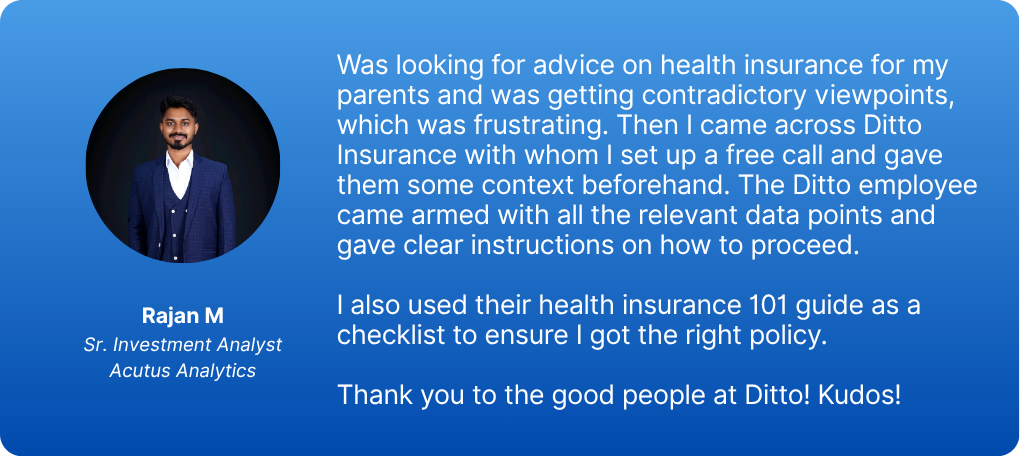
At Ditto, we’ve assisted over 8,00,000 customers with choosing the right insurance policy. Why customers like Rajan below love us:
- No-Spam & No Salesmen
- Rated 4.9/5 on Google Reviews by 15,000+ happy customers
- Backed by Zerodha
- Dedicated Claim Support Team
- 100% Free Consultation
You can book a FREE consultation. Slots are running out, so make sure you book a call or WhatsApp us now!
Conclusion
Understanding PED in health insurance is important before buying a policy, especially if you already have a medical condition. Proper planning can help you avoid claim issues later.
Here are a few things to keep in mind:
- Disclose all medical conditions honestly during purchase
- Compare waiting periods before choosing a plan
- Check add-ons that help reduce PED waiting time
- Renew your policy continuously without breaks
- Buy health insurance early to complete waiting periods sooner
- Read policy wording carefully to understand coverage limits and timelines
A well-chosen policy can offer strong financial protection even if you have an existing illness. If you are unsure which plan suits your condition, explore our recommendations for the best health insurance plans in India.
Frequently Asked Questions
Last updated on: