The ACKO Health Insurance premiums depend on factors such as the chosen plan (ACKO Platinum or ACKO Platinum Lite), sum insured, age, family size, city of residence, medical history, and underwriting outcome.
You will not find a single static ACKO Health Insurance premium chart because premiums are personalized for every applicant. Instead, ACKO uses an AI-based pricing engine to generate customized quotes based on the applicant's profile. Buyers can use ACKO's online premium calculator to estimate premiums for their specific requirements.
Unlike traditional insurers that publish detailed premium tables in their brochures, ACKO provides only sample premium illustrations and product details. The final premium, available plan variants, and applicable benefits are determined after evaluating the applicant's profile and underwriting requirements.
Health insurance premiums are an important factor when choosing a policy, but they should not be the only deciding factor. Buyers should also compare the coverage, waiting periods, exclusions, claim settlement performance, and policy features before making a purchase.
Since ACKO follows a personalized pricing model, the quoted premium is only one part of the decision. Understanding what the premium includes and how the benefits differ between ACKO Platinum and ACKO Platinum Lite is equally important when evaluating the overall value of a policy.
This article shares sample premium estimates across different buyer profiles, explains the key factors that influence premiums, compares ACKO Platinum and Platinum Lite, and highlights the claim metrics and policy features buyers should review before purchasing.
Not sure whether ACKO offers the right balance of price and coverage? Book a call or chat on WhatsApp with Ditto's IRDAI-certified advisors.
What Is the ACKO Health Insurance Premium Chart?
ACKO Health Insurance does not publish a comprehensive health insurance premium chart that includes rates across all ages, cities, sum insured options, family sizes, and medical profiles. Instead, premiums are generated individually through its online premium calculator based on the applicant's details.
The insurer's product brochures and prospectus outline the plan features and include a few sample premium illustrations, but they are not a complete rate card. It also specifies that not all benefits, plan variants, or features may be available to every applicant, as these are subject to eligibility, underwriting, and other applicable terms and conditions. This makes it important to review the available benefit details and the final policy schedule before making a purchase.
To estimate premiums, buyers need to enter details such as age, city, family composition, and sum insured in ACKO's premium calculator. The displayed premium is indicative and may change after underwriting or medical evaluation.
Since ACKO follows a direct-to-consumer (D2C) model, policies are purchased, serviced, and claimed digitally without agents or offline paperwork. As a result, standardized ACKO quotes may not always be available across comparison platforms.
Sample ACKO Health Insurance Premiums by Age and Sum Insured
Family Floater, 2 Adults, Senior Citizens Ages 62 & 63
₹94,106
₹78,083
Note: These are sample premiums for a Delhi-based applicant (PIN 110010) with a ₹1 crore sum insured. Actual premiums may vary based on age, family composition, medical history, location, underwriting, and selected add-ons. Since ACKO uses a personalized pricing model, not all applicants will see the same premium or plan options.
Talk to an expert today and find the right insurance for you.
ACKO Platinum Health vs ACKO Platinum Lite Comparison
Feature
ACKO Platinum
ACKO Platinum Lite
Sum insured
Up to ₹1 crore & unlimited (subject to applicability)
Up to ₹1 crore
Waiting periods
Initial and specific illness waiting periods are not applicable
Initial waiting period: 30 days and 2 years (specified illnesses) apply
Pre-existing diseases
0-3 years, based on health evaluation and underwriting
Standard waiting period of 3 years
Restrictions
No room rent restrictions, disease-wise limits, or co-payments
No room rent restrictions, disease-wise limits, or co-payments
Consumables cover
Built-in. Covers eligible non-medical expenses (consumables) incurred during hospitalization, subject to policy terms
Built-in. Covers eligible non-medical expenses (consumables) incurred during hospitalization, subject to policy terms
No Claim Bonus
Built-in. Sum insured increases by 100% after every claim-free year, up to the limit specified in the policy
Built-in. Sum insured increases by 100% after every claim-free year, up to the limit specified in the policy
Restoration Benefit
Built-in. Automatically restores the sum insured after it is exhausted by an admissible claim, as per the policy terms and conditions
Built-in. Automatically restores the sum insured after it is exhausted by an admissible claim, as per the policy terms and conditions
Best Suited For
Buyers seeking broader coverage and quicker access to benefits
Budget-conscious buyers comfortable with standard waiting periods
Factors That Affect Your ACKO Health Insurance Premium
Age: Age is one of the biggest factors affecting premiums. Since the likelihood of making a claim increases with age, premiums become higher for older applicants.
City: Healthcare costs vary across locations. As a result, people living in metro cities pay higher premiums than those in smaller cities or towns.
Sum Insured: Choosing a higher sum insured increases the premium, but not always in direct proportion. For example, upgrading from ₹25 lakh to ₹1 crore does not increase the premium by 4 times.
Plan Variant: ACKO Platinum costs more than ACKO Platinum Lite because it offers shorter waiting periods based on health evaluation.
Medical History: Existing medical conditions and pre-existing diseases can influence the premium, waiting periods, underwriting decisions, or policy exclusions. Depending on the health assessment, ACKO may charge a higher premium.
Individual Vs. Family Floater: A family floater policy is often more cost-effective than purchasing separate individual policies for each family member. However, all insured members share the same sum insured.
Optional Add-Ons: Choosing optional add-ons, such as restoration benefit, daily cash allowance, or other optional covers (where available), can increase the overall premium payable under the policy.
ACKO Health Insurance Claim Settlement Ratio and Review
ACKO has maintained an average health insurance Claim Settlement Ratio (CSR) of 95.64% during FY 2024-26, indicating that it has settled a high proportion of eligible health insurance claims during this period. While this reflects a strong claims track record, the CSR alone does not provide a complete picture of an insurer's overall performance.
Before purchasing a policy, buyers should also evaluate factors such as waiting periods, coverage, exclusions, network hospitals, customer service, and the claims experience. For a detailed assessment of ACKO's policy features, strengths, limitations, and claims performance, refer to our ACKO health insurance review.
Why Choose Ditto for Health Insurance?
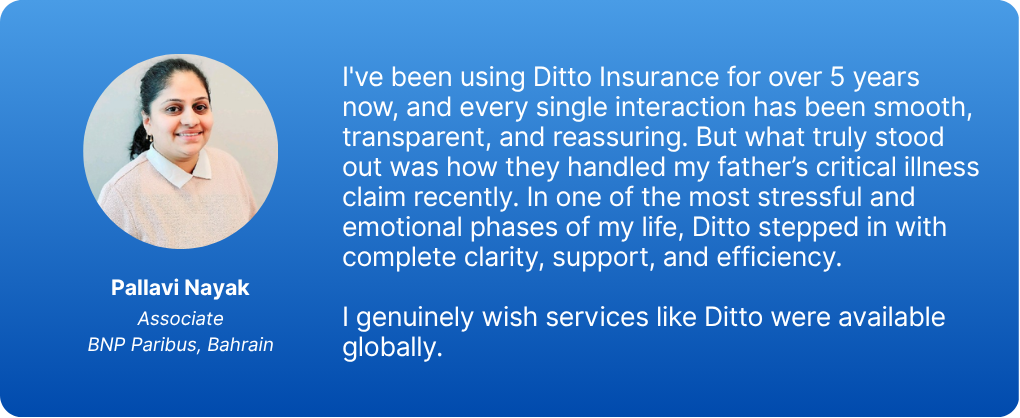
At Ditto, we’ve assisted over 8,00,000 customers with choosing the right insurance policy. Why customers like Pallavi below love us:
No-Spam & No Salesmen
Rated 4.9/5 on Google Reviews by 25,000+ happy customers
ACKO offers competitive health insurance premiums, especially for younger buyers, but the final premium depends on factors such as age, location, family size, medical history, and underwriting. When choosing between ACKO Platinum Health and Platinum Lite, don't compare premiums alone.
Consider waiting periods, coverage, exclusions, claim settlement performance, and other policy terms to determine which plan offers better value. For a more comprehensive evaluation of the insurer's coverage, features, and claims performance, read our ACKO health insurance review before making a decision. If you're still unsure, compare ACKO with other established insurers and choose the plan that best matches your healthcare needs and budget.
Frequently Asked Questions
Does ACKO have a fixed premium chart for health insurance?
No. ACKO does not publish a fixed health insurance premium chart that lists rates for every age, city, sum insured, and family combination. Instead, ACKO's AI-based pricing engine generates personalized premiums using factors such as age, location, family size, medical history, sum insured, and other applicant details. As a result, not every buyer will see the same premium, plan variant, or coverage options. The product brochures include only sample premium illustrations, not a comprehensive rate card, and the final premium is determined after underwriting and eligibility assessment.
How much does ACKO health insurance cost for a 25-year-old?
For a healthy 25-year-old living in Delhi and purchasing a ₹1 crore health insurance policy, the annual premium starts at around ₹16,178 for ACKO Platinum and ₹13,075 for ACKO Platinum Lite, based on the sample quotes used in this comparison. These estimates assume no declared pre-existing diseases, a one-year policy term, and a standard applicant profile. The final premium may vary depending on factors such as age, city of residence, family composition, medical history, underwriting outcome, available add-ons, applicable discounts, and other policy-specific details at the time of purchase.
What is the difference between ACKO Platinum and ACKO Platinum Lite?
ACKO Platinum and ACKO Platinum Lite are comprehensive health insurance plans, but they differ mainly in their waiting periods, sum insured options, and underwriting. Platinum Lite offers coverage from ₹10 lakh to ₹1 crore with a 30-day initial waiting period, a 2-year waiting period for specified illnesses, and a 3-year waiting period for pre-existing diseases. ACKO Platinum offers ₹1 crore or unlimited coverage, waives the initial and specific illness waiting periods, and applies a 0-3-year waiting period for pre-existing diseases, based on the applicant's health evaluation. Both variants have no room-rent restrictions, no disease-specific sub-limits, no co-payment, and include an inflation-protection benefit.
Is ACKO Platinum worth the extra premium?
Whether ACKO Platinum is worth the additional premium depends on your healthcare needs and budget. Platinum generally costs 21% to 49% more than Platinum Lite because it offers shorter waiting periods and broader coverage. For example, a healthy 25-year-old pays about ₹3,103 more annually, while the premium difference for a senior-citizen floater is about ₹16,023. Buyers expecting to use their policy sooner may benefit from Platinum, while younger and healthier individuals may find Platinum Lite offers better overall value.
What factors affect an ACKO health insurance premium?
Several factors determine your ACKO health insurance premium, including your age, city or PIN code, chosen sum insured, plan variant, medical history, family composition, and underwriting outcome. Age is one of the biggest pricing factors, as older applicants are more likely to make claims. Premiums also increase with higher sum insured amounts, although not always in direct proportion. Choosing a family floater instead of separate individual policies can often reduce overall costs. In addition, selecting available add-ons can increase the final premium payable under the policy.
What is ACKO's health insurance claim settlement ratio?
ACKO has maintained an average Claim Settlement Ratio (CSR) of 95.64% during FY 2024-26, indicating a strong record of settling eligible health insurance claims. While a high CSR is an important indicator of an insurer's claims performance, it should not be the sole factor when choosing a health insurance policy. Buyers should also compare waiting periods, coverage limits, exclusions, network hospitals, customer support, and the overall claims experience. Evaluating these factors together provides a more complete picture of whether the policy offers the right value for your healthcare needs and budget.
Why is ACKO health insurance cheaper than that of many other insurers?
ACKO follows a direct-to-consumer (D2C) model, selling health insurance policies online without relying on agents or extensive offline distribution. This helps reduce operating and distribution costs, enabling the insurer to offer competitive premiums. In addition, its AI-based pricing engine personalizes premiums based on each applicant's profile. However, premium should not be the only factor when choosing a policy. Buyers should also compare coverage, waiting periods, exclusions, claim settlement performance, network hospitals, customer support, and overall policy benefits to determine which plan offers the best long-term value.
How many network hospitals does ACKO have for cashless claims?
ACKO offers access to a cashless network of over 11,500+ hospitals across India, although the exact number may change as hospitals are added to or removed from the network. A large hospital network improves access to cashless treatment during both planned and emergency hospitalizations, reducing the need for reimbursement claims. However, network availability can vary by city and hospital. Before purchasing a policy or scheduling treatment, buyers should confirm that their preferred hospital is part of ACKO's current cashless network to ensure they can avail of cashless hospitalization benefits.




![ACKO Health Insurance Premium Chart [2026]](https://stat.joinditto.in/images/2026/07/Acko-Health-Insurance-Premium-Chart-@2x.webp)