



Overview
Pet ownership in India has changed. Dogs and cats are no longer just animals you feed and house, they're family. And that shift comes with a real change in how much you're willing to spend on their health and wellbeing.
Veterinary costs are climbing fast. Routine illnesses, infections, accidents, and surgeries are now just part of responsible pet ownership for many people. That's exactly why pet insurance is becoming more relevant in India.
Countries like the US and UK have been doing this for years. North America alone had 7.03 million insured pets by the end of 2024. India is still early, but the logic is the same: as care becomes more advanced and more expensive, insurance starts to look less like a luxury and more like a safety net.
In this guide, we cover how pet insurance works in India, which plans are available, what gets excluded, and how to decide if it's right for your pet.
What Is Pet Insurance?
Pet insurance is a general insurance product regulated by IRDAI. You pay an annual premium, and the insurer covers eligible vet costs for your pet up to a defined sum insured.
Pet insurance in India runs almost entirely on a reimbursement model. Here's how it works:
- Your pet falls ill or gets hurt.
- You visit a licensed vet and pay the bill.
- You submit the invoice, medical records, and claim form to your insurer.
- The insurer reimburses the eligible amount, usually within 7 to 15 business days.
Quick Note: Most plans have a 30-day waiting period for illness. Accidents are covered from day 1. So buy insurance when your pet is young and healthy, not when they are old and have developed medical conditions. The planning should be similar to how you would approach your own health insurance.
Does Pet Insurance in India Cover Any Species of Pet?
Honest answer: It's mostly a dogs-and-cats product right now.
Most retail pet insurance products from major insurers in India currently focus on these species. The reason is simple: Insurers need enough claims data to price risk correctly. Dogs and cats have that. Parrots, rabbits, hamsters, and turtles don't, at least not yet.
A small number of niche providers do cover exotic pets like birds and reptiles, but the market is thin, coverage is narrow, and pricing is irregular. You'd typically need to go through a broker since they can help with the purchase and streamline the claim processing.
What About Livestock?

What Does Pet Insurance Cover in India?
Accidental Injuries
If your dog or cat is hit by a vehicle, falls from a height, or gets hurt in any physical accident, treatment costs are covered from day 1. This benefit is available across all pet insurance plans.
Illnesses and Infections
Most plans cover common illnesses like tick fever, parvovirus, and respiratory or gastrointestinal conditions. Cheaper plans tend to cover a narrower list of illnesses, so it's worth reading the fine print before you buy.
Surgical Procedures
Surgeries, including expensive orthopedic procedures, are covered under most plans.
Hospitalization and ICU Costs
Better pet insurance plans cover both pre- and post-hospitalization expenses. This matters because hospitalization and ICU care can be expensive, especially in metro clinics, and a week-long stay can wipe out most families financially.
Mortality Benefit
If your pet passes away due to an accident or a covered illness, most plans pay the insured value. It won't undo the loss, but it does provide some financial relief.
Third-Party Liability (TPL)
If your dog or cat bites someone, injures a child, or causes property damage, the legal and medical costs should be covered by you. HDFC ERGO Paws n Claws covers third-party liability up to ₹1 crore, the highest in the Indian market, and is genuinely useful in apartment complexes with strict pet rules.
What Is Not Covered Under Pet Insurance?
- Pre-Existing Conditions: If your pet had any illness, injury, or diagnosed condition before the policy start date, it will not be covered. This exclusion is permanent in most cases and is the single most common reason claims get rejected.
- Hereditary and Congenital Conditions: Many plans exclude conditions that are genetic or present from birth. This catches purebred owners off guard because the most popular breeds, such as Pugs, French Bulldogs, Labradors, and German Shepherds, carry known breed-specific risks. Some plans cover these after a waiting period, but others exclude them entirely.
- Cosmetic and Elective Procedures: Anything that isn't medically necessary is not covered. This includes grooming, ear cropping, tail docking, declawing, and cosmetic dental cleaning. No plan in India covers these.
- Pregnancy and Breeding-Related Costs: If your pet is pregnant, whelping, or needs a C-section, those costs are not covered. Insurers treat breeding as a choice made by the owner, so all related complications are mostly excluded across plans available in India.
- Rabies and Canine Distemper: Some plans explicitly exclude rabies, canine distemper, and leptospirosis. These are among the most common and fatal dog diseases in India, especially for pets that aren't fully vaccinated.
- Experimental and Unproven Treatments: Homeopathy, herbal treatments, and any procedure not recognized by mainstream veterinary practice are excluded across all plans.
Talk to an expert
today and
find
the right
insurance for you.


Popular Pet Insurance Companies in India
Here is a pet insurance comparison of popular plans by entry age, sum insured, and key features.
Note: The entry and exit ages depend on the pet's size. It is usually divided into small, medium, large, and giant. Always check the policy wording for exact details.
How Much Does Pet Insurance Cost in India?
Note: Premiums are calculated for a 2-year-2-month-old Labrador under Generali Central’s Dog Health Insurance Plan, with a ₹1 lakh sum insured, as per the insurer’s website. Pet insurance costs in India depend on breed, age, cover amount, city, add-ons, and the insurer's underwriting.
Who Should Buy Pet Insurance?
Buy It if you:
- Own a purebred dog like a Labrador, Golden Retriever, German Shepherd, Pug, or French Bulldog. These breeds carry higher health risks.
- Live in a metro city where vet costs are structurally higher.
- Have an apartment in a complex where a dog bite or property damage can trigger formal complaints.
- Don't have ₹3 lakh-₹5 lakh set aside specifically for a pet emergency.
- Adopted an Indie dog with an unknown health history.
Think Twice If:
- Your pet is 7 to 8 years old. Most insurers won't write new policies for those over that age.
- You own a cat with no known health issues and a clean history.
- You genuinely have a large liquid emergency fund earmarked for your pet and won't touch it for anything else.
Why Choose Ditto for Insurance?
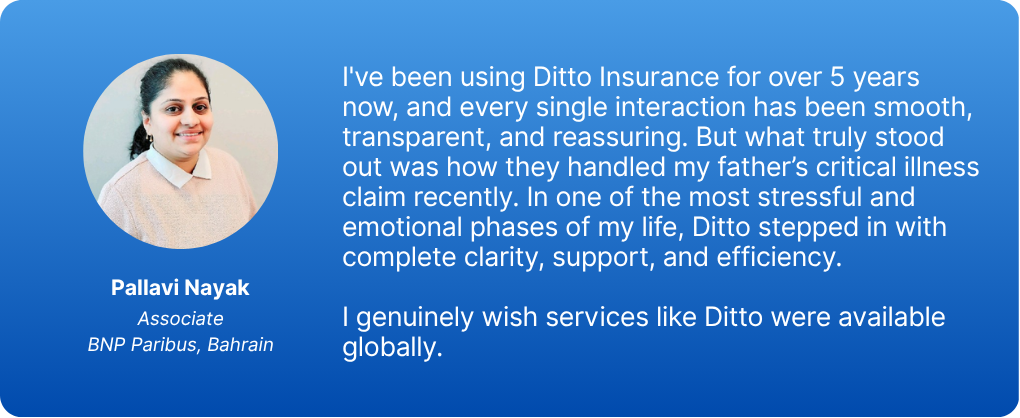
At Ditto, we’ve assisted over 8,00,000 customers with choosing the right insurance policy. Why customers like Pallavi below love us:
- No-Spam & No Salesmen
- Rated 4.9/5 on Google Reviews by 22,000+ happy customers
- Backed by Zerodha
- Dedicated Claim Support Team
- 100% Free Consultation
Confused about the right insurance? Speak to Ditto’s certified advisors for free, unbiased guidance. Book your call now or chat with our advisors on WhatsApp.
Conclusion
Pet insurance in India is real, regulated by IRDAI, and increasingly worth buying, especially if you have a younger purebred dog in a metro city and no dedicated emergency fund.
Most plans work on a reimbursement model. Most caps at ₹50,000 sum insured. And most exclude pre-existing and hereditary conditions. So, buying early while your pet is young and healthy makes all the difference.
Your Next Step: Get a quote from a pet insurance provider, and read the exclusions section of the policy document carefully. Don't leave it for when something goes wrong.
Frequently Asked Questions
Last updated on: