



Quick Overview
Applying for term insurance after a heart-related diagnosis can feel intimidating. At Ditto, we’ve helped hundreds of applicants with cardiac histories navigate underwriting by reviewing medical reports, insurer questionnaires, and final decisions. In this guide, we’ll break down:
- Which heart conditions are typically insurable
- Which ones are usually declined
- How insurers assess risk
- What you can do to maximise your approval odds
Are Heart Patients Eligible for Term Insurance?
Yes, heart patients may be eligible for term insurance, but approval isn’t automatic. It depends on the type of heart condition, its severity, and how well it’s managed today. Insurers first look at the nature of the disease, clearly separating lifestyle-managed conditions from structural or ischemic heart problems.
They also review your medical history closely. This includes when the condition was diagnosed, any hospitalizations or procedures, current treatment, and how regularly you follow up with your doctor. Age at diagnosis matters too. Heart disease that starts early is seen as higher risk, while late-onset, well-controlled conditions are viewed more favourably.
How Insurers Treat Common Heart Conditions in India
India has a high burden of cardiovascular disease. Here’s how most term insurers actually underwrite these conditions, based on real decisions we’ve tracked.
- Coronary Artery Disease (CAD)/ Ischemic Heart Disease/ Atherosclerosis
Outcome: The application is almost always declined
Even if the event was many years ago, you’re currently asymptomatic, or reports look stable.
Includes history of heart attack (MI), angioplasty/stent placement, and bypass surgery (CABG). - Hypertension (High Blood Pressure)
This is the most commonly accepted cardiac condition, often insurable if stable and controlled.
Other factors that influence the decision include duration of hypertension, number of medications, associated conditions (diabetes, obesity, high cholesterol, and evidence of organ damage.
For normal blood pressure, consider opting for our recommended term insurance plans, such as HDFC Life’s Click2Protect Supreme or Axis Max Life’s Smart Term Plan Plus.
Note: Even high cholesterol/dyslipidemia is insurable if it is under control and you haven’t had a heart-related diagnosis/event.
- Arrhythmias (Irregular Heartbeats)/ Rheumatic Heart Disease (RHD)/ Heart Failure
Outcome: The application is usually declined.
This category includes atrial fibrillation, ventricular arrhythmias, and conduction disorders that require ongoing monitoring or medical therapy. In addition, rheumatic heart disease (RHD) frequently results in permanent valvular damage.
Even when surgically corrected, such cases are typically declined because of underlying structural heart disease and the potential for future complications.
Regardless of current stability or apparent severity, these conditions indicate reduced cardiac reserve and a significantly increased risk of mortality.
Factors to Consider Before Purchasing Term Insurance for Heart Patients
- Tests to be Taken
If you have a history of heart disease, insurers usually require recent medical investigations along with records of past procedures to assess your current health status. This commonly includes blood and urine tests, blood pressure readings, ECG, and, in some cases, a treadmill stress test or imaging, depending on your profile. A standard evaluation also covers lipid profile, HbA1c, and kidney and liver function tests. - Counter-Offers
If you receive a counteroffer with higher premiums or reduced benefits, there’s almost no scope for negotiation. In most cases, it’s better to accept the base cover if it's reasonable, or to reapply elsewhere (but only with expert guidance). - Timing
Recent diagnoses, medication changes, or hospitalisations often lead to postponement instead of approval. Insurers like to see stability over time. It’s better to wait till your health improves.
Ditto's Tip
How to Get Term Insurance for Heart Patients
- Set Expectations Clearly
Some heart conditions are simply uninsurable under standard term plans. Knowing this early prevents wasted applications. - Consider a Lower Sum Assured
If you apply for a modest sum assured of ₹25-50 lakhs, it reduces the insurer’s risk exposure. This can also help you get your foot in the door sometimes. You can also consider opting for a standard saral jeevan bima policy to assess the insurer’s willingness to take on the risk. - Apply with Full Disclosure
It’s crucial never to hide a heart condition, as non-disclosure almost always leads to claim rejections or policy cancellations later.
Ditto's Note
Why Choose Ditto for Term Insurance?
At Ditto, we’ve assisted over 8,00,000 customers with choosing the right insurance policy. Why customers like Aaron below love us:
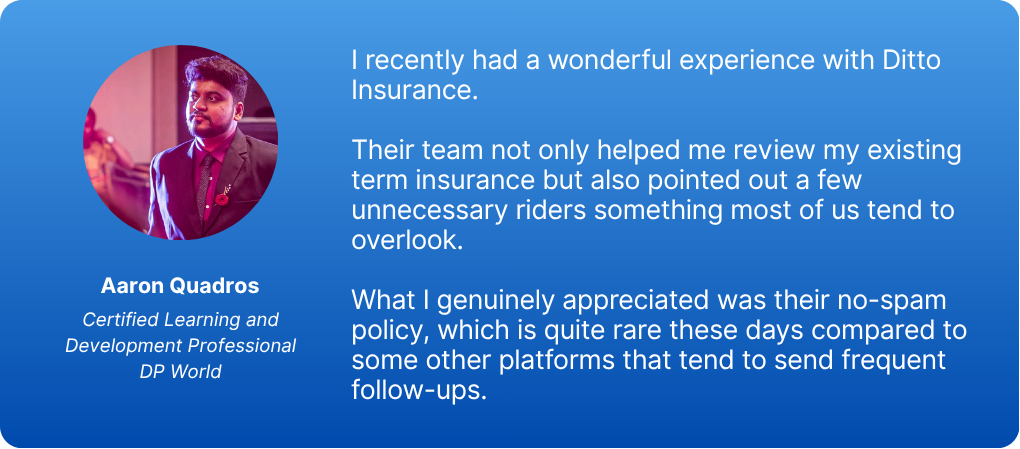
- No-Spam & No Salesmen
- Rated 4.9/5 on Google Reviews by 15,000+ happy customers
- Backed by Zerodha
- 100% Free Consultation
You can book a FREE consultation. Slots are running out, so make sure you book a call now!
Conclusion
Getting term insurance with a heart condition is challenging, but not always impossible. Try getting health insurance first, as you may have a better chance there. For more details, you can also check out our detailed guide on health insurance for heart patients.
Frequently Asked Questions
Last updated on: