



Overview
Your education influences term insurance eligibility, but it is rarely the deciding factor. Insurers also assess your income, age, occupation, health, and overall financial profile before approving your application and determining the cover you can get.
In this guide, we’ll explain how your educational qualification impacts your term insurance eligibility and the best plans available for graduates and non-graduates.
What Is Term Insurance Education Eligibility?
Education is not a universal legal requirement for buying term insurance in India. However, insurers may consider your educational qualification during underwriting, especially when assessing higher coverage amounts or applicants with limited financial documentation.
Insurers follow their own eligibility criteria, so requirements vary by product. Insurers accept applicants with 10th, 10th plus a full-time diploma, or 12th standard, while others may prefer graduates and above for higher-value term insurance coverage.
A 10th-pass individual earning ₹1 crore annually would be an outlier, not the typical profile insurers expect. Insurers assess the broader pattern of education, income, occupation, and financial stability. A graduate or postgraduate with a strong career trajectory may have a more predictable path to higher income, which can support higher cover eligibility.
Note: For NRIs, many insurers require applicants to have completed at least 12th standard. However, education criteria can vary across insurers and products, so always check the latest eligibility requirements before applying.
Talk to an expert
today and
find
the right
insurance for you.


Does Education Play a Role in Deciding Your Sum Assured?
Your educational qualification can indirectly affect the sum assured you may qualify for. Insurers may consider education alongside income, age, occupation, and financial profile during underwriting.
For differentiation during underwriting, insurers generally classify applicants into three broad education categories: 10th pass, 12th pass, and graduate and above, which typically includes postgraduates and PhD holders.
Example: A 25-year-old earning ₹10 lakh annually may qualify for potential coverage of ₹2.5 crore to ₹3.5 crore under the three education categories. These figures are indicative and may vary after the insurer evaluates the applicant's profile.
Education and income work together. For example, at ₹5 lakh income, a postgraduate may qualify for up to ₹1.25 crore with Bajaj Life eTouch II and ₹1.75 crore with HDFC Life Click 2 Protect Supreme Plus, subject to insurer-specific criteria.
Note: Besides education, insurers assess several core eligibility factors before issuing term insurance. Age determines entry and policy-term limits, while income proof helps establish financial eligibility for the requested cover. Health, lifestyle, smoking status, occupation, and medical test results can also influence underwriting and the final premium.
Did You Know?
Best Term Insurance Plans for Non-Graduates
- Axis Max Life Smart Term Plan Plus: Offers a critical illness rider covering up to 64 illnesses for a maximum of 30 years. It also provides accelerated terminal illness cover of up to ₹1 crore. Smart Term Plan Plus includes a Special Exit Value, which can return eligible base premiums from the 25th policy year, subject to applicable conditions.
- HDFC Life Click 2 Protect Supreme Plus: Offers a waiver of premium option covering 60 critical illnesses and disabilities. Its Life Stage benefit allows eligible policyholders to increase their cover after milestones such as marriage or childbirth. Click 2 Protect Supreme Plus also offers a Smart Exit benefit after 25 policy years, subject to a minimum 31-year policy term and other conditions.
- ICICI Life iProtect Smart Plus: Its Life Stage benefit lets eligible policyholders increase their cover after events such as marriage, childbirth/adoption, or an eligible home loan. The increase can range from 25% to 100% of the original sum assured. iProtect Smart Plus also offers a Smart Exit option after 25 policy years, subject to applicable conditions.
- Bajaj Life eTouch II: Bajaj eTouch II includes an accelerated terminal illness benefit of up to ₹2 crore. Eligible nominees can also receive an instant ₹2 lakh payout from the base sum assured within three working days of claim registration and submission of the required documents.
- Aditya Birla Sun Life Super Term Plan: Offers accelerated terminal illness cover of up to ₹1 crore and an Accidental Total and Permanent Disability (ATPD) option that can waive future premiums after a qualifying disability. Super Term Plan also provides an instant payout after three completed policy years, with ₹1 lakh available for ₹50 lakh to ₹1 crore cover and ₹2 lakh for cover above ₹1 crore.
Note: We evaluate every plan using Ditto’s detailed policy rating framework, comparing its coverage, features, insurer strength, and long-term value rather than focusing on premium alone.

Best Term Insurance Plans for Graduates and Above
Axis Max Life Smart Term Plan Plus
The plan offers a Cover Continuance benefit that allows policyholders to defer premiums for up to 12 months without penalties, subject to policy terms. It also provides an instant claim payout of up to ₹2 lakh within one working day, after the policy completes the applicable one-year waiting period.
HDFC Life Click 2 Protect Supreme Plus
The policy offers an accelerated claim payout of up to ₹5 lakh to help nominees manage immediate expenses. After the applicable one-year waiting period, the amount can be paid within one working day of claim registration, subject to document submission. The plan also includes health management services.
ICICI Life iProtect Smart Plus
The plan offers an instant payout of up to ₹3 lakh for policies with at least ₹1 crore sum assured, after a three-year waiting period, subject to applicable terms. It also offers a Premium Break after five completed policy years, allowing premiums to be deferred for up to 12 months while cover continues.
Bajaj Life eTouch II
The plan offers an early exit value after 25 completed policy years for eligible policyholders aged 60 or above. The benefit is subject to policy conditions and is unavailable during the final five policy years. It also offers a Cover Continuance benefit, allowing eligible policyholders to defer premiums for 12 months after completing three policy years while retaining life cover.
Aditya Birla Sun Life Super Term Plan
The plan offers an early exit value after 30 completed policy years, allowing eligible policyholders to receive 100% of base premiums paid as a lump sum. The benefit is unavailable during the final five policy years and terminates the policy after payout. Its Life Stage benefit also enables additional cover after key life events without fresh underwriting.
Note: Term insurance for housewives may have separate education requirements that vary by insurer. Some insurers may require the wife to be 12th pass or a graduate, depending on factors such as whether the husband already has an existing term insurance policy and the overall family income profile.
Why Choose Ditto for Term Insurance?
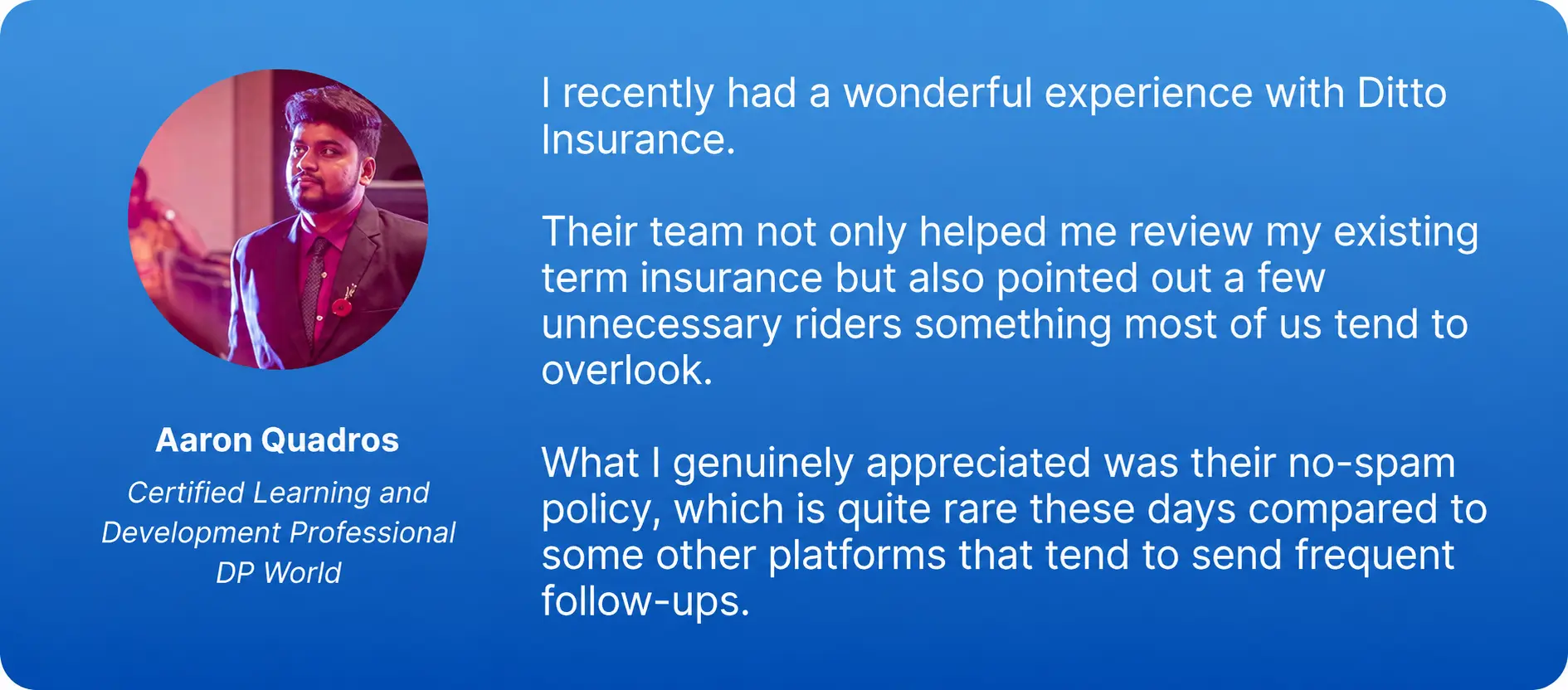
At Ditto, we’ve assisted over 12,00,000 customers with choosing the right insurance policy. Why customers like Aaron below love us:
- 100% Free Consultation
- No Spam. No Sales Pressure.
- Rated 4.9/5 on Google Reviews by 30,000+ Happy Customers
- Backed by Zerodha
- Dedicated Claim Support Team
- Compare Plans and Premiums with a Trusted Insurance Advisor
Confused about the right insurance? Speak to Ditto’s certified advisors for free, unbiased guidance. Book your call now or chat with us on WhatsApp. Slots fill up fast!
Conclusion
Education influences term insurance eligibility, but it is rarely the only deciding factor. Insurers also assess income, occupation, age, health, and financial stability before determining the coverage you can obtain.
Insurers offer flexibility on education when other factors are in place. At Ditto, we help customers navigate this process and find the best term insurance plans available for their needs.
Note: Education criteria and other underwriting factors work together, so eligibility and sum assured limits can vary based on the overall applicant profile. Insurers regularly update these criteria based on their underwriting experience and reinsurer guidelines. Therefore, the figures mentioned here are indicative and may change over time.
Frequently Asked Questions
Last updated on: