



Quick Overview
Choosing a ₹10 lakh term insurance plan is one way to ensure your family’s financial security in the event of your absence. At Ditto, we have helped numerous individuals and families make informed decisions about their life insurance needs, guiding them toward the best solutions for their situation.
But is ₹10 lakh enough to shield your family from financial stress in the long run? In this article, we will explore the pros and cons of a ₹10 Lakh term insurance policy, and help you understand whether it is truly sufficient for your loved ones' needs.

Why a ₹10 Lakh Term Insurance Plan Isn’t a Good Idea
Rising Inflation
The cost of living has been increasing steadily. ₹10 lakh will not retain its value over the next few years. Thus, it becomes inadequate for future needs.
Outstanding Loans/Debts
If you have any loans, such as personal or home loans, they can consume a large portion of the ₹10 Lakh. Now, your family would have little left to cover its other financial needs, if any.
Long-Term Financial Support
₹10 Lakh might be sufficient for a few immediate expenses, but it won’t provide long-term financial security, such as children's education costs or retirement planning for your spouse.
Unfortunately, for many families, ₹10 lakh is just 1-3 years of expenses, and not “lifetime security”. For instance, if your household spends ₹35,000/month, then ₹10,00,000 lasts for 28 months (before any loan/education costs).
That is why financial experts often recommend life covers worth 10-15 times your annual income.
If you’re unsure about how much sum assured you should opt for, check out our term insurance coverage calculator.
Premium Comparison of Different Sum Assured: ICICI Prudential
If you’re scared about exorbitant premiums as the coverage amount increases, consider this example of a 25-year-old, non-smoking, healthy male, covered until age 65.
Plan: Saral Jeevan Bima
Plan: iProtect Smart Plus
As you can see, increasing life insurance coverage generally decreases the premium per lakh. For example, in the Saral Jeevan Bima plan, the premium per lakh is ₹428.5 for ₹10 lakhs of coverage, but it drops to ₹331.88 for ₹25 lakhs.
Similarly, in the iProtect Smart plan, the premium per lakh drops from ₹130.72 for ₹50 Lakhs to ₹79.76 for ₹2 Crores.
This shows that higher coverage isn't as expensive as it seems. You're essentially getting more coverage at a lower rate as the sum assured increases.
Alternatives to Buying a ₹10 Lakh Term Insurance Plan
Since ₹10 lakh isn’t enough, here are a few alternatives:
- ₹50 Lakh Term Insurance Plan: For those seeking better coverage, opting for a ₹50 Lakh plan can provide greater security.
- Supplementing with Other Investments: Apart from term insurance, you can also look into other forms of financial planning, like mutual funds or SIPs, to increase your financial security.
₹10 Lakh Term Insurance Plans You Can Consider
If you're considering a ₹10 Lakh term insurance plan, some of the insurers, based on consistent performance metrics like claim settlement ratio (CSR), amount settlement ratio, complaints volume, and business volume, are:
- Axis Max Life
- HDFC Life
- ICICI Prudential
You can consider opting for their Saral Jeevan Bima plan offerings. This is because most insurers set a relatively high minimum sum assured (often around ₹50 lakh) for their flagship, feature-rich term plans. They need enough premium to cover fixed costs, such as medical underwriting, distribution/agent commissions, servicing, while still keeping the product profitable.
If you’re looking for a lower cover, like ₹10 lakh, options like Saral Jeevan Bima (or similar low-ticket term products) are often the most practical choice.
If you’d like to know more about how we evaluate plans or insurers, check out Ditto’s Cut.
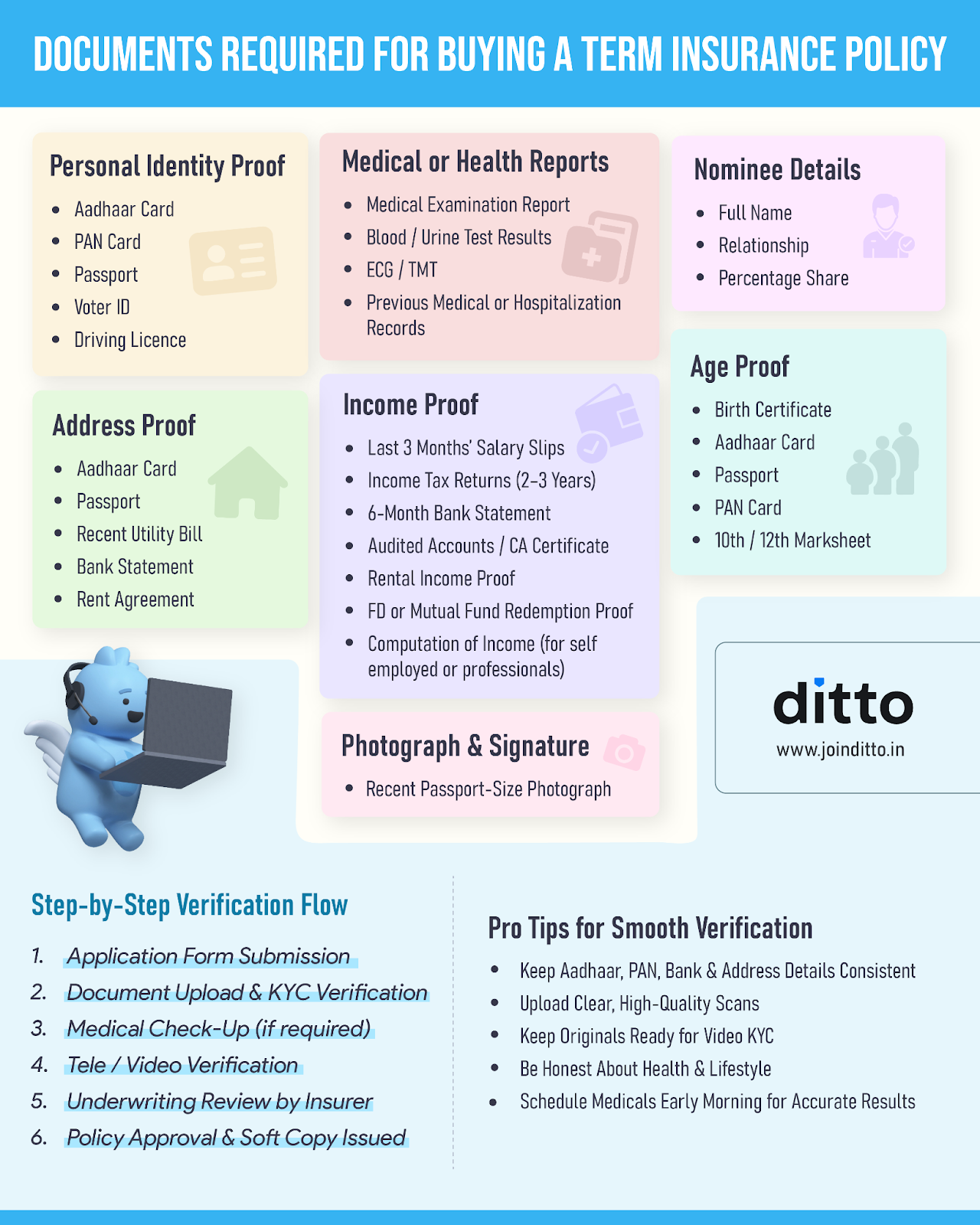
Documents Required to Purchase a ₹10 Lakh Term Insurance Plan
Here’s a list of the documents you should keep in handy while buying a life insurance policy worth ₹10 lakh or any other amount:
Why Choose Ditto for Term Insurance?
At Ditto, we’ve assisted over 8,00,000 customers with choosing the right insurance policy. Why customers like Vijay below love us:

- No-Spam & No Salesmen
- Rated 4.9/5 on Google Reviews by 15,000+ happy customers
- Backed by Zerodha
- 100% Free Consultation
You can book a FREE consultation. Slots are filling up quickly, so be sure to book a call now!
Conclusion
A ₹10 lakh term insurance plan can offer basic financial support, but for most individuals, it falls short of providing proper long-term security. As your income and responsibilities grow, upgrading to a higher cover (e.g., ₹50 lakh, ₹1 crore, or more) becomes essential.
Frequently Asked Questions
Last updated on: