



Quick Overview
Many people assume that once they buy a health insurance policy, they're covered immediately, but that’s rarely true. Most policies in India have waiting periods, during which claims won’t be paid.
However, a growing number of modern insurers are now offering plans that waive or reduce these waiting periods for certain conditions. This guide breaks down how zero waiting period health insurance works, which plans offer this benefit, and whether paying extra for immediate coverage makes sense for your situation.
What Is Zero Waiting Period in Health Insurance?
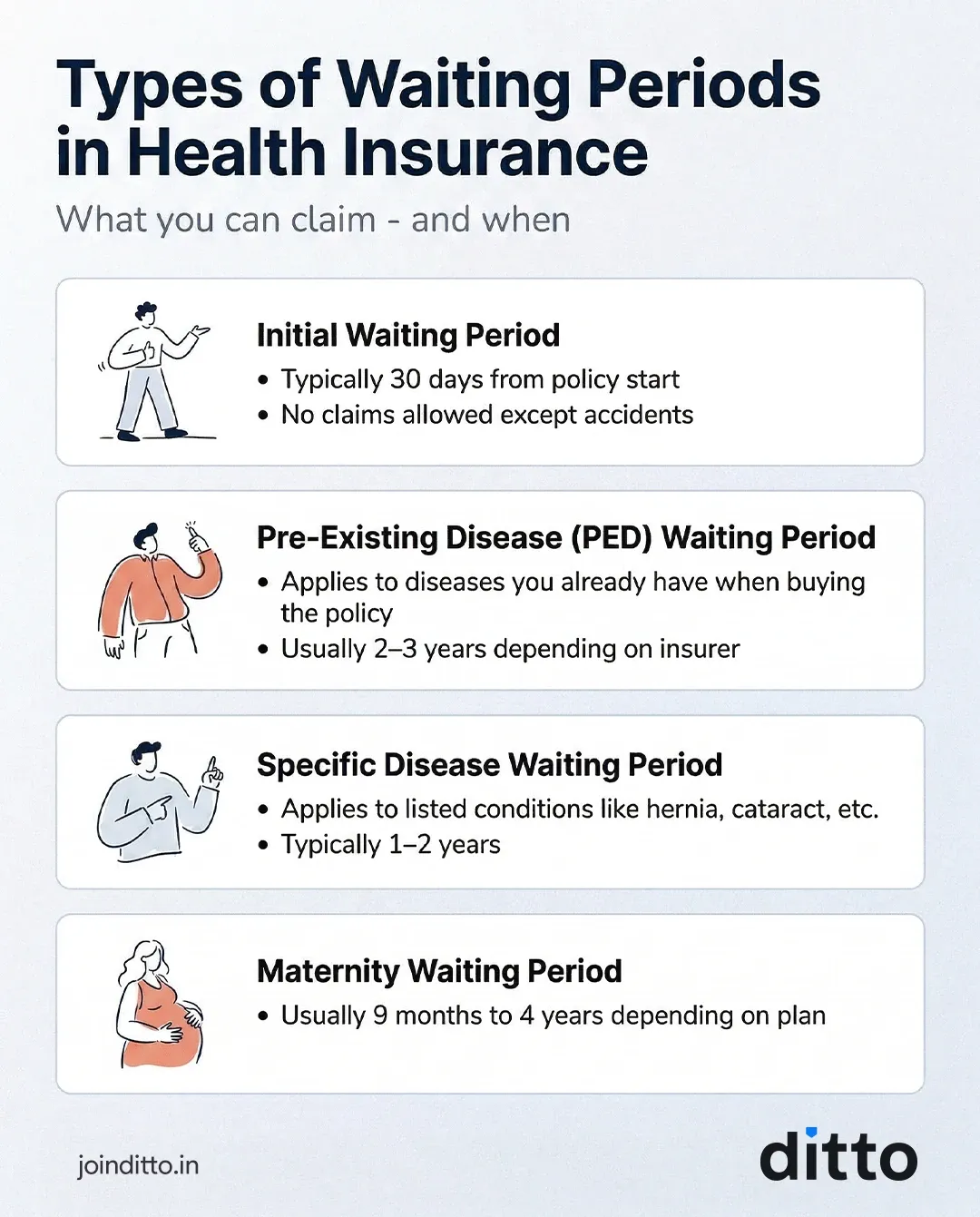
Zero waiting period health insurance eliminates or significantly reduces one or more of the standard waiting periods, as shown in the visual below.
How Does Zero Waiting Period Health Insurance Work?
- Day 1 PED Coverage: Some plans cover specific pre-existing diseases from the first day. This may be part of the base policy (e.g., HDFC ERGO Energy Silver) or available as a paid add-on (e.g., Niva Bupa ReAssure 2.0’s Disease Management Rider for conditions like diabetes and hypertension).
- Reduced PED Waiting Period: Not all plans eliminate the waiting period entirely; some shorten it to around 30 days for listed conditions. For instance, Care Supreme (Instant Cover add-on) and HDFC Optima Secure (ABCD Chronic Care add-on) reduce the waiting period for conditions like diabetes, hypertension, asthma, and high cholesterol.
- No Initial or Specific Illness Waiting Period: A few premium plans waive the standard 30-day waiting period and may also reduce or remove waiting periods for certain illnesses. For example, ACKO Platinum removes both for most conditions (subject to underwriting), while ICICI Lombard Elevate (Jumpstart add-on) cuts the specific illness waiting period to 1 year.
- Employer-Provided Policies: Group health insurance plans often waive waiting periods for pre-existing diseases and sometimes maternity benefits, since the risk is spread across many members.
Note: “Zero waiting period” doesn’t mean full coverage from day one. It only applies to the conditions and benefits explicitly listed in the policy, so reading the fine print is crucial.
Talk to an expert
today and
find
the right
insurance for you.


Common Conditions Covered Under Zero Waiting Period (or Reduced PED Wait)
- Diabetes (Type 1 and Type 2)
- Hypertension / High Blood Pressure
- Asthma
- Dyslipidemia / High Cholesterol
- Chronic Obstructive Pulmonary Disease (COPD)
If your pre-existing condition is not listed, standard waiting periods will still apply.
What Is Usually Not Covered From Day 1
- Other pre-existing diseases not specifically mentioned in the plan or add-on
- Specific illness treatments like hernia, cataract, or joint replacement, unless the policy explicitly reduces or removes their waiting periods
- Maternity benefits, which typically have a separate waiting period ranging from 9 months to 4 years, depending on the plan
Best Zero Waiting Period Health Insurance Plans in India
How to Choose the Right Zero Waiting Period Policy
- Understand What “Zero Waiting Period” Actually Covers: Check which conditions are covered immediately, which still have waiting periods, and whether the benefit comes with the base plan or an add-on.
- Evaluate The Insurer, Not Just The Feature: A strong claims record matters more than marketing features. Look at claim settlement ratios, hospital network size, complaint volume, and processing efficiency before focusing on waiting period benefits.
- Disclose Medical History Honestly: All pre-existing conditions must be declared at purchase. Hiding information can lead to claim rejection later, even if the policy offers zero waiting period benefits.
- Expect Higher Costs and Stricter Checks: Plans with zero waiting periods often come with higher premiums and more detailed medical underwriting due to the immediate risk taken on by insurers.
- Check For Co-Pays And Sub-Limits: Some policies offset risk with co-payments, disease-wise sub-limits, or limits on room rent, which can reduce the actual value of coverage.
Why Choose Ditto for Health Insurance?
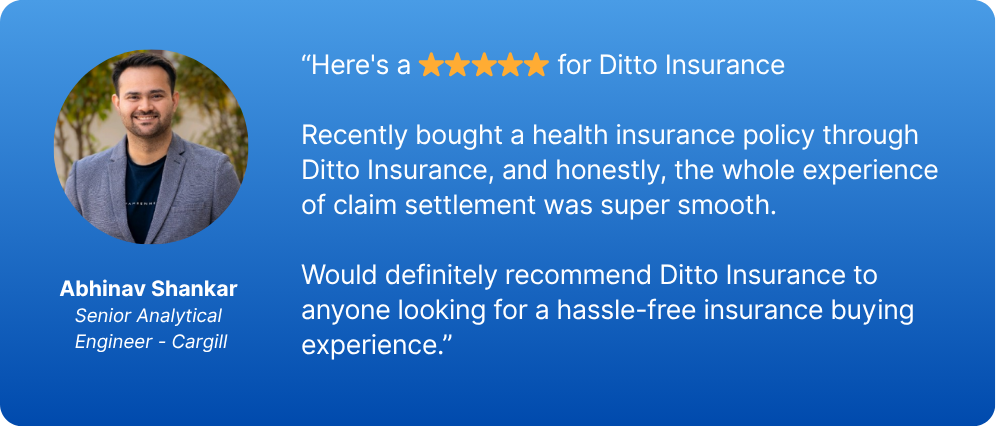
At Ditto, we’ve assisted over 8,00,000 customers with choosing the right insurance policy. Why customers like Abhinav below love us:
- No-Spam and No Salesmen
- Rated 4.9/5 on Google Reviews by 15,000+ happy customers
- Backed by Zerodha
- Dedicated Claim Support Team
- 100% Free Consultation
You can book a FREE consultation. Slots are running out, so make sure you book a call now or chat with our advisors on WhatsApp.
Conclusion
Zero waiting period health insurance can be genuinely valuable, especially if you have pre-existing conditions and can't afford to wait years for coverage to kick in. But it isn't the right call for everyone. If you're young and healthy with no pre-existing conditions, a standard plan is almost always more cost-effective.
If a zero waiting period offering looks unusually generous relative to its premium, treat that as a warning signal. It usually means the insurer is compensating elsewhere through stricter underwriting, hidden sub-limits, or co-pay clauses that only surface at claims time. If a plan is priced too aggressively, it often isn’t sustainable. This can lead to steep premium hikes at renewal or changes in benefits over time.
Most importantly, focus on the insurer’s reliability, claim history, and long-term stability. If you want a broader view of how these plans compare, our guide to the best health insurance plans in India is a good place to start.
Frequently Asked Questions
Last updated on: