



Quick Overview
You might have noticed your renewal premium increasing even though your coverage hasn’t changed much. This happens because insurers adjust premiums based on several factors, such as age brackets, medical inflation, and policy features. A policy that costs around ₹15,000 a year in your 20s can easily cross ₹40,000 by your 40s for similar coverage.
Naturally, this raises an important question: Is there a way to reduce health insurance premium costs without compromising coverage? The good news is that lower premiums don’t always require cutting protection. Making smarter policy choices can significantly control costs.
In this article, we’ll discuss the practical tips to reduce health insurance premiums and the policy decisions that can help lower costs while keeping your financial protection intact.
Practical Tips to Reduce Health Insurance Premium
- Use a Solid Base Plan with a Super Top-Up: Super top-ups give you higher cover at a lower premium than buying a very large base policy outright. The trade-off is the deductible, which is the amount you pay before the policy starts paying.
- Multi-year Policies: Choosing a multi-year policy gives you a discount of around 5%-15%, but you have to make a higher payment upfront.
Here’s a quick example to illustrate how multi-year premiums work.
- Porting or Migration: You can explore other similar policies by porting or migrating the existing policy. This helps you carry forward your waiting periods and continue coverage.
- Reduce Premium Carefully: Lower sum insured and cost-sharing through copayments can reduce premiums. But choosing a low sum insured defeats the purpose of health insurance because it can leave you exposed when medical costs spike.

Factors That Increase Your Health Insurance Premium
Age Bracket
As you grow older, the likelihood of medical conditions increases, which eventually raises the risk factor for the insurer. Hence, premiums increase when you move into higher age brackets.
Location
Insurers often classify cities into different zones because treatment costs in metro cities are typically higher than in smaller towns.
Medical Inflation
Healthcare costs continue to rise due to advancements in medical technology, wider use of advanced diagnostics, and higher hospital charges. As treatment costs increase, insurers periodically adjust premiums to reflect these higher expenses.
Medical History and Lifestyle Habits
Pre-existing diseases like diabetes or hypertension and lifestyle habits like smoking and alcohol consumption can also raise premiums in the form of loadings. These generally range between 10%-40% of your base premiums.
Coverage and Add-ons Selected
Higher coverage means higher premiums. Add-ons such as the outpatient department (OPD) benefits and maternity coverage can also increase costs significantly.
Policy Type
Individual policies provide separate coverage for each member, which can increase the total cost. In contrast, a family floater plan offers a single shared sum insured for all members, making it efficient for families.
Smart Policy Choices That Help Reduce Premium Costs
- Choose the Right Sum Insured
Choose at least a ₹15-₹25 lakh sum insured, keeping medical inflation and the possibility of rare but expensive medical events in mind.s. If the premiums get too high, you can always start with a lower coverage and review it every 3-4 years.
Note: If you increase your sum insured later, you need to serve fresh waiting periods and undergo underwriting for the incremental amount.
- Opt for Family Floater Plans
A family floater is usually cheaper for young couples than buying separate individual plans. However, premiums are often based on the age of the eldest member, and adding older parents can increase the cost significantly. It is often better to take a separate policy for parents.
- Start Early
Buying insurance at a young age helps you cover waiting periods before health issues show up. The premiums are low because you can avoid the risk of loadings and strict underwriting.
- Avoid Unnecessary Add-Ons
Add-ons can enhance coverage, but they also increase premiums. It is better to start with a strong base policy and add riders only if they are genuinely useful for your situation.
Here is a simple premium comparison for the HDFC ERGO Optima Secure plan of two healthy adults (31, 32) living in Delhi (110010).
Key Insights
- The add-ons taken are Optima Well-being (OPD add-on) and Parenthood (Maternity add-on).
- Add-ons increase premiums while offering limited coverage, so it may be better to skip them if they do not add value to the policy.
- The premium difference between a ₹10 lakh and a ₹15 lakh coverage is usually small, making higher coverage affordable.
Talk to an expert
today and
find
the right
insurance for you.


Lifestyle and Financial Habits That Lower Premiums
- Manage BMI and Lifestyle Habits: High Body Mass Index (BMI) and lifestyle habits can increase your premiums. Hence, it is advisable to keep them in check to avoid unnecessary costs.
- Preventive Health Check-ups: Catching health issues early can help you manage them before they become serious and harder to insure.
- Renew Policy on Time: If your policy lapses and is not renewed within the allowed period, you may lose continuity benefits. Then, you need to buy a fresh policy based on your current age and health condition, which may lead to higher premiums.
- Keep an Emergency Fund: Expenses like deductibles and policy exclusions require out-of-pocket payment even with insurance. Having an emergency fund helps you manage unexpected medical costs and not strain your finances.
- Reviewing Your Plan: Smart restructuring of policies can help control costs. Checking for better value and coverage policies regularly can help reduce the extra spending.
- Use Tax Benefits Wisely: Health insurance premiums qualify for tax deductions under Section 80D (old regime), which can lower your taxable income. Tax savings help reduce your net out-of-pocket cost.
Did You Know?
Mistakes to Avoid When Trying to Lower Premiums
- Choosing Price Over Claims: While price matters, factors like the insurer’s claim settlement experience and customer support are equally important.
- Ignoring Network Hospitals: A wide network of cashless hospitals makes the claim process easier during emergencies. Choosing a policy after checking the network hospital list can reduce hassles at the time of claims.
- Hiding Material Facts: Details like smoking habits, BMI, and ongoing treatments must be declared honestly. If discovered during claim verification, the insurer may reject the claim. There are some protections after continuous coverage in the form of moratorium period, but fraud or misrepresentation is always an exception.
- Relying on Employer Coverage: Relying solely on employer-provided health insurance to avoid paying for an individual policy can be risky. Employer coverage may end if you change jobs or retire.
Why Choose Ditto for Health Insurance?
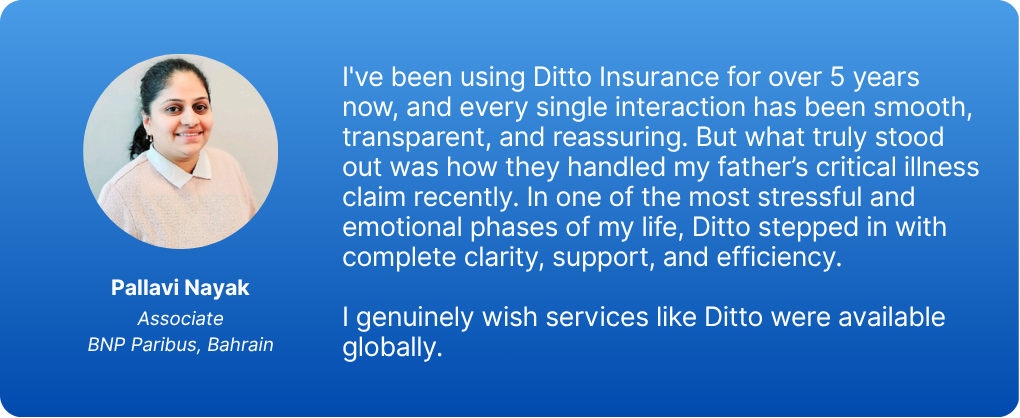
At Ditto, we’ve assisted over 8,00,000 customers with choosing the right insurance policy. Why customers like Abhinav below love us:
- No-Spam & No Salesmen
- Rated 4.9/5 on Google Reviews by 15,000+ happy customers
- Backed by Zerodha
- Dedicated Claim Support Team
- 100% Free Consultation
You can book a FREE consultation. Slots are running out, so book a call or chat with us on WhatsApp now!
Conclusion
Since health insurance premiums keep increasing, they should not feel like a financial burden. Understanding the factors affecting health insurance premiums and following practical health insurance premium saving tips can help you manage them. y. In most cases, the best tips to reduce health insurance premiums involve making smarter decisions, such as buying insurance early, choosing the right insurer, selecting the right sum insured, and avoiding unnecessary add-ons.
At the same time, it’s important not to reduce premiums at the cost of essential protection. The goal isn’t just to reduce health insurance premiums, but to balance affordability with meaningful coverage when you actually need it.
If you’re unsure of how to balance premiums and coverage, you can check our detailed guide on how to choose a health insurance plan as a starting point.
Frequently Asked Questions
Last updated on: