


Overview
Introduction
Choosing between two health insurers is not as simple as picking the one with the larger hospital network or the lower premium. Coverage, waiting periods, claims experience, and product features can all affect which insurer works better for you.
That's why the Niva Bupa vs. Manipal Cigna Health Insurance comparison matters. While both are standalone health insurers, their plans differ in coverage, product design, waiting periods, and performance.
In this comparison, we'll look at Niva Bupa and Manipal Cigna's history, flagship plans, coverage, waiting periods, premiums, performance metrics, and pros and cons. By the end, you'll know when Niva Bupa makes more sense and when Manipal Cigna could be the better fit.
Niva Bupa vs. Manipal Cigna: Insurer Comparison
Niva Bupa
- Niva Bupa, formerly Max Bupa, began in 2010 as a Max India-Bupa joint venture. After Max exited, it rebranded in 2021 and is now a listed insurer promoted by Bupa Singapore Holdings.
- Its retail portfolio is largely characterized by feature-rich plans, strong restoration benefits, premium lock feature, high-cover options, and considerable scope for customization.
- As of March 2026, Niva Bupa has 210 branches and about 2.39 lakh individual agents.
Manipal Cigna
- Manipal Cigna began operations in 2014 as CignaTTK and now operates as a joint venture between the Manipal Group and global health services company Cigna.
- Its retail portfolio stands out for differentiated waiting-period options, coverage aimed at certain chronic conditions, and high-cover or global-treatment options.
- It has 124 branches and about 1.06 lakh individual agents as of March 2026, giving Niva Bupa a clear advantage in distribution scale.
Niva Bupa vs. Manipal Cigna: Plan and Coverage Comparison
Popular Niva Bupa Health Insurance Plans
Popular Manipal Cigna Health Insurance Plans
Waiting Periods and Exclusions: Niva Bupa vs. Manipal Cigna Compared
Waiting Periods
Most retail health insurance plans from both insurers broadly follow the usual waiting-period structure:
- Initial Waiting Period: Usually 30 days for non-accidental illnesses. Accidental hospitalization is generally covered from Day 1.
- Specified Illness Waiting Period: Commonly around 24 months.
- Pre-Existing Disease (PED) Waiting Period: Usually 24 to 36 months, depending on the product.
However, both insurers offer options that can shorten or remove these waiting periods.
Niva Bupa
- Disease Management: ReAssure 2.0 and Aspire can offer day 1 cover for diabetes and hypertension, subject to underwriting and policy terms.
- Day 1 PED Option Under ReAssure 3.0: ReAssure 3.0 can cover up to 145 specified PEDs from day 1, subject to underwriting and applicable loadings.
Manipal Cigna
- Sarathi 2.0: Available with Sarvah Uttam, this can reduce the wait to 30 days for accepted conditions such as asthma, diabetes, hypertension, dyslipidemia, and obesity.
- Reduction in PED Optional Cover: Available with select plans such as Prime Senior Classic and Prime Senior Elite, this option can reduce the applicable PED waiting period from 24 months to 90 days. This is plan-specific and not available across all Manipal Cigna policies.
Why Manipal Cigna Stands Out
Exclusions
Both insurers have similar standard exclusions.
- Diagnostic-only admissions, custodial or rest care, and medically unnecessary treatment.
- Cosmetic procedures, obesity treatment, and unproven treatments unless policy conditions are met.
- Alcohol or drug abuse-related treatment and certain hazardous activities.
- Maternity and infertility expenses unless specifically covered.
Niva Bupa
Exclusions vary by plan and variant. Some ReAssure 3.0 variants have room restrictions, co-payments, or modern-treatment limits. Maternity is not covered under ReAssure 3.0 base cover, while Aspire’s M-iracle covers maternity, IVF, surrogacy, adoption, and newborn care, subject to limits and waiting periods.
Manipal Cigna
Some benefits have additional exclusions. For example, Sarvah excludes domiciliary hospitalization for conditions such as diabetes, hypertension, asthma, COPD, arthritis, and epilepsy.
Talk to an expert
today and
find
the right
insurance for you.


Sample Premium Comparison: Niva Bupa vs. Manipal Cigna
Note: Here, A stands for adult and C for child(ren). These are indicative premiums for a Delhi resident (PIN code: 110010) with ₹15 lakh cover, including recommended add-ons and discounts. Your premium can change based on age, city, medical history, plan variant, added discounts, and chosen add-ons.
Premium Insight: Niva Bupa is 8%–19% cheaper for younger profiles, partly because several benefits are built in, while Sarvah Uttam needs add-ons for similar coverage. For ages 62 and 63, Sarvah Uttam is about 8% cheaper, showing pricing can reverse with age.
Performance Metrics: Niva Bupa vs. Manipal Cigna
Source: This information is sourced from the IRDAI annual reports, Manipal Cigna public disclosures, and Niva Bupa public disclosures. For more data on other insurers, explore Ditto Data Lab.
Pros & Cons of Niva Bupa
Pros
- Strong Retail Plans: ReAssure 2.0, ReAssure 3.0, and Aspire offer restoration, accumulated cover, maternity benefits in select plans, and customization options.
- Larger Scale: Niva Bupa's average health GWP was about ₹6,985 crore for FY 2024-26, compared with about ₹1,624 crore for Manipal Cigna.
- In-House Retail Claims: Niva Bupa handles individual retail claims in-house, giving it direct control over the claims process.
- PED Coverage Options: Select plans offer day 1 or reduced waiting periods for certain PEDs, subject to underwriting and loadings.
Cons
- Slightly Higher Complaint Levels: Niva Bupa's three-year average complaints stood at 37.13 per 10,000 claims, slightly higher than Manipal Cigna's 32.17. However, the metric has improved significantly, with complaints falling to 29 per 10,000 claims in FY2026, marking Niva Bupa's lowest level yet.
- Smaller Hospital Network: Niva Bupa has 10,000+ network hospitals compared with Manipal Cigna's 14,000+, although both meet Ditto's 10,000+ benchmark.
- Complex Plan Variants: Room eligibility, co-payments, treatment limits, and features vary across variants.
- Conditional Benefits: Features such as day 1 PED coverage, restoration, and Lock the Clock have eligibility rules, triggers, or underwriting conditions.
- Recent Regulatory Action: In August 2026, IRDAI warned Niva Bupa for breaching FY2024-25 Expenses of Management limits and barred new offices for six months. Niva Bupa says it was compliant in FY2025-26 and Q1 FY2026-27. Existing policies and claims are unaffected.
Pros & Cons of Manipal Cigna
Pros
- Strong Waiting Period Flexibility: Sarvah Param removes standard initial, specified illness, and PED waits by default. Sarathi can further reduce waits for specified chronic conditions.
- Larger Hospital Network: Manipal Cigna has 14,000+ network hospitals versus Niva Bupa’s 10,000+, offering broader cashless access.
- Lower Complaint Levels: Manipal Cigna averaged 32.16 complaints per 10,000 claims versus 37.13 for Niva Bupa.
- High-Value and Global Cover: Sarvah offers cover up to ₹3 crore, while Lifetime Health offers high-value and global treatment options in select variants.
Cons
- Smaller Business Scale: Manipal Cigna averaged about ₹1,624 crore in health GWP versus Niva Bupa’s ₹6,985 crore from FY 2024-26.
- Claims Setup Varies by Policy Date: For policies purchased or renewed on or after December 22, 2025, Manipal Cigna manages cashless services directly. Older policies continue to use their respective Third-Party Administrators (TPAs). You can check the applicable network hospitals through Manipal Cigna's network hospital locator.
- Many Benefits Are Optional: Sarvah Uttam requires add-ons for any-room cover, restoration, non-medical expenses, air ambulance, and annual health checkups, increasing premiums.
- Some Plans Have Room-Related Restrictions: Sarvah Uttam has Single Private AC room eligibility by default. Choosing a higher room without the relevant room modification add-on can result in proportionate deductions on associated expenses.

Which One Should You Choose: Niva Bupa or Manipal Cigna?
Choose Niva Bupa If
You want a larger retail health insurer with a broader mainstream portfolio, in-house handling of individual retail claims, and feature-rich plans such as ReAssure 2.0, ReAssure 3.0, and Aspire. It is also worth considering if maternity and newborn coverage are priorities.
Choose Manipal Cigna If
You want a larger hospital network, lower complaint levels, or more niche plan options. Sarvah Param removes the standard initial, specified-disease, and PED waiting periods, subject to underwriting, while Lifetime Health offers high-value and global coverage.
Overall, Niva Bupa may appeal to buyers looking for a broader mainstream retail portfolio and feature-rich plans, while Manipal Cigna may suit those prioritizing a larger hospital network, specialized waiting-period benefits, or high-value coverage options.
Why Choose Ditto for Health Insurance?
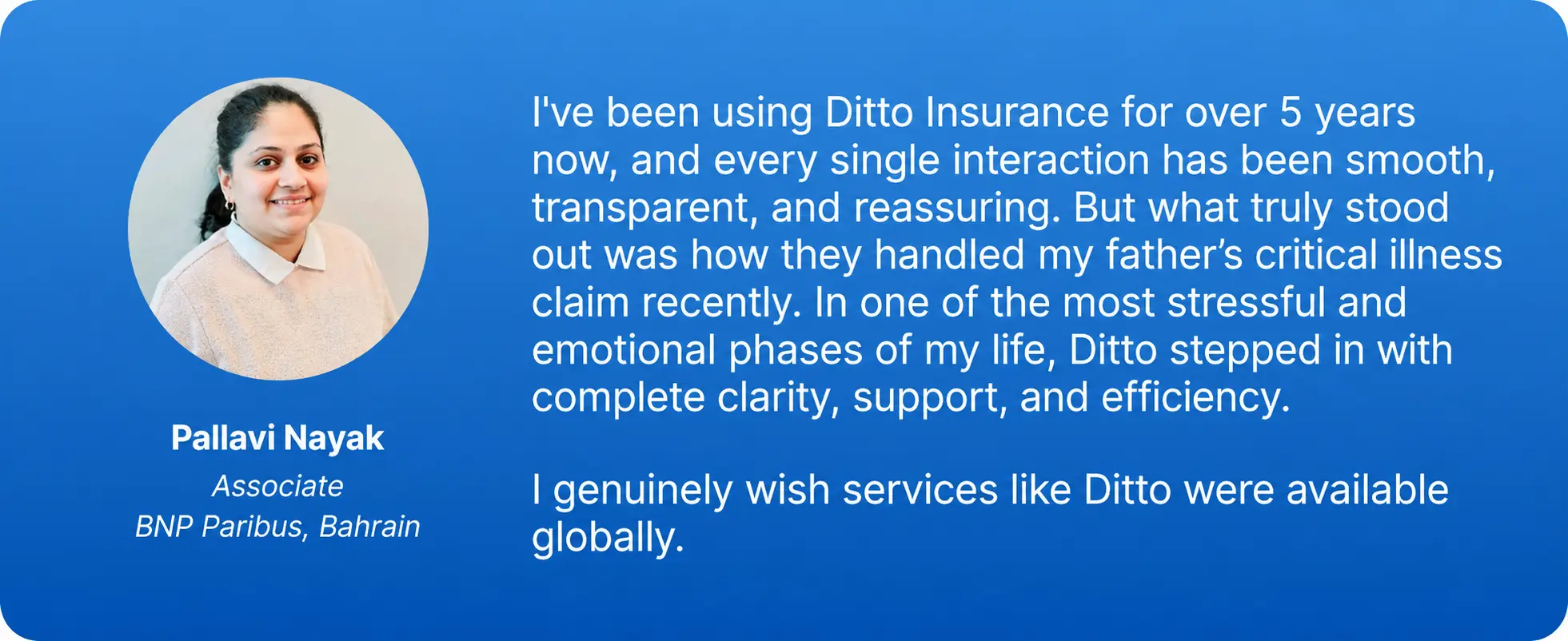
At Ditto, we’ve assisted over 12,00,000 customers choose the right insurance policy. Why customers like Pallavi love us:
- 100% Free Consultation
- No Spam. No Sales Pressure.
- Rated 4.9/5 on Google Reviews by 30,000+ Happy Customers
- Backed by Zerodha
- Dedicated Claim Support Team
- Compare Plans and Premiums with a Trusted Insurance Advisor
Confused about the right insurance? Speak to Ditto’s certified advisors for free, unbiased guidance. Book your call now or chat with us on WhatsApp. Slots fill up fast!
Conclusion
Niva Bupa and Manipal Cigna are both credible standalone health insurers, but their strengths are different once you look beyond basic coverage.
Niva Bupa makes more sense for buyers who want a larger insurer, a strong mainstream retail portfolio, and in-house handling of individual retail claims. ReAssure 2.0 Platinum+ also features on our list of the best health insurance plans in India. Manipal Cigna may suit buyers who value a larger hospital network, lower complaint levels, high-value or global coverage, or differentiated waiting-period options such as Sarvah Param.
If you are comparing the two, focus on the specific plan rather than the insurer alone. Check the waiting periods, room eligibility, optional covers, exclusions, and claims setup before deciding which policy fits your needs better.
Frequently Asked Questions
Last updated on: