


Overview
Imagine a family member falling seriously ill, and the hospital bill running into lakhs overnight. For many households in Jharkhand, this fear is real, and it's exactly the gap the Mukhyamantri Abua Swasthya Suraksha Yojana (MASSY) was built to bridge.
The scheme provides eligible ration card holders with cashless cover of up to ₹15 lakh per year at no cost. That is three times PM-JAY’s standard ₹5 lakh annual family limit.
This article covers what the scheme actually covers, who qualifies, and how to apply for your Abua Swasthya card online. We'll also explain where MASSY falls short, so you know if you need more protection.
What Is Mukhyamantri Abua Swasthya Suraksha Yojana?
In Jharkhand, the Mukhyamantri Abua Swasthya Suraksha Yojana expands the government health coverage framework to provide eligible families with a total of up to ₹15 lakh in cashless coverage per year.
Mode of Implementation
The scheme runs in hybrid mode, as per the existing Memorandum of Understanding (MoU) with the National Insurance Company, until that agreement expires or is terminated:
- Up to ₹1 Lakh per Family, per Year: Covered under insurance mode by the National Insurance Company (NIC).
- Above ₹1 Lakh and up to ₹5 Lakh Per Family, Above ₹5 Lakh and up to ₹15 Lakh per Year: Covered under trust mode by the Jharkhand State Arogya Society (JSAS).
- Premium: ₹980 per family, per year, for the first ₹1 lakh of coverage. This is paid by the government, not the insured members.
Please Note: For you as a beneficiary, this insurance-trust split makes no real difference. Treatment stays cashless either way, as long as you go to an empaneled hospital.
Eligibility for Mukhyamantri Abua Swasthya Suraksha Yojana
Who Qualifies
You qualify for MASSY if you are a domicile resident of Jharkhand and your family holds a valid ration card. You are eligible if you are covered by the National Food Security Act (NFSA) or your state's own Food Security Act. It includes Pink (Priority Households) (PHH), Yellow (Antyodaya Anna Yojana) (AAY), and Green ration cards.
Family Size and Age
There is no age limit and no cap on family size. Every member listed on the ration card gets covered under the same ₹15 lakh family limit.
A Common Gap to Check
If a family member's name is missing from the ration card, they cannot generate their own health card. It's worth confirming every name is listed correctly before you apply.
Talk to an expert
today and
find
the right
insurance for you.


Benefits: ₹15 Lakh Cover Under Abua Swasthya Suraksha Yojana
Sum Insured and Scope
A sum insured of ₹15 lakh per family, per year is given under the scheme.
- It covers secondary and tertiary hospitalizations across around 2,322 medical and surgical procedures across 26 specialties, of which 21 packages are reserved for state government hospitals.
- Pre-existing diseases from day 1, with no waiting period.
- Free medicines for chronic conditions, including diabetes, dialysis, and high blood pressure, are provided at government hospitals.
Where You Can Use It
Cashless treatment under the Mukhyamantri Abua Swasthya Suraksha Yojana is available at hospitals empaneled under the Ayushman Bharat–Mukhyamantri Jan Arogya Yojana, the Mukhyamantri Gambhir Bimari Upchar Yojana, and hospitals subsequently empaneled specifically under MASSY. This includes eligible government and private hospitals, provided the hospital is authorized for the required treatment package.
Standard PM-JAY beneficiaries can use their ₹5 lakh central entitlement at PM-JAY-empaneled hospitals across India. However, the official MASSY resolution does not clearly confirm nationwide portability of the state-funded coverage or the additional benefit above ₹5 lakh. Before seeking treatment outside Jharkhand, beneficiaries should confirm the hospital’s MASSY eligibility and the available benefit limit by calling 104 or 1800-345-6540.
How to Apply for the Abua Swasthya Card Online
Documents Required
- Aadhaar card for every family member.
- Ration card (Pink, Yellow, or Green).
- Jharkhand residence certificate.
How to Apply
Step 1: Visit the Jharkhand State Health Portal, known as Jharkhand Beneficiary Identification System (BIS).
Step 2: Log in using your mobile number.
Step 3: Search for your family using your ration card number.
Step 4: Complete e-KYC for each member using Aadhaar OTP or biometric verification at a nearby Pragya Kendra.
Step 5: Your health card gets generated once verification is complete.
Step 6: Keeping all documents ready beforehand saves you from repeat visits or delays.
Abua Swasthya Suraksha Yojana vs Private Health Insurance: Do You Still Need Cover?
MASSY delivers value. A ₹15 lakh cover, no waiting period, and free treatment for pre-existing diseases are hard to match, especially for low-income families.
But it has real gaps. It's a state-funded welfare scheme, not a retail policy purchased and controlled by the beneficiary. So it depends on the state's ongoing MoU with the National Insurance Company and could change over time. Hospital access is also not widespread.
Fixed treatment packages are another gap. If you want a private room upgrade, a newer surgical technique, or a hospital outside the empaneled network, you'll likely pay out of pocket. And if your family doesn't hold an eligible ration card, you can't access MASSY at all, regardless of your actual income. Have a look at the infographic below to compare private insurance and government schemes:
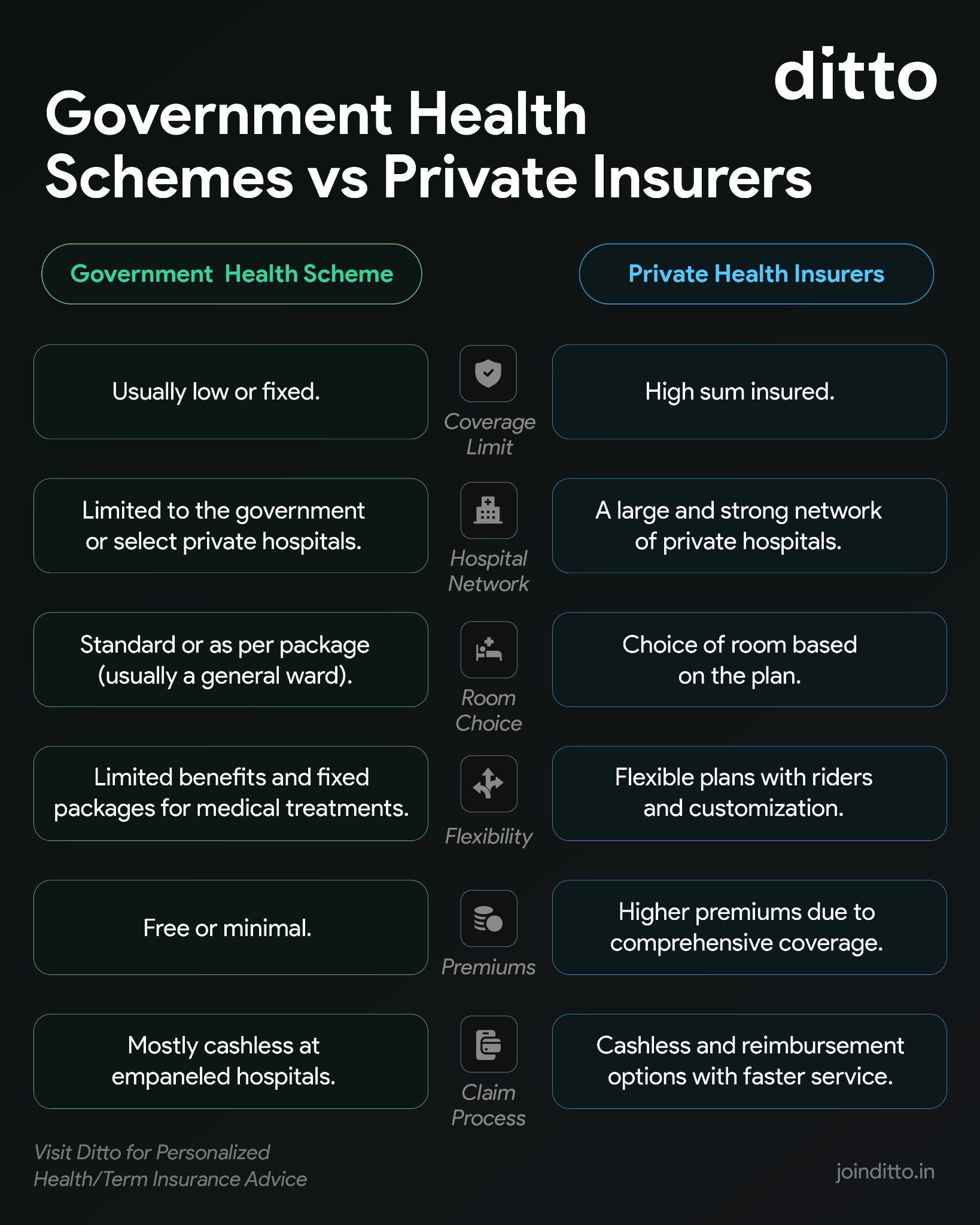
Ditto's Take: Keep MASSY as your free base cover if you qualify, but add a private health insurance policy for a wider choice of hospitals and comprehensive protection against these gaps. If you don't qualify for MASSY, private cover becomes your main safety net, not a backup.
Why Choose Ditto for Health Insurance?
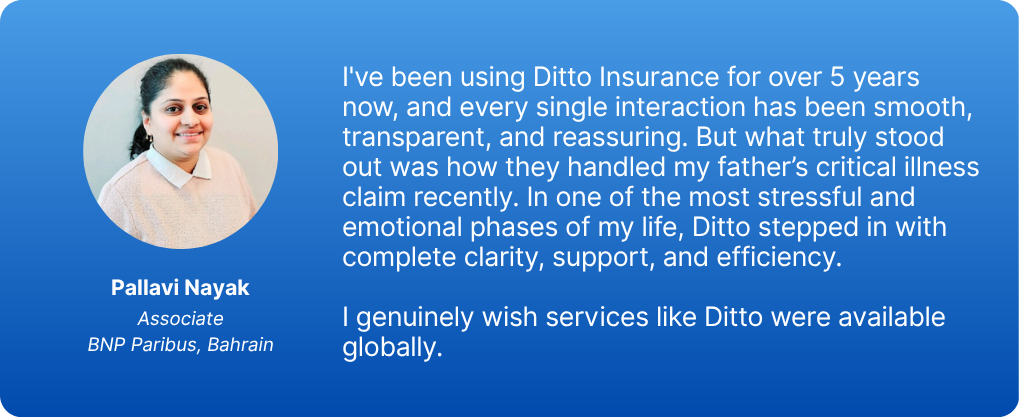
At Ditto, we’ve assisted over 8,00,000 customers with choosing the right insurance policy. Why customers like Pallavi below love us:
- No-Spam & No Salesmen
- Rated 4.9/5 on Google Reviews by 25,000+ happy customers
- Backed by Zerodha
- Dedicated Claim Support Team
- 100% Free Consultation
Confused about the right insurance? Speak to Ditto’s certified advisors for free, unbiased guidance. Book your call or chat with us on WhatsApp now!
Conclusion
MASSY offers real financial protection through its ₹15 lakh cover, cashless treatment, and day 1 coverage for pre-existing diseases, especially valuable for Jharkhand's ration card holders. However, it doesn't cover every treatment, hospital, or expense. You can still face out-of-pocket costs for non-empaneled hospitals, higher room categories, or treatments outside the fixed packages.
For more complete and consistent protection, it's worth adding a retail private health insurance plan alongside the scheme, especially if you're a middle-income earner or don't hold an eligible ration card. If you're comparing options from established insurers, you can explore our guide on the best health insurance plans in India.
Frequently Asked Questions
Last updated on: