




Overview
Hospital bills can add up quickly, especially when treatment involves surgery, ICU care, or a longer hospital stay. For families in Mizoram, the Mizoram Universal Health Care Scheme (MUHCS) is designed to reduce that burden by offering cashless treatment at government and empaneled private hospitals.
The scheme has already seen significant adoption. According to India Today NE, more than 2.88 lakh families enrolled in its first year. MUHCS 2.0 was rolled out on April 1, 2026, bringing a higher budget allocation and stricter norms for emergency care.
But how much does MUHCS actually cover, who qualifies, and where can you use it? This guide breaks down the eligibility rules, benefits, enrollment process, empaneled hospitals, and whether the scheme alone is enough to protect your family's healthcare finances.
What Is the Mizoram Universal Health Care Scheme?
MUHCS is the state government's flagship universal health coverage program, run by the Mizoram State Health Care Society (MSHCS) under the Department of Health & Family Welfare. The scheme took effect on April 1, 2025.
The goal of the scheme is to cover the entire population of Mizoram by integrating the Mizoram State Health Care Scheme with Ayushman Bharat Pradhan Mantri -Jan Arogya Yojana (AB-PMJAY) and other government health programs, while extending coverage to people who were not previously included. It also incorporates the existing health scheme for state government employees, with special provisions for employees and civil pensioners.
The Mizoram State Health Care Society has also received ISO certification and two national AB-PMJAY awards for its implementation of the scheme.
Mizoram Universal Health Care Scheme 2026: What Changed Under MUHCS 2.0?
On March 16, 2026, Chief Minister Lalduhoma launched MUHCS 2.0, an upgraded version of the scheme, along with a dedicated call center called "MUHCS Chhawntu."
The key changes include:
- Stricter Emergency Care Rules: Treatment at non-empaneled hospitals within the state is allowed only in the following situations:
- Immediate ICU admission.
- Urgent life-saving surgery.
- Emergency surgery following an accident.
- Higher Budget Allocation: The state government allocated ₹130 crore for MUHCS 2.0 for FY 2026 to 2027.
Who Is Eligible Under MUHCS and Which Category You Fall Into?
All bona fide residents of Mizoram are eligible under MUHCS. The scheme has six main beneficiary categories, with later MUHCS 2.0 updates expanding or modifying coverage for certain employee groups. Your category determines your premium, coverage amount, and ward entitlement.
Important Eligibility Notes
Coverage, Contribution Slabs, and Benefits Under MUHCS
MUHCS provides health insurance on a family floater basis, where the sum insured is shared among all enrolled family members during a policy year. Any unused balance expires at the end of the policy year and does not carry forward to the next year.
Benefits Covered Under MUHCS
Category-Wise Contribution, Coverage, and Ward Entitlement
AB-PMJAY Beneficiaries
Contributory Beneficiaries
Contributory Beneficiaries can choose from the following plans:
- General Plan: Annual premium of ₹2,500 per family with a ₹5 lakh family floater cover and general ward entitlement.
- Standard Plan: Annual premium of ₹5,000 per family with a ₹5 lakh family floater cover and semi-private (shared) ward entitlement.
- Private Plan: Annual premium of ₹10,000 per family with a ₹5 lakh family floater cover and private ward entitlement.
Government Employees
Civil Pensioners
All Government of Mizoram pensioners and family pensioners who opt for the Mizoram Universal Health Care Scheme (MUHCS) 2.0 pay the same subscription, irrespective of their basic pension.
Note: If both spouses are Government of Mizoram pensioners, both must subscribe separately, increasing the combined annual coverage to ₹24 lakh.
What Does MUHCS Not Cover?
- Diagnostic tests done solely for screening or diagnosis, unless part of covered hospitalisation, follow-up care, or eligible outpatient department or day-care treatment.
- Routine dental care that is not included among the specified dental procedures covered under MUHCS.
- Fertility-related procedures and vaccinations, unless specifically included under an applicable MUHCS package.
- Cosmetic or aesthetic treatments that are not medically necessary.
- Convalescence, rest cures, and treatment for general debility, unless specifically covered under the scheme.
- Domiciliary care, except where specifically included under MUHCS benefits.
- Treatment related to alcohol or substance-abuse detoxification, and treatment arising from war or nuclear events, where excluded under the scheme provisions.
For the latest covered procedures and package rates, refer to the June 2026 revised MUHCS package rates.
Talk to an expert
today and
find
the right
insurance for you.


How to Enroll in the Mizoram Universal Health Care Scheme?
The Mizoram Universal Health Care Scheme registration process depends on your beneficiary category. State government employees, MSHCS employees, provisional employees, or muster roll staff are enrolled through their respective government records. Contributory beneficiaries must complete the enrollment process themselves, while civil pensioners follow a separate subscription process.
Enrollment Process for Contributory Beneficiaries
Note: MUHCS contributory enrollment is not open year-round. For FY 2026-27, enrollment ran from February 16 to May 15, 2026, after an extension from April 15. Those who miss the window must wait for the next enrollment cycle. Check the official MSHCS announcements for the latest dates.
Step 1: Choose Your Enrollment Method
You can enroll through either of the following methods:
- Online: Complete the enrollment form on the official MUHCS portal, upload the required documents, and pay the applicable premium through UPI, debit or credit card, or internet banking.
- Offline: Visit the nearest sub-center to complete a physical enrollment form and submit the required documents. The sub-center forwards the application and supporting documents to the Mizoram State Health Care Society (MSHCS) for processing.
Step 2: Verification of Your Application
MSHCS verifies your application and supporting documents before approving your enrollment.
Step 3: Receive Your MUHCS Card
Once your enrollment is approved, you will receive a MUHCS ID and card, which can be used to receive cashless treatment at empaneled hospitals under the scheme.
Important Points to Remember
Enrollment Process for Civil Pensioners
Civil pensioners must exercise the prescribed option to subscribe to the Mizoram Universal Health Care Scheme (MUHCS) 2.0.
- Treasury pensioners must submit Format 1(a). If the Pension Payment Order has not yet been finalized, they must submit Format 1(b) to the concerned Treasury Officer.
- Bank pensioners must submit Format 2 to the concerned Bank or Pension Disbursing Authority.
Empaneled Hospitals and Cashless Treatment Under MUHCS
MUHCS provides cashless treatment at empaneled hospitals, so beneficiaries do not have to pay eligible hospitalization expenses out of pocket. However, charges for non-covered services or amenities beyond the entitled ward category must be borne by the beneficiary.
The scheme covers all government hospitals in Mizoram, while private hospitals are empaneled by the Department of Health & Family Welfare based on the prescribed eligibility criteria. Hospitals empaneled under AB-PMJAY are also recognized under MUHCS. You can check the latest list of MUHCS-empaneled hospitals before planning your treatment.
Once admitted, the hospital registers the beneficiary on the MUHCS IT platform and submits a pre-authorization request. If additional treatment or a longer hospital stay is required, the hospital must seek further approval from the Mizoram State Health Care Society (MSHCS).

MUHCS vs. Private Health Insurance: Do You Still Need Cover?
Higher Financial Protection
MUHCS cover varies by beneficiary category, with ₹5 lakh available to several categories and higher or unlimited benefits for others. A private policy lets you choose a separate sum insured based on your family’s healthcare needs.
Protection Against Package-Rate Gaps
MUHCS reimburses treatment at prescribed package rates, not the hospital’s actual bill. For permitted non-empaneled treatment, any amount above the applicable MUHCS or CGHS rate is paid by the beneficiary.
Wider Hospital Choice
Cashless MUHCS treatment is limited to empaneled hospitals. Under MUHCS 2.0, non-empaneled treatment is allowed only for specified emergencies and is reimbursed rather than provided cashlessly.
Additional Benefits
Depending on the plan, private health insurance can offer features such as restoration of the sum insured, cumulative bonuses, broader room options, wellness benefits, and selected OPD or diagnostic coverage.
Different Consumer Protections
MUHCS is a government health scheme, not an IRDAI-regulated retail insurance policy. Therefore, protections such as the free-look period, Bima Bharosa, and Insurance Ombudsman do not apply. MUHCS follows its own grievance-redressal process.
Medical Inflation and Cover Adequacy
MUHCS provides a fixed cover of ₹5 lakh for several beneficiary categories. However, healthcare costs continue to rise due to medical inflation, which can reduce the purchasing power of this fixed amount over time.
Why Choose Ditto for Health Insurance?
At Ditto, we’ve assisted over 12,00,000 customers choose the right insurance policy. Why customers like Pallavi love us:
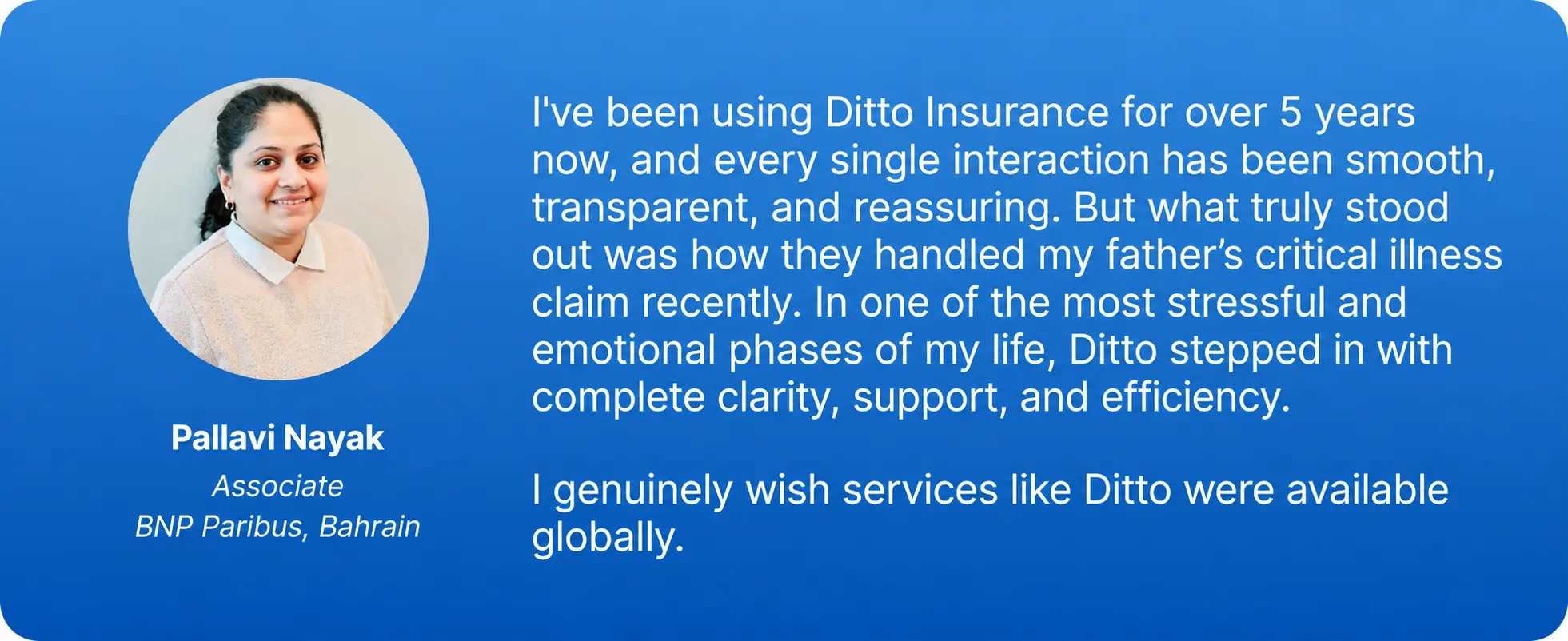
- 100% Free Consultation
- No Spam. No Sales Pressure.
- Rated 4.9/5 on Google Reviews by 30,000+ Happy Customers
- Backed by Zerodha
- Dedicated Claim Support Team
- Compare Plans and Premiums with a Trusted Insurance Advisor
Confused about the right insurance? Speak to Ditto’s certified advisors for free, unbiased guidance. Book your call now or chat with us on WhatsApp. Slots fill up fast!
Conclusion
The Mizoram Universal Health Care Scheme plays an important role in reducing the financial burden of hospitalization by offering cashless treatment to eligible beneficiaries across the state. However, before depending on the scheme for planned medical care, it's important to understand your eligibility category, coverage limits, contribution requirements, and the hospitals where cashless treatment is available.
If you're looking for higher coverage, access to a wider network of hospitals, or benefits that go beyond what MUHCS provides, it's worth exploring some of the best health insurance plans in India to find a policy that complements the scheme and offers more comprehensive financial protection for you and your family.
Frequently Asked Questions
Last updated on: