



Overview
A health insurer can have thousands of hospitals, dozens of policies, and a huge customer base. But none of that matters if settling a claim becomes difficult when you actually need the policy.
That’s what makes the question “is Star Health Insurance good?” more complicated than it initially sounds.
In this Star Health Insurance review, we'll cover the insurer's key plans, claim settlement performance, sample premiums, claim process, and real customer experiences, so you know what to check before buying.
Star Health Insurance: Plans & Key Features
Star Health offers several plans, from broad family policies to specialized products and super top-ups.
Super Star
Super Star is Star Health’s highly customizable comprehensive plan. The current version (UIN: SHAHLIP27049V022627) was launched in May 2026, so make sure you’re looking at the latest Star Health Insurance policy details rather than an older brochure.
- The sum insured ranges from ₹5 lakh to ₹1 crore, with an unlimited sum insured option for those who want maximum protection.
- Its standout feature is "Freeze Your Age," which locks your premium at your entry age until your first claim or age 56, whichever comes first. However, premiums can still rise due to medical inflation, so it's not a permanent freeze.
- The policy comes with no room rent restrictions, unlimited restoration of your sum insured, and a cumulative bonus of up to 100% for claim-free years.
- An add-on called Quick Shield covers certain pre-existing conditions like diabetes and hypertension from as early as day 31, reducing the pre-existing disease waiting period.
Comprehensive
This is the traditional, all-in-one plan for buyers who want broad coverage without customizing every detail.
- Covers a single private AC room, 100% automatic restoration, and 60 days pre-hospitalization plus 90 days post-hospitalization coverage.
- No co-payment if you buy before age 61. After that, a 10% co-payment applies to every claim.
- Includes maternity cover, hospital cash, air ambulance, and some OPD-style benefits like dental and eye care, which most basic plans skip.
- The catch: if you choose a room above the single private AC category, you'll face proportionate deductions on the rest of your bill too.
Assure
Assure is Star Health's family-first plan, built for households that need maternity and newborn benefits.
- Covers up to 9 members (six adults and three dependent children, including parents and parents-in-law) under one floater policy, useful for larger joint families.
- Maternity cover, newborn cover from day 1, and assisted reproduction benefits come standard, not as costly add-ons.
- Unlimited restoration of up to 100% of the sum insured and wellness-linked renewal discounts of up to 20%.
- Waiting periods still apply here: maternity has a 24-month wait, and pre-existing diseases are covered after 36 months (or 30 months if you choose the 3-year policy term).
Super Surplus Gold (Super Top-Up)
If you already have a base health policy through your employer or another insurer, Super Surplus Gold works as a backup layer for large medical bills.
- Sum insured options run from ₹10 lakh to ₹1 crore, with deductible choices between ₹3 lakh and ₹25 lakh, depending on the sum insured you pick.
- No pre-policy medical checkup is required, and the plan offers lifelong renewability.
- One of its best features is a pre-existing disease waiting period of just 1 year, far shorter than the 3-year wait on most base plans.
- No co-payment, so once your claim crosses the deductible, Star Health covers the full remaining bill.
- Premiums tend to run 15%-20% higher than comparable super top-up plans from other insurers, so it's not the cheapest option in this category.
Star Health Insurance: Performance Metrics
This data has been sourced from IRDAI annual reports and the insurer’s public disclosures. To compare it with other insurers, refer to Ditto Data Lab.
Talk to an expert
today and
find
the right
insurance for you.


Key Insights
CSR Is Improving but Still Below Benchmark
Decent ICR
Watch Out for the Complaints Volume
Strong Hospital Network
Star Health Insurance: Sample Premium Illustration by Age & Cover
Note: A stands for adult, C stands for child. For this comparison, we’ve taken sample profiles of healthy individuals living in Delhi (pincode: 110010) and covered for a sum insured of ₹15 lakh. These are indicative premiums and may vary based on your exact location, health history, and selected add-ons.
How Does the Star Health Insurance Claim Process Work?
Cashless Claims (Only at Star Health Network Hospitals):
- Inform Star Health at least 48 hours before a planned admission, or within 24 hours for an emergency.
- Show your Star Health ID card and a valid photo ID at the hospital's insurance desk.
- The hospital submits a pre-authorization form directly to Star Health.
- Star Health's in-house team reviews and approves (or queries) the request, usually communicating a decision quickly since there's no TPA in between.
- Once approved, Star Health settles the bill directly with the hospital at discharge.
Reimbursement Claims:
- Pay the hospital bills upfront.
- Notify Star Health within 24 hours of admission.
- Collect all original bills, discharge summary, and prescriptions.
- Fill out the claim form and submit it online or at your nearest branch.
- After verification, the approved amount is transferred to your bank account.
Star Health Insurance: Pros and Cons

Pros of Star Health Insurance
Extensive Hospital Network
Star Health has a network of 14,000+ hospitals, giving policyholders broad access to cashless treatment. Its network is particularly extensive across South Indian states, where the insurer has a long-standing presence.
Large Scale and Substantial Business Volumes
Star Health operates at considerable scale. A large premium base and established operations provide the insurer with the financial capacity to manage periods of elevated claims, although annual business volume alone should not be treated as a measure of claim-settlement quality.
Specialized Health Insurance Products
Star Health offers products designed for customer segments that may have limited options elsewhere, including people with diabetes, cardiac conditions, a history of cancer, and HIV. This makes its product portfolio relevant for customers who may find it difficult to obtain comprehensive health insurance from other insurers.
In-house Claims Processing
Star Health handles claims internally rather than routing them through a separate TPA. This can simplify communication during the claims process and potentially reduce coordination between multiple parties, particularly for cashless claims.
Senior Citizen-friendly Entry Options
Products such as Senior Citizens Red Carpet allow individuals to enter the policy at older ages, with entry available up to 75 years. The plan also does not require mandatory pre-policy medical examinations, subject to the policy's terms and conditions.
Cons of Star Health Insurance
- Sub-Par Metrics: At 54.04 complaints per 10,000 claims and an 88.63% claim settlement ratio, Star Health's numbers are below the industry average. This does not mean every policyholder will face problems, but it does indicate more reported claim-related complaints and a lower proportion of claims settled than the industry benchmark.
- Frequent Deductions and Partial Settlements: Documented disputes have involved claim deductions and partial settlements, including cases where policyholders received less than expected. Room-rent limits, policy exclusions, and other fine-print terms can affect the final claim amount, so policy wording matters when assessing coverage.
- Competitive Pricing but Long-Term Sustainability Is Uncertain: Some Star Health plans are competitively priced for specific customer profiles. However, current pricing does not tell you how premiums will behave over the long term. Claims experience, healthcare inflation, and future premium revisions can all affect the cost of maintaining the policy.
- 2024 Data Breach and 2025 Regulatory Penalty: Star Health faced a major data breach in 2024, with reports indicating that information belonging to more than 31 million customers was exposed, including sensitive personal and medical data. In 2025, Outlook Money reported that IRDAI imposed a ₹3.39 crore penalty on the insurer for non-compliance with cybersecurity requirements.
Why Choose Ditto for Health Insurance?
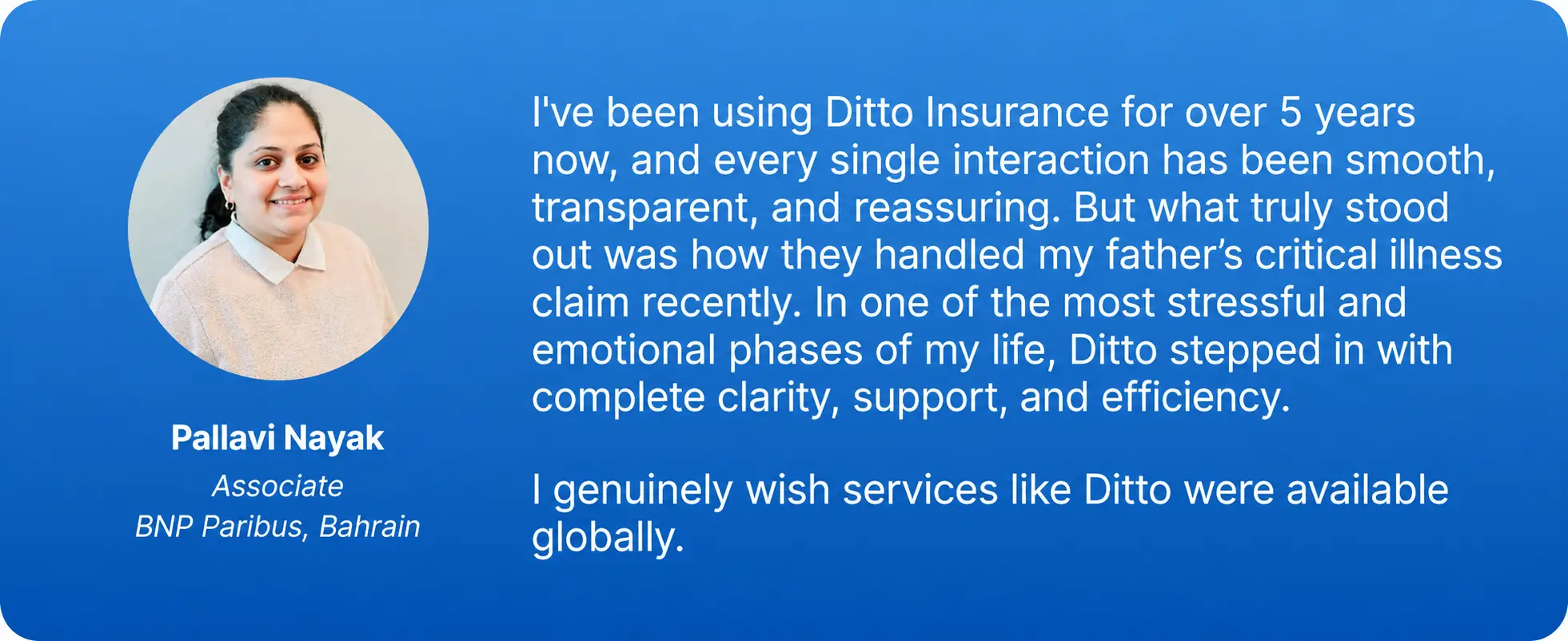
At Ditto, we’ve assisted over 12,00,000 customers choose the right insurance policy. Why customers like Pallavi love us:
- 100% Free Consultation
- No Spam. No Sales Pressure.
- Rated 4.9/5 on Google Reviews by 30,000+ Happy Customers
- Backed by Zerodha
- Dedicated Claim Support Team
- Compare Plans and Premiums with a Trusted Insurance Advisor
Confused about the right insurance? Speak to Ditto’s certified advisors for free, unbiased guidance. Book your call now or chat with us on WhatsApp. Slots fill up fast!
Conclusion: Is Star Health Insurance Good?
Overall, it's not among our top picks today, but it isn't a blanket "no" either.
If you live in South India where its hospital network runs deepest, or you need one of its specialized plans for a pre-existing condition, Star Health can genuinely make sense, especially if you buy through a trusted advisor who can help you pick the right plan and stay on top of your claim.
If smooth, predictable claims are your top priority, compare Star Health with insurers that have stronger claim settlement ratios before you decide. You can also go through our guide on the best health insurance companies in India for more details.
Either way, read the policy wording carefully, keep your medical disclosures accurate, and know your waiting periods before you sign up.
Frequently Asked Questions
Star Health Customer Reviews
Last updated on: