



Overview
Your treatment is done, the doctor has cleared you for discharge, and you’re ready to head home. But then the billing desk tells you to wait because the insurer’s final approval is still pending.
This is where the hospital TPA desk steps in. It helps move the cashless claim along by collecting the required documents, coordinating with the hospital and insurer, and keeping the paperwork in order from admission to discharge. However, the TPA desk does not approve your claim. Your insurer still makes the final decision.
In this guide, we break down what a hospital TPA desk does, how it fits into the cashless claims process, what documents you need at each stage, and what to do if you’re stuck with a delay or rejection.
What Is a Hospital TPA Desk?
The hospital TPA desk (also called the insurance helpdesk or mediclaim counter) is an administrative counter inside a hospital.
In practice, it acts as a coordination point where hospital staff help complete pre-authorization forms, obtain required medical notes from the treating doctor, and submit documents to the insurer in the prescribed format.
At a network hospital, a cashless request is usually initiated through the hospital’s insurance, billing, or cashless team and then sent to the insurer or its TPA via the hospital TPA desk. Some hospitals have a dedicated TPA desk, while others handle this digitally or through their billing team.
Think of the desk as the middleman between you and the insurer’s claims team. It moves the paperwork, but it doesn't decide approvals or claim limits.
Hospital TPA Desk vs. Insurer’s TPA
How the Hospital TPA Desk Processes a Cashless Claim
Step 1: Pre-Authorization
When you reach a network hospital, you first show your health e-card and ID at the TPA desk. They give you a pre-authorization form. You fill in your basic details, and your doctor adds medical information such as the diagnosis, proposed treatment or surgery, and estimated cost. The hospital then sends this request to the insurer or TPA. This is only an initial approval, not the final settlement.
If the insurer needs more information (like test reports or medical notes), the query usually goes to the hospital TPA desk and your doctor. However, the insurer or TPA may still contact you directly for details not available with the hospital.
Step 2: During Treatment
If complications arise, the ICU stay is extended, or additional procedures are needed, the final cost may exceed the initial approval.
In such cases, the hospital TPA desk sends an enhancement (re-authorization) request to the insurer to increase the approved cashless limit while treatment is ongoing.
Step 3: Final Discharge Settlement
At discharge, the hospital prepares the final paperwork, itemized bill, discharge summary, and test reports, and shares them with the insurer through the TPA desk.
The insurer reviews the claim and may disallow non-payable expenses or apply policy-level deductions.
You then pay any remaining amount (if any), such as co-payment, non-payable expenses, or room rent excess (charges above your policy’s allowed room limit), and the hospital completes your discharge process.
Documents to Carry to the TPA Desk Before and After Admission
Before/At Admission:
Keep these ready when you reach the hospital:
- Health insurance e-card or policy number/document
- Valid government photo ID (Aadhaar, PAN, passport)
- Corporate ID (if it’s a group insurance policy)
- Doctor’s prescription or admission advice
- Relevant test reports or diagnostic records
During Hospital Stay: Keep your pre-authorization or claim reference number handy.
At Discharge:
Make sure you retain copies of:
- Signed discharge summary
- Itemized hospital bill
- Payment receipts (for deposits, co-payment, or out-of-pocket expenses)
- Implant stickers or invoices (if any implants were used)

Pre-Authorization Timelines and IRDAI Rules You Should Know
1-Hour Pre-Authorization Rule
Insurers must respond to a cashless pre-authorization request within 1 hour, but only after receiving the complete request from the hospital. The time the hospital TPA desk takes to gather reports and send the file is not included in this 1-hour window. If the insurer needs more information (like test reports or medical notes), the query usually goes to the hospital TPA desk and your doctor. However, the insurer or TPA may still contact you directly for details not available with the hospital.
3-Hour Discharge Approval Rule
At discharge, insurers must approve the final bill within 3 hours of receiving the discharge request and documents from the hospital. Importantly, IRDAI states that patients should not be made to wait to be discharged. If there’s a delay beyond 3 hours and it leads to extra charges (like additional room rent), those costs must be paid by the insurer.
When to Inform the Insurer for Cashless:
- For planned admissions, you (the policyholder or patient) should inform the insurer at least 48 to 72 hours in advance, either directly or through the hospital, to initiate pre-authorization early.
- For emergencies, you or a family member should inform the insurer within 24 hours of admission, either independently or via the hospital.
Note: As per IRDAI’s policyholder protection framework, a claim cannot be rejected or closed solely due to delayed intimation.
Key Insight
Talk to an expert
today and
find
the right
insurance for you.


What Happens if Your Cashless Claim Is Rejected?
Cashless rejection does not always mean your insurance claim is rejected. Cashless requests can be turned down for operational reasons such as:
- Incomplete medical details or test reports sent by the hospital.
- Ongoing checks related to pre-existing disease (PED) waiting periods.
- Hospital network issues, like being removed from the network or administrative mismatches.
Even if a cashless request isn't approved, you can still proceed with treatment. You need to pay the hospital bill at discharge and then file a reimbursement claim with your insurer.
Note: Not all rejections are process-related. If the treatment falls under a waiting period, exclusion, or isn’t medically necessary, it may not be payable even under reimbursement.
How Reimbursement Works
After discharge, you can submit all documents like bills, prescriptions, and the discharge summary to the insurer for a reimbursement claim. The insurer (or their TPA) verifies these against your policy terms and processes all eligible expenses.
For reimbursement claims, keep your original documents ready, as the insurer may ask you to submit them for verification. It’s best to keep soft copies or photocopies for your records before submitting them.
As per IRDAI guidelines, insurers typically settle reimbursement claims within 15 days once all required details are in place.
A reimbursement claim may also include eligible pre- and post-hospitalization expenses, subject to policy terms.
Did You Know?
Why Choose Ditto for Health Insurance?
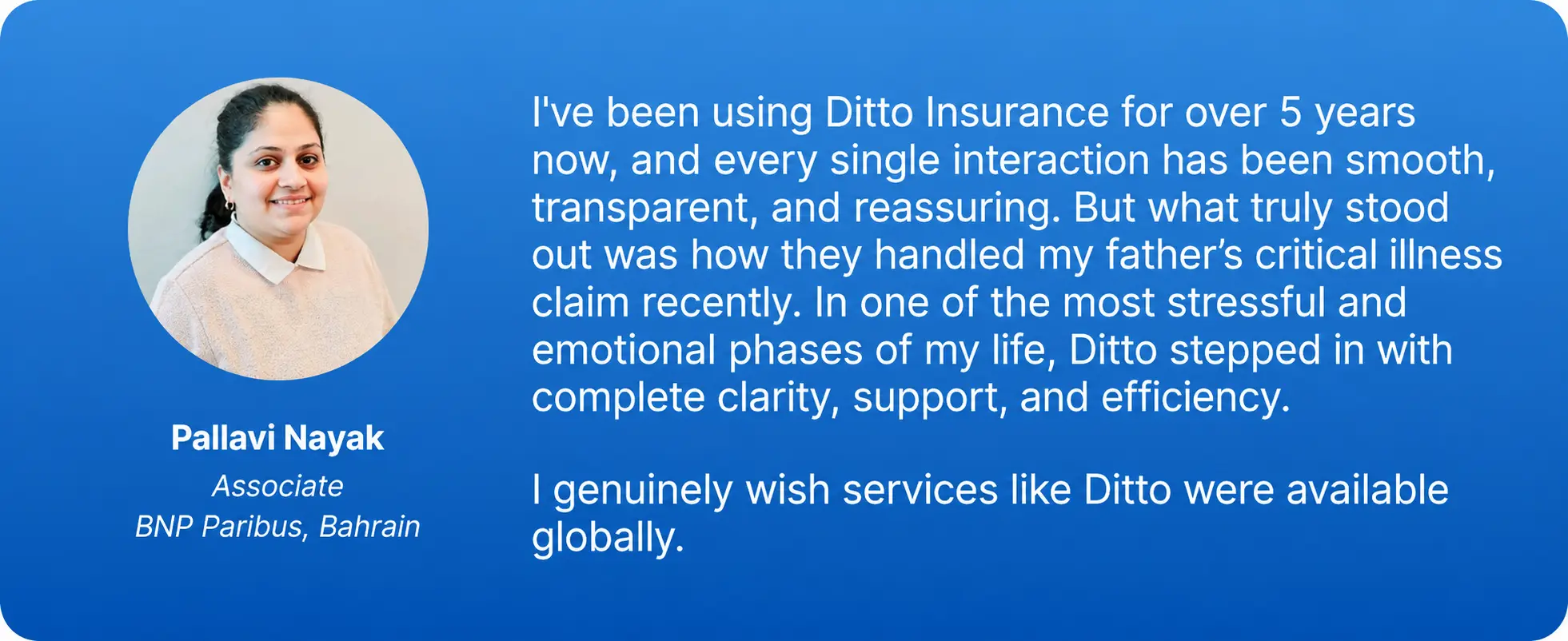
At Ditto, we’ve assisted over 12,00,000 customers with choosing the right insurance policy. Why customers like Pallavi love us:
- 100% Free Consultation
- No Spam. No Sales Pressure.
- Rated 4.9/5 on Google Reviews by 30,000+ Happy Customers
- Backed by Zerodha
- Dedicated Claim Support Team
- Compare Plans and Premiums with a Trusted Insurance Advisor
Confused about the right insurance? Speak to Ditto’s certified advisors for free, unbiased guidance. Book your call now or chat with us on WhatsApp. Slots fill up fast!
Conclusion
A hospital TPA desk is a single point of contact for paperwork, pre-authorization, and coordination with the insurer, and a well-run desk can reduce time during both admission and discharge.
However, it does not approve, reject, or negotiate claims. That decision rests with the insurer. So if you are waiting for an update, following up with the insurer or its TPA directly can sometimes be faster. Its usefulness also depends on whether the hospital is in your insurer’s network, so it is better to confirm this in advance rather than at the billing counter.
If you have purchased your health insurance through Ditto, our claims team can handle the process end-to-end and step in wherever things get stuck so you are not chasing hospitals or insurers during a stressful time.
Bottom Line: Before you rely on cashless treatment, confirm your hospital is active in your insurer's network, and carry your ID and policy documents. If you're still comparing options, check out the best health insurance plans in India.
Frequently Asked Questions
Last updated on: