



Overview
India's elderly population is projected to rise from 10 crore in 2011 to 23 crore by 2036, as per the Ministry of Social Justice and Empowerment.
More senior citizens mean more hospital visits and rising medical bills nationwide. Your own parents are part of this shift, and one hospital stay can wipe out years of savings if they are not insured.
Health insurance for parents above 60 in India is available, and you have more choices than you might think. The main thing is knowing which features matter and which ones reduce your payout later.
This guide covers why premiums rise after 60, how copayment, waiting periods, and sub-limits work, and which plans are worth shortlisting.
Why Health Insurance for Parents Above 60 Costs More?
Higher Medical Risk
Pre-Existing Diseases (PEDs)
Medical Inflation
Longer Hospital Stays
How Health Insurance for Parents Above 60 Works: Copayment, Waiting Periods, and Sub-Limits
Copayment
This means your parents pay a fixed percentage of every hospital bill themselves, and the insurer pays the rest. For instance, a 20% copayment on a ₹5 lakh bill means you pay ₹1 lakh out of pocket. Many senior citizen-specific plans carry a mandatory copayment of 10% to 30%, so always check this clause closely. For example, Star Health offers a senior citizen Red Carpet health insurance plan that comes with a mandatory 30% copayment.
Waiting Periods
There are mainly 3 waiting periods that are commonly applicable.
Sub-Limits
These limits cap how much the insurer pays for a specific treatment, room rent, or disease, regardless of your total Sum Insured (SI). A ₹25 lakh cover with a tight room rent sub-limit can still leave you with a large unpaid bill.
Look for a plan with no copayment, a short or reducible waiting period, and no sub-limits. That combination protects your payout when it matters most.
How Can Senior Citizens Get Health Insurance in India?
Check the infographic to see how senior citizens can get health plans.
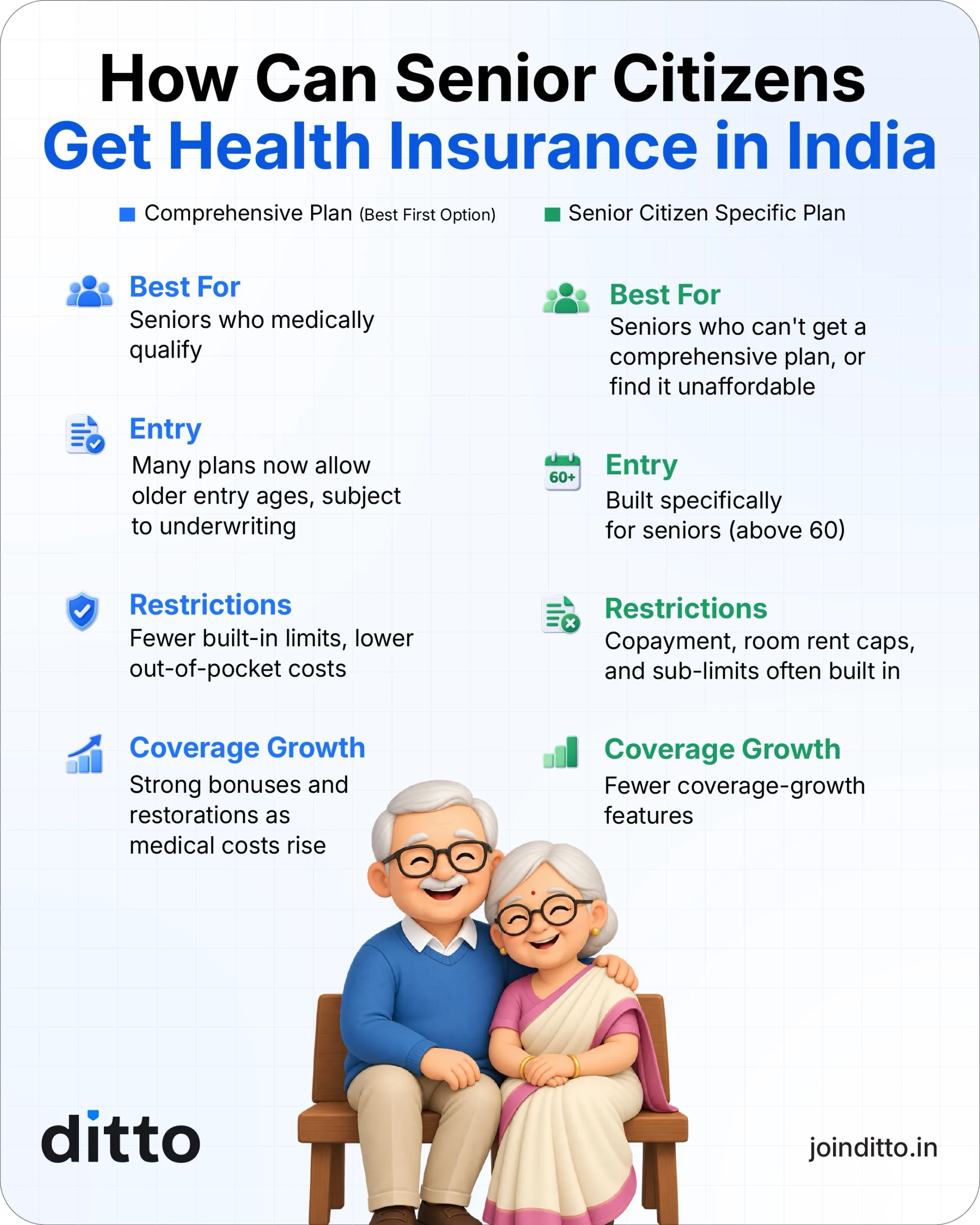
Verdict: Try a comprehensive plan first if your parent qualifies. Only fall back on a senior citizen-specific plan if health history or affordability rules that out.
Best Health Insurance for Parents Above 60 in India
At Ditto, we shortlist the best plans for senior citizens using a simple policy and insurer rating framework:
- Policy Terms: Room rent rules, copayment, consumables coverage, and waiting periods.
- Insurer Metrics: Hospital network strength and claims service track record.
- Premium Value: Whether the price is fair for what the plan actually offers.
Based on the same framework, here are our top health insurance plans for parents above 60.
Note: Explore verified health insurance data from insurers and IRDAI's annual disclosures at Ditto Data Labs, our proprietary repository maintained by the Ditto team.
Did You Know?
Sample Premiums for Health Insurance for Parents Above 60
Note: A denotes adult. The premiums above are indicative values based on a ₹15 lakh SI for healthy individuals residing in Delhi (110010). Your actual premium can vary based on age, medical history, underwriting, and location.
Ditto’s Take: Premiums tend to rise sharply once you cross 65, since insurers price in the higher risk that comes with age. That said, premiums will only keep climbing with age (and other factors) regardless of when you buy. Hence, it's better to start a policy for your parents as early as possible. That way, by the time they actually need to make a claim, the waiting period will already be behind them.
Please Note: IRDAI now caps annual premium hikes for senior citizen plans at 10%, unless the insurer gets special regulatory approval, so you get some protection from sudden renewal shocks.
Talk to an expert
today and
find
the right
insurance for you.


Common Mistakes to Avoid When Insuring Parents Above 60
Chasing the Lowest Premium
A cheap plan can be tempting, but it usually comes at a cost. Lower coverage, a steeper copayment, or extra restrictions show up when you need to file a claim. Always judge a plan by what it actually pays out, not just what it costs upfront.
Buying Too Late
The longer you wait, the higher the premium, the stricter the underwriting, and the fewer plans you can choose from. Mandatory pre-policy medical tests also become more common with age. Buying early keeps your options open.
Overlooking Copayment and Deductible Clauses
Many senior citizen plans require you to pay part of every bill through a mandatory copayment or deductible. If you skip this check, you could end up covering a large chunk of the bill yourself.
Not Checking the PED Waiting Period
If a parent already has BP, diabetes, thyroid issues, or something similar, find out exactly when that condition gets covered. Some plans lock in a fixed waiting period with no way to shorten it, leaving you without support when you need it most.
Not Disclosing PEDs
It may feel harmless to leave out a minor health detail, but underreporting or hiding a condition can lead to claim rejection or even policy termination. Always declare your parents' medical history honestly when buying.
Skipping the Fine Print
Some policies cap what they pay for room rent or specific procedures like cataract surgery or knee replacement. Anything above that cap comes out of your pocket, so check these limits before you buy to reduce out-of-pocket spending. Also check for adequate bonus accumulation and whether claims affect it. Restoration also plays an important role for senior citizen plans because of the likelihood of frequent hospitalizations.
Ignoring Medical Inflation
Treatment costs keep climbing every year, so a sum insured that feels sufficient today may fall short in a few years. Pick a cover that can keep pace with rising healthcare costs, not just today's price. We generally recommend a cover between ₹15 lakh and ₹25 lakh to keep up with inflation. Choose a cover that is sufficient and sustainable.
Not Reading the Exclusions List
Most people check what a plan covers and skip what it doesn't. That gap can lead to false expectations at claim time, so go through the permanent exclusions, disease-specific restrictions, non-payable items, and any waiting-period exclusions before you sign up.
Ignoring Insurer Metrics
A low premium means little if the insurer struggles with claims. Check for metrics like the insurer's claim settlement ratio, incurred claims ratio, complaint volumes, and annual business. Also check how strong their cashless hospital network is in your parents' city.
Tax Benefits on Health Insurance for Parents Above 60
Buying a policy for your parents does more than protect their health. It also lowers your tax bill under Section 80D of the Income Tax Act (renumbered as Section 126), as long as you file under the old tax regime.
Here is how the deduction breaks down:
Why Choose Ditto for Health Insurance?
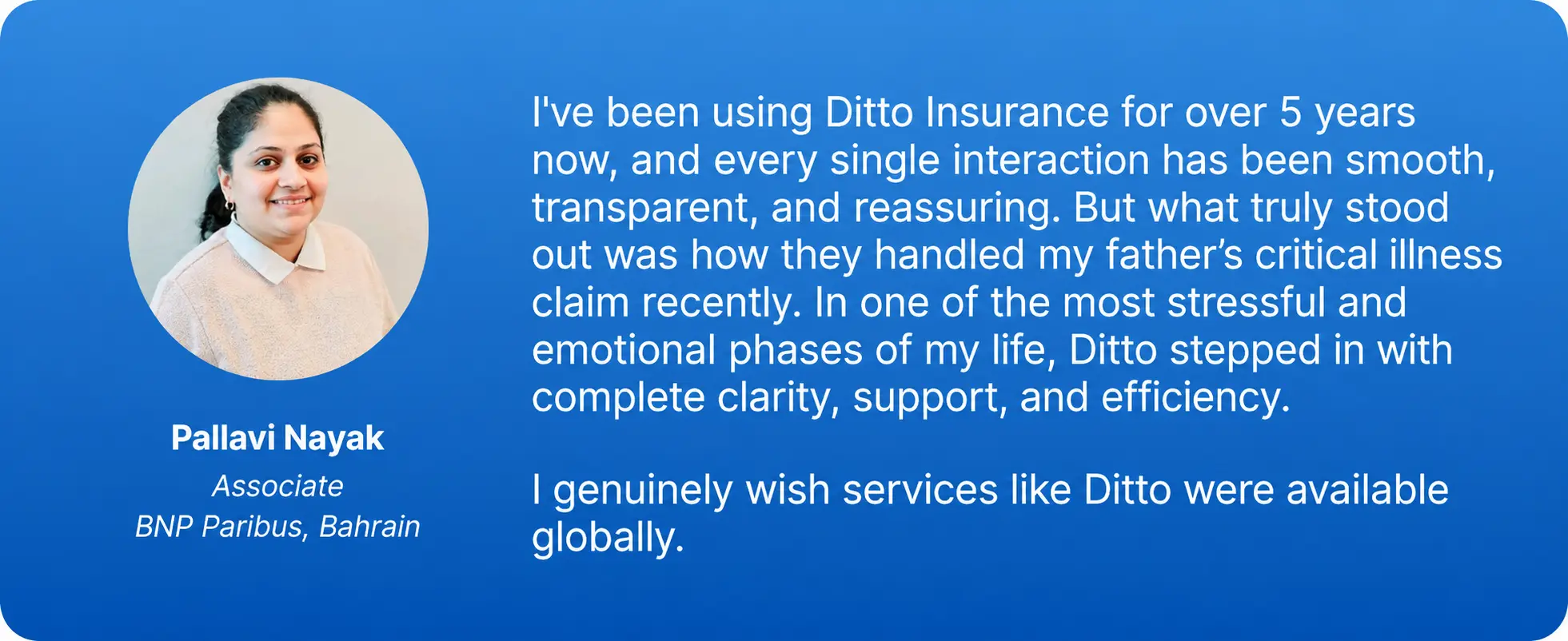
At Ditto, we’ve assisted over 12,00,000 customers with choosing the right insurance policy. Why customers like Pallavi love us:
- 100% Free Consultation.
- No Spam. No Sales Pressure.
- Rated 4.9/5 on Google Reviews by 30,000+ Happy Customers.
- Backed by Zerodha.
- Dedicated Claim Support Team.
- Compare Plans and Premiums with a Trusted Insurance Advisor.
Confused about the right insurance? Speak to Ditto’s certified advisors for free, unbiased guidance. Book your call now or chat on WhatsApp. Slots fill up fast!
Conclusion
Health insurance for parents above 60 years is not just about ticking a box. It is about making sure the policy actually pays out when your parents need it most.
To sum it up, look for a plan with no copayment, no room rent caps, and no sub-limits, and aim for at least ₹15 lakh to ₹20 lakh in coverage. Check the waiting period for any existing conditions, and confirm the insurer's hospital network covers where your parents actually live.
Your next step is simple. Shortlist two or three plans, compare the fine print, and disclose your parents' medical history honestly during the application. That single habit will save you from future claim rejections.
Frequently Asked Questions
Last updated on: