



Quick Overview
Rising healthcare costs can make even a single hospitalization financially overwhelming, especially for vulnerable families. The Gopabandhu Jan Arogya Yojana addresses this gap by offering free treatment at government hospitals and cashless care at empaneled private hospitals, ensuring broader and more accessible healthcare coverage.
This guide breaks down its coverage, benefits, and limitations to help you understand if it truly meets your healthcare needs.
Did You Know?
Key Features of Gopabandhu Jan Arogya Yojana
- Free treatment is available to everyone at government health facilities across Odisha, from sub-centers to district hospitals, regardless of income or status.
- Economically vulnerable families can access cashless treatment at empaneled private hospitals.
- Each family gets health coverage of up to ₹5 lakh per year.
- Women in the family receive an additional ₹5 lakh in cover once the base limit is exhausted.
- The scheme allows beneficiaries to access treatment at empaneled private hospitals both within and outside Odisha. This portability makes it especially useful for migrant workers, students, and families who may need care while living or traveling outside the state.
Take Note: To explore more about the scheme, refer to the GJAY Dashboard for a clear understanding.
Inclusions and Exclusions of Gopabandhu Jan Arogya Yojana
Note: The inclusion and exclusion criteria may vary. It is advisable to refer to the official website for a better understanding.
Eligibility and Application Process for Gopabandhu Jan Arogya Yojana
Eligibility Criteria
- Under the Gopabandhu Jan Arogya Yojana, all families are eligible for free treatment at government health facilities, as the state bears the full cost of care.
- For cashless treatment at empaneled private hospitals, eligibility is limited to families holding a GJAY or BSKY smart card. Individuals covered under the National Food Security Act (NFSA) or the State Food Security Scheme (SFSA) are also eligible.
How to Apply for Gopabandhu Jan Arogya Yojana?
Step 1: Check Your Eligibility
All families can access free treatment at government hospitals. For private hospital coverage, you must have a GJAY/BSKY card or be covered under NFSA/SFSA.
Step 2: Confirm Enrollment Status
Eligible NFSA/SFSA families are usually auto-enrolled, so you may not need to apply separately.
Step 3: Get Your GJAY Smart Card
Visit your nearest MO Seva Kendra or Common Service Center with your NFSA/SFSA card to collect or reissue your smart card.
Step 4: Verify Your Details
Check your card details and balance online using your mobile number or card number.
Once your card is issued, present your card at empaneled hospitals for cashless treatment. In emergencies, you can submit it within 72 hours of hospitalization.
Documents Required to Apply for Gopabandhu Jan Arogya Yojana
To access benefits under Gopabandhu Jan Arogya Yojana, you will need an NFSA or SFSA card in order to issue or correct your card at an MO Seva Kendra. Additionally, the GJAY/BSKY smart health card is required to avail cashless treatment at empaneled private hospitals.
Bear in Mind: Under the scheme, treatment is provided as per predefined package rates. It is advisable to check the package details and inclusions in advance to understand what expenses are covered.
Advantages and Disadvantages of Gopabandhu Jan Arogya Yojana
Note: You can use the Gopabandhu Jan Arogya Yojana hospital locator on the official portal to find empaneled hospitals nearby for cashless treatment.
Gopabandhu Jan Arogya Yojana Vs Private Insurance: Is It Enough on Its Own?
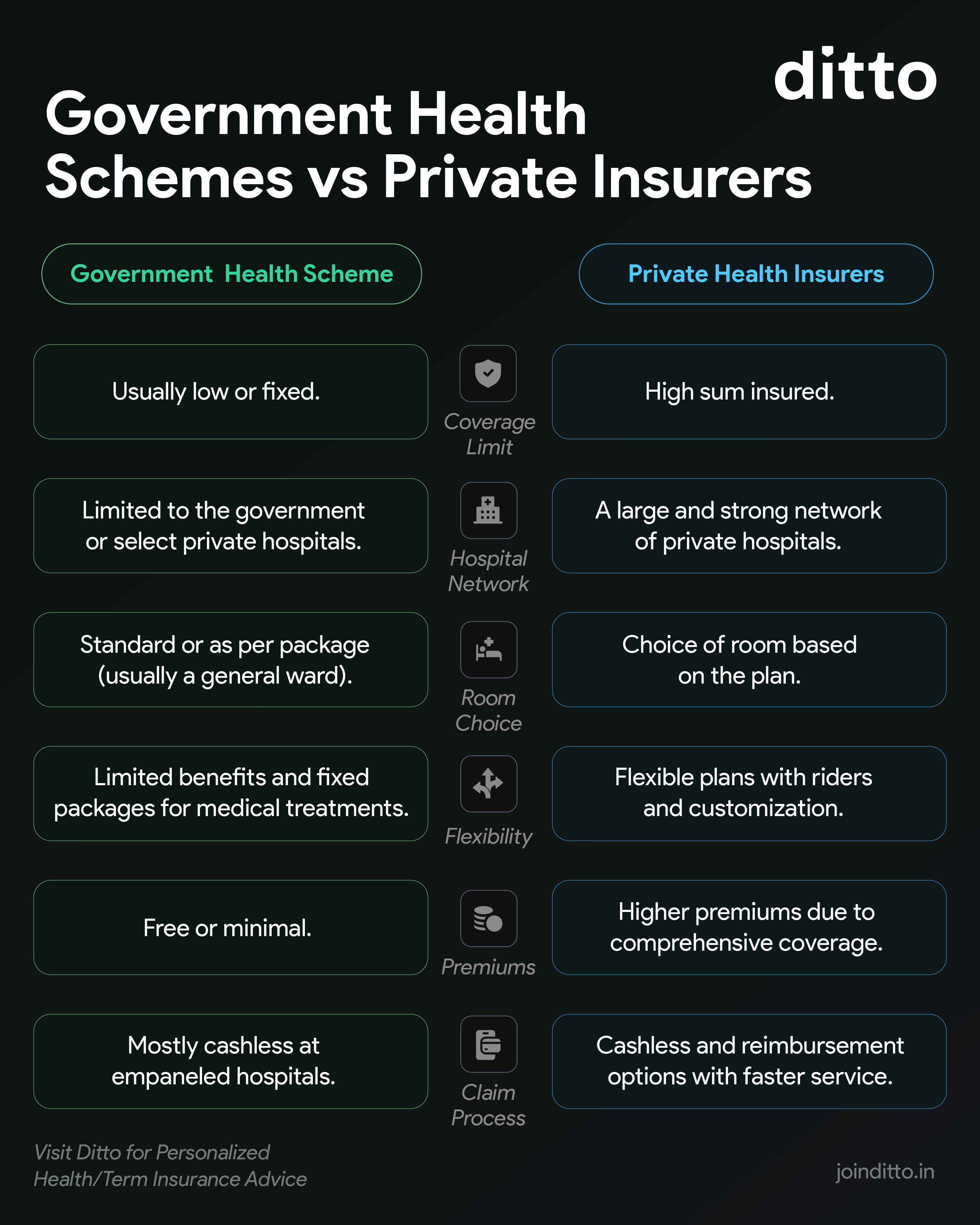
The Gopabandhu Jan Arogya Yojana offers strong baseline protection, especially for economically vulnerable families. However, like most government schemes, its benefits, hospital network, and coverage limits can evolve based on policy decisions and budgets.
Private health insurance from insurers like HDFC Ergo provides more consistent and customizable coverage, wider flexibility in hospital choice, and higher sum insured options.
Take a look at the infographic to understand the difference between private insurers and government schemes:
Why Choose Ditto for Health Insurance?
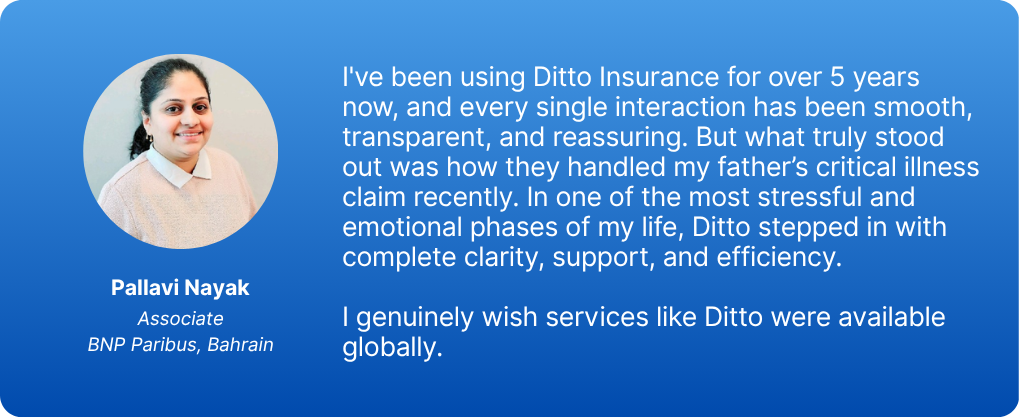
At Ditto, we’ve assisted over 8,00,000 customers with choosing the right insurance policy. Why customers like Pallavi below love us:
- No-Spam & No Salesmen
- Rated 4.9/5 on Google Reviews by 20,000+ happy customers
- Backed by Zerodha
- Dedicated Claim Support Team
- 100% Free Consultation
Confused about the right insurance? Speak to Ditto’s certified advisors for free, unbiased guidance. Book your call or chat on WhatsApp with us now!
Conclusion
The Gopabandhu Jan Arogya Yojana provides a strong safety net with free and cashless treatment. However, there are limitations to public healthcare access, and capped coverage may not always be sufficient, especially for high-cost treatments like neurosurgery.
For more comprehensive and consistent protection, it is worth considering a personal health insurance plan alongside the scheme. If you are looking for a health plan from insurers with established track records, we recommend the best health insurance plans.
Frequently Asked Questions
Last updated on: