


Overview
Paying ₹30,000 upfront for family health insurance can feel like a significant expense, especially when you have rent, EMIs, school fees, and other household costs to manage. So, the option to pay in smaller monthly installments might sound appealing.
But there's a catch. Not all health insurers offer monthly payment options. And even when they do, the total cost may be higher than paying annually due to installment charges or fewer discounts.
So, is paying monthly actually worth it, or does an annual payment make more financial sense? If you're comparing health insurance plans for family monthly premium options, this guide covers the plans worth considering, what affects their premiums, and how to choose the right payment frequency.
What Are the Best Health Insurance Plans for Families in 2026?
When comparing family health insurance plans, look beyond the monthly premium and focus on how well the policy actually protects your family during a claim. Based on Ditto’s detailed health insurance policy and insurer rating framework, these five plans are worth considering in 2026.
Before we break down these five plans, here’s a quick video comparing the top family health insurance plans in India for 2026 and what you should know before choosing one for your family.
HDFC ERGO Optima Secure+
HDFC ERGO Optima Secure+ offers Sum Insured (SI) options from ₹10 lakh to ₹2 crore for individuals and families.
- No Restrictions: The plan does not have any room rent limit, co-payment, or disease-wise sub-limits.
- Infinite Benefit (Bonus): Adds 100% of the base sum insured at every renewal, with no maximum cap, regardless of claims.
- Unlimited Restore (Restoration): Restores the base sum insured multiple times during the policy year for eligible claims.
- Secure Benefit: Provides an additional 100% of the base sum insured from day one.
Care Supreme
Care Supreme offers sum insured options from ₹5 lakh to ₹1 crore.
- No Restrictions: The plan does not have any room rent limit, co-payment, or disease-wise sub-limits.
- Cumulative Bonus: An in-built benefit that increases the sum insured by 50% at each renewal, up to 100% of the base sum insured, even if you make a claim.
- Unlimited Automatic Recharge (Restoration): Restores the sum insured unlimited times for related and unrelated illnesses.
- Cumulative Bonus Super: An optional benefit that can provide an additional 100% bonus at each renewal, irrespective of claims, up to 500% of the base sum insured.
- Cumulative Bonus Booster: An optional benefit that can provide an additional 100%, irrespective of claims, up to infinity.
Aditya Birla Activ One MAX
Aditya Birla Activ One MAX offers sum insured options from ₹5 lakh to ₹2 crore, making it suitable for families looking for anything from basic to very high coverage.
- No Restrictions: The plan does not have any room rent limit, co-payment, or disease-wise sub-limits.
- Super Credit (Bonus): Adds 100% of base SI at every renewal, regardless of claims, up to 500%, capped at ₹3 crore.
- Super Reload (Restoration): From the second claim onwards, restores up to the base SI unlimited times during the policy lifetime.
- HealthReturns: Lets you earn rewards worth up to 100% of your eligible premium by meeting wellness and fitness goals.
Niva Bupa ReAssure 3.0 Black
Niva Bupa ReAssure 3.0 Black offers sum insured options of ₹5 lakh, ₹10 lakh and Unlimited for individuals and families.
- No Restrictions: The plan does not have any room rent limit, co-payment, or disease-wise sub-limits.
- Booster+ (Bonus): Carries forward unused base sum insured every year, up to 10X the base sum insured.
- ReAssure Forever (Restoration): Restores 100% of the base sum insured after your first claim is settled. Once triggered, it stays active for the entire policy and does not need to be reactivated each year, as long as you use the base cover. Not applicable if you choose the unlimited sum insured variant.
- Live Healthy (Wellness Discount): Earn health points by tracking steps on the insurer’s app (1,000 steps = 1 point) and get a renewal discount of up to 30%, depending on activity levels.
- Claim Safeguard+ (Optional Add-On): Covers consumables that are usually non-payable (like gloves, PPE kits, syringes, etc.), which are otherwise out-of-pocket in most policies.
SBI Super Health Platinum Infinite
SBI Super Health Platinum Infinite offers sum insured options from ₹50 lakh to ₹2 crore, making it suitable for families looking for high-value coverage.
- Disease-Wise Sub-Limits: No disease-wise sub-limits. However, some specific benefits have separate caps, such as bariatric surgery at ₹2 lakh
- No Restrictions: The plan does not have any room rent limit or co-payment restrictions.
- Loyalty Credit (Bonus): Adds 50% of the base sum insured at every renewal, irrespective of claims, up to 100% of the base SI.
- ReInsure Benefit (Restoration): Available from the first claim itself and restores up to 200% of the base sum insured unlimited times for related and unrelated illnesses.
- Health Multiplier: Increases available cover for 37 listed serious illnesses, including cancer, kidney failure, CABG, stroke, and major organ transplant.
Family Health Insurance Monthly Premiums by Family Size and Sum Insured
Family health insurance premiums typically increase as you add more members or choose a higher sum insured. To give you a better idea of the costs, here's how monthly premiums vary across different family sizes and age groups for the Aditya Birla Activ One MAX health insurance plan.
For ₹10 Lakh Sum Insured:
For ₹15 Lakh Sum Insured
Note: A stands for adult and C for child. These are indicative premiums for a Delhi resident (PIN code: 110010) with ₹10 lakh and ₹15 lakh sum insured. Actual premiums can vary based on age, location, medical history, underwriting, plan variant, discounts, and selected add-ons.
Premium Insight: Paying monthly costs about 6% more than paying the year upfront. For example, a couple aged 62 and 63 with a ₹15 lakh cover pays ₹77,544 over 12 months if paying monthly, against ₹73,155 if paid yearly. That’s ₹4,389 extra. For a younger couple (31, 32) with ₹10 lakh cover, the extra is ₹861. If the one-time payment is manageable, paying annually is cheaper.
Talk to an expert
today and
find
the right
insurance for you.


Is Paying a Monthly Premium Better Than Annual Payment?
Monthly installments can make family health insurance easier to manage, but annual payment is usually simpler and often cheaper overall. From the insurer’s side, annual payments are also easier to administer because they involve fewer payment failures, follow-ups, and transaction-related costs.
When Monthly Payment Makes Sense
Monthly installments can help if paying the full annual premium at once would strain your household budget. For instance, if your annual premium is ₹36,000, paying in monthly installments could make the expense easier to manage alongside other household costs. However, your monthly payment would be higher than ₹3,000 because insurers can charge extra for this flexibility.
But monthly payment should be viewed as a payment convenience, not necessarily a cheaper way to buy insurance.
How Insurer-Offered Monthly Payments Work
- Grace Period: As per IRDAI rules, the grace period is 15 days for monthly installments and 30 days for other payment modes, with coverage continuing only for installment modes.
- Not a Loan: This is a premium-payment frequency option, not credit-card or NBFC financing.
- Can Cost More: Insurers may apply an installment loading (2% to 5%) or not extend certain annual or multi-year discounts. For example, HDFC ERGO Optima Secure offers no-cost installments but reserves long-term discounts for upfront payments.
- Example: Very few insurers in India offer this facility. Star Health offers installment payments on plans such as Super Star and Star Comprehensive.
What Happens if You Make a Claim While Paying Monthly?
When Does Annual Payment Make More Sense?
If you can comfortably afford the premium upfront, annual payment is usually the simpler option.
You make one payment for the year, have fewer due dates to track, and avoid the risk of missing an installment. It can also work out cheaper where an insurer offers better discounts for annual or multi-year payment.
Another Way to Pay Monthly: Credit Card or NBFC EMI
What Drives Your Family Health Insurance Monthly Premium?
- Age: Premiums generally rise as insured members get older because health risks increase with age. In family floater health insurance, premiums are calculated based on the age of the oldest member.
- Family Size: Adding a spouse, children, or parents usually increases the premium, though each plan has limits on the maximum number of members and relationships.
- Sum Insured: Higher coverage means a higher premium, though the increase is not always proportional.
- City or PIN Code: Premiums can vary by location based on healthcare costs and insurer pricing zones.
- Medical History and Lifestyle: Existing illnesses, smoking, alcohol use, and BMI can affect underwriting and may increase the premium.
- Plan Features and Add-Ons: Benefits such as maternity cover, Outpatient Department (OPD), consumables, or super bonus can increase the premium.
For a clearer estimate, use a family health insurance premium calculator to compare costs based on your family's age, location, number of members, and preferred coverage. However, the final premium may vary depending on the insurer, medical underwriting, and selected add-ons.
Why Choose Ditto for Health Insurance?
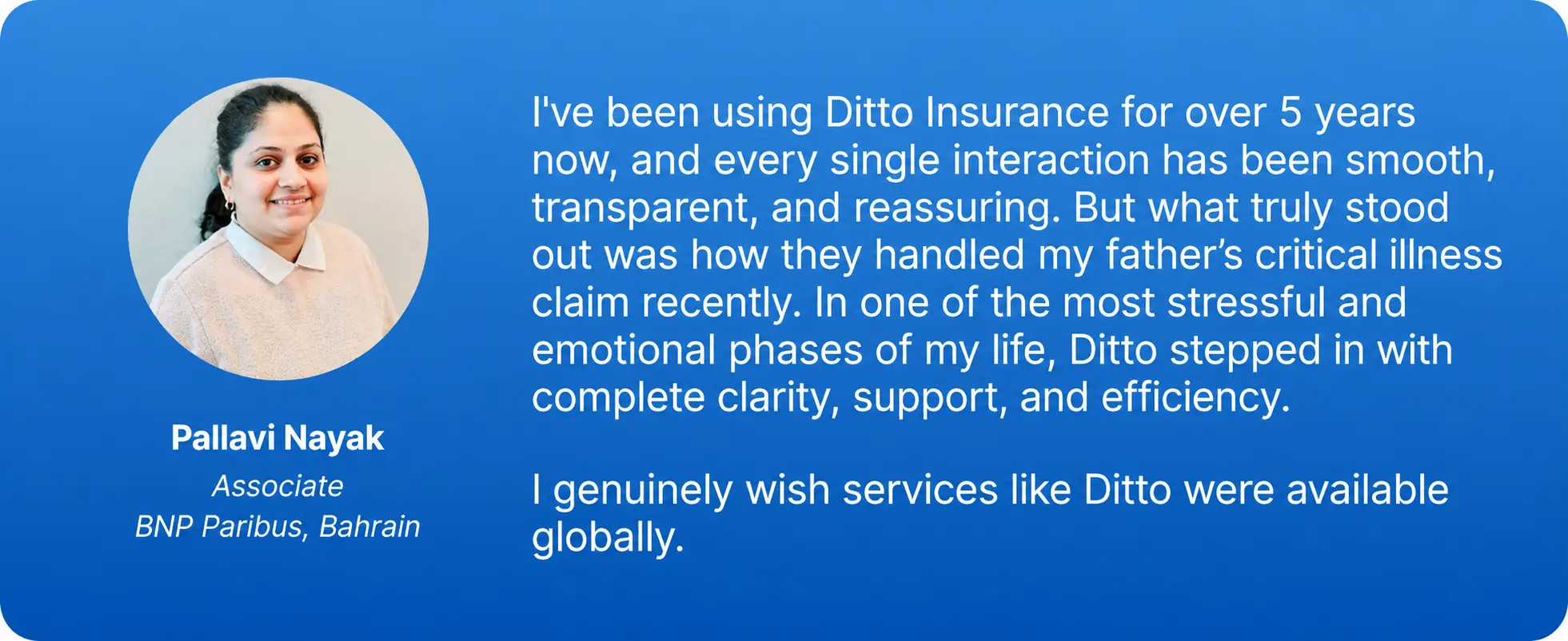
At Ditto, we’ve assisted over 12,00,000 customers choose the right insurance policy. Why customers like Pallavi love us:
- 100% Free Consultation
- No Spam. No Sales Pressure.
- Rated 4.9/5 on Google Reviews by 30,000+ Happy Customers
- Backed by Zerodha
- Dedicated Claim Support Team
- Compare Plans and Premiums with a Trusted Insurance Advisor
Confused about the right insurance? Speak to Ditto’s certified advisors for free, unbiased guidance. Book your call now or chat with us on WhatsApp. Slots fill up fast!
Conclusion
Monthly installments can make family health insurance easier to budget for, but they may come with installment loadings, fewer discounts, and claim-time adjustments for pending premiums. So choose the policy based on coverage first, and treat the payment mode as a secondary decision.
At Ditto, we recommend paying annually because it is simpler, reduces the risk of missed due dates, and can be cheaper overall. The removal of GST on individual and family health insurance premiums has also made annual payments more affordable.
If paying a lump sum is difficult, consider insurer-offered installments before a credit card. Alternatively, you can set aside money through an RD or SIP and use the accumulated amount toward your annual premium, making the payment easier to manage.
Frequently Asked Questions
Last updated on: