



Health insurance has become increasingly important for Chennai residents, especially after the COVID-19 pandemic highlighted how quickly medical emergencies can drain savings. With healthcare costs continuing to rise, having adequate coverage offers valuable financial protection and peace of mind.
This is particularly relevant in a Tier 1 city like Chennai, where treatment costs and insurance premiums are often higher than in smaller towns. Choosing the right policy requires careful research to ensure it matches your healthcare needs and budget. This guide will help you understand the key aspects of health insurance in Chennai and make a more informed decision.
Chennai and Health Insurance
Chennai, the cultural capital of South India and a major economic hub, is characterized by its extensive healthcare network and a population that spans a wide socio-economic spectrum. The city faces several specific health insurance needs due to:
- Environmental Challenges: Chennai’s climate, marked by extreme heat and monsoonal rains, poses unique health challenges, including waterborne and vector-borne diseases.
- Industrial and Technological Hub: As a centre for IT and manufacturing, Chennai's workforce faces occupational health risks alongside typical urban health issues like stress and lifestyle diseases.
- Growing Healthcare Sector: With some of India’s leading hospitals and medical research institutions, Chennai offers advanced medical treatments that can be costly, underscoring the need for adequate health insurance coverage.
Why Do You Need Health Insurance Policies in Chennai?
The importance of health insurance in Chennai can be attributed to several factors:
- High Cost of Medical Treatments: Chennai's advanced healthcare infrastructure means higher medical costs. Health insurance helps manage these costs effectively.
- Rising Incidence of Lifestyle Diseases: The urban lifestyle contributes to increasing cases of diabetes, heart disease, and other chronic conditions, necessitating regular medical attention and long-term treatment plans covered by health insurance.
- Climatic Conditions: The city’s climatic conditions contribute to health issues such as respiratory problems and infections, making health insurance essential for financial planning against unpredictable medical expenses.
Things to Remember When Choosing Health Insurance Plans in Chennai
When selecting a health insurance plan in Chennai, keep the following considerations in mind:
- Comprehensive Coverage: Look for plans that offer comprehensive coverage, including outpatient services, hospitalisation, and critical illness coverage.
- Network Hospitals: Consider plans that include a wide network of hospitals in Chennai, especially those that offer cashless hospitalisation facilities.
- Policy Inclusions and Exclusions: Understand what is included and excluded in the policy, particularly concerning diseases prevalent in Chennai due to its unique environmental conditions.
- Premium vs. Benefits: Evaluate the balance between the premium costs and the benefits provided. Affordable plans should not compromise on the essential coverage needs typical to Chennai’s environment.
How to Choose the Best Health Insurance Plans in Chennai?
Selecting the best health insurance plan involves:
- Assessing Personal Health Needs: Base your choice of health insurance on personal and family health history, considering prevalent local health issues.
- Utilizing Online Comparison Tools: Make use of online comparison tools to evaluate different health insurance plans, focusing on coverage, premiums, exclusions, and customer reviews.
- Choose the perfect health insurance provider.
- Consulting with Insurance Experts: Consider consulting with insurance advisors to get tailored advice based on the specific healthcare landscape of Chennai.
- Claim Settlement Ratio: Calculated as the number of health insurance claims settled in a year against the number of claims raised to the insurer in the year, the Claim Settlement Ratio, or CSR, is one of the crucial metrics used to determine an insurer's credibility. It sheds some light on the insurer's claim settlement track record.
Here is a quick look at the CSR of some of the top health insurance providers (average of data from 2022 to 2025) -
- Claim Settlement Ratio: Calculated as the number of health insurance claims settled in a year against the number of claims raised to the insurer in the year, the Claim Settlement Ratio, or CSR, is one of the crucial metrics used to determine an insurer's credibility. It sheds some light on the insurer's claim settlement track record.
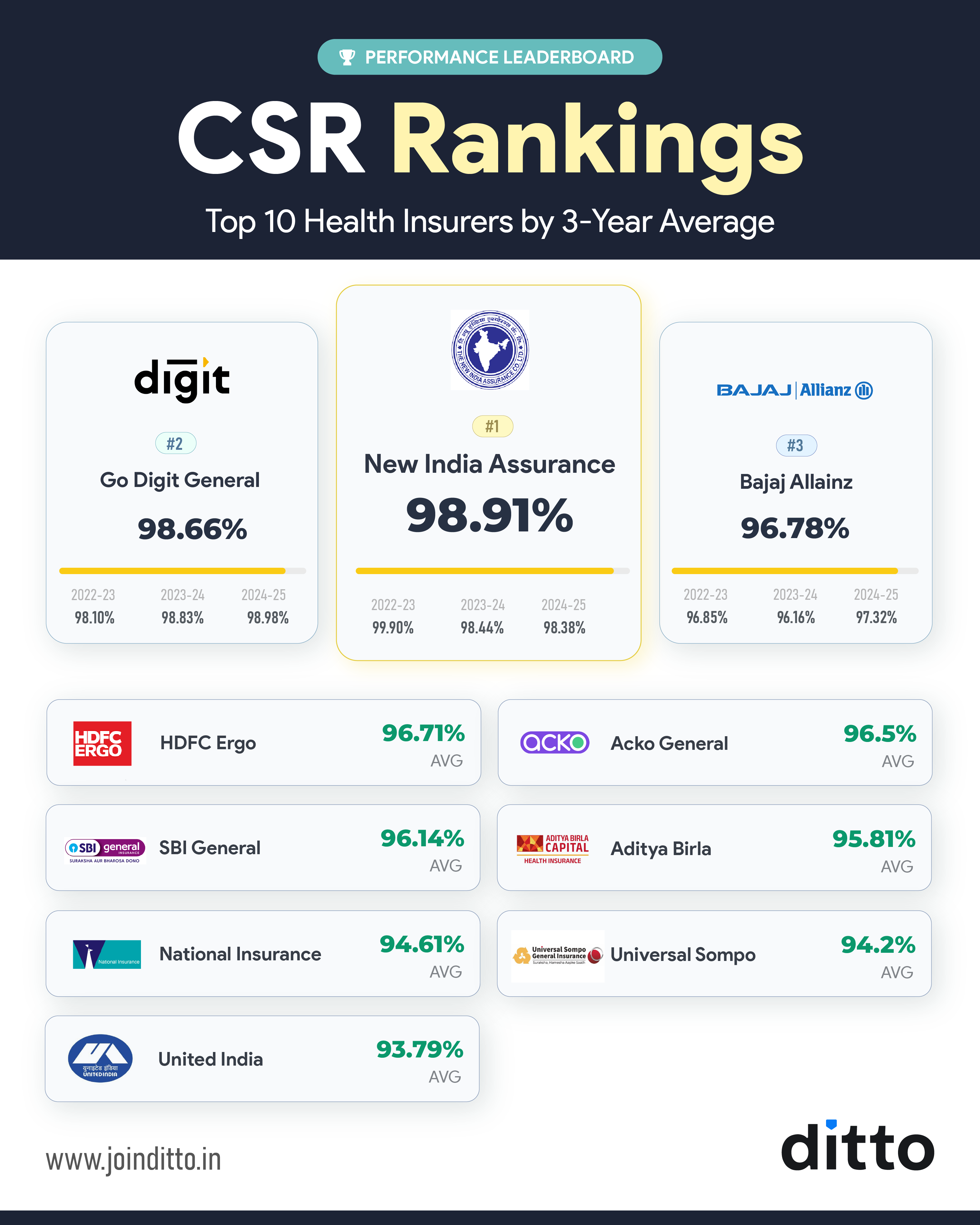
However, it would be good to remember that CSR numbers can easily be misleading since they do not reflect whether the claim has been settled entirely or partially. A CSR of 90 or above is the best way forward for a credible health insurer. On the other hand, if an insurer’s CSR is less than 80, you might start looking around for other providers.
- Incurred Claim Ratio: An insurer's Incurred Claim Ratio (ICR) indicates the provider's future sustainability and, hence, its claim settlement potential. The ICR metric is measured by dividing the total amount spent settling claims against the total amount collected as premiums across the year.
The ideal ICR of a health insurer lies between 50 and 70. An ICR of less than 50 suggests that the insurer is too focused on building its business profits, and an ICR of more than 80 means that the insurer is too focused on settling claims (which might seem great in the short term, but in the long run, the insurer might face a financial crunch). - Complaint Volume: When choosing a health insurance provider, it's important to consider the number of complaints the insurer receives (per 10,000 claims filed). This metric offers valuable insight into the claim settlement experience of current policyholders. As most complaints arise from delayed or denied claims, the complaint volume strongly indicates the insurer's approach to handling claims and their ability to settle them efficiently.
- Annual Average Business Income: While this may not be an exact measure of an insurer’s credibility, understanding their annual business volume helps you gauge the scale of the insurer’s operations and the potential size of its client base. Since you are entrusting a significant coverage amount to the insurer, choosing a medium- or large-sized provider with a strong client base is advisable, as this often reflects their reliability and established track record in the insurance industry.
Talk to an expert
today and
find
the right
insurance for you.


Best Health Insurance Plans in Chennai (2026)
Each of these plans is designed to address the unique challenges and needs of Chennai residents, providing peace of mind through comprehensive health coverage and access to quality medical care.
Last updated on: