



Delhi has long been one of India's most prominent cities, known for its rich history, political importance, and vibrant markets. However, it also faces high pollution levels, which can contribute to various health issues. Coupled with the city's high cost of living, medical treatment and hospitalization can be expensive, often running into lakhs of rupees.
This is where health insurance becomes essential. A good health insurance plan can help cover unexpected medical expenses and protect your savings during emergencies. Before choosing a policy, it's important to understand the available plans, their benefits, and how to select an insurer that best fits your healthcare and financial needs.
So, read on!
Delhi and Health Insurance
Delhi stands out due to its unique juxtaposition of being a historical city with modern healthcare challenges. As the national capital with a significant influx of domestic and international visitors, the demand for high-quality medical services is constant. The city's healthcare infrastructure is stretched between highly advanced private facilities and under-resourced public hospitals.
Given this disparity, the role of health insurance becomes crucial in ensuring that Delhi's diverse population, from government officials to daily wage earners, has equitable access to healthcare. Additionally, the city's ongoing struggle with air quality issues significantly heightens the health risks associated with respiratory diseases, making health insurance not just a luxury but a necessity for its citizens.
Why Do You Need Health Insurance Policies in Delhi?
Delhi's residents face a dual challenge: managing the high cost of healthcare and mitigating the risks associated with urban living. The city's medical inflation often outpaces the general inflation rate, leading to a rapid increase in healthcare costs. Furthermore, the lifestyle in Delhi, characterized by high stress, varying air quality, and an increasingly sedentary lifestyle, contributes to the prevalence of lifestyle-related health issues such as cardiovascular diseases, diabetes, and chronic respiratory illnesses. Health insurance mitigates the financial impact of these conditions by covering a wide range of medical expenses, from diagnostic tests and medical treatments to hospitalization and post-treatment care, ensuring that residents do not have to compromise on quality care due to cost considerations.
Things to Remember When Choosing Health Insurance Plans in Delhi
When navigating the complex landscape of health insurance in Delhi, several additional factors need consideration:
- Tailored Benefits: Look for plans that offer benefits tailored to urban health needs, such as coverage for pollution-related health issues.
- Flexibility and Portability: Ensure that the insurance plan offers flexibility in terms of adding or removing members and moving between different insurance providers without losing the benefits.
- Limits and Caps: Carefully check for any sub-limits or caps on room rent, specific treatments, and disease-specific caps, which can significantly affect out-of-pocket expenses during a medical emergency.
- Preventive Healthcare: Given the high prevalence of lifestyle diseases, opt for plans that offer preventive healthcare options, including regular health check-ups, vaccination coverages, and wellness benefits.
Talk to an expert
today and
find
the right
insurance for you.


How To Choose The Best Health Insurance Plans In Delhi?
Selecting the best health insurance requires a strategic approach:
- Choose the perfect health insurance provider
- Claim Settlement Ratio: Calculated as the number of health insurance claims settled in a year against the number of claims raised to the insurer in the year, the Claim Settlement Ratio, or CSR, is one of the crucial metrics used to determine an insurer's credibility. It sheds some light on the insurer's claim settlement track record. Here is a quick look at the CSR of some of the top health insurance providers (average of data from 2022 to 2025) -
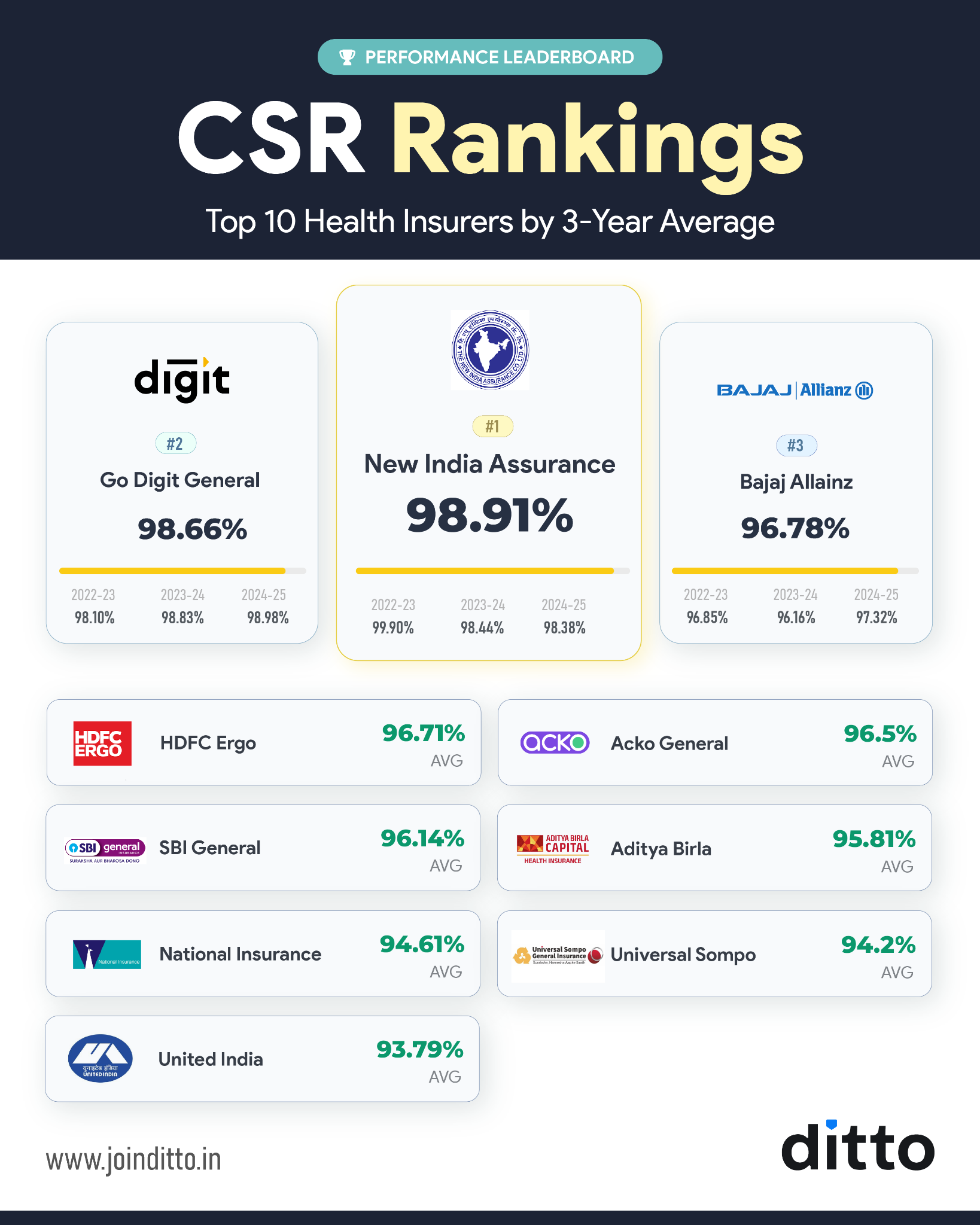
- However, it would be good to remember that CSR numbers can easily be misleading since they do not reflect whether the claim has been settled entirely or partially. A CSR of 90 or above is the best way forward for a credible health insurer. On the other hand, if an insurer’s CSR is less than 80, you might start looking around for other providers.
- Incurred Claims Ratio: An insurer's Incurred Claim Ratio (ICR) indicates the provider's future sustainability and, hence, its claim settlement potential. The ICR metric is measured by dividing the total amount spent settling claims against the total amount collected as premiums across the year. The ideal ICR of a health insurer lies between 50 and 70. An ICR of less than 50 suggests that the insurer is too focused on building its business profits, and an ICR of more than 80 means that the insurer is too focused on settling claims (which might seem great in the short term, but in the long run, the insurer might face a financial crunch).
- Complaint Volume: When choosing a health insurance provider, it's important to consider the number of complaints the insurer receives (per 10,000 claims filed). This metric offers valuable insight into the claim settlement experience of current policyholders. As most complaints arise from delayed or denied claims, the complaint volume strongly indicates the insurer's approach to handling claims and their ability to settle them efficiently.
- Annual Average Business Income: While this may not be an exact measure of an insurer’s credibility, understanding their annual business volume helps you gauge the scale of the insurer’s operations and the potential size of its client base. Since you are entrusting a significant coverage amount to the insurer, choosing a medium- or large-sized provider with a strong client base is advisable, as this often reflects their reliability and established track record in the insurance industry.
- Understand the Fine Print: Read the policy documents carefully to understand the fine print, including the coverage details, exclusions, and the claims process.
- Annual Limits and Renewability: Verify if the plan has annual limits on claims and whether it offers lifetime renewability, which can be crucial for long-term health management.
- Customer Support: Choose insurance companies known for their strong customer support, as navigating claims and understanding policy benefits can be challenging without effective communication.
- Technology Integration: Consider insurers that provide digital tools for easier management of policies, including mobile apps for tracking claims, health records, and accessing telemedicine services
Best Health Insurance Plans in Delhi (2026)
In 2026, the best health insurance plans for residents of Delhi will be those that offer comprehensive coverage tailored to the specific health risks of living in a major metropolitan area. Some notable plans are:
Each plan is structured to address the multifaceted aspects of healthcare needs in a bustling metropolis like Delhi, ensuring that policyholders can navigate the healthcare landscape effectively without financial hardships.
Last updated on: