



Overview
You have booked your Singapore trip. Flights, hotel, maybe even a Universal Studios ticket. And then you wonder if travel insurance is worth the extra spend on top of everything else.
Here is the honest answer. Singapore does not mandate that you buy travel insurance to enter the country. But Singapore hospitals charge steep rates, even for something as routine as an appendix surgery. If you fall sick or get hurt there, you pay out of your own pocket unless you have a policy backing you up.
This article covers whether travel insurance Singapore plans are mandatory, what they should include, and how much medical cover you actually need. We’ll cover real cost estimates by age and trip length, and how single-trip travel insurance Singapore compares with annual cover. You will also learn how to file a claim the right way.
Is Travel Insurance Mandatory for Singapore?
Singapore does not require Indian tourists to hold travel insurance for a tourist visa or entry. Indian passport holders need a Singapore visa, but the official document checklist only asks for your application form, passport, photograph, and supporting documents. You do need a passport valid for at least six months, an onward or return ticket, and enough funds for your stay.
You must submit the free SG Arrival Card within three days before arriving in Singapore, including the day of arrival. It is free, and it is not a visa or an insurance requirement. That said, do not assume insurance is never required. A university, employer, cruise line, or tour operator might ask for it separately, even though Singapore immigration does not.

What Travel Insurance for Singapore Should Cover?
Emergency Medical Treatment
This is the core feature of the plan. It should cover hospitalization, outpatient emergencies, diagnostics, surgery, ICU stays, and prescribed medicines. Singapore's private hospitals bill foreign visitors at full, unsubsidized rates, so this benefit is what protects you from paying those bills yourself.
Emergency Evacuation and Repatriation
Singapore itself has world-class hospitals, so you are unlikely to be evacuated out of the country for better treatment. This benefit usually comes into play the other way around, flying you back to India if your condition needs long-term care at home.
Personal Accident
This benefit pays out for accidental death or permanent disability during the trip. This matters if your Singapore itinerary includes activities like cable cars, water sports at Sentosa, or simply crossing busy roads in an unfamiliar city.
Personal Liability
This helps you provide coverage if you accidentally injure someone or damage property. Singapore has a large, well-used network of e-scooters and bicycles for rent, and a liability claim can follow you home if you damage a hired ride or hurt a pedestrian.
Trip Cancellation and Interruption
Reimburses non-refundable costs like flights and hotels if your trip is canceled or cut short. This only applies to named reasons such as sudden illness, hospitalization, or a family emergency, not to a change of mind or a visa being rejected.
Missed Connection and Travel Delay
Many Indian travelers connect through Singapore's Changi Airport on the way to onward destinations. This benefit pays out if you miss a connecting flight or face a long delay, but check the minimum delay hours required and whether it pays a fixed amount or reimburses actual costs.
Checked-In Baggage Loss or Delay
Covers the cost of essentials if your bag is delayed or permanently lost, whether that happens on a direct flight or during an airport transit. Per-bag and per-item sub-limits apply, so this is not full replacement cover for everything packed inside.
Passport Loss
Covers the cost of getting a replacement travel document if your passport is lost or stolen in Singapore. You will need a local police report and documentation from the Indian High Commission in Singapore before the insurer processes this.
Watch Out for These Traps:
- A big headline number like SGD 200,000 can still hide low surgery or ICU sub-limits.
- Cashless treatment does not mean every Singapore hospital accepts it automatically.
- Baggage cover rarely pays the full value of what was in your suitcase.
- Trip cancellation usually excludes visa rejection and simple changes of plan.
How Much Medical Cover You Need for a Singapore Trip
Singapore healthcare is expensive enough that a small cover amount can leave you badly exposed.
According to Singapore's Ministry of Health, a typical overall private-hospital bill for an appendectomy runs around SGD 23,576. A respiratory infection without complications typically costs about SDG 10,953 at a private hospital.
Please note: These are Singapore patient figures, not guaranteed tourist prices, but they show the scale of the risk.
Here is a simple way to decide your cover:
Ditto's Insight: For a Singapore trip, avoiding restrictive sub-limits matters more than chasing the highest headline sum insured.
Popular Travel Insurance Plans for Singapore
Travel Insurance Singapore Cost by Trip Length and Age
When comparing online travel insurance Singapore plans, use the same destination, trip length, age, medical limit, and optional benefits to get a fair premium comparison. Here’s a snapshot of how premiums look for the HDFC ERGO Explorer Platinum plan for Asia (excluding Japan).
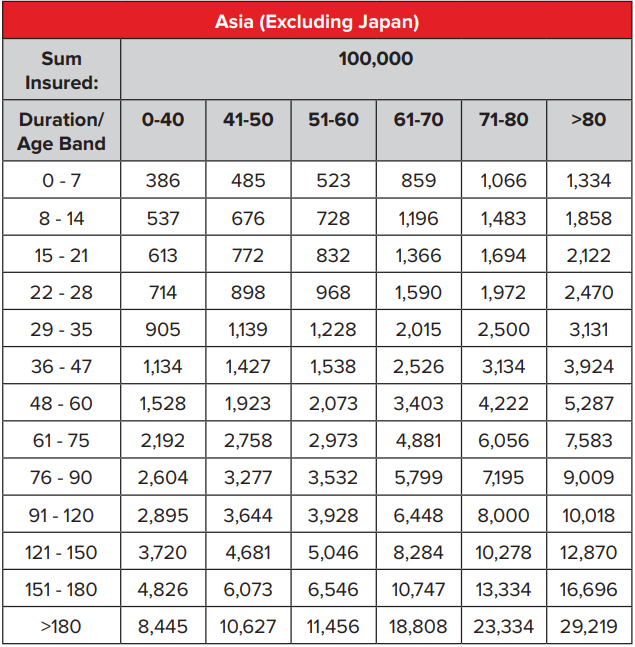
Note: The premiums are indicative and for a single-trip policy, considering the following parameters:
- Base Sum Insured: USD 100,000
- No optional covers, loadings, discounts, or add-ons
- Premiums are in INR and exclusive of taxes
Talk to an expert
today and
find
the right
insurance for you.


Pre-Existing Conditions and Other Exclusions to Check
Most travel policies exclude claims linked to a health condition you already had before buying the plan. But insurers handle this differently.
Some plans:
- Exclude pre-existing disease (PED) claims completely.
- Cover only a sudden, life-threatening emergency until you are stable.
- Offer an optional PED rider, usually with a much smaller sub-limit than your main medical cover.
Please Note: If you have diabetes, hypertension, asthma, a cardiac condition, or take regular medication, declare it honestly when you buy the plan. A PED rider does not mean full treatment cover. It typically excludes routine consultations, refills, and planned procedures.
Other Common Exclusions to Know:
- Traveling against medical advice or specifically to seek treatment
- Routine pregnancy and childbirth
- Self-inflicted injury
- Alcohol or drug-related incidents
- War and civil disturbances
- Adventure sports, unless you add a specific rider
- Unattended baggage or cash
- Trip cancellation for a simple change of mind
- Visa rejection, unless expressly covered
- Non-emergency dental treatment
Single Trip vs. Multi Trip Cover for Singapore
Note: Do not assume annual cover is always the cheaper option. It depends on your trip length, age, and how much cover you want.
How to Claim on a Singapore Travel Insurance Policy?
For a Medical Emergency:
- Call your insurer's international assistance line right away.
- Share your policy number, passport details, hospital name, and doctor's details.
- Ask if a cashless arrangement or payment guarantee is possible.
- If cashless is not available, pay the hospital first and file for reimbursement later.
- Keep itemized bills, receipts, prescriptions, and the discharge summary.
For Baggage Loss or Delay: Get a Property Irregularity Report (PIR) from the airline, keep your baggage tags, and note any compensation the airline already paid you.
For Passport Loss: File a local police report and contact the Indian High Commission for replacement documents.
For Trip Cancellation or Delay: Keep the airline's written confirmation, original and revised tickets, and any medical certificate if illness caused the disruption.
Who Should Buy Travel Insurance for Singapore?
You Should Consider Buying It if You:
- Are traveling with elderly parents or young kids.
- Have a pre-existing health condition.
- Are planning to include activities like theme parks, water sports, or long transit connections.
- Travel on a tight budget and cannot absorb a large medical bill.
You Could Reasonably Skip it If:
- Your employer, university, or tour package already includes equivalent cover.
- You are on a very short business trip fully covered by your company's group policy.
Even then, check the coverage limits of any existing plan before assuming you are protected. Company or university cover sometimes has lower medical limits than a dedicated travel plan.
Why Choose Ditto for Insurance?
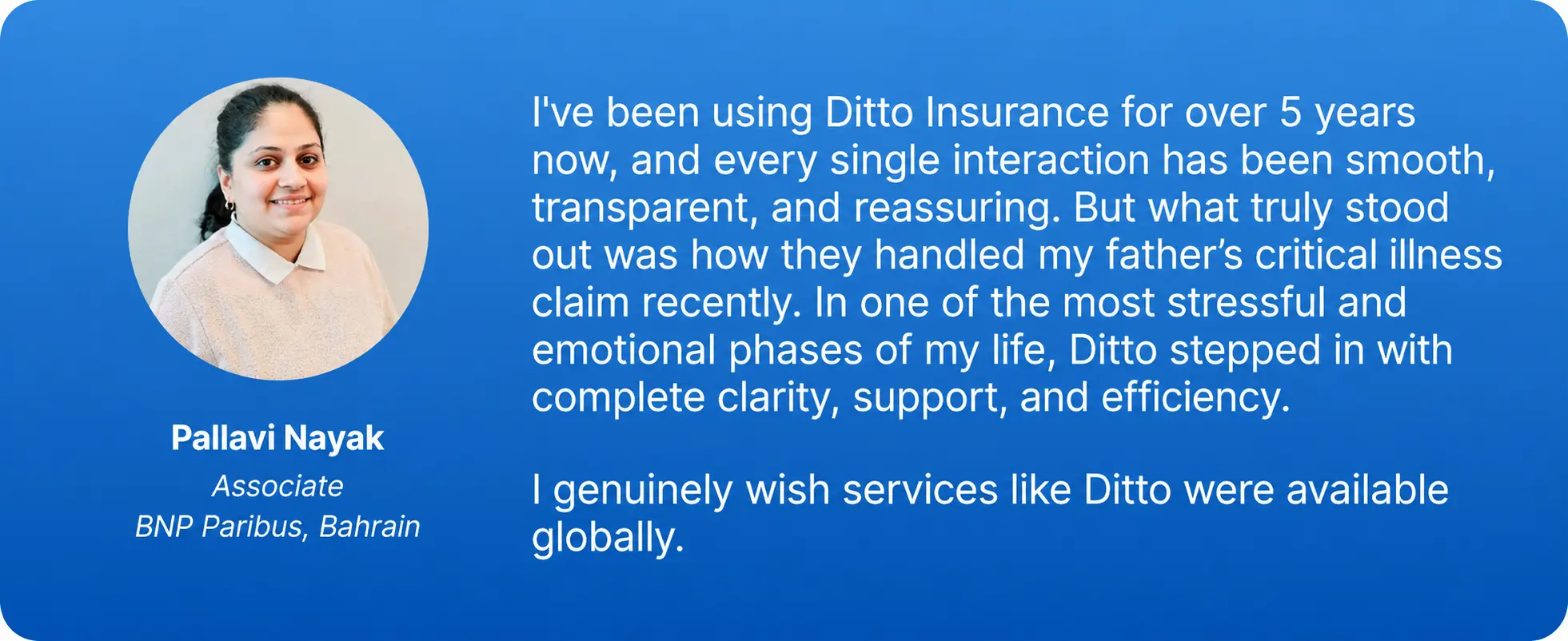
At Ditto, we’ve assisted over 12,00,000 customers choose the right insurance policy. Why customers like Pallavi love us:
- 100% Free Consultation
- No Spam. No Sales Pressure.
- Rated 4.9/5 on Google Reviews by 30,000+ Happy Customers
- Backed by Zerodha
- Dedicated Claim Support Team
- Compare Plans and Premiums with a Trusted Insurance Advisor
Confused about the right insurance? Speak to Ditto’s certified advisors for free, unbiased guidance. Book your call now or chat with us on WhatsApp. Slots fill up fast!
Conclusion
Singapore will not ask for travel insurance at immigration, but its hospitals will ask for full payment if you land uninsured. A good plan handles that bill along with evacuation, trip disruptions, and lost baggage or documents. It cannot replace your health insurance back home, your term cover, or treatment for a condition you already had.
Ditto's Take: Do not judge a plan by its premium alone. Compare the real medical sum insured, the sub-limits inside it, the exclusions, and the PED terms before you buy.
Please Note: Ditto does not currently sell standalone travel insurance. We do help with health insurance and term life insurance, the two policies that protect you well beyond a single trip. See our guides on the best health insurance plans in India and the best term insurance plans in India.
Frequently Asked Questions
Last updated on: