



Quick Overview
India’s insurance penetration is still just 3.7% of GDP, which is about half the global average of 7.3%, and life insurance has slipped to 2.7%.
That is exactly why the IRDAI annual report matters. Think of it as a yearly report card on the insurance industry, tracking what's sold, what went wrong (complaints, mis-selling), and how claims were handled.
In this article, we walk you through the IRDAI annual report, its objectives, the key FY 2024-25 highlights, and where to download it.
Objectives and Purpose of the IRDAI Annual Report
The IRDAI Annual Report exists for one main reason: accountability. The regulator is required to publish a yearly report in a set format, so the public can see what happened in the insurance market and what the regulator did about it.
In simple terms, the IRDAI annual report tries to answer four beginner questions:

Is insurance in India growing in a healthy way?
It reviews the economy and the insurance market, and shows how different parts of insurance are performing.
Are customers being treated fairly?
It covers policyholder protection, grievances, and ombudsman-related themes. If you are worried about mis-selling or claim delays, this is where you look first.
Are insurers financially strong enough to pay claims?
The report includes sections on solvency, reinsurance, and investments, because “can they pay” matters as much as “will they pay.”
What rules and supervision changed this year?
It lists the directions, orders, regulations, and the bigger statutory functions IRDAI performs across the industry.
If you are buying insurance for the first time, use the IRDAI annual report as a reality check. IRDAI cannot tell you which exact plan to buy, but they will help you ask smarter questions and avoid obvious red flags.
Key Highlights of the Latest IRDAI Annual Report
Industry Scale Check
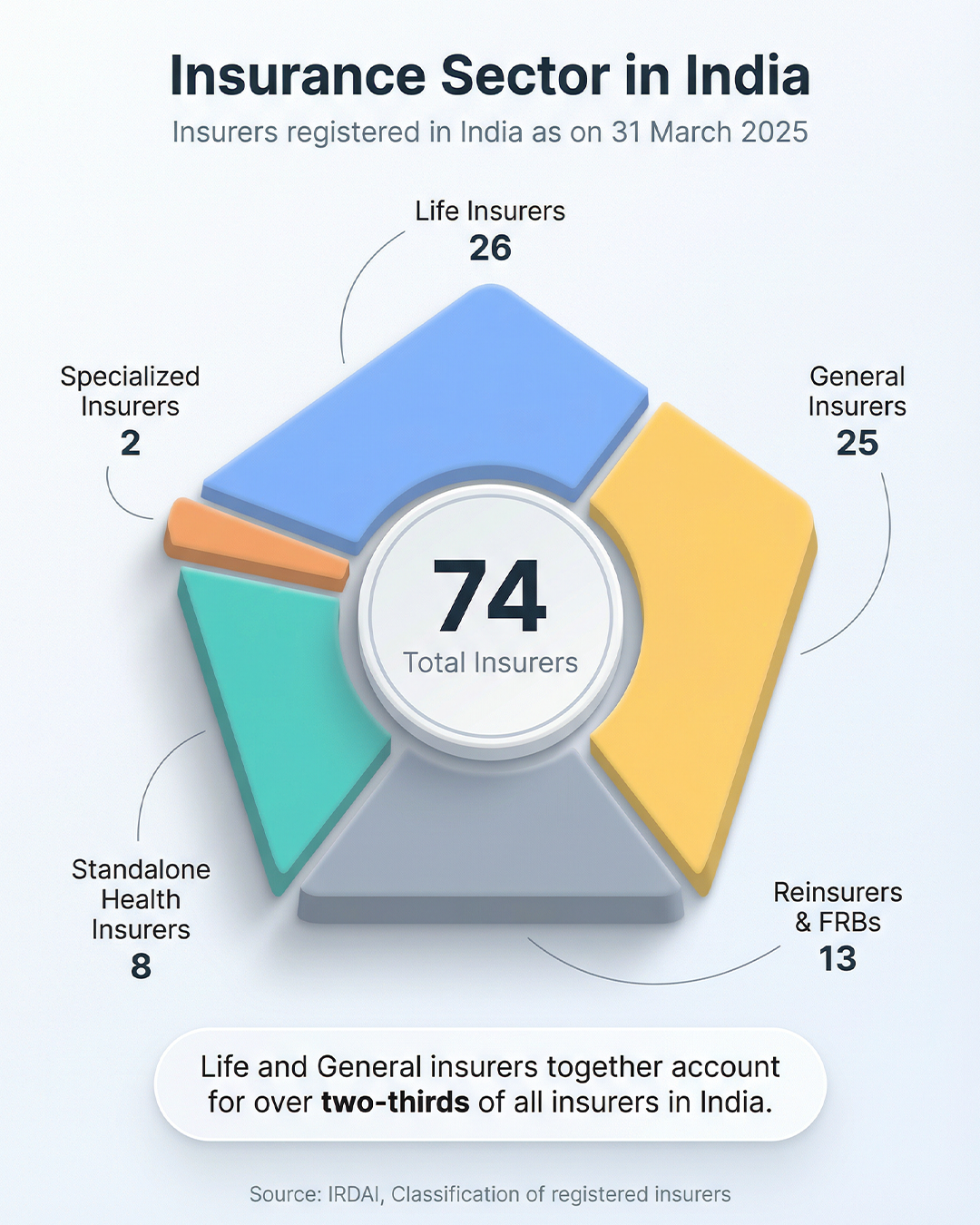
As of March 31, 2025, the report lists 74 registered insurers and reinsurers in India. It also notes the industry’s investments (assets under management) at about ₹74.43 lakh crore, which is a reminder that insurance is not just protection, it is also a major long-term savings pool that regulators watch closely.
Insurance Density
Insurance density (premium per person) in India rose slightly to USD 97 in FY25 from USD 95 in FY24. Life insurance density increased from USD 70 to USD 72, while non-life stayed flat at USD 25. This means the average premium per person is inching up, but the improvement is still modest, so insurance is not spreading meaningfully faster across the population.
Non-life Premiums Grew
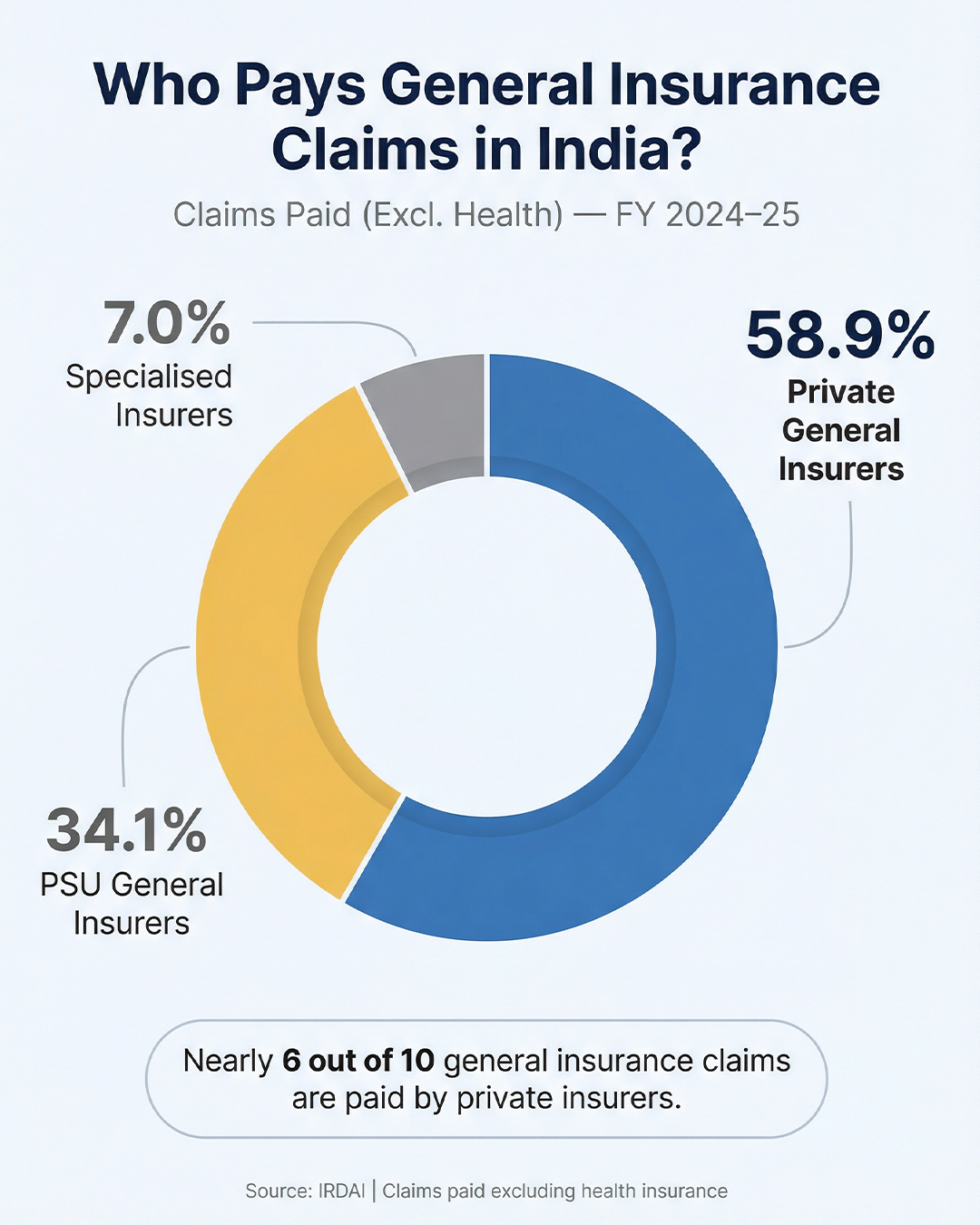
General + standalone health insurers wrote about ₹3.08 lakh crore of direct premium within India in FY 25. Health (including personal accident) and motor continue to be the biggest chunks, so most consumer-facing change tends to show up here first (pricing, claims, service).
Premiums Rose, but Fewer Policies Sold
Life insurers collected about ₹8.86 lakh crore in total premium in FY 25, but new individual policies fell to 270.22 lakh, down from 291.77 lakh in FY 24 (a drop of 21.55 lakh, or about 7.4%). If you are a customer, this “premium up, policies down” pattern often signals higher ticket sizes and more renewals, and not more first-time buyers getting covered.
Health Insurance Covered Millions of Lives
Health insurance covered about 580.6 million lives in FY 25. This coverage comes from: roughly 42.3% through government schemes, 47.4% through group policies, and 10.3% through individual or retail policies. In premium terms, group plans are the biggest share. This matters because “lives covered” is rising mainly due to group or government coverage, and individual retail coverage is growing slowly.
Health Claims Volume was Massive
Insurers processed about 3.26 crore number of health claims in FY 25, and around 58% were cashless. The practical takeaway: cashless is becoming the default experience for many people, so network quality and pre-authorization handling matter even more than flashy features.
Average Claim Amount Paid
General and health insurers paid an average of ₹28,910 per settled health claim in FY 25. For life insurance, IRDAI does not give one single average, but the FY 25 death-claims tables imply about ₹3.33 lakh per paid individual death claim and ₹1.42 lakh per paid group death claim. In simple terms: health claims are smaller and frequent; life claims are larger and less frequent.
Underwriting Under Pressure
The report shows the non-life segment had an overall underwriting loss (around ₹30,276 crore) in FY25. Underwriting loss does not mean insurers are ‘going broke’. It often means pricing and claims control will tighten next year. It can also push insurers to tighten claims, and increase prices on new (and sometimes renewing) policies, while relying more on investment income to offset underwriting losses.
Grievances: Complaints and Claims Issues Dominate
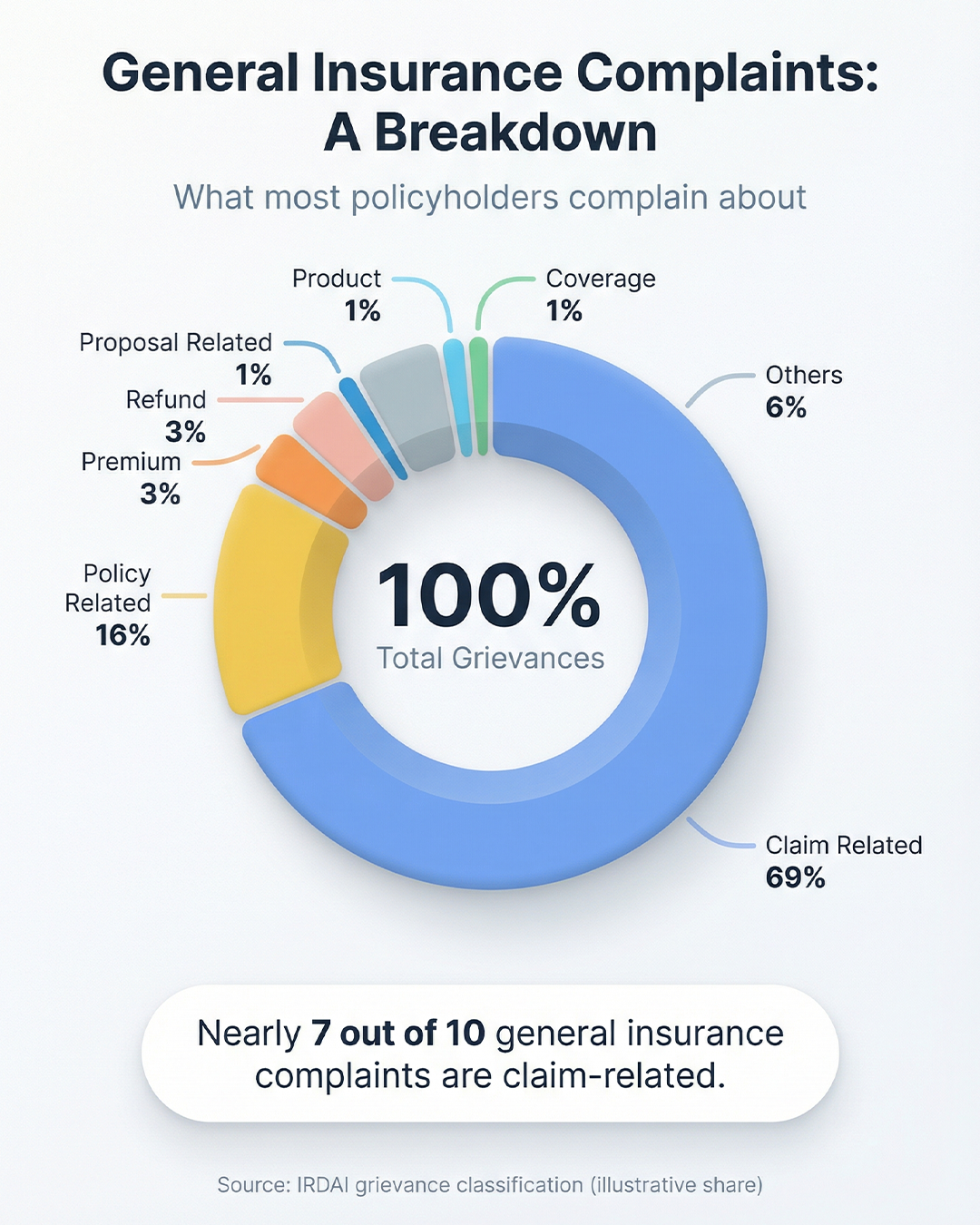
IRDAI’s Bima Bharosa portal recorded 2,57,790 grievances in FY25 (life: 1,20,429; general+health: 1,37,361). Claims-related issues form a big share of complaints, so when you are comparing insurers, service track record is not optional, it is the main criteria for selection.
Mis-selling Signals
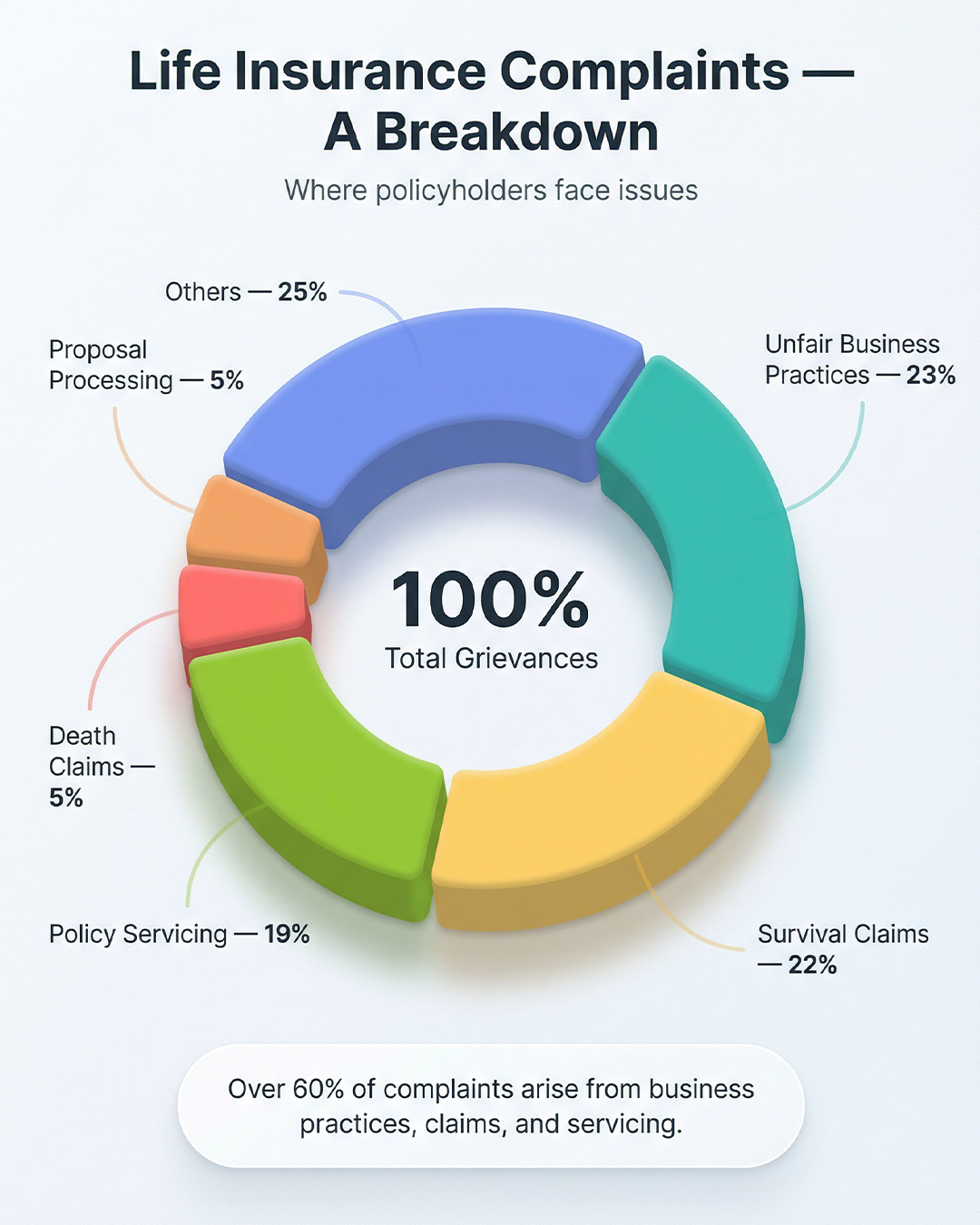
Life insurers saw 26,667 grievances tagged as Unfair Business Practices (UFBP) in FY25, up from 23,335 in FY24 (a 14% increase). This is a strong reminder for buyers to treat “agent promises” as non-binding and to rely on the policy document, benefit illustration, and the Customer Information Sheet.
Policyholder Protections
The report highlights moves like the Customer Information Sheet (CIS) and the push for clearer product design and simpler policy terms. You should start seeing more standardized summaries and fewer “hidden” surprises when insurers follow this properly.
Faster Accountability
Insurers must comply with Ombudsman awards within 30 days, failing which a ₹5,000 per day penalty can apply. This is worth knowing because escalation works best when you can quote the rule and timelines, not just plead for help.
Unclaimed Money
Insurers are required to host searchable databases for unclaimed amounts of ₹1,000 or more, updated twice a year, and accessible via the Bima Bharosa portal that redirects to insurer sites. If your family has older policies, this is a very practical “do once a year” check.
Insurance for All by 2047
A lot of the report’s actions tie back to the stated vision of “Insurance for All by 2047”, plus enabling regulations like Bima Sugam (Insurance Electronic Marketplace) Regulations, 2024. If executed well, this is meant to reduce friction in buying/servicing and improve reach, but as a buyer you should still judge outcomes by claim experience and complaint trends.
Where to Download the IRDAI Annual Report?
Step 1: Go to IRDAI’s official website and open the Annual Reports page.
Step 2: Look for “IRDAI Annual Report 2024-25” in the list (it is shown as non-archived and dated 30-12-2025).
Step 3: Click the report title to open the official document page.
Step 4: Click Download on that page to save the PDF.
Why Choose Ditto for Insurance?
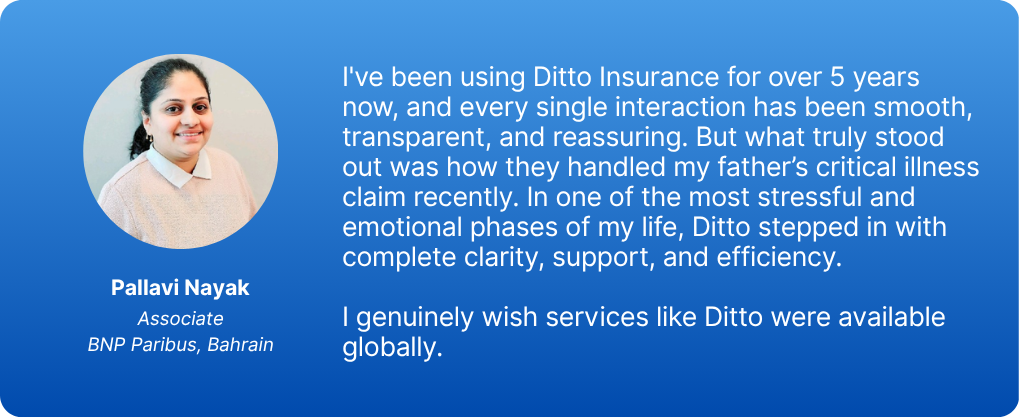
At Ditto, we’ve assisted over 8,00,000 customers with choosing the right insurance policy. Why customers like Pallavi below love us:
- No-Spam & No Salesmen
- Rated 4.9/5 on Google Reviews by 15,000+ happy customers
- Backed by Zerodha
- Dedicated Claim Support Team
- 100% Free Consultation
Confused about the right insurance? Speak to Ditto’s certified advisors for free, unbiased guidance. Book your call now, or chat with us on WhatsApp.
Ditto’s Take on IRDAI Annual Report
Use the IRDAI Annual Report as a buyer safety filter, not a ranking of “best insurers.” It is most useful for spotting patterns like rising complaints, mis-selling signals, and where claims pressure is building, but it will not replace reading the policy wording.
What to do with it:
- Check complaint themes (claims delays, unfair sales), not just raw numbers.
- Use health statistics as context, then judge insurers on network strength and claim process.
- Treat sales promises as noise; trust the CIS, benefit illustration, and policy document.
Bottom line: Read the report to spot risks, then pick a policy only after the fine print checks out.
Quick Context
Frequently Asked Questions
Last updated on: