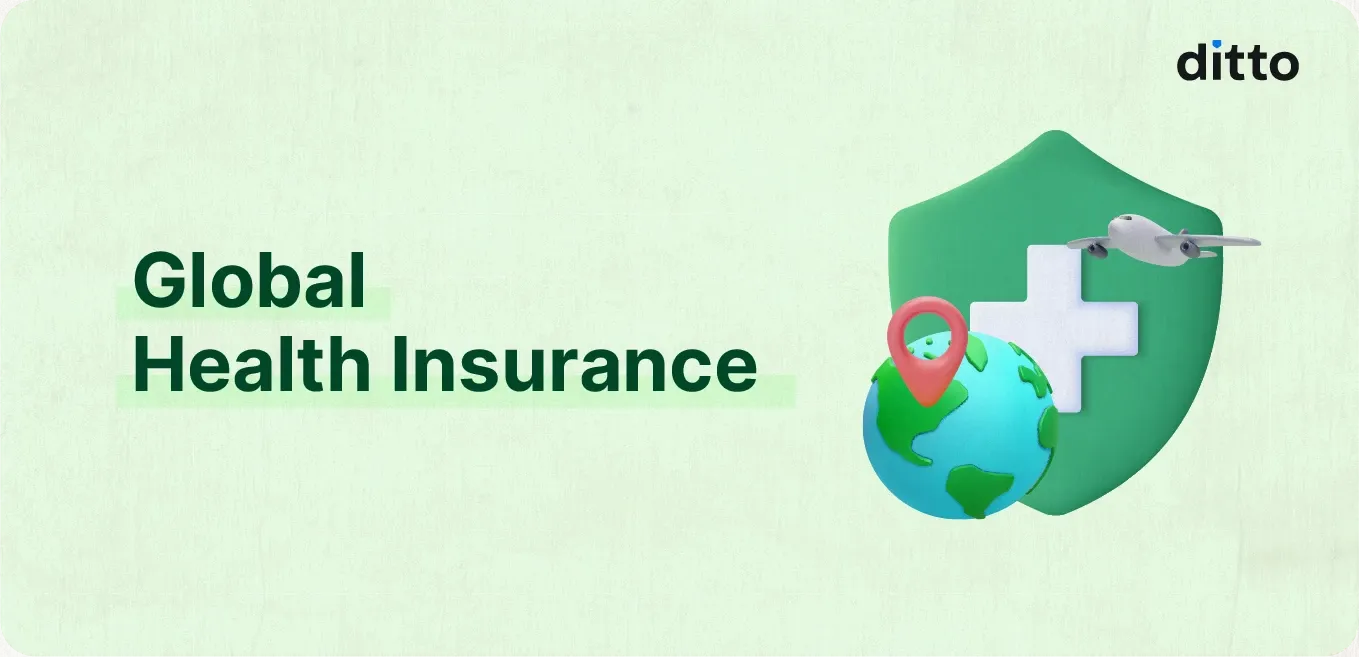
Global health insurance provides comprehensive medical coverage for those working or traveling abroad. Unlike standard health or travel insurance, it provides borderless coverage for both planned treatments and emergency hospitalization. Some key features of global health insurance include inpatient care, outpatient visits, emergency medical evacuation, and optional add-ons such as dental and maternity coverage.
Multiple Indian health plans, such as HDFC ERGO Optima Secure Global Plus and Care Advantage, offer global coverage. A 25-year-old individual from Delhi, seeking ₹1 crore in coverage, pays ₹87,858 under the HDFC ERGO Optima Secure Global Plus plan.
This guide is ideal for Indian residents evaluating health insurance plans with overseas treatment benefits.
Healthcare abroad is more expensive than in India. According to the World Bank’s Global Health Expenditure Database, India’s current health expenditure per person was only $84.69 in 2023, compared to $13,473.19 in the United States (US). In simple terms, per-person healthcare spending in the US was roughly 159 times higher than in India.
For Indians working or traveling abroad, this creates a real problem. Most regular Indian health insurance policies do not cover planned or long-term medical care outside the country. That is where global health insurance comes in.
This guide discusses what global or international coverage is, its benefits, and the plans offering overseas treatment features.
Global health insurance means your policy can also pay for treatment outside India. This is different from a regular health insurance plan that works only within India. A global health plan, or a plan with overseas benefits, allows you to use your insurance in other countries, either for emergency treatment, planned treatment, or both, depending on the policy.
Some plans cover emergency hospitalization abroad if something unexpected happens while you are outside India. A few of them allow you to travel abroad for planned treatment after a diagnosis in India. Some other plans mention worldwide coverage, but only for specific illnesses or cover you in limited countries.
However, words like “global cover” or “worldwide cover” do not mean every treatment in every country is automatically covered.
You still need to check which countries are included, whether planned or cashless treatment is allowed, and what documentation the insurer requires. This also involves understanding whether insurance is offered only to resident Indians or non-resident Indians (NRIs).
Talk to an expert today and find the right insurance for you.
What Does Global Health Insurance Cover?
Indian plans with global health insurance usually cover hospitalization outside India for emergencies and for planned treatments, depending on the product.
However, they still come with terms, restrictions, approvals, and clearly defined conditions. They are not open-ended “free to use anywhere, anytime” covers, which is why it’s important to review the details carefully before you buy health insurance with global coverage. Let’s understand what is covered in most global plans below.
Most Popular Global Health Insurance Plans in India
Allows planned treatment abroad (after diagnosis in India)
Global Health Insurance vs Travel Insurance: What's the Difference?
Aspects
Global Health Insurance
Travel Insurance
Intent
Offer you financial security during your health scares, both domestically and internationally.
Specifically designed to offer you financial support during your international trips.
Coverage
Hospitalization expenses, pre and post-hospitalization charges, outpatient department (OPD) charges (add-on), maternity expenses (add-on or in-built), room rent, or daycare treatments.
Personal liabilities, medical emergencies, lost baggage, stolen/missing travel documents, or last-minute cancellations.
Emergency or scheduled treatments
Coverage for both emergency and scheduled medical procedures or treatments.
Only emergency medical treatments are covered.
Premium costs
Hefty premiums to cover medical expenses at international healthcare facilities.
Relatively affordable due to short-term nature.
Limitations
Geographical exclusions are possible (mainly the United States and Canada), more reimbursements than cashless treatments, mandatory deductibles, and copayments.
Only emergency medical treatments, coverage for a limited number of days (30 to 180 days) or a number of trips, and pre-existing diseases (PEDs) are most likely excluded.
Ideal for
Extensive overseas visits, trips, work-related requirements, or medical tourism (only for Indian residents).
Foreign holidays scheduled once a year, or very short trips for professional or personal reasons.
Niva Bupa Aspire Titanium Plus With Borderless Add-on (20% Copay)
Aditya Birla Activ One VIP+
TATA AIG Medicare Premier
(Individual Plan): Age 25
₹87,858
₹26,087
₹30,281
₹1,00,513
₹25,571
(Family Floater, 2A): Ages (31, 32)
₹1,35,240
₹44,108
₹49,443
₹1,80,882
₹46,090
(Family Floater, 2A 1C): Ages (35, 34, 5)
₹1,64,169
₹57,350
₹62,293
₹2,31,813
₹60,165
(Family Floater, 2A): Ages (62, 63)
₹3,48,022
₹3,25,730
₹161,082
₹3,73,276
₹1,22,673
Note: Here, A stands for adults and C denotes children. Premiums are illustrative for a person seeking a ₹1 crore sum insured, residing in Delhi - 110010, including necessary and mandatory add-ons.
Key Features and Benefits of Global Health Insurance Plans
International Medical Coverage: These plans cover eligible medical expenses outside India, depending on the countries and treatments included in the policy.
Emergency Hospitalization Abroad: If you fall ill or are involved in an accident while abroad, the plan can cover the costs of emergency hospitalization.
Planned Treatment Overseas: Plans with global coverage allow you to travel abroad for planned treatment, usually after a diagnosis in India, and are subject to policy conditions.
Cashless Treatment Facility: Global health plans also offer cashless treatment at network hospitals outside India, reducing the need for large upfront payments.
High Sum Insured Options: Since medical treatment abroad can be expensive, these plans often offer higher coverage limits than standard health insurance plans.
Coverage for Select Critical Illnesses: Global health plans like SBI Super Health Premium Infinite cover treatment abroad for specific critical illnesses, such as cancer, organ transplant, or major heart conditions.
Pre- and Post-Hospitalization Cover: These plans also cover medical expenses incurred before and after hospitalization, subject to the policy’s timelines and limits.
Second Medical Opinion: Global health insurance plans offer access to international medical opinions, helping you confirm a diagnosis or treatment plan.
Useful for Long Stays Abroad: These plans can be helpful if you frequently travel overseas or stay abroad for work, family, or personal reasons.
Peace of Mind: Global health insurance reduces the financial stress of seeking medical care in expensive healthcare markets outside India.
Who Needs Global Health Insurance in India?
Global health insurance is not required for everyone. It is primarily useful for:
Frequent international travellers
Individuals going abroad for long stays
People who want coverage for planned treatment abroad
Families with members traveling abroad
What Is Not Covered Under Global Health Insurance?
Treatment Outside the Covered Region: If the policy covers only certain countries or regions, treatment taken outside those areas will not be covered.
Planned Treatment Without Prior Approval: Many plans require insurer approval before you travel abroad for planned treatment. If you skip this step, the claim may be rejected.
Illnesses Not Listed in the Policy: Some global covers apply only to selected critical illnesses or specific medical conditions. Any illness outside that list may not be covered.
Pre-Existing Diseases During the Waiting Period: Like regular health insurance, pre-existing diseases (PEDs) may not be covered immediately. Coverage begins only after the waiting period is completed.
Non-Medical and Consumable Expenses: Items such as registration charges, convenience items, personal expenses, and other non-payable items may be excluded.
Experimental or Unproven Treatments: Treatments that are not medically necessary, not approved, or considered experimental are usually not covered.
OPD, Dental, and Maternity Unless Specifically Included: Outpatient consultations, dental care, maternity, and routine checkups are usually covered only if the policy specifically includes them.
How Do Claims Work Abroad?
Claims abroad work in the same way as domestic health insurance in India: cashless and reimbursement. An added step of significant importance is obtaining timely intimation and pre-approval from your insurer for planned treatments. Please note that claims work a little differently abroad compared to India.
How Much Does Global Health Insurance Cost?
Global health insurance is usually more expensive than domestic health insurance because treatment costs abroad are much higher. The premium depends on several factors.
Country or Region Covered: Plans that include expensive healthcare markets like the United States, Canada, or Europe usually cost more than plans with limited international coverage.
Sum Insured: A higher sum insured means a higher premium. Since overseas treatment can be expensive, global plans often come with larger cover amounts (usually in crore).
Type of Coverage: Emergency-only overseas cover is usually cheaper than a plan that allows planned treatment abroad.
Age and Health Condition: Older buyers or people with pre-existing diseases (PEDs), such as hypertension or diabetes, may have to pay higher premiums or face stricter underwriting.
Individual vs Family Cover: A family floater with global coverage will usually cost more than an individual plan, but it may be more convenient if multiple family members need overseas protection.
Add-Ons and Extra Benefits: Benefits like OPD cover, maternity, dental, medical evacuation, second opinion, or wider region cashless access can increase the premium.
Things to Keep in Mind While Buying Global Health Insurance
01
Understand Your Need First
Your actual life situation should decide your solution, not how premium the policy sounds. Always consider circumstances like frequent travel abroad or permanent relocation when deciding whether to purchase global health insurance plans.
02
Do Not Assume Global Means Fully Covered
Many plans limit global coverage to specific illnesses, countries, or conditions. Some exclude places like the US unless specially chosen. Always read exactly what is covered internationally.
03
Higher Premiums Must Justify Realistic Usage
Plans with international coverage are far more expensive than domestic health plans. Make sure what you are paying extra for actually aligns with something you may realistically use, not just a theoretical advantage.
04
A Quick Check for NRIs and OCIs
Indian global plans do not replace domestic health insurance. Most are not even available to NRIs and Overseas Citizens of India (OCIs). In practice, NRIs usually keep an Indian plan for India hospitalization and depend on local insurance abroad for day-to-day and major treatment needs.
Why Choose Ditto for Health Insurance?
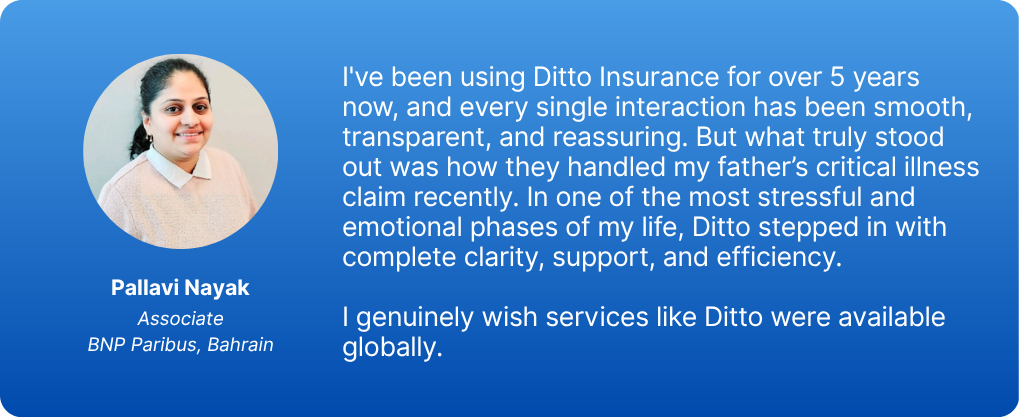
At Ditto, we’ve assisted over 8,00,000 customers with choosing the right health insurance policy. Why customers like Pallavi below love us:
No-Spam & No Salesmen
Rated 4.9/5 on Google Reviews by 15,000+ happy customers
Global health insurance may seem like a premium feature, but in practice, it is useful only in specific scenarios.
In most cases, you should opt for travel medical insurance rather than relying on an Indian health plan with global cover. It is cheaper, designed for short trip durations, and accepted for visas and emergencies.
If you’re planning a long-term stay outside India, explore local health insurance options in your destination country. These plans have stronger local hospital tie-ups, better cashless arrangements, and clearer claims support.
Indian plans with overseas benefits often come with higher premiums and restrictions on where and how you can use them. Cashless overseas treatment is not always guaranteed, and coordinating claims across borders and time zones can be challenging.
If you plan to return to India later, keeping a domestic health plan active can still be useful for completing waiting periods and accumulating bonuses, but don’t rely on it as your safety net abroad.
Disclaimer
Ditto currently does not help with purchasing global health insurance. Hence, our analysis is based on publicly available information and should not be treated as personalized advice. Always read the policy brochure carefully and consult a licensed advisor before purchase.
Frequently Asked Questions
1. What is global health insurance and how is it different from regular health insurance?
Global health insurance covers medical treatment outside India, including emergency and sometimes planned hospitalization abroad. A regular domestic health plan only covers treatment within India. Some global plans, such as HDFC ERGO Optima Secure Global Plus, offer both domestic and international coverage under a single policy. The key difference is geography. Domestic plans are cheaper and simpler to use, while global plans carry higher premiums, operational complexities, claim coordination difficulties, and cashless approval issues.
2. Can Indians buy global health insurance in India?
Yes, Indian residents can buy global health insurance from Indian insurers. Plans like Care Advantage, Niva Bupa Aspire Titanium+ with the Borderless add-on, and Aditya Birla Activ One VIP+ are available to Indian residents. However, most Indian-issued global health plans are not available to NRIs or OCIs. If you are an NRI, we recommend keeping a domestic Indian plan for coverage during India visits, and relying on a locally purchased plan abroad for day-to-day or major medical needs.
3. Is global health insurance worth it for Indians who travel abroad occasionally?
For occasional travelers, standard travel insurance is usually the better choice. It is cheaper, covers short trip durations of 30 to 180 days, and is widely accepted for visa applications. Global health insurance makes more sense if you travel frequently, stay abroad for extended periods, or want the option of planned treatment outside India. Always evaluate your actual travel frequency and realistic need for overseas medical care before paying the higher premiums that global plans typically require.
4. What is the difference between global health insurance and travel insurance?
Travel insurance is designed for short international trips and covers emergencies, lost baggage, trip cancellations, and travel-related issues. Global health insurance focuses on comprehensive medical coverage, including planned hospitalization, OPD, maternity, and long-term care abroad. Travel insurance typically covers only emergency treatments, while global health plans can cover both scheduled and emergency procedures. Premiums for travel insurance are relatively affordable compared to global health plans. For a detailed breakdown, read our guide on travel insurance vs medical insurance with international coverage.
5. Which are the best global health insurance plans in India in 2026?
Some of the most recommended global health insurance plans in India include HDFC ERGO Optima Secure Global Plus (covers both emergency and planned treatment with a CSR of 96.71%), Care Advantage (high sum insured with optional worldwide coverage), Niva Bupa Aspire Titanium+ with the Borderless add-on, Aditya Birla Activ One VIP+ (worldwide cover including the US and Canada, CSR of 95.81%), and Tata AIG Medicare Premier (covers planned treatment abroad after diagnosis in India). The claim settlement ratio figures here are based on the FY 2022-25 average.
6. Does global health insurance cover the US and Canada?
Not all global health plans cover the US and Canada by default. For example, Care Advantage lets you choose worldwide coverage while excluding the US and Canada, which lowers the premium. Plans like Aditya Birla Activ One VIP+ do include the US and Canada. Since healthcare in the United States is significantly more expensive, per-person health spending in the US was roughly 159 times higher than in India as of 2023. Premiums for plans covering the US are considerably higher.
7. How do health insurance claims work when you are hospitalized abroad?
Claims abroad work in two ways, cashless and reimbursement, just like domestic health insurance. For cashless claims, you need to be treated at a hospital within the insurer's international network and get prior approval. For reimbursement, you pay the bills upfront and submit documents to the insurer after returning. Cashless treatment abroad is not always guaranteed, and approval conditions can be stricter than in India. You can read Ditto's detailed guide on cashless vs reimbursement claims to understand the full process.
8. What is not covered under global health insurance plans?
Global health insurance comes with several exclusions. Treatment in countries not listed in the policy, planned procedures without prior insurer approval, illnesses not covered by the policy, pre-existing diseases during the waiting period, consumables, experimental treatments, and OPD or dental care unless specifically included are typically excluded. Some plans also require you to be diagnosed in India before traveling abroad for planned treatment. Skipping this step can lead to claim rejection. Always read the policy document carefully before purchasing.
9. Can NRIs buy global health insurance from Indian insurers?
Most Indian-issued global health plans are not available to NRIs or OCIs. Many policies also require the policyholder to be present in India for at least six months in a calendar year to remain eligible. NRIs from Financial Action Task Force (FATF)-blacklisted countries face additional restrictions. At Ditto, we recommend that NRIs consider an Indian domestic plan for coverage during visits to India and rely on locally purchased health insurance in their country of residence for regular medical needs abroad.
10. How much does global health insurance cost for an Indian?
The cost varies based on the sum insured, countries covered, age, and the type of coverage. As a reference, a 25-year-old from Delhi looking for ₹1 crore coverage under the HDFC ERGO Optima Secure Global Plus plan would pay a premium of approximately ₹87,858 per year. Plans that include the US and Canada tend to cost more than those that exclude them. Emergency-only overseas plans are usually cheaper than plans that also cover planned treatment abroad. Add-ons like OPD, maternity, and dental further increase the premium.
11. Does global health insurance offer tax benefits under Section 80D?
Yes, premiums paid for health insurance plans in India, including those with global coverage, are eligible for tax deductions under Section 80D of the Income Tax Act (old regime). You can claim up to ₹25,000 for yourself and your family, and an additional ₹25,000 if your parents are below 60, or ₹50,000 if they are senior citizens. You can also claim the same 50,000 if you or your spouse is a senior citizen. The tax benefit applies to the overall premium paid, not just the domestic portion of the plan.
12. Is it better to get global health insurance or buy local insurance in the country you are moving to?
If you are relocating abroad for an extended period, local health insurance in the destination country is generally the better option. Local plans have stronger hospital tie-ups, better cashless networks, and clearer claims support in that country. Indian plans with global coverage often come with higher premiums, limited cashless access abroad, and complex cross-border claim coordination. At Ditto, our recommendation is to maintain an Indian domestic plan for visits back home and purchase a local health plan in the country where you are living or working.
13. What is the sum insured I should opt for in a global health insurance plan?
Since medical costs abroad are significantly higher than in India, a high sum insured is essential for global health plans. Heart surgery in the US alone can cost between $80,000 and $ 150,000. Most experts recommend a minimum coverage of $1 million (about ₹10 crore) for a global health plan. Plans like Care Advantage and Aditya Birla Activ One VIP+ offer high sum insured options designed for overseas treatment. However, these plans also have a coverage cap of ₹6 crore. At Ditto, we recommend not underinsuring yourself when buying a plan that includes expensive healthcare markets.
14. Can I use my existing Indian health insurance plan abroad?
A standard Indian health insurance plan typically covers treatment only within India. It does not automatically extend to overseas hospitalization. Some plans do offer an add-on or built-in global benefit, but these come with specific conditions around which countries are covered, whether the treatment is emergency or planned, and whether cashless access is available. Before assuming your existing policy works abroad, check the policy document carefully or speak to your insurer. At Ditto, we can help you review your current plan and assess whether an upgrade or a separate cover makes sense.
15. Do global health insurance plans cover pre-existing diseases abroad?
Pre-existing diseases (PEDs) are usually subject to a waiting period before they are covered, even under global health insurance plans. This waiting period typically ranges from 1 to 3 years, depending on the insurer. Once the waiting period is completed, PED-related hospitalization may be covered, including overseas treatment, subject to the plan's conditions. If you have a pre-existing condition and are planning to travel or move abroad, we recommend buying a plan early in India so the waiting period is served while you are still in the country.
16. Is cashless treatment always available abroad under global health insurance?
Cashless treatment abroad is not guaranteed with all global health insurance plans. It depends on whether your insurer has a tie-up with the hospital you are admitted to in that country. In many cases, especially in smaller cities or less common destinations, you may have to pay upfront and later file a reimbursement claim. This can require arranging a significant sum of money on short notice. Before purchasing a global plan, check the insurer's international hospital network and understand how cashless access works in the specific countries you are likely to need coverage in.
17. What is medical evacuation, and is it covered under global health insurance?
Medical evacuation refers to transporting a patient from a location where adequate medical care is unavailable to a facility that can provide the required treatment, sometimes across borders or back to India. Some global health insurance plans cover emergency medical evacuation as part of their benefits. Plans like Aditya Birla Activ One VIP+ include travel assistance features. If you are traveling to remote destinations or countries with limited healthcare infrastructure, it is important to check whether your plan includes medical evacuation cover, as the cost of air ambulance services can run into several lakhs or more.
18. Can I get a second medical opinion abroad under global health insurance?
Yes, several global health insurance plans include a second medical opinion benefit that allows you to consult an international specialist before committing to a treatment plan. This is particularly useful for serious diagnoses such as cancer or rare conditions, where treatment protocols may vary across countries. Plans like HDFC ERGO Optima Secure Global Plus offer this as part of their global benefits. This feature can be valuable not just for people traveling abroad but also for those in India who want access to international expertise before undergoing a major procedure domestically or overseas.
19. What documents do I need to file a global health insurance claim?
For a reimbursement claim abroad, you typically need original hospital bills and receipts, discharge summary, doctor's prescriptions and diagnostic reports, a claim form filled and signed, your passport and travel documents showing dates of travel, and prior approval letters if your plan requires them for planned treatment. For cashless claims, your insurer or its international third-party administrator (TPA) handles most of the documentation directly with the hospital. Always keep copies of all medical records and bills. If the documents are in a different language, you would also need a translated version from the hospital with a vernacular declaration.
20. Should I buy a global health insurance plan or a separate overseas plan for my child studying abroad?
For a child going abroad for higher education, a separate local health plan in the destination country is almost always preferable to relying on a global health plan purchased in India. Most colleges, universities, and student visa programs in countries such as the US, the UK, Canada, and Australia require students to have local health coverage. Indian global plans may not meet these requirements and may have limited cashless access in those countries. At Ditto, we recommend purchasing local student health insurance in the destination country and keeping an Indian domestic plan active for visits home.
Customer Reviews
4.9
20915 reviews
Ditto is doing really great. Absolutely spam free- that's the best part. They don't talk to you like they are forced to sell the product. It's more like, helping us buy better. Advisor Nuha was very patient and answered all my questions with clarity. Thanks for the service
I
INDHUMATHI M
Loved the service! Maheta Nidhi Hitesh was incredibly helpful and knowledgeable. She guided me through the whole process and made everything super easy to understand. I really appreciated how patient she was with all my questions—there was no pressure at all, just clear and honest advice. Honestly, I'm very happy with my experience at Ditto so far. Highly recommend!
RK
Ragul Kumar
I had a great experience with Ditto while exploring health insurance options. The process was smooth and everything was explained clearly.
A special thanks to Swaroop SK for patiently answering all my questions and guiding me through the policy details without any pressure. The transparency and support made it much easier to understand and choose the right plan.
Really appreciate the assistance!
PS
Pulkit Singh
Had a great experience with Ditto Insurance. Ishita Sudrania was extremely helpful in guiding me through choosing the right term plan. There was no spamming or sales pressure, and all my questions were patiently answered. She also assisted me thoroughly with the entire application process. Highly recommend!
SS
Samil Shah
I had a great experience with Ditto while filing my health insurance claim. Their team guided me clearly through the entire process, helped with the required documents, and promptly answered all my queries. Their support made the claim process much smoother and less stressful. Highly appreciate their assistance.