



Buying health insurance is one of those decisions you truly appreciate when a medical bill shows up unexpectedly. A good plan can cover day care procedures, and pre- and post-hospitalization expenses too, so you do not end up exhausting your savings for every health emergency. In India, where treatment costs keep rising year after year, the decision to buy health insurance early gives you better options, lower premiums, and fewer coverage-related issues later. This becomes even more important when you consider that India’s insurance penetration still hovers around 3.7%, meaning a large portion of healthcare expenses are still paid out of pocket.
This guide explains how to buy health insurance, when to buy it, how to choose the right coverage, and the common mistakes to avoid.
How to Buy Health Insurance in India?
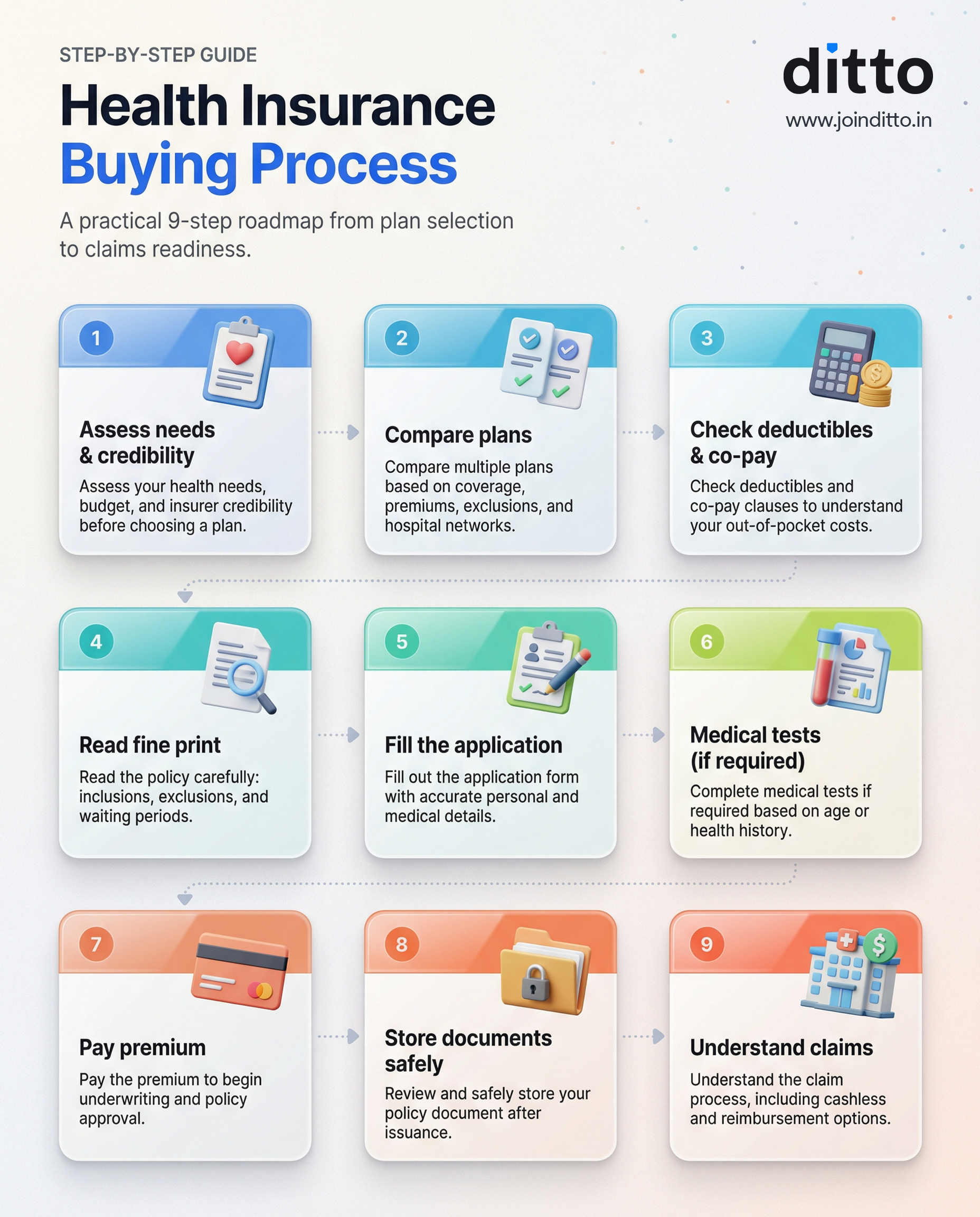
If you want to buy health insurance, you must know the steps to get started with the process, as mentioned in the infographic below:
Did You Know?
How Much Health Insurance Coverage Do You Need?
An ideal cover for a comprehensive health insurance policy should be between ₹15 to ₹25 Lakhs because of 3 reasons:
- Black Swan Analogy: A health emergency that could turn your life upside down without insurance. The most common examples are high cost medical transplants or treatments like cancer (bone marrow transplant) that impact lives directly.
- Medical Inflation: Rise in medical expenses that happens every 2-3 years. What you are considering as a ₹5 lakh cover today will be a mere ₹2.5 lakh a few years later.
- Difficulty in Increasing Sum Insured: If you get diagnosed with a serious medical condition at a later stage, the insurers may reject increasing the sum insured.
Most importantly, a comprehensive cover of ₹15 to ₹25 lakhs with features like unlimited restoration of cover and sufficient bonuses pushes your total coverage to a high amount, giving you peace of mind.
Why Should You Buy Health Insurance?
Financial Protection Against Medical Emergencies
Medical emergencies are unpredictable and often expensive. A single hospitalization due to an accident, infection, or critical illness can cost several lakhs of rupees, especially in private hospitals. If you buy health insurance, the insurer covers these costs, ensuring that your savings and investments remain intact during emergencies.
Rising Health Care Costs in India
Healthcare inflation in India has consistently remained in the high single digits and often crosses around 12-15% annually. Costs of surgeries, diagnostics, ICU stays, and specialist consultations are rising every year, particularly in metro and Tier-1 cities. Buying health insurance early helps you hedge against these rising costs.
Access to Quality Healthcare
When you buy health insurance, you are not restricted to government hospitals or basic facilities. You can choose reputed private hospitals, experienced doctors, and advanced treatment options without worrying about affordability.
Coverage Beyond Hospitalization
Apart from hospital stays, modern health insurance plans also cover pre- and post-hospitalization expenses like tests, medicines, physiotherapy, doctor consultations , day care procedures, ambulance charges, organ donor expenses, and several other expenses.
Tax Benefits Under the Income Tax Act
Premiums paid for health insurance are eligible for tax deductions under Section 80D (old regime) of the Income Tax Act. Through this act, you can claim deductions on the premiums paid for health insurance for yourself and your family. Refer to our guide on Health Insurance Tax Benefits for further details.
Cashless Access and Smooth Hospital Experience
A major practical reason to buy health insurance is cashless hospitalization, where the insurer or TPA pays the network hospital directly (as per policy terms). Recent IRDAI guidelines and master circulars have improved timelines. For instance, cashless authorization decisions are expected within an hour of request, and final discharge approval within three hours. While approvals still depend on policy coverage, these rules significantly reduce last-minute delays and payment stress at hospitals.
Your Employer Health Cover Is Helpful, but Not Enough
Employer-provided health insurance is useful, but it is tied to your job. Coverage can change or stop when you switch jobs, take a career break, or retire. Corporate plans also tend to be one-size-fits-all and may not scale as your life evolves (marriage, children, or dependent parents). A personal policy ensures continuity, control, and long-term protection.
Consumer Protection and Better Standardization
Health insurance today is more policyholder-friendly than before due to IRDAI regulations. Pre-existing disease waiting periods are capped at 36 months, and after 60 months of continuous coverage (moratorium period), insurers cannot deny claims for non-disclosure except in cases of fraud. IRDAI says a health policy shall not be denied renewal merely because the insured made claims in prior years (with limited exceptions for certain benefit-based covers that end after payout).
Talk to an expert
today and
find
the right
insurance for you.


Best Health Insurance Plans
While the best health insurance plan depends on your age, city, health condition, and family structure, some insurers consistently stand out for their coverage features, claim settlement track record, and hospital network.
At Ditto, we use a transparent policy rating framework to list the best health insurance plans that can cater to your needs:
- Policy Terms: Room rent rules, co-pay, consumables coverage, and waiting periods
- Insurer Metrics: Hospital network strength and claims service track record
- Premium Value: Whether the price is fair for what the plan actually offers
Based on this framework, we recommend the following health insurance plans:
Best 5 Health Insurance Plans
If you want to see further on how they stack up, refer to this guide on the best health insurance plans in India.
Quick Note: What makes buying health insurance “different” from most other purchases is that the fine print matters more than the brand name. The same “₹15 lakh cover” can behave very differently depending on room rent rules, sub-limits, co-pay, waiting periods, and claim process.
When is the Right Time to Buy Health Insurance?
The best age to buy health insurance is as early as possible. Younger individuals are healthier, face fewer medical tests, and are less likely to have pre-existing conditions. This allows insurers to offer coverage at standard rates without exclusions or premium loadings.
Benefits of Buying Health Insurance Early
- Lower Starting Premiums: Younger age means lower perceived risk
- Shorter Waiting Periods: Waiting periods for pre-existing diseases and specific illnesses get completed earlier
- No Coverage Compromises: Higher chances of getting full coverage without sub-limits
- Lifetime Renewability: You remain covered even in older age
Buying Health Insurance After Marriage or Parenthood
Marriage and children increase financial responsibility. Health insurance plans for families are cost-effective and allow you to cover spouses and children under a single policy. Buying health insurance at this stage ensures your family’s healthcare needs are secured.
Buying Health Insurance for Senior Citizens
While it is better to buy early, buying health insurance is still important for senior citizens. However, premiums are higher, waiting periods feel longer, and coverage may come with restrictions like sub-limits and co-payment clauses. Early planning reduces these challenges related to health insurance for senior citizens.
Health Insurance Premium Comparison by City and Tier
Health insurance premiums vary due to various factors, such as age, number of members, loading charges,, pincode, add-ons, and the cover amount.
Premiums are also higher in certain areas, such as Delhi-NCR, Mumbai, and parts of Gujarat, because of differences in treatment and hospital costs. Smaller towns, on the other hand, have lower premiums.
Sample Health Insurance Premium by Age and Coverage Amount
Note: These are indicative premiums for a Delhi resident (Pincode - 110001), with a ₹25 lakh sum insured, including mandatory and recommended add-ons. Your premiums can change based on age, city, medical history, plan variant, and chosen add-ons.
Common Mistakes to Avoid While Buying Health Insurance
Not Assessing Your Coverage Needs
Many buyers choose a policy based on low premiums or marketing offers without evaluating their actual healthcare needs. Your health insurance should align with your age, lifestyle, medical history, and family health risks. Assessing these factors helps you choose adequate coverage for both routine care and emergencies.
Non-Disclosure of Medical History
Failing to disclose existing illnesses, past treatments, or lifestyle habits like smoking and drinking is a serious mistake that can lead to claim rejection or policy cancellation later. Even if it increases the premium, full and honest disclosure ensures your claims are honoured without complications when you need the policy the most.
Overlooking the Fine Print
Policy documents contain crucial details about exclusions, limits, and conditions that many people ignore. Missing clauses on co-payments, room rent limits, or exclusions can lead to claim surprises later. Reading the fine print helps avoid common health insurance issues during claim settlement.
Focusing Solely on Premiums
Cheapest premiums often come with reduced coverage or higher out-of-pocket expenses. Choosing a policy based only on cost can leave you underinsured during medical emergencies. Always evaluate coverage benefits, limits, and deductibles along with the premium.
Ignoring the Waiting Periods
Health insurance plans have waiting periods for pre-existing diseases and specific treatments. Overlooking these timelines can result in claim rejection when you need coverage most. Checking waiting periods in advance helps you avoid future health insurance problems.
Neglecting to Check the Hospital Network
A limited hospital network can disrupt access to cashless treatment during emergencies. Not all hospitals are covered under every insurer’s network. Ensuring your preferred hospitals are included guarantees smoother medical care.
Ignoring Additional Benefits
Many policies offer wellness programs, health check-ups, and alternative treatment coverage. Skipping these requirements can reduce the overall value of your health insurance plan. Evaluating add-on features helps you maximize long-term health and financial benefits.
Not Planning for Parents Separately
Adding parents to a family floater policy can significantly dilute its effectiveness. Since parents have a higher probability of claims, the sum insured may get exhausted faster, leaving inadequate coverage for other family members. Their inclusion also increases the overall premium of the floater and can complicate renewals due to age-related underwriting and health disclosures.
Not Considering the Insurer’s Performance Metrics
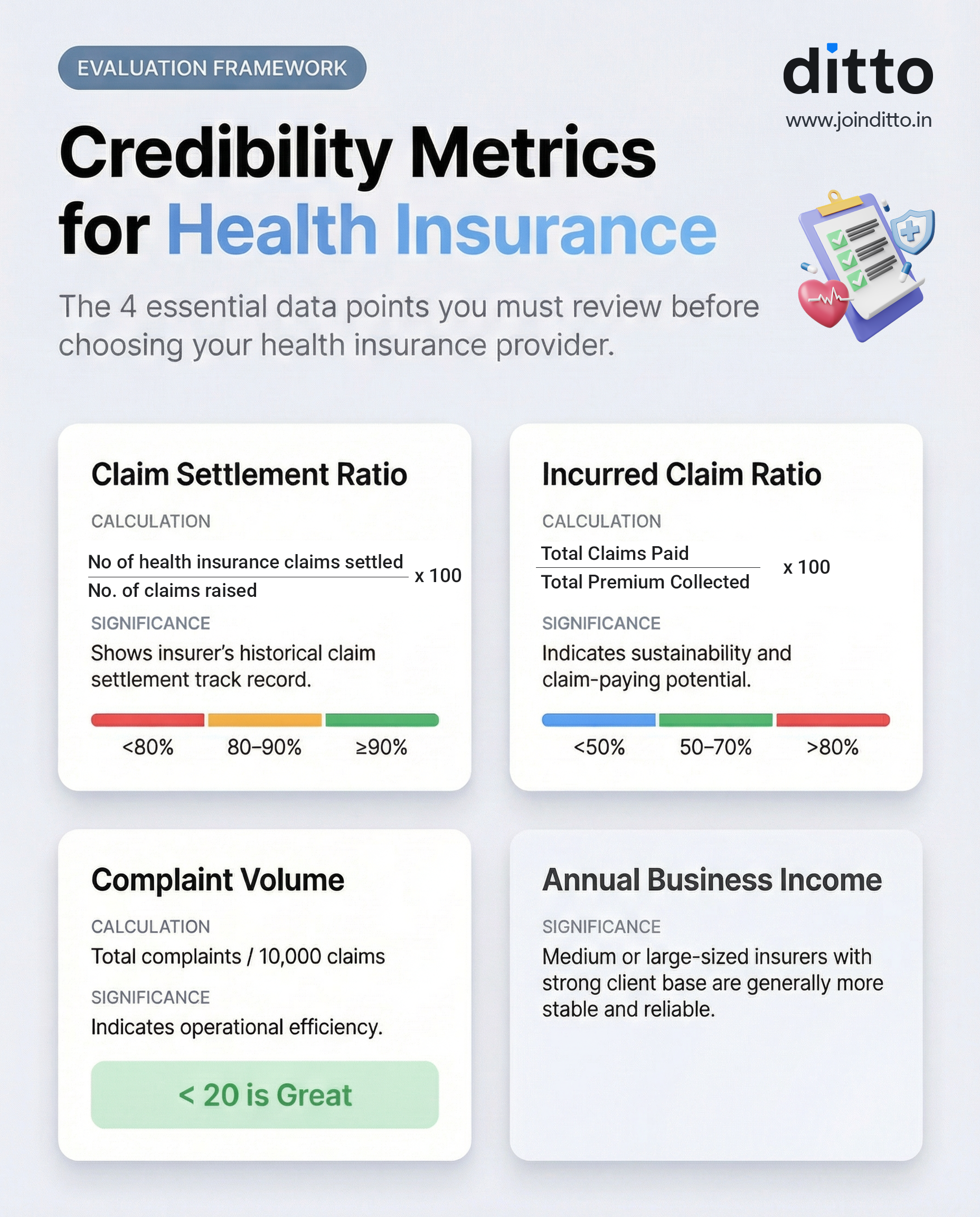
Ignoring an insurer’s performance metrics like CSR, ICR, complaint volumes, scale of operations, and track record may result in delays or claim-related frustrations.
Always choose an insurer with a strong record in the following metrics for smoother claim processing:
Why Choose Ditto for Health Insurance?
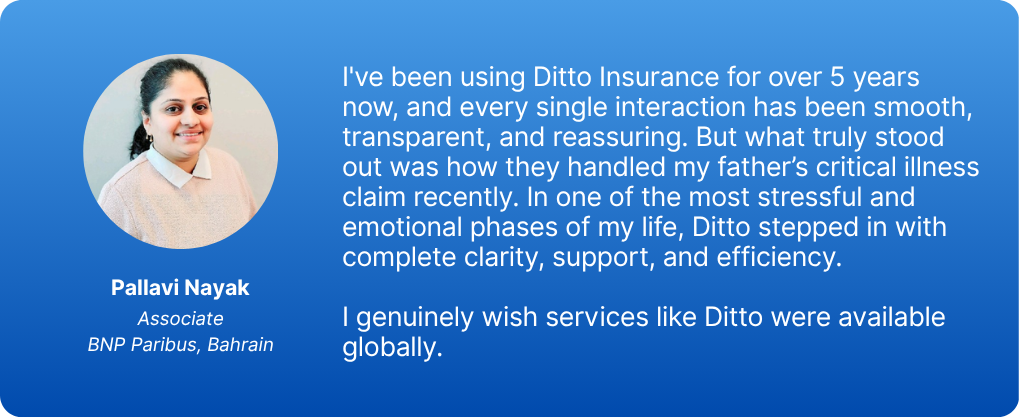
At Ditto, we’ve assisted over 8,00,000 customers with choosing the right insurance policy. Why customers like Pallavi below love us:
- No-Spam & No Salesmen
- Rated 4.9/5 on Google Reviews by 15,000+ happy customers
- Backed by Zerodha
- Dedicated Claim Support Team
- 100% Free Consultation
Confused about the right insurance? Speak to Ditto’s certified advisors for free, unbiased guidance. Book your call or WhatsApp us, slots fill up fast!
How to Pick the Right Health Insurance Policy?
When you buy health insurance, you protect your health, savings, and peace of mind in a world where medical costs are rising rapidly.
- Family floaters work well for younger families with similar health risks, while individual policies offer better stability when members have different age or health profiles.
- You can also combine an affordable base policy with a super top-up to increase coverage cost-effectively without paying high premiums on the entire sum insured.
- Decide the features you absolutely need before comparing plans, and look for policies with no room rent caps, disease-wise sub-limits, or co-payment clauses.
By buying early and choosing the right coverage, you can secure quality healthcare for yourself and your family for decades.
If you are still confused about your choices, you can always speak to an insurance advisor or an intermediary to make an informed decision.
Disclaimer
Frequently Asked Questions
Customer Reviews
Last updated on: