



What Changed and Why it Matters
IRDAI issued a circular on March 16, 2026, to discuss transitional arrangements for the payment of annual fees and issuance of CoRs for insurance intermediaries. The circular applies to multiple entities, including brokers, corporate agents, insurance marketing firms, web aggregators, common service centres, surveyors and loss assessors, insurance repositories, and third-party administrators.
Under the amended law, registration under Section 42D of the Insurance Act, 1938, is now perpetual, subject to compliance with the annual fee, replacing the earlier fixed-term validity.
In effect, once registered, an intermediary's licence will remain valid unless IRDAI specifically suspends or cancels it.
A Reform Years in the Making
The push for perpetual licence insurance in India was not sudden. Intermediaries such as brokers and corporate agents had long argued that frequent renewals impose heavy compliance and administrative costs. Perpetual licences provide stability, allow long-term investment in digital platforms, and align India with global regulatory practice.
India's insurance penetration is 3.7%, significantly below global averages. Hence, a simplified, stable regulatory environment for distributors can help accelerate growth in both urban and rural markets.
The Transitional Arrangements
IRDAI has introduced temporary measures to ensure a smooth transition, recognizing that such a major structural change requires careful implementation.
As a transitional measure, intermediaries receiving fresh registration or renewal between February 5, 2026, and June 30, 2026, must pay an interim annual fee at the time of issuance of the CoR. This arrangement is temporary until detailed regulations are notified. Here’s an overview of the current fee structure as per IRDAI’s latest circular (sourced above):
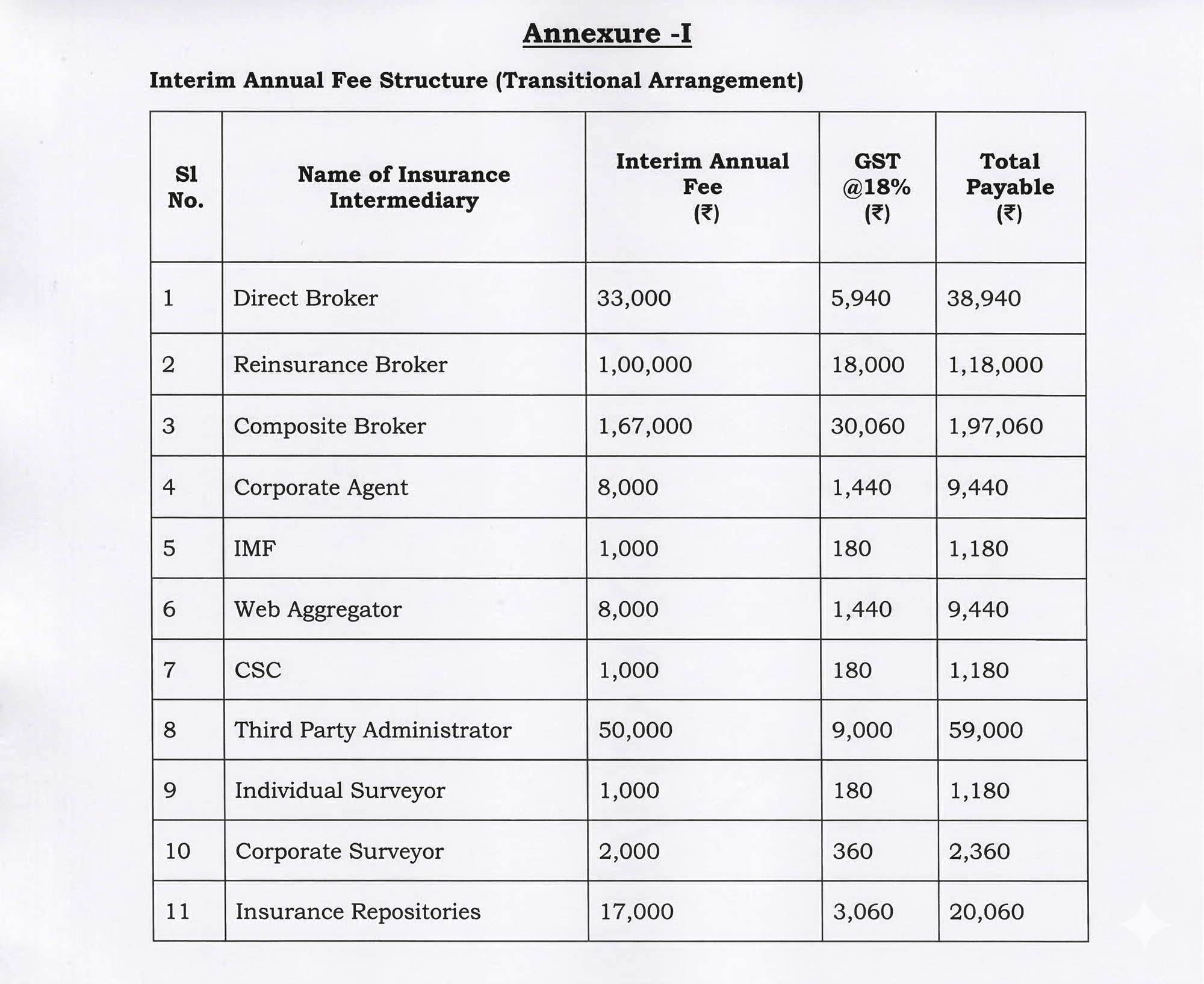
Note: For cases where renewal was granted on or after February 5, 2026, but the renewal fees had already been paid, the amount collected will be applied to the interim annual fee, and any excess will be refunded.
Did You Know?
What This Means for the Industry
For brokers, corporate agents, insurance marketing firms, and other intermediaries, the practical impact of IRDAI new rules is significant. The elimination of the triennial renewal process reduces compliance overhead, frees up management bandwidth, and removes the existential uncertainty that came with each renewal cycle. Long-term investments in technology platforms, talent, and distribution infrastructure become easier to justify when business continuity no longer hinges on a regulatory calendar.
For the broader market, the reform is expected to deepen participation among smaller and newer intermediaries, including digital-first players, who previously found the renewal burden disproportionately costly relative to their scale.
What Does This Mean for Customers?
A smoother IRDAI intermediary registration reform can improve continuity in distribution and servicing. If intermediaries spend less time on repetitive relicensing work, they can focus more on the quality of their advice, documentation support, claims assistance, and after-sales service. That can also support better customer experience, even if the customer never sees the regulation itself.
However, the renewal of the perpetual insurance broker licence in India will proceed smoothly only if poor conduct, non-compliance, and fee defaults are closely monitored. Hence, the success of this reform will depend on how effectively IRDAI enforces the remaining compliance framework.
Why Choose Ditto for Insurance?
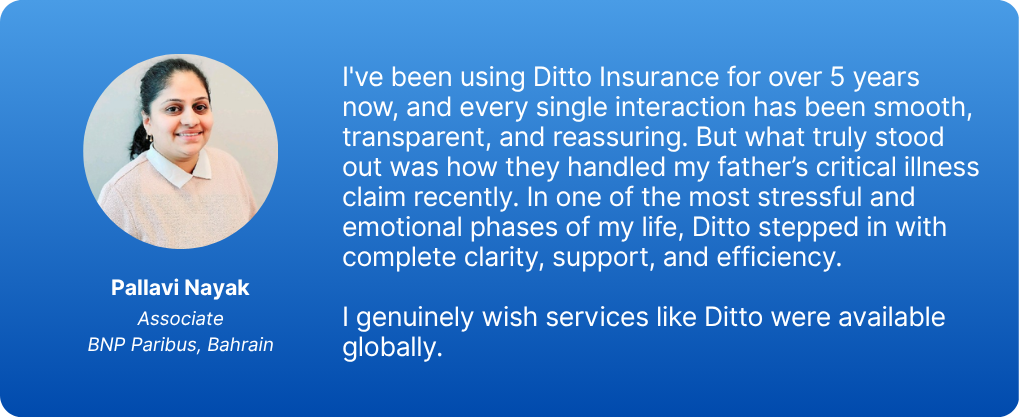
At Ditto, we’ve assisted over 8,00,000 customers with choosing the right insurance policy. Why customers like Pallavi below love us:
- No-Spam & No Salesmen
- Rated 4.9/5 on Google Reviews by 15,000+ happy customers
- Backed by Zerodha
- Dedicated Claim Support Team
- 100% Free Consultation
Confused about the right insurance? Speak to Ditto’s certified advisors for free, unbiased guidance. Book your call or chat on WhatsApp with us now!
Looking Ahead
The IRDAI retains the power to issue further clarifications or directions to address any implementation difficulties under the amended provisions. A comprehensive regulatory framework governing annual fee payments is yet to be notified, and the industry will watch closely for the final structure that will replace the current interim arrangement after June 30, 2026.
The transition to perpetual registration also marks a major move towards accomplishing the government's ambitious Insurance for All by 2047 goal.
Disclaimer: Ditto is a licensed corporate agent with IRDAI, and this change will also apply to intermediaries like us. Our perspective is shared for informational purposes only and should not be treated as legal or regulatory advice. You can view our IRDAI license details here.
Frequently Asked Questions
Last updated on: