



What if a simple blood test could shape your entire future?
That’s why understanding the term insurance medical test list can give you a clear advantage. Knowing what’s tested and how to prepare puts you in control. At Ditto, we guide you through every step, from understanding the tests to choosing the right insurer, so you're not just guessing but making informed, confident decisions.
Now let’s unpack what these tests involve, how to approach them, and why they matter for your insurance application.
What Is a Medical Test for Term Insurance?
Term insurance is designed to provide financial protection to your loved ones if something happens to you. Before issuing a policy, insurers want to understand the health risk they are taking on. That’s where medical tests come in.
These tests give insurers a clearer picture of your current health and help them decide how much coverage they can offer, at what cost, and under what terms. Essentially, the tests help them assess your risk level more accurately.
In many cases, the results are what determine whether your application is accepted, modified, or even declined.
Key Takeaways: Medical tests help insurers evaluate your health so they can make an informed decision about offering coverage.
Why Medical Tests Matter for Term Insurance Buyers?
Think of it from the insurer’s side. When they promise a payout of ₹1 crore or more, they want to be confident about the risk they're taking. These tests offer a way to verify that you're in good health and that your application is truthful.
For you as a buyer, these tests are important too. If you're healthy, you could benefit from lower premiums. If something concerning is detected, catching it early could lead to better health management and informed insurance choices.
It's a step that serves both parties, leading to transparency and better financial planning.
Key Takeaways: Test results directly influence three critical decisions—policy approval, premium calculation, and coverage terms.
Medical Test for Term Insurance List Explained
Before an insurer approves your term insurance application, they’ll typically ask you to undergo a few health checks. These aren’t just formalities—they help insurers gauge your overall health and assess the risk involved in offering you coverage. Here's a quick look at the most commonly requested tests by insurers:
These tests may be done at a diagnostic center or even from the comfort of your home, depending on your insurer.
Key Takeaways: Standard tests include blood work, heart checks, and urine analysis, aimed at understanding your current health profile.
Additional Tests for High Sum Assured Plans
While the basic health checks cover most applicants, opting for a high-value cover—typically above ₹2 crore—raises the stakes for insurers. To better assess the associated risk, they might require a few extra screenings.
Here are some of the additional tests insurers may request:
These are especially important for applicants:
- Above 40–45 years
- With a family history of illness
- Looking for high-value cover
These are especially important if you have a family history of serious illnesses or are applying at an older age. They help insurers spot risks that don’t always show up in basic tests.
Key Takeaways: High-cover policies often need advanced screenings, especially for older applicants or those with a medical history.
Who Needs Medical Tests and Who Might Be Exempt?
Not everyone applying for term insurance needs to undergo a medical test. Based on our experience, here’s how most insurers typically decide:
Even if you’re under 35, declaring conditions like asthma or high blood pressure can trigger a mandatory medical exam.
Some insurers also offer no medical term plans, but these may come with limitations on coverage or higher premiums.
Key Takeaway: Testing requirements vary by insurer. Age, coverage amount, and declared health conditions are common triggers—but these guidelines are subject to change, so always confirm with your advisor or insurer.
How Test Results Affect Premiums and Policy Approval
Medical test outcomes play a crucial role in how your term insurance application is evaluated. If your reports show normal ranges across key health parameters, your application is likely to move quickly with standard premium rates.
However, if the results flag any concerns—such as elevated blood sugar levels or liver irregularities—you may still be approved, but with a higher premium. This additional charge is called a loading. For instance, someone with diabetes might face a loading of 25–50% depending on their HbA1c levels and overall health profile.
In rare cases, if the health risk appears too high, the insurer might decline the application altogether. But that’s not the end of the road. You can either reapply after improving your health or consider insurers with more flexible underwriting policies.
Key Takeaways: Good test results can help keep premiums low. Health concerns don’t always mean rejection but they can lead to added costs or delays.
Can You Skip Tests with a No-Medical-Term Plan?
How to Prepare for Term Insurance Medical Tests?
Want to improve your chances of clearing medical tests with flying colors? Here's what you can do:
- Fast for 8–10 hours before the test, especially for sugar and cholesterol readings.
- Avoid alcohol, smoking, and caffeine for at least 24–48 hours.
- Stay hydrated and well-rested before the test day.
- Carry ID proof and details of any ongoing medication.
- Inform the testing professional about pre-existing conditions honestly.
Insurers usually send a medical team to your home or direct you to a nearby center. Ditto helps coordinate all this seamlessly.
Key Takeaways: With a bit of preparation: fasting, rest, and openness, you can ensure a smooth testing experience and help present an accurate snapshot of your health to your insurer.
Ditto’s Advice: For that extra edge, keep these practical tips in mind:
- Schedule tests for mid-week (Tuesday–Thursday) when labs are less rushed.
- Avoid getting tested if you’re unwell. Reschedule instead.
- Inform the technician about any prescription medications.
- Request home sample collection if it’s more convenient or comfortable.
Why Being Honest in Your Medical Disclosure Matters?
It can be tempting to leave out minor health details when filling out insurance forms but doing so could backfire. Non-disclosure is one of the leading reasons claims get rejected. Insurers cross-check your disclosures with the results from your medical tests, and if there’s a mismatch, even an active policy can be voided.
Being truthful doesn’t just build trust, it ensures your family won’t face hurdles during claim settlement.
In fact, undergoing medical tests is actually in your favor. It helps insurers better assess your risk, and you receive a copy of the test results too. It’s a great way to understand your own health better.
Ditto’s Advice: Feeling a little anxious about your medical test results? Totally normal. Consider doing a basic health check-up in advance—most standard packages cost just ₹1,000–2,000. It can give you an early glimpse into any red flags and the breathing room to make lifestyle tweaks or even push your application timeline if needed. Since the entire process usually takes about two weeks, a little prep goes a long way.
Key Takeaways: Always disclose medical information truthfully, and see medical tests as a chance to protect, not penalize, your peace of mind.
Conclusion
Getting term insurance is a smart move. But getting the right coverage with the right medical checks and benefits makes all the difference. Medical tests are not just a formality. They are often what separates a settled claim from a denied one.
Why Choose Ditto for Term Insurance?
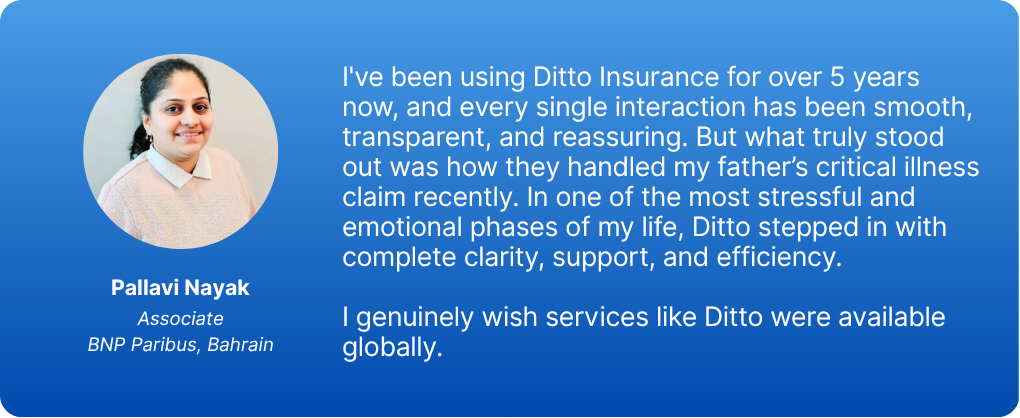
At Ditto, we’ve assisted over 8,00,000 customers with choosing the right insurance policy. Why customers like Pallavi below love us:
- No-Spam & No Salesmen
- Rated 4.9/5 on Google Reviews by 15,000+ happy customers
- Backed by Zerodha
- Dedicated Claim Support Team
- 100% Free Consultation
You can book a FREE consultation. Slots are running out, so make sure you book a call now or chat on WhatsApp with our expert IRDAI-certified advisors.
Frequently Asked Questions
Last updated on: