



Quick Overview
Mental health plays a much bigger role in our overall well-being than many people realize, including our financial planning. When applying for life insurance, most people expect to be asked about physical health conditions such as heart disease or diabetes. What often surprises them is how closely insurers also evaluate mental health history.
Conditions such as anxiety, depression, bipolar disorder, or past substance use can influence how insurance companies assess risk.
Understanding how mental health affects life insurance helps you prepare for the application process and avoid surprises. In this article, we’ll break down how insurers evaluate mental health, what factors matter most, and how you can improve your chances of securing affordable coverage.
Why Insurers Assess Mental Health in Life Insurance?
Under IRDAI regulations, insurers must evaluate applicants fairly and transparently, but underwriting outcomes can vary widely.
This is because insurers assess mental health primarily through the lens of mortality risk, that is, whether a condition increases the likelihood of premature death. Some mental health conditions can make daily life more challenging and may increase vulnerability to concerns such as suicidal thoughts, substance use difficulties, lifestyle instability, accidental harm, or other physical health issues.
From an underwriting perspective, this is about actuarial risk pricing and long-term probability assessment, and not a moral judgment about the individual.
Note: At Ditto, we focus on term insurance products because they are the most comprehensive and affordable life insurance option. Traditional life insurance products may be assessed differently.
Suicide Clause in Life Insurance

Mental Health Conditions That May Impact Life Insurance
Depression
Mild and well-managed depression with no hospitalization history may be considered on a case-by-case basis under underwriting. However, moderate to severe depression, linked with other conditions like anxiety, especially with recurrent episodes, has a higher chance of rejection in term insurance. Recent episodes or ongoing intensive treatment significantly reduce the chances of approval.
Anxiety Disorders
Most anxiety disorders are evaluated based on severity and treatment history. Mild, stable cases are commonly approved (depending on underwriting and overall evaluation), with a chance of a counteroffer, such as loading charges (higher premiums). However, severe anxiety, frequent panic attacks, or hospitalization may lead to stricter underwriting or even rejection in certain cases.
Attention Deficit Hyperactivity Disorder (ADHD)
ADHD underwriting depends on age, severity, and medication history. While some well-controlled cases may be assessed individually, many term insurers tend to decline applications.
Bipolar Disorder
Bipolar disorder is considered high risk due to relapse probability and associated mortality concerns. From our experience, most term insurers in India typically decline such applications outright, with approvals being rare and subject to extremely strict underwriting conditions.
Schizophrenia
Schizophrenia is typically viewed as a severe psychiatric condition with long-term management concerns. While technically subject to underwriting, we have seen many insurers reject applications due to elevated mortality and relapse risks.
Obsessive Compulsive Disorder (OCD)/Panic Disorders
OCD cases are usually outright rejected for term insurance because OCD is a chronic mental health condition that involves persistent, intrusive thoughts and repetitive behaviors. Because of the high risk profile, insurers typically decline term insurance applications where OCD is already diagnosed. In rare cases where issuance is considered, it occurs only after strict underwriting and is accompanied by counteroffers.
Impact of Mental Health on Premiums, Approval, & Coverage
If the issue is in the past, you’ll need all medical reports, psychiatric evaluations, hospital records, attending physician statements, and proof of current mental stability. Without documentation, applications are difficult to process.
Even if all information is disclosed correctly with or without reports, they may still decline the proposal if they consider the profile too risky.
Additional Questionnaires Asked by Insurers
Insurers use questionnaires similar to:
Nervous Disorder: Life Assured Questionnaire and Attending Physician Statement (APS)
These forms usually ask about the date of diagnosis, symptoms, treatment details, medication dosage, hospitalizations, suicide attempts, and current mental state. This is a standard practice in underwriting for mental health insurance India.
How Does the Application Journey Change?
- More Documentation
Expect detailed questionnaires, past medical records, and certification from your treating psychiatrist. Insurers may also require an Attending Physician Statement (APS). - Longer Processing Time
Applications involving mental health disclosures usually take longer to underwrite. Instead of instant approvals, the process may stretch over a few weeks. - Possible Medical Examination
Insurers may request additional medical tests or even a psychiatric evaluation to assess current stability and treatment response. - High Chances of Modified Terms
You may receive counteroffers, such as premium loadings, rider exclusions, or approval for a lower sum assured or a policy term shorter than the one applied for. - If No Medical Reports Available
Without a documented medical history, insurers find it difficult to assess risk. This significantly reduces the chances of approval.
Note: In cases where a term plan application is rejected by the insurance company before issuance, the full premium paid is refunded to the customer. Refunds typically take 14-15 business days, though timelines may vary by insurer and be longer.
If the insurer makes a counteroffer, the applicant has the right to accept or decline it. If the applicant rejects the counteroffer, the premiums are refunded; if they accept it, they must formally agree to the modified terms.
If you’re exploring insurance options and want to make an informed choice, you can also take a look at our comprehensive guide to the best term insurance plans in India to find a plan that aligns with your overall financial protection needs.
Buying Life Insurance with Mental Health Conditions in India
Be completely transparent about your diagnosis and treatment history, gather all relevant medical records, and check with your insurer in advance whether they underwrite your specific condition. Seeking a pre-underwriting opinion can prevent unnecessary rejections, and applying without riders may improve your chances of approval.
It’s crucial to never hide a mental health diagnosis, as non-disclosure can lead to claim rejection and policy cancellation later.
Life Insurance vs Mental Health Insurance
Note: Under IRDAI rules, health insurers must provide coverage for mental illnesses on par with physical illnesses. Although there isn’t a standalone mental health insurance product in India, mental health treatment is included under standard health insurance policies. That said, the extent of coverage, such as Outpatient Department (OPD) therapy benefits, counseling session limits, and waiting periods, can vary by plan.
Tips to Get Life Insurance Despite Mental Health History
1) Go for Basic Protection
Focus on the essential sum assured and avoid adding riders, as including them can trigger additional scrutiny during underwriting.
2) Be Honest and Thorough
Fully disclose your diagnosis, medications, therapy history, and any past hospitalizations. Non-disclosure can result in policy cancellation or claim rejection later.
3) Highlight Stability and Management
Demonstrate long-term control of the condition, such as consistent medication, no recent relapses, and minimal specialist visits.
4) Compare Multiple Insurers
Underwriting philosophies vary across insurers in India. If one declines, another may evaluate the case differently.
5) Work with an Experienced Advisor
Advisors familiar with higher-risk cases can help you approach insurers strategically and avoid unnecessary rejections.
6) Consider Simplified or Traditional Policies
If term insurance is declined, explore the Saral Jeevan Bima Yojana (an IRDAI-mandated offering) or traditional life insurance policies. Coverage may be lower and premiums higher, but securing some protection is better than remaining uninsured.
Why Choose Ditto for Life Insurance?
At Ditto, we’ve assisted over 8,00,000 customers with choosing the right insurance policy. Why customers like Aaron below love us:
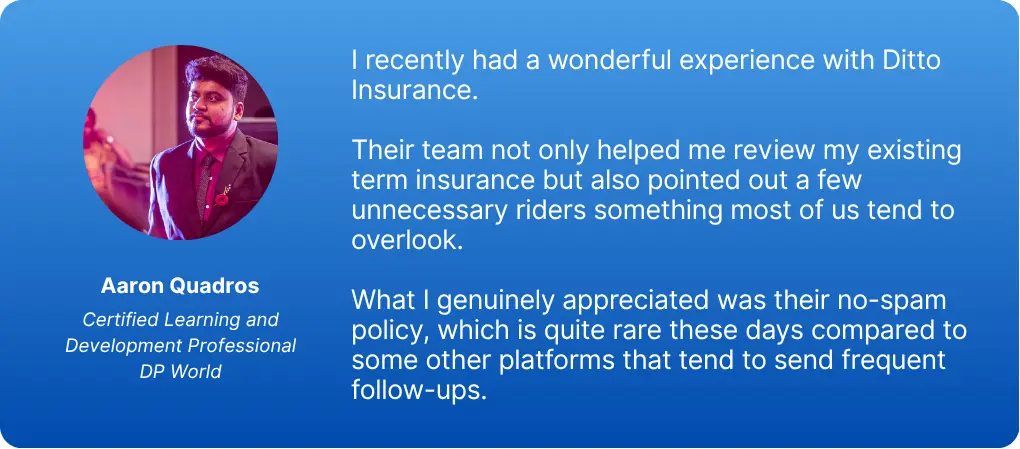
- No-Spam & No Salesmen
- Rated 4.9/5 on Google Reviews by 15,000+ happy customers
- Backed by Zerodha
- 100% Free Consultation
You can book a FREE consultation. Slots are running out, so make sure you book a call or chat on WhatsApp now!
Conclusion
Securing life insurance with a mental health history in India can be challenging, but not impossible. Since insurers evaluate cases based on mortality risk and underwriting guidelines, outcomes may range from standard approval to counteroffers or rejection, depending on the condition and its stability. With honest disclosure, proper documentation, and the right application strategy, many individuals can still obtain meaningful coverage, ensuring financial protection for their families despite past or ongoing mental health concerns.
Full Disclosure: All the details mentioned in the article above are for informational purposes only. For more information, you can reach out to us to see how we shortlist plans or insurers.
Frequently Asked Questions
Last updated on: