



Quick Overview
Imagine planning your family’s financial future only to discover that your term insurance premium rises unexpectedly each year. This uncertainty can disrupt your long-term financial planning, especially if you rely on fixed outflows. Term insurance provides coverage for a specified period (policy tenure) and offers a death benefit to your beneficiaries if you pass away during the term. It’s an essential financial tool because it provides affordable protection, ensuring your loved ones remain financially secure even in the event of the unexpected.
According to IRDAI, life insurance penetration in India was just 2.8% in FY 2023-2024, primarily due to confusion surrounding pricing and policy details. This leads to a crucial question: Does term insurance premium increase every year? Understanding the answer is vital because the decision you make today will affect the amount you pay over the coming decades. Whether your premium increases or remains largely unchanged depends on the type of policy you choose and the specific terms outlined at the time of purchase.
At Ditto, we aim to simplify these decisions by clearly explaining policies and matching you with the right plan. Let’s explore this topic in detail to help you make an informed choice.
1. Different types of term plans
2. Recent premium hikes
3. Key factors influencing premium changes
4. Upgrading your coverage
5. How to avoid rising premiums
6. Whether term insurance is still worth it.
By the end of this post, you’ll be equipped to choose the right policy type, avoid unnecessary premium hikes, and make a wise, long-term insurance decision, with help from Ditto every step of the way.
Does Term Insurance Premium Increase Every Year?
If you’re wondering, does term insurance premium increase every year? The answer isn’t a simple yes or no; it depends mainly on the type of term policy you choose.
Understanding how different types of term insurance are structured can help you make an informed decision and avoid unexpected cost increases.
Let’s break it down:
Level Term Plans
These are the most common and predictable types of term insurance. When you opt for a level term policy, your premium is fixed for the duration of the policy, be it 20, 30, or 40 years. This means that even as you age or if your health changes, your premium won’t increase. It's a preferred option for those who value budgeting stability and long-term financial planning.
Group Term Plans
These are not typically available for individual purchase but are offered through employers, banks, alumni groups, or professional associations. Group term plans are usually renewed annually, and premiums can change each year based on the collective risk profile of the group. As a result, you may see premium increases over time, and coverage is often not portable if you leave the organization.
Increasing Term Plans
Some policies are structured to offer increasing coverage as your financial responsibilities grow (for example, due to inflation or family expansion). However, it is essential to note that while coverage increases, premiums remain unchanged for the entire policy term. This is because the insurer charges a slightly inflated but fixed premium upfront, anticipating future increases in coverage.
Ditto’s Take on Increasing Term Plans
Not all term insurance premiums increase yearly. Level term plans offer fixed premiums for consistent budgeting. In contrast, group term plans may have premiums that rise due to factors such as aging or health changes, depending on the risk profile of the entire group.
Next, let’s explore why term insurance premiums have increased in recent years and what’s driving these upward trends across the industry.
Note: A level plan locks in whatever you pay on day one, for good. Find out what that figure looks like right now with Ditto's term insurance premium calculator.
Why Have Term Insurance Rates Increased Recently?
In recent years, many policyholders and new buyers have noticed a significant uptick in term insurance premiums. This has raised a common question: Is the increase in premiums due to external market changes or a shift in individual risk? The answer lies in a combination of global events and structural adjustments within the insurance industry.
Several key factors have contributed to the recent surge in term insurance costs:
- Post-COVID Risk Reassessment
The COVID-19 pandemic led to a global spike in mortality rates, which had a direct impact on how insurers assess life risk. In response, insurers re-evaluated their underwriting models to account for greater uncertainty, resulting in higher premiums to balance the increased risk exposure. - Reinsurer Pricing Changes
Indian insurance companies typically rely on international reinsurers to share risk. Following the pandemic, many global reinsurers increased their pricing due to losses and a more cautious approach to life risk. Indian term insurers, in turn, had little choice but to pass those increased costs on to their customers. - Global Alignment of Premiums
Historically, term insurance in India has been underpriced compared to global standards. As the insurance sector matures and becomes more data-driven, companies are adjusting rates to reflect realistic mortality expectations better and ensure long-term sustainability. This correction is bringing Indian premiums more in line with international norms.
Term insurance premiums have risen recently due to post-pandemic mortality risk reassessments, increased costs from global reinsurers, and a strategic correction to align Indian rates with international benchmarks. Now that we've looked at industry-wide changes, let’s dive into the specific personal and policy-related factors that directly influence your term insurance premium.
Factors That Affect Term Insurance Premium Increases
Still asking yourself, “Does term insurance premium increase every year?” The answer can be yes, if specific personal, policy-related, or structural changes occur over time. While some term plans offer fixed premiums, others adjust based on evolving risk factors and plan features. However, it’s imperative to note here that once you’ve bought your policy, your premiums will remain fixed for the entire policy tenure.
Talk to an expert
today and
find
the right
insurance for you.


If you’re yet to buy a policy, you’ll notice premiums going up over time. For example, if you looked at the premiums 6 months ago, they could be vastly different from the premiums you’ll see today. Here are the main contributors that can lead to an increase in your term insurance premium:
Age
Age is one of the most significant factors in determining your premium. The older you are when purchasing a policy, the higher your premium is likely to be. That’s why buying term insurance early in life is cost-effective; you lock in a lower rate for the entire term (especially with level term plans).
Health
Your health at the time of purchase or revival (if your policy lapses) plays a critical role. If your health deteriorates due to chronic illness, lifestyle choices like smoking, or other medical conditions, insurers may view you as a higher risk, especially when reviving a lapsed policy. This can lead to increased premiums or even stricter underwriting terms.
Policy Term and Cover Amount
The duration (tenure) of your policy and the sum assured (cover amount) are crucial in determining your premium. Longer-term policies typically cost more upfront but offer stable premiums throughout the policy period, especially if locked in early. Similarly, higher coverage amounts result in higher premiums, as the insurer assumes a greater financial risk. Choosing a longer tenure and adequate cover early in life helps you lock in a lower rate, while waiting may increase the cost due to rising age and health risks.
Riders and Add-ons
Optional benefits like critical illness cover, accidental disability benefit, or waiver of premium can significantly enhance protection, but they also raise your overall premium. These add-ons are priced separately and added to your base term insurance cost.
Ditto’s Take
Inflation-Adjusted or Increasing Coverage Plans
Some term insurance products are designed to increase the sum assured annually, keeping pace with inflation or rising life expenses. While the growing coverage is a valuable feature, the premium does not increase each year. Instead, you pay a fixed but slightly higher premium from the start. This higher premium is calculated based on the anticipated increase in sum assured over the policy’s life. So, even though the coverage increases, your premiums remain constant.
So, will your premiums constantly increase? Not necessarily. Once you've purchased a term insurance policy, your premiums typically remain fixed for the entire policy term. However, if you're still in the process of buying one, you may notice that premiums increase over time due to changes in age, health, policy type, and added riders. And if you let your policy lapse and need to reapply, you may face significantly higher premiums based on your current health and age.
Ditto’s Take on Increasing Term Insurance Premiums
Now, what if your financial needs grow over time? Let’s explore what happens when you want to increase your term insurance coverage later.
Can You Increase Your Term Insurance Amount Later?
Yes, increasing your term insurance coverage later is possible—but it’s not always automatic or cost-effective. If you're wondering, "Does term insurance premium increase every year if I add more coverage?"—the short answer is: often, yes. That’s because increasing your sum assured usually involves a reassessment of your current health and risk profile.
There are three main ways to increase your term insurance coverage:
Buy a New Term Plan
You can always purchase an additional term insurance policy to boost your total coverage. However, this means re-evaluating your income, health, age, and lifestyle at the time of the request. If you've aged significantly or your health has worsened, your new premium will likely be much higher than your original rate, and there is a possibility of rejection of your application.
Life Stage Benefit Options
Some modern term policies offer life stage benefits, which allow you to increase your coverage during key milestones such as marriage, childbirth, or home purchase, often without medical tests. These increments are typically pre-approved and priced into the policy structure, offering a relatively smoother upgrade path. Please note that underwriting might be required depending on the insurer’s decision.
Top-Up or Add-On Options
Select insurers offer top-ups or policy extensions, allowing you to increase your sum assured later. However, these are treated as separate chunks of coverage, and the premium for the additional amount is calculated based on your current profile, not your original entry age.
In summary, yes, you can increase your term insurance amount later, but doing so usually results in higher premiums, unless your plan includes built-in life stage or top-up options that allow for smoother and more cost-effective upgrades. So, how can you minimize the risk of rising premiums altogether? Let’s look at innovative ways to keep your term insurance costs stable.

How to Avoid Rising Term Insurance Premiums
Buy Early
Age is one of the primary factors influencing life insurance pricing. The earlier you buy, the lower your risk profile and the cheaper your premium. By purchasing a policy in your 20s or early 30s, you can lock in a low rate for the entire term, even if your health changes later.
Choose a Level-Term Plan
These plans are specifically designed to offer fixed premiums for the entire policy term. That means your payments won't increase annually, even as you age. It’s the most reliable way to avoid premium surprises.
Live a Healthy Lifestyle
Insurers reward lower-risk individuals. Maintaining a healthy weight, avoiding tobacco, and managing chronic conditions can reduce your risk classification, which in turn keeps premiums lower or prevents future loadings if you ever need to increase coverage.
Compare Plans Before You Buy
Tools like Ditto’s comparison tool help you analyze premiums, features, riders, and coverage terms across different insurers. A smart comparison can save you money and ensure you choose a policy that fits your long-term financial goals. To avoid rising term insurance premiums, buy early and buy right, opt for level-term plans, stay healthy, and compare policies carefully. These steps help lock in predictable costs and long-term value. Still unsure whether it’s worth investing in term insurance despite recent price hikes? Let’s break down the value proposition next.
Should You Still Buy Term Insurance Despite Price Hikes? (Ditto’s take)
Absolutely. Even though premiums have gone up in recent years, term insurance continues to offer unmatched value when it comes to protecting your family's financial future. If you’re still wondering, “Does term insurance premium increase every year, and is it worth it now?”—here’s what you need to keep in mind:
Cost vs Coverage Value
Despite recent hikes, term insurance remains one of the most affordable forms of life coverage. You’re typically paying a small amount annually to secure a substantial sum assured (typically in crores), often enough to cover your family’s financial needs, debt, and long-term expenses in your absence.
Delaying Only Increases Cost
Postponing your purchase doesn't save money—it increases your long-term cost. As you age, your premiums go up. And if your health changes negatively, you might face extra charges (premium loading) or even risk being denied coverage altogether.
Peace of Mind is Priceless
The reassurance that your loved ones will be financially stable—even if something happens to you—is a benefit that outweighs small premium increases. Even slightly higher rates today are still a wise trade-off for long-term security and peace of mind.
In short, despite recent premium hikes, term insurance remains an innovative and affordable financial safety net—especially if you buy early and lock in long-term benefits.
Why Choose Ditto for Term Insurance?
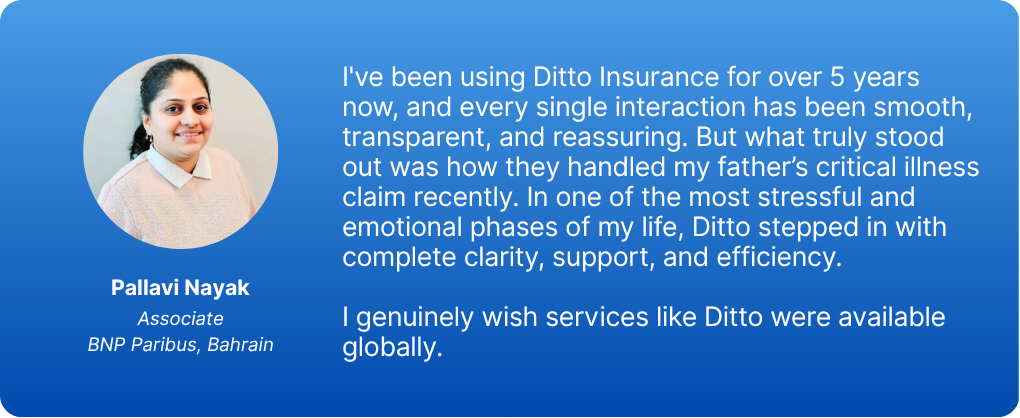
At Ditto, we’ve assisted over 8,00,000 customers with choosing the right insurance policy. Why customers like Pallavi below love us:
- No-Spam & No Salesmen
- Rated 4.9/5 on Google Reviews by 15,000+ happy customers
- Backed by Zerodha
- Dedicated Claim Support Team
- 100% Free Consultation
You can book a FREE consultation. Slots are running out, so make sure you book a call now or chat on WhatsApp with our expert IRDAI-certified advisors.
Conclusion
So, does term insurance premium increase every year? The answer isn’t always straightforward, as it largely depends on the type of policy you choose. Level term plans come with fixed premiums, making them ideal for stable, long-term financial planning. On the other hand, group term policies may experience premium increases over time due to reassessments.
Many also ask, can I increase my term insurance amount later? Yes, but it usually involves higher premiums and may require a fresh medical evaluation, unless your policy includes built-in life stage or top-up options. That's why it’s often smarter to secure the right amount of coverage upfront.
Key Takeaways:
- A term insurance premium increase can be avoided with the right plan.
- Can I increase my term insurance amount? Yes, but it’s better to choose the right coverage now to avoid costly upgrades later.
- Lock in lower rates early with a fixed premium term policy.
- Despite rising costs, term insurance remains one of the most affordable ways to secure your family's future.
Use Ditto’s comparison and advisory tools to find your ideal policy today.
Frequently Asked Questions
Last updated on: