






Quick Overview
If you are planning to switch jobs, one question that often comes up is what happens to your employer health insurance after you resign. Many employees in similar situations assume that their corporate policy will continue to protect them even after leaving the job.
In reality, the coverage is limited, and once your last working day approaches, the coverage ends. This can leave you and your family suddenly uninsured if you haven’t planned your next step. That is why planning for your retail health insurance is a smarter way to protect your family.
In this article, we explain when corporate health insurance typically ends, what options you have to continue coverage, and how to avoid risky gaps that could leave you paying medical bills out of pocket.

What Happens to Employer Health Insurance After You Resign?
Resignation
In most companies, health insurance remains active until the last working day or the end of the notice period. Some organizations extend coverage until the end of the same calendar month, but this varies by employer.
Layoff or Termination
If an employee is laid off, companies sometimes continue the health insurance for a short transition period. In some cases, coverage may continue until the end of the financial year, as defined by the company policy.
Retirement
The corporate health insurance usually ends once the employment contract concludes. Some organizations may offer post-retirement group coverage options, but this depends entirely on the employer’s benefits policy, and usually, the employee has to pay for it.
Note: Since these rules differ across companies, it’s important to confirm the exact coverage end date with your HR team and review your employee benefits policy before leaving the organization.
Impact On Family Coverage
Health Insurance Options After Quitting Your Job
Porting or Migrating Your Corporate Policy to an Individual Plan
- IRDAI regulations allow individuals covered under a group health insurance policy to migrate to a retail policy offered by the same insurer upon exiting the group. This option can help continue coverage without starting completely from scratch.
Key Insight: In practice, the migration process can take time and usually requires the insurer's approval. Some companies also require employees to initiate this request before the corporate policy ends, so it’s important to speak with HR and the insurer early if you plan to explore this option.
Buying a Fresh Personal Health Insurance Policy
- Retail policies give you greater control over coverage, since you become the master policyholder rather than being dependent on your employer’s group policy.
- If you’re planning to resign or switch jobs, it is better to buy a personal policy early rather than waiting until your corporate coverage ends.
If you're evaluating options, you can also explore some of the best health insurance plans available in India to compare coverage features before buying.
Moving to a Spouse or Family Floater Policy
- If your spouse already has employer health insurance, you may be able to join their corporate policy as a dependent. Some companies allow mid-year additions when there is a qualifying life event, such as marriage.
- Alternatively, if your spouse has an existing individual retail policy, you can convert it into a family floater. This can be a practical option for families who want a single policy that is independent of employment status, and it is usually offered as a mid-year inclusion or at renewals.
How to Port Corporate Health Insurance Without Losing Benefits
Portability Timelines And Eligibility Rules
- You generally need to apply for migration at least 30 days before the renewal date of the existing policy, although insurers may accept shorter timelines in some cases.
- Migration is usually allowed only up to the sum insured available under the previous corporate policy, along with any cumulative bonus earned.
Note: Currently, direct porting from a group policy to a retail plan from a different insurer is not possible. We first have to migrate to a retail plan from the same company and then explore porting options upon the next renewal.
Continuity Benefits for Waiting Periods
- According to IRDAI guidelines, when migration happens without a break in coverage, the waiting period already served under the group policy is carried forward. This applies to pre-existing disease waiting periods and other time-bound exclusions.
However, if you choose a higher sum insured under the new policy, the additional coverage may have fresh waiting periods. The major misconception around this is ‘same plan comes with the same benefits as well as the same premiums, which is not the case.
Underwriting and Approval Process
- Porting from group health insurance to an individual policy is subject to underwriting by the insurer. This means the insurer may review your health conditions and lifestyle habits before issuing the new policy.
- IRDAI regulations also state that the insurer must communicate its underwriting decision within 15 days after receiving the migration request.
Steps to Follow Before Exit
- Inform HR and the insurer about your intention to migrate the policy.
- Choose an individual or family floater policy offered by the same insurer.
- Submit the migration or proposal form along with the previous policy details.
- Provide identity proof, age proof, and medical declarations if required.
Risks of Coverage Gaps After Resignation
Medical Emergencies When Uninsured
Fresh Waiting Periods
Claim Risks Due To Policy Lapse
Higher Premiums
Worth Knowing: Employer Life Insurance Ends When You Resign
Why Choose Ditto for Health Insurance?
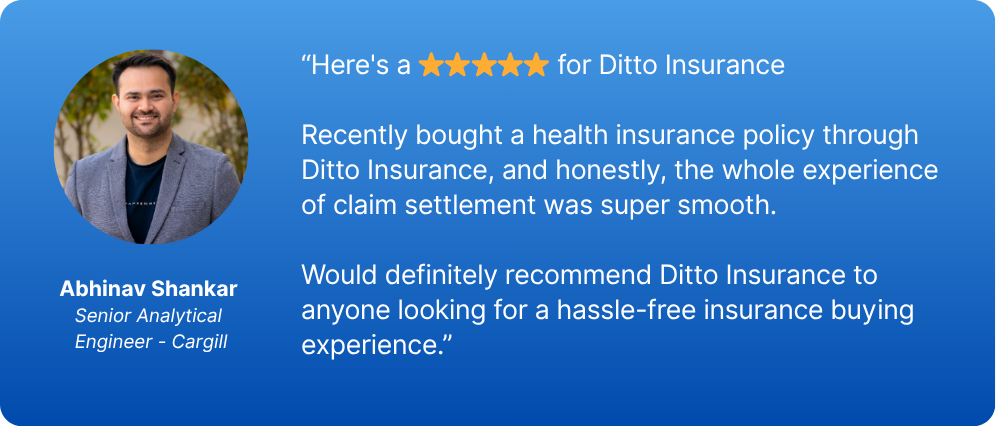
At Ditto, we’ve assisted over 8,00,000 customers with choosing the right insurance policy. Here’s why customers like Abhinav love us:
- No-Spam & No Salesmen
- Rated 4.9/5 on Google Reviews by 15,000+ happy customers
- Backed by Zerodha
- 100% Free Consultation
You can book a FREE consultation with us. Slots are filling up quickly, so be sure to book a call now or chat with us on WhatsApp!
Conclusion
Corporate health insurance is a great benefit while you’re employed. But once you leave your job, that coverage usually ends quickly. And if you haven’t planned your next step, you and your family could suddenly be without protection.
The good news? You have options. You can migrate your corporate policy, buy a personal health insurance plan, or move to your spouse's existing coverage. The key is to start planning before your corporate policy expires, so you avoid coverage issues and waiting periods.
So, if you’re planning to change jobs soon, take a few minutes to review your options. And if you’re unsure what makes the most sense, you can check this guide on how to choose the best health insurance providers to help you make the transition smoothly.
Frequently Asked Questions
Last updated on: