
Health Insurance

West Bengal Health Scheme (WBHS): Eligibility and Benefits

Ann Tresa Jais

Written by Ann Tresa Jais

Insurance Writer

Gaurav Bhat

Reviewed by Gaurav Bhat

IRDAI-Certified Expert at Ditto

SP0738578124

Certified
West Bengal Health Scheme (WBHS): Eligibility and Benefits

Overview

The West Bengal Health Scheme (WBHS) provides healthcare benefits to eligible government employees, pensioners, and their families. 

Key Features of WBHS

  • Cashless Treatment: Eligible beneficiaries receive up to ₹5 lakh per hospitalization at empaneled private hospitals within West Bengal.
  • Reimbursement: Expenses exceeding the cashless limit qualify for reimbursement, subject to government-approved rates and scheme conditions.
  • Coverage Scope: Benefits include hospitalization, specified outpatient treatments, related pre- and post-hospitalization expenses, and approved diagnostic investigations.
  • Eligible Beneficiaries: Coverage extends to state government employees, pensioners, eligible All India Services officers, specified institutional employees, and qualifying dependents.

How to Enroll

  • Visit the Portal: Open the official website and select Online Enrollment.
  • Choose Your Category: Select the applicable employee, pensioner, or institutional beneficiary category.
  • Submit Details: Provide employment or pension information, identification details, and eligible dependent information.
  • Complete Verification: The designated government authority reviews the application and issues the enrollment certificate.

A ₹4 lakh hospital bill can seriously strain a family's finances. But for eligible West Bengal government employees and pensioners enrolled in the West Bengal Health Scheme (WBHS), the scheme can settle a large part of that expense directly with the hospital.

That’s because the scheme offers cashless treatment at empaneled private hospitals. But there’s a catch. 

WBHS isn’t open to everyone, and it isn’t free. In return for cashless cover, you give up your monthly medical allowance. Government rules also set which family members you can include and which hospitals you can use.

In this guide, we break down who’s eligible, what the scheme covers, how to enroll and get cashless treatment, what it costs you, and how it compares with private health insurance.

What Is the West Bengal Health Scheme (WBHS)?

The West Bengal Health Scheme (WBHS) is a state government healthcare program introduced on September 19, 2008. According to the West Bengal Health Scheme portal, it was initially launched for government employees and extended to retired employees and family pensioners in 2009.

In 2014, the scheme was renamed the West Bengal Health for All Employees and Pensioners Cashless Medical Treatment Scheme, introducing cashless hospitalization of up to ₹2 lakh per admission. Under the Finance Department memorandum dated September 17, 2026, the cashless hospitalization limit under WBHS increased from ₹2 lakh to ₹5 lakh per admission. The revised limit applies to eligible beneficiaries admitted to private empaneled hospitals within West Bengal on or after October 1, 2026.

The scheme also has a substantial reach. According to the official WBHS portal, it reports over 10 lakh beneficiaries across its government employee and pensioner categories.

Scheme StatisticsReported Figures
Beneficiaries Under Government Employees7,65,252
Beneficiaries Under Government Pensioners2,62,015
Empaneled Private Hospitals205
Empaneled Diagnostic Centers30

Who Is Eligible for the West Bengal Health Scheme?

The West Bengal Health Scheme is available to specific categories of government employees, pensioners, and their families, rather than all state residents. According to the West Bengal Finance Department, the following groups are eligible, subject to applicable conditions:

    • State Government Employees: Employees serving under the West Bengal government.
    • Pensioners and Family Pensioners: Retired state government employees and eligible family pensioners.
    • All India Services Officers: Serving and retired IAS, IPS, and Indian Forest Service (IFS) officers associated with West Bengal, subject to applicable WBHS and Central Government Health Scheme (CGHS) rules.
    • Educational Institution Employees: Eligible employees and pensioners of covered grant-in-aid colleges and universities.
    • Panchayati Raj Employees: Eligible employees and pensioners of covered Panchayati Raj institutions.

Which Family Members Are Eligible Under WBHS?

Eligible employees and pensioners can also extend the scheme's benefits to dependent family members. However, eligibility depends on their relationship, age, income, and disability status.

According to the Finance Department memorandum, dated September 2026, the following conditions apply:

Family MemberEligibility Condition
ParentsGross monthly income must not exceed ₹8,500
Husband or Wife Eligible without any specific age or income limit. 
Sons Without Permanent DisabilitiesEligible up to age 25 or until financially independent, whichever comes first. Monthly income must not exceed ₹5,000.
Sons With Permanent DisabilitiesNo upper age limit if they have a certified physical or mental disability exceeding 40%, subject to the applicable disability conditions
Unmarried DaughtersEligible regardless of age, until they start earning
Widowed or Divorced DaughtersGross monthly income must not exceed ₹5,000.
Stepchildren and Legally Adopted Children Eligible subject to the same age, income, and dependency conditions as biological children. 
Unmarried, Widowed, or Divorced SistersNo specific age limit. Monthly income must not exceed ₹5,000, subject to dependency conditions.
Minor Brothers and SistersEligible up to age 18, subject to a monthly income ceiling of ₹5,000

Important

From October 1, 2026, sons and daughters who lose regular WBHS eligibility due to age, income, marital status, or other dependency conditions can optionally enroll as Non-Pecuniary Beneficiaries. They can continue receiving treatment at WBHS-approved rates at empaneled healthcare facilities but must pay the entire bill themselves. They are not eligible for government-funded cashless treatment or reimbursement under this category.

Background Image

Key Features of the West Bengal Health Scheme

01

Cashless Hospitalization

Provides up to ₹5 lakh per hospitalization at empaneled private hospitals within West Bengal, effective October 1, 2026. 

02

Hospitalization Reimbursement

Eligible hospitalization expenses exceeding the applicable cashless limit can be reimbursed through the prescribed claims process, subject to government-approved rates and other conditions.

03

Pre- and Post-Hospitalization Expenses

Reimburses eligible outpatient medical expenses incurred within 30 days before admission and 30 days after discharge, provided they are related to the hospitalization.

04

Outpatient Treatment (OPD)

Covers eligible treatment for specified diseases, including cancer, tuberculosis, heart disease, and chronic kidney disease.

05

Follow-Up Treatment and Diagnostic Tests

Reimburses follow-up treatment for specified diseases and certain prescribed investigations, even without hospitalization, at recognized healthcare facilities.

06

Non-Empaneled Hospital Treatment

Reimburses up to 60% of approved costs at hospitals with 80 beds or fewer and 80% at hospitals with more than 80 beds. Payment cannot exceed actual expenses and is subject to licensing requirements.

07

Treatment Outside West Bengal

Reimburses eligible treatment at designated specialty hospitals outside the state, including admissible travel expenses for the patient and one attendant, subject to scheme conditions.

08

Specialized Medical Treatments

Certain high-cost procedures, including specified cardiac implants, chemotherapy, immunotherapy, and non-package treatments, require additional approval from the WBHS Authority.

09

Government-Approved Package Rates

Medical procedures and investigations are reimbursed at prescribed WBHS rates, which may differ from a hospital's regular charges. Beneficiaries can check the official WBHS rate list for applicable package rates.

Talk to an expert
today and find
the right
insurance for you.

Ditto Advisor

How to Apply for the Scheme and Avail Cashless Treatment

How to Enroll in WBHS?

  1. Visit the Official Portal: Go to the WBHS website and select the appropriate option under Online Enrollment.
  2. Complete the Enrollment Application: Follow the instructions for your beneficiary category and provide the required employment or pension details and information about eligible dependents.
  3. Provide Supporting Information: Submit the identification and dependent-family information required by the scheme. The government also requires beneficiary photographs, signatures, blood-group details, and Aadhaar-related information.
  4. Complete Official Verification: The relevant government office processes the application. For state employees and pensioners, the Head of Office (HoO) or Pension Sanctioning Authority (PSA) handles the applicable enrollment requirements.
  5. Obtain the Enrollment Certificate: Once the application is approved, obtain the WBHS enrollment certificate and check that the beneficiary details are accurate.

For grant-in-aid college and university beneficiaries, enrollment is available through separate portal options and is subject to the applicable Higher Education Department rules.

Note: Fresh enrollment is subject to government-notified deadlines. Applicants should check the latest circular or confirm with their administrative office before applying.

How to Avail Cashless Treatment Under WBHS?

  1. Select an Empaneled Hospital: Check the official hospital directory and confirm that the hospital can provide the required treatment under WBHS.
  2. Verify Beneficiary Details: Present the WBHS enrollment certificate and identification details at the hospital so it can verify eligibility.
  3. Obtain Necessary Permissions: The hospital must follow the scheme's authorization requirements. Certain specialized or high-cost procedures require additional permission from the WBHS Authority.
  4. Receive Cashless Treatment: For eligible treatment, the hospital submits its claim to the WBHS Medical Cell, which determines the admissible amount under government-approved rates and scheme conditions.
  5. Claim Additional Reimbursement: If eligible expenses exceed the cashless amount, submit the reimbursement claim through the prescribed DDO or PSA process, using the relevant bills and medical records.

Contribution Amount and Payment Details

According to the West Bengal Finance Department, WBHS does not charge a standard monthly premium. Specific contribution rules apply to other beneficiary categories, as detailed below. 

Beneficiary CategoryContribution and Payment Requirements
State Government Employees Must give up the medical allowance ordinarily received with their salary upon enrollment.
Government Pensioners Must give up the applicable medical relief ordinarily received with their pension. 
Grant-in-Aid College and University Beneficiaries Eligible college teachers, librarians, graduate laboratory instructors, and university teachers and officers must give up their regular medical allowance upon enrollment.
Serving All India Services (AIS) Officers Subject to WBHS and CGHS enrollment rules. Officers who opt for CGHS cannot retain WBHS benefits simultaneously.
AIS Officers Returning From CGHS A one-time re-entry provision requires a nonrefundable ₹1 lakh payment. 
Non-Pecuniary Beneficiaries Must pay their treatment expenses themselves. WBHS-approved rates apply, but government-funded cashless treatment and reimbursement do not. 

West Bengal Health Scheme vs. Private Health Insurance

WBHS provides cashless hospitalization and reimbursement for eligible medical expenses. However, relying on it alone can leave gaps that a comprehensive private health insurance policy could help address.

    • Higher Coverage: WBHS offers up to ₹5 lakh in cashless treatment per hospitalization. Although expenses exceeding this limit can qualify for reimbursement, payments remain subject to government-approved rates and scheme rules. A private policy with a ₹15 lakh or higher sum insured can provide additional financial protection, subject to its terms.
    • Greater Hospital Choice: WBHS cashless treatment is restricted to empaneled hospitals. Private health insurance may offer access to a wider or different hospital network, giving you more treatment options.
    • Fewer Treatment Restrictions: WBHS follows government-approved package rates and requires special permission for certain expensive procedures. A comprehensive private policy with fewer sub-limits and restrictions may offer greater flexibility.
    • Protection Against Medical Inflation: Rising medical costs can widen the gap between hospital charges and WBHS-approved rates. A private policy with adequate coverage can help manage this financial exposure.

Why Choose Ditto for Health Insurance?

At Ditto, we’ve assisted over 12,00,000 customers choose the right insurance policy. Why customers like Pallavi love us:
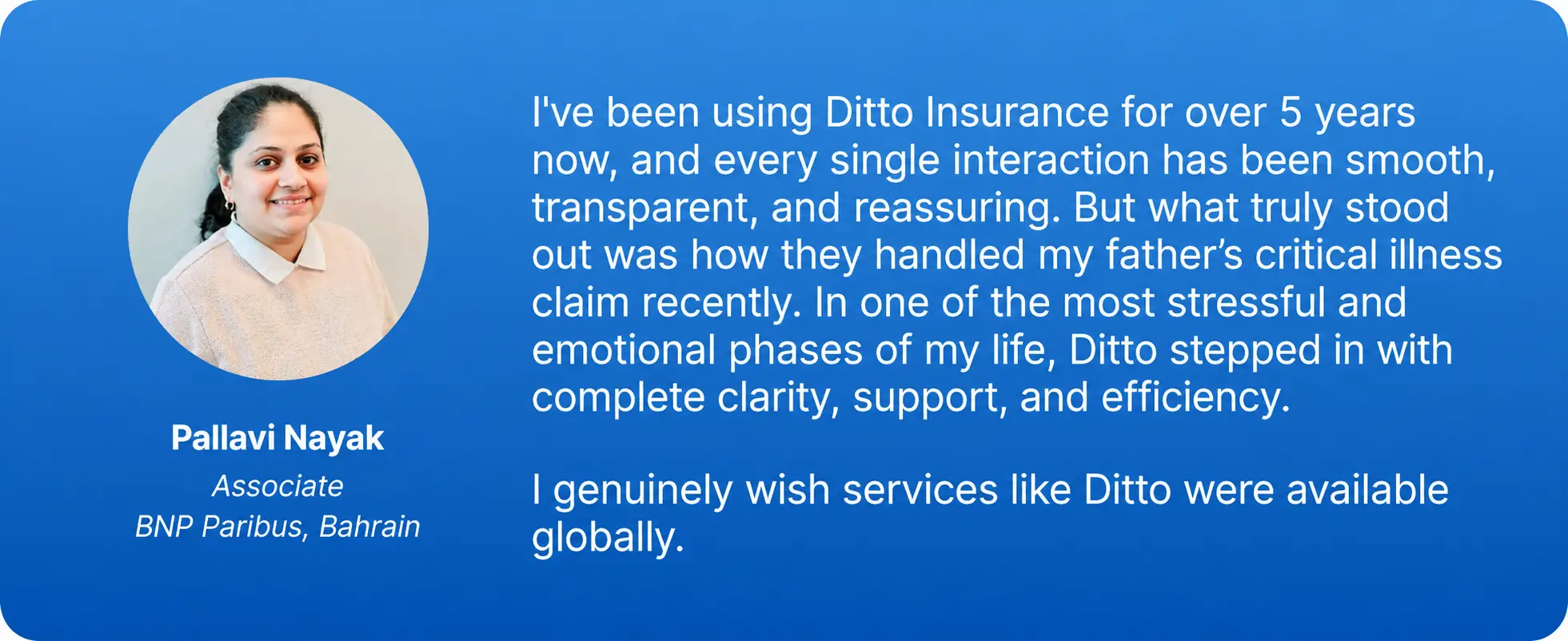
Pallavi Nayak LinkedIn Customer Testimonial
    • 100% Free Consultation
    • No Spam. No Sales Pressure.
    • Rated 4.9/5 on Google Reviews by 30,000+ Happy Customers
    • Backed by Zerodha
    • Dedicated Claim Support Team
    • Compare Plans and Premiums with a Trusted Insurance Advisor

Confused about the right insurance? Speak to Ditto’s certified advisors for free, unbiased guidance. Book your call now or chat with us on WhatsApp. Slots fill up fast!

Conclusion

The West Bengal Health Scheme provides eligible government employees, pensioners, and their families with cashless hospitalization of up to ₹5 lakh per admission, along with reimbursement for specified medical expenses. However, beneficiaries should understand the scheme's eligibility rules, approved package rates, hospital network, and reimbursement restrictions before relying on it for treatment.

While WBHS offers valuable financial protection, it may not cover every medical expense. If you want higher coverage, more hospital choice, and fewer treatment restrictions, consider comparing the best health insurance plans in India to find additional protection that fits your family's healthcare needs.

Frequently Asked Questions

Is the West Bengal Health Scheme enough to cover a state government employee's whole family?

WBHS covers enrolled state government employees, their spouses, and eligible dependent family members. However, the West Bengal Health Scheme benefits are subject to dependency conditions, approved treatment rates, and reimbursement rules. Not every hospital expense is payable. Family members must also meet the applicable age and income requirements. A separate private health insurance policy can offer additional financial protection and hospital choices, subject to its coverage conditions.

Which hospitals in Kolkata offer cashless treatment under the West Bengal Health Scheme?

Several hospitals in Kolkata offer cashless treatment under WBHS, including Desun Hospital & Heart Institute, Calcutta Medical Research Institute, B.M. Birla Heart Research Centre, R.N. Tagore International Institute of Cardiac Sciences, Ruby General Hospital, and Mission of Mercy Hospital. These are only a few examples from the West Bengal Health Scheme cashless hospital list. For the complete West Bengal Health Scheme hospital list, visit the official WBHS hospital directory, select Kolkata, and verify the hospital's empanelment status before admission.

What documents are needed to apply for a West Bengal Health Scheme card?

WBHS enrollment requires employment or pension details, beneficiary information, photographs, signatures, blood-group details, and Aadhaar information. Dependents require additional documents based on their eligibility category. Applicants can visit the official WBHS portal to access the relevant enrollment form. Once submitted, the designated government authority verifies the application. The West Bengal Health Scheme login also allows authorized officials to process applications and issue enrollment certificates.

Can retired state government employees and pensioners continue under the West Bengal Health Scheme?

Yes. State government employees already enrolled in WBHS at retirement remain covered from their retirement date unless they opt out, according to the Finance Department notification dated August 5, 2025. Eligible pensioners and family pensioners can also receive scheme benefits by surrendering their applicable medical relief. Their dependent beneficiaries remain subject to the scheme's eligibility conditions. Separate WBHS and CGHS rules apply to retiring All India Services officers.

What happens if I get treated at a hospital that is not empaneled under the West Bengal Health Scheme?

Cashless treatment is unavailable at non-empaneled hospitals. However, eligible inpatient treatment within West Bengal qualifies for reimbursement of up to 60% of approved costs at hospitals with 80 beds or fewer, or 80% at hospitals with more than 80 beds. Reimbursement cannot exceed actual expenses. The hospital must hold a valid clinical establishment license. Patients must submit the prescribed claim documents, including the hospital-certified Annexure-II form.

Does the West Bengal Health Scheme cover OPD treatment and pre-existing diseases?

Yes. WBHS reimburses eligible outpatient treatment for specified diseases and follow-up care, subject to its conditions. It also covers related medical expenses incurred within 30 days before hospitalization and 30 days after discharge. The published scheme rules do not impose a blanket waiting period for pre-existing diseases, as in private health insurance policies. However, treatment must qualify under the applicable WBHS benefits, recognized hospital requirements, and reimbursement rules.

Last updated on: