



How Does Current Location Affect Health Insurance Premium?
Here's a scenario many buyers encounter: you get a ₹15L health insurance quote online, then a friend in another city quotes the same plan and pays significantly less.
This isn't subjective. Insurers assess how does current location affect health insurance premium by analyzing the cost of healthcare in your area: hospital charges, specialist fees, claim frequency, and pricing changes accordingly. The mechanism behind this is called zone-based pricing.
In this guide, we'll break down how health insurance zones in India work and help you understand what to do if you move cities.
What Are Health Insurance Zones in India?
Health insurers in India classify cities and regions into zones or tiers based on two factors:
• Urbanization and Cost of Living: Metro cities, like Mumbai and Delhi, have higher hospital charges, more specialist consultations, and higher room rents, all of which drive up claim amounts.
• Insurer's Hospital Network: Insurers also consider the density of their network hospitals and historical claim data in each region.
The more developed and urban a city, the higher its zonal classification, and the higher the premium. This is why health insurance in non metro city is generally more affordable: lower healthcare costs mean lower claim payouts, and insurers pass on some of that savings to policyholders.
Zone classifications vary between insurers, but most follow a similar structure. Here's how Care Supreme categorizes locations across its four zones:
Health Insurance Zone List: Metro vs. Non-Metro Cities
Note: For rural health insurance buyers in some zones, certain riders may be mandatory.
Think of zone-based pricing as a geographic risk adjustment. Insurers look at average claim costs across cities and set premiums accordingly.
Take Care Supreme, a popular retail health plan, as an example. It has four pricing zones. Here's what the annual premiums look like for a ₹15 lakh sum insured across all zones:
How Zone-Based Premium Pricing Works
These are Illustrative premiums for Care Supreme with the following add-ons: Cumulative Bonus Super, Annual Health Check-up, Care Claim Shield Plus, Wellness Benefit, & Air Ambulance. OPD Care is mandatory for Zone 4 only.
Key Insights: As you can see, a 25-year-old in Delhi pays ₹15,111, about 50% more than another person seeking the same coverage in Howrah (₹10,012). For a senior couple (ages 62 and 63), Delhi premiums are roughly 36% higher than Howrah.
Note: There is no universal health insurance zone classification in India. Each insurer defines its own zone list and pricing structure. Using a single insurer’s framework (like Care Supreme) can be misleading. Always check the specific zone classification in your policy document.
Did You Know?

Tips to Choose the Right Plan Based on Your Zone
Verify Your Zone Before Buying
Enter your current PIN code on the insurer's website to confirm which zone applies to you. Don't assume based on the city alone because some suburbs of metro cities also fall into lower zones.
If You Live in a Non-Metro City, Don't Over-Optimize for Price Alone
Health insurance in non-metro cities is cheaper, but ensure your plan has a strong hospital network in your city, too. A low-zone plan is only valuable if cashless claims work where you live.
Inform Your Insurer When You Relocate
Premiums are based on your current address, so moving cities can change what you pay at renewal. Not updating your address can lead to cashless denial, claim delays due to KYC mismatch, or even scrutiny for misrepresentation. Insurers may also demand the correct premium difference later.
Watch Out for Zonal Co-Payments
If you're considering a PSU insurer, check whether their plan has a zonal co-payment clause. This can significantly increase your out-of-pocket costs if you're in a high-zone city. For plans that don't carry zonal co-payments, read our guide to the best health insurance plans in India.
Compare Plans Within Your Zone
Premiums can vary significantly across zones. But even within the same zone, insurers price plans differently, so it’s important to compare at least 3–4 options based on your city and age profile.
Why Choose Ditto for Health Insurance?
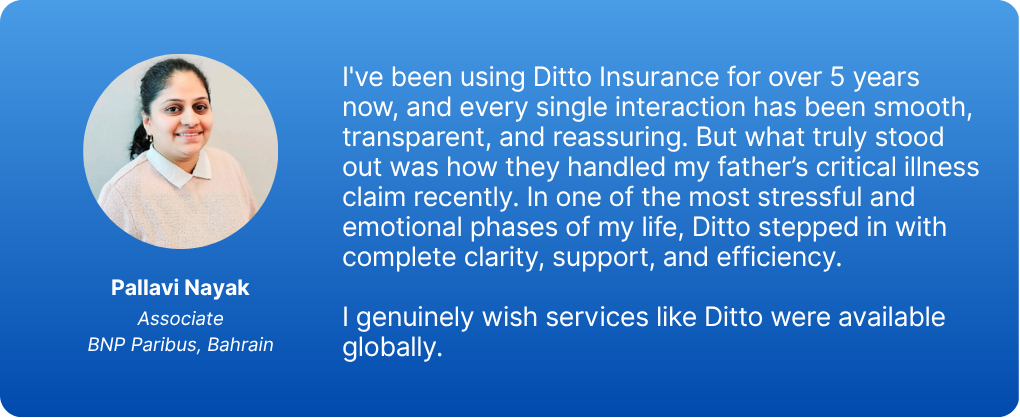
At Ditto, we’ve assisted over 8,00,000 customers with choosing the right insurance policy. Why customers like Pallavi below love us:
- No-Spam & No Salesmen
- Rated 4.9/5 on Google Reviews by 15,000+ happy customers
- Backed by Zerodha
- Dedicated Claim Support Team
- 100% Free Consultation
Confused about the right insurance? Speak to Ditto’s certified advisors for free, unbiased guidance. Book your call or chat on WhatsApp with us now!
Conclusion
Understanding health insurance zones in India helps you decode why premiums vary between cities and plan your coverage more effectively. Whether you're buying health insurance in a non-metro city or paying Zone 1 rates in Delhi, the key is to choose a plan that matches both your zone and your coverage needs. If you're unsure of your zone or planning to relocate, speak with a Ditto advisor to review whether your current plan still makes sense for your location.
Frequently Asked Questions
Last updated on: